2051 results for "Psychology"

The last victim: a true-life journey into the mind of the serial killer

Moss, Jason
DEAR MR. MANSON... It started with a college course assignment, then escalated into a dangerous obsession. Eighteen-year-old honor student Jason Moss wrote to men whose body counts had made criminal history: men named Dahmer, Manson, Ramirez, and Gacy. DEAR MR. DAHMER... Posing as their ideal victim, Jason seduced them with his words. One by one they wrote him back, showering him with their madness and violent fantasies. Then the game spun out of control. John Wayne Gacy revealed all to Jason -- and invited his pen pal to visit him in prison... DEAR MR. GACY... It was an offer Jason couldn't turn down. Even if it made him... The book that has riveted the attention of the national media, this may be the most revealing look at serial killers ever recorded and the most illuminating study of the dark places of the human mind ever attempted.
Warner Books 2000-02-01 278 pages

The Ego and the Id

Freud, Sigmund
Anyone seeking to understand their own mind or that of other people should have this groundbreaking book. In one of his most important writings, Freud brings the id, the secret source of human passion, out from the shadows, and explains how it remains in constant conflict with the ego and the superego. He suggests that the complex interactions of these three parts of the mind are the source of all human behaviors and personality traits. Sigmund Freud founded the field of psychoanalysis and pioneered the use of the unconscious for treating mental disorders. Almost 100 years after his death, his ideas remain influential in psychotherapy, psychology, and psychiatry.
Independently published 2022 70 pages

Choke: what the secrets of the brain reveal about getting it right when you have to

Beilock, Sian
Why do the smartest students often do poorly on standardized tests?Why did you tank that interview or miss that golf swing when you should have had it in the bag?Why do you mess up when it matters the most—and how can you perform your best instead? It happens to all of us. You’ve prepared for days, weeks, even years for the big day when you will finally show your stuff—in academics, in your career, in sports—but when the big moment arrives, nothing seems to work. You hit the wrong note, drop the ball, get stumped by a simple question. In other words, you choke. It’s not fun to think about, but now there’s good news: This doesn’t have to happen.Dr. Sian Beilock, an expert on performance and brain science, reveals in Choke the astonishing new science of why we all too often blunder when the stakes are high. What happens in our brain and body when we experience the dreaded performance anxiety? And what are we doing differently when everything magically "clicks" into place and the perfect golf swing, tricky test problem, or high-pressure business pitch becomes easy? In an energetic tour of the latest brain science, with surprising insights on every page, Beilock explains the inescapable links between body and mind; reveals the surprising similarities among the ways performers, students, athletes, and business people choke; and shows how to succeed brilliantly when it matters most. In lively prose and accessibly rendered science, Beilock examines how attention and working memory guide human performance, how experience and practice and brain development interact to create our abilities, and how stress affects all these factors. She sheds new light on counter-intuitive realities, like why the highest performing people are most susceptible to choking under pressure, why we may learn foreign languages best when we’re not paying attention, why early childhood athletic training can backfire, and how our emotions can make us both smarter and dumber. All these fascinating findings about academic, athletic, and creative intelligence come together in Beilock’s new ideas about performance under pressure—and her secrets to never choking again. Whether you’re at the Olympics, in the boardroom, or taking the SAT, Beilock’s clear, prescriptive guidance shows how to remain cool under pressure—the key to performing well when everything’s on the line.
Free Press 2010-09-21 294 pages

Real change: mindfulness to heal ourselves and the world

Salzberg, Sharon
"From one of most prominent figures in the field of meditation comes a guidebook for how to use mindfulness to build our inner strength, find balance, and help create a better world In today's fractured world we're constantly flooded with breaking news that cause anger, grief, and pain. People are feeling more stressed out than ever and in the face of this fear and anxiety they can feel so burnt out and overwhelmed that they end up frozen in their tracks and can't do anything. In Real Change Sharon Salzberg, a leading expert in Lovingkindness meditation, shares sage advice and indispensible techniques to help free ourselves from these negative feelings and actions. She teaches us that meditation is not a replacement for action, but rather a way to practice generosity with ourselves and summon the courage to break through boundaries, reconnect to a movement that's bigger than ourselves, and have the energy to stay active. Consulting with veteran activists and social change agents in a variety of fields, Salzberg collects and shares their wisdom and offers the best practical advice to foster transformation in both ourselves and in society. To help tame our inner landscape or chaos, Salzberg offers mindfulness practices that will help readers cultivate a sense of agency and stay engaged in the long-term struggle for social change. Whether you're resolving conflicts with a crochety neighbor or combating global warming, Real Change will help guide you with the fundamental principles and mindfulness practices that will lead to the clarity and confidence that lets us lift a foot and take our next step into a better world"--
Flatiron Books 2020-09-01 230 pages

How to be human: the manual

Wax, Ruby
In How to be a Human, Ruby Wax tries to come up with some answers to that niggling question about who we are. With the input of a monk (an expert on our inner lives) and a neuroscientist (an expert on the brain), Ruby explores how to find happiness in the modern world - despite the constant bombardment of bad news, the need to choose between 5,000 different types of toothpaste, and the loneliness of having hundreds of friends who we've never met and don't know us.Filled with witty anecdotes from Ruby's own life, and backed up by scientific authority, How to be a Human is the only guide you need for building a healthy, happy relationship with yourself.
Penguin Life 2018-01-15 263 pages

Love and death in the American novel

Fiedler, Leslie A.
A retrospective article on Leslie Fiedler in the New York Times Book Review in 1965 referred to Love and Death in the American Novel as "one of the great, essential books on the American imagination . . . an accepted major work." This groundbreaking work views in depth both American literature and character from the time of the American Revolution to the present. From it, there emerges Fiedler's once scandalous--now increasingly accepted--judgment that our literature is incapable of dealing with adult sexuality and is pathologically obsessed with death.
Dalkey Archive Press 1997 512 pages

Letting everything become your teacher: 100 lessons in mindfulness

Kabat-Zinn, Jon
Yes, there actually is a way to let everything become your teacher, to let life itself, and everything that unfolds within it, the “full catastrophe” of the human condition in the words of Zorba the Greek, shape your ongoing development and maturation. Millions have followed this path to greater sanity, balance, and well-being, often in the face of huge stress, pain, uncertainty, sorrow, and illne[Bokinfo]
Delta Trade Paperbacks 2009-04-28 160 pages

The authority gap: why women are still taken less seriously than men, and what we can do about it

Sieghart, Mary Ann
"An incisive, intersectional look at the mother of all gender biases: a resistance to women's authority and power. Every woman has a story of being underestimated, ignored, challenged, or patronized in the workplace. Maybe she tried to speak up in a meeting, only to be talked over by male colleagues. Or a client addressed her male subordinate instead of her. Despite the progress we've made toward equality, we still fail, more often than we might realize, to take women as seriously as men. In The Authority Gap, journalist Mary Ann Sieghart examines the wide-ranging implications of this critical gender bias. She explores its intersections with race and class biases and the measures we can take to bridge the gap. With precision and insight, she marshals a wealth of data from a variety of disciplines-including psychology, sociology, politics, and business-and interviews pioneering women like Booker Prize winner Bernardine Evaristo and Janet Yellen. The Authority Gap offers a "a credible roadmap that is capable of taking women from the margins to the center" (Mary McAleese, former president of Ireland)"--
W. W. Norton & Company 2022 375 pages

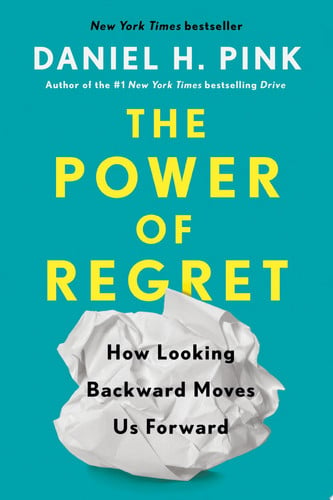
The power of regret: how looking backward moves us forward

Pink, Daniel H.
"From Daniel H. Pink, the #1 New York Times-bestselling author of When and Drive, a new book about the transforming power of that crucial and misunderstood emotion, regret. "Regret is not dangerous or abnormal, it is healthy and universal, an integral part of being human," Daniel H. Pink writes in his provocative and eye-opening new book. "Done right, it needn't bring us down; it can lift us up." Drawing from new research in social psychology, neuroscience, biology, and more, as well as from more than ten thousand people in thirty-five countries around the world who responded to his World Regret Survey-the largest of its kind ever conducted-Pink challenges the idea of regret being a drag on our self-esteem and outlook. In fact, understanding how regret actually works and using those insights to reframe our perspective of it will help us reclaim regret as an indispensable emotion that can help us make smarter decisions, perform better at work and school, and bring greater meaning to our lives. As he did in his other paradigm-changing books When, Drive, and A Whole New Mind, Pink sets down a dynamic new way of thinking about regret and frames his ideas in ways that are clear, accessible, and pragmatic. Packed with true stories of people's regrets as well as practical takeaways for reimagining regret as a positive force in your own life, this book shows how we can live richer, more engaged lives-with no regrets"--
Riverhead Books 2022-02-01 240 pages

Breaking Bad 101: the complete critical companion

Sepinwall, Alan
An essential deep dive into the greatest television drama of all time. Breaking Bad 101 is the ultimate companion for fans of the groundbreaking series that redefined modern television. Esteemed critic Alan Sepinwall brings together his acclaimed episode recaps--originally published during the show's run--with brand-new essays, updated commentary, and exclusive insights from the creators and cast. With sharp wit and deep reverence, Sepinwall explores the show's masterful storytelling, complex characters, and cinematic brilliance. From Walter White's transformation to the show's unforgettable finale, this book unpacks the psychology, symbolism, and cultural impact of every episode. Featuring interviews with Vince Gilligan and other key voices behind the scenes, Breaking Bad 101 is both a celebration and a critical exploration of a series that changed television forever. Perfect for longtime fans, new viewers, and anyone fascinated by the art of storytelling, this is the definitive guide to the dark genius of Breaking Bad .
Abrams Press 2018-10-23 284 pages

The Elementary Forms of Religious Life

Emile Durkheim
The French Sociologist Émile Durkheim is commonly cited as the father of sociology. Principle to the work of Durkheim was his concern with regard to how modernity was effecting traditional social and religious institutions, more specifically with how societies could maintain their integrity and coherence in an era in which new social institutions were coming into being. One of his principles works, "The Elementary Forms of Religious Life" is a comparative theory of the religious lives of ancient and modern societies and the sociological influence of their respective religious institutions. Durkheim argues that the essence of religion is the concept of the sacred and it is this single phenomenon that is common to all religions. The work extensively discusses the concept of the sacred by examining the worship of totems in ancient religions and by arguing that modern societies have displaced this totemism by ascribing a new form of sacredness to the individual and individual rights. "The Elementary Forms of Religious Life" is a compelling exposition on the impact of religious institutions in ancient and modern life and a worthy read for anyone interested in religious or sociological studies. This edition is printed on premium acid-free paper.
Neeland Media 2019-08-23 414 pages

The Rise of Superman Decoding the Science of Ultimate Human Performance

Steven Kotler
A Wall Street Journal bestseller. In this groundbreaking book, New York Times bestselling author Steven Kotler decodes the mystery of ultimate human performance. Drawing on over a decade of research and firsthand reporting with dozens of top action and adventure sports athletes like big wave legend Laird Hamilton, big mountain snowboarder Jeremy Jones, and skateboarding pioneer Danny Way, Kotler explores the frontier science of "flow," an optimal state of consciousness in which we perform and feel our best. Building a bridge between the extreme and the mainstream, The Rise of Superman explains how these athletes are using flow to do the impossible and how we can use this information to radically accelerate performance in our own lives. At its core, this is a book about profound possibility; about what is actually possible for our species; about where--if anywhere--our limits lie.
Amazon Publishing 2021-09-07 254 pages

Stalin

Kotkin, Stephen
"A magnificent new biography that revolutionizes our understanding of Stalin and his world. It has the quality of myth: a poor cobbler's son, a seminarian from an oppressed outer province of the Russian empire, reinvents himself as a top leader in a band of revolutionary zealots. When the band seizes control of the country in the aftermath of total world war, the former seminarian ruthlessly dominates the new regime until he stands as absolute ruler of a vast and terrible state apparatus, with dominion over Eurasia. While still building his power base within the Bolshevik dictatorship, he embarks upon the greatest gamble of his political life and the largest program of social reengineering ever attempted: the collectivization of all agriculture and industry across one sixth of the earth. Millions will die, and many more millions will suffer, but the man will push through to the end against all resistance and doubts. Where did such power come from? In Stalin, Stephen Kotkin offers a biography that, at long last, is equal to this shrewd, sociopathic, charismatic dictator in all his dimensions. The character of Stalin emerges as both astute and blinkered, cynical and true believing, people oriented and vicious, canny enough to see through people but prone to nonsensical beliefs. We see a man inclined to despotism who could be utterly charming, a pragmatic ideologue, a leader who obsessed over slights yet was a precocious geostrategic thinker--unique among Bolsheviks--and yet who made egregious strategic blunders. Through it all, we see Stalin's unflinching persistence, his sheer force of will--perhaps the ultimate key to understanding his indelible mark on history. Stalin gives an intimate view of the Bolshevik regime's inner geography of power, bringing to the fore fresh materials from Soviet military intelligence and the secret police. Kotkin rejects the inherited wisdom about Stalin's psychological makeup, showing us instead how Stalin's near paranoia was fundamentally political, and closely tracks the Bolshevik revolution's structural paranoia, the predicament of a Communist regime in an overwhelmingly capitalist world, surrounded and penetrated by enemies. At the same time, Kotkin demonstrates the impossibility of understanding Stalin's momentous decisions outside of the context of the tragic history of imperial Russia. The product of a decade of intrepid research, Stalin is a landmark achievement, a work that recasts the way we think about the Soviet Union, revolution, dictatorship, the twentieth century, and indeed the art of history itself"--Provided by publisher.
Penguin Books 2015-10-13 976 pages

The Curse of the Good Girl Raising Authentic Girls with Courage and Confidence

Rachel Simmons
Bestselling author of Odd Girl Out , Rachel Simmons exposes the myth of the Good Girl, freeing girls from its impossible standards and encouraging them to embrace their real selves In The Curse of the Good Girl , bestselling author Rachel Simmons argues that in lionizing the Good Girl we are teaching girls to embrace a version of selfhood that sharply curtails their power and potential. Unerringly nice, polite, modest, and selfless, the Good Girl is a paradigm so narrowly defined that it's unachievable. When girls inevitably fail to live up-experiencing conflicts with peers, making mistakes in the classroom or on the playing field-they are paralyzed by self-criticism, stunting the growth of vital skills and habits. Simmons traces the poisonous impact of Good Girl pressure on development and provides a strategy to reverse the tide. At once expository and prescriptive, The Curse of the Good Girl is a call to arms from a new front in female empowerment. Looking to the stories shared by the women and girls who attend her workshops, Simmons shows that Good Girl pressure from parents, teachers, coaches, media, and peers erects a psychological glass ceiling that begins to enforce its confines in girlhood and extends across the female lifespan. The curse of the Good Girl erodes girls' ability to know, express, and manage a complete range of feelings. It expects girls to be selfless, limiting the expression of their needs. It requires modesty, depriving the permission to articulate their strengths and goals. It diminishes assertive body language, quieting voices and weakening handshakes. It touches all areas of girls' lives and follows many into adulthood, limiting their personal and professional potential. Since the popularization of the Ophelia phenomenon, we have lamented the loss of self-esteem in adolescent girls, recognizing that while the doors of opportunity are open to twenty-first-century American girls, many lack the confidence to walk through them. In The Curse of the Good Girl , Simmons provides a catalog of tangible lessons in bolstering the self and silencing the curse of the Good Girl. At the core of Simmons's radical argument is her belief that the most critical freedom we can win for our daughters is the liberty not only to listen to their inner voice but also to act on it.
Penguin Books 2010 278 pages

Focus: The Hidden Driver of Excellence

Goleman, Daniel
In Focus, psychologist and journalist Daniel Goleman delves into the science of attention in all its varieties, presenting a long-overdue discussion of this little-noticed and underrated mental asset that matters enormously for how we navigate life. Attention works much like a muscle: use it poorly and it can wither; work it well and it grows. In an era of unstoppable distractions, Goleman persuasively argues that now more than ever we must learn to sharpen focus if we are to contend with, let alone thrive in, a complex world. Goleman analyzes attention research as a threesome: inner, other, and outer focus. He shows why high-performers need all three kinds of focus, as demonstrated by rich case studies from fields as diverse as competitive sports, education, the arts, and business. Those who excel rely on what Goleman calls smart practice that helps them improve habits, add new skills, and sustain excellence. Combining cutting-edge research with practical findings, Focus reveals what distinguishes experts from amateurs and stars from average performers.
HARPER PAPERBACKS 2015-05-05 320 pages