2604 results for "World History"

The last American vampire

Grahame-Smith, Seth
"New York Times bestselling author Seth Grahame-Smith returns with the follow-up to Abraham Lincoln: Vampire Hunter--a sweeping, alternate history of 20th Century America as seen through the eyes of vampire Henry Sturges. THE LAST AMERICAN VAMPIRE In Reconstruction-era America, vampire Henry Sturges is searching for renewed purpose in the wake of his friend Abraham Lincoln's shocking death. It will be an expansive journey that will first send him to England for an unexpected encounter with Jack the Ripper, then to New York City for the birth of a new American century, the dawn of the electric era of Tesla and Edison, and the blazing disaster of the 1937 Hindenburg crash. Along the way, Henry goes on the road in a Kerouac-influenced trip as Seth Grahame-Smith ingeniously weaves vampire history through Russia's October Revolution, the First and Second World Wars, and the JFK assassination. Expansive in scope and serious in execution, THE LAST AMERICAN VAMPIRE is sure to appeal to the passionate readers who made Abraham Lincoln: Vampire Hunter a runaway success"--
Grand Central Publishing 2015-01-13 398 pages

All roads lead to October: Boss Steinbrenner's 25-year reign over the New York Yankees

Allen, Maury
George Herman Ruth was the Babe. Lou Gehrig was the Iron Horse. Joe DiMaggio was the Yankee Clipper. George Steinbrenner is the Boss. On a rainy January morning, 1973, a press conference is called that will change the face of the Yankees forever. A young Cleveland Industrialist by the name of Steinbrenner stands at New York's famed 21 Club and announces his new ownership of the Yankees. And so begins the Steinbrenner era, the era of the Boss. Now with five World Championships to his name, Steinbrenner is not only the owner of one of the past century's winningest baseball teams, but a legendary figure in his own right. Both eccentric and egocentric, Steinbrenner's unique approach to the game turned a not-so-good 1973 Yankees squad into World Champions just five years later. As integral to the history of the Yankees as DiMaggio or Ruth, All Road Lead to October examines the team under Steinbrenner's reign. Having covered the Yankees since Steinbrenner came aboard, acclaimed sports journalist and noted author Maury Allen examines the complex and often fiery relationships the owner had with the likes of Billy Martin, Reggie Jackson, Yogi Berra, Joe Torre, Darryl Strawberry and many others. Here are the first hand, insider's accounts of the pivotal events in the Yankees rise to power. Covering both off the field and on the field controversies like Yankees pitchers Fritz Peterson and Mike Kekich's wife swapping, the angry tirades, fights and often brilliant coaching moves of the misunderstood Billy Martin, the inside story of the signing of Reggie Jackson whose ego was as big as his bat, and the Yankees rise to baseball dominance with the likes of Jeter, Williams, El Duque, Clemens, Rivera and Torre, Maury Allen give an exclusive look at all the action. Allen was there through it all, from Steinbrenner's first press conference, through the death of Catfish Hunter, the World Series wins, the controversial trades and firings, and even when a drunk Billy Martin banged on his hotel room door one night madder than hell. This is the definitive look at not only the Boss, the but the New York Yankees, the most celebrated team of the twentieth century.
St. Martin's Press 2000-07-14 298 pages

Mother of God: a history of the Virgin Mary

Rubin, Miri
How did the Virgin Mary, about whom very little is said in the Gospels, become one of the most powerful and complex religious figures in the world? To arrive at the answers to this far-reaching question, one of our foremost medieval historians, Miri Rubin, investigates the ideas, practices, and images that have developed around the figure of Mary from the earliest decades of Christianity to around the year 1600. Drawing on an extraordinarily wide range of sources—including music, poetry, theology, art, scripture, and miracle tales—Rubin reveals how Mary became so embedded in our culture that it is impossible to conceive of Western history without her. In her rise to global prominence, Mary was continually remade and reimagined by wave after wave of devotees. Rubin shows how early Christians endowed Mary with a fine ancestry; why in early medieval Europe her roles as mother, bride, and companion came to the fore; and how the focus later shifted to her humanity and unparalleled purity. She also explores how indigenous people in Central America, Africa, and Asia remade Mary and so fit her into their own cultures. Beautifully written and finely illustrated, this book is a triumph of sympathy and intelligence. It demonstrates Mary’s endless capacity to inspire and her profound presence in Christian cultures and beyond.
Yale University Press 2009 532 pages

The Expanding Blaze How the American Revolution Ignited the World, 1775-1848

Jonathan Israel
"A major intellectual history of the American Revolution and its influence on later revolutions in Europe and the Americas, the Expanding Blaze is a sweeping history of how the American Revolution inspired revolutions throughout Europe and the Atlantic world in the eighteenth and nineteenth centuries. Jonathan Israel, one of the world's leading historians of the Enlightenment, shows how the radical ideas of American founders such as Paine, Jefferson, Franklin, Madison, and Monroe set the pattern for democratic revolutions, movements, and constitutions in France, Britain, Ireland, the Netherlands, Belgium, Poland, Greece, Canada, Haiti, Brazil, and Spanish America. The Expanding Blaze reminds us that the American Revolution was an astonishingly radical event--and that it didn't end with the transformation and independence of America. Rather, the revolution continued to reverberate in Europe and the Americas for the next three-quarters of a century. This comprehensive history of the revolution's international influence traces how American efforts to implement Radical Enlightenment ideas--including the destruction of the old regime and the promotion of democratic republicanism, self-government, and liberty--helped drive revolutions abroad, as foreign leaders explicitly followed the American example and espoused American democratic values. The first major new intellectual history of the age of democratic revolution in decades, The Expanding Blaze returns the American Revolution to its global context."--
Princeton University Press 2019-11-26 768 pages

Ghostbusters: the ultimate visual history

Wallace, Daniel,Aykroyd, Dan,Reitman, Ivan
"Who you gonna call? The Ghostbusters saga has been thrilling fans around the world for over three decades, from the original movies to the animated shows, comics, video games, toys, and other collectibles. For the first time, Ghostbusters: The Ultimate Visual History takes a comprehensive look at the entire franchise, telling the complete story behind the creation of a true pop culture phenomenon. Beginning with an in-depth look at the original film, Ghostbusters: The Ultimate Visual History delves into the archives to showcase a wealth of never-before-seen concept art and photography that will take fans into the production of a true classic. Also featuring a large section on Ghostbusters II, the book brings together exclusive interviews with the key players from both films, including director Ivan Reitman; stars Dan Aykroyd, Ernie Hudson, and Sigourney Weaver; and producers Michael C. Gross and Joe Medjuck."--Provided by Amazon.com.
Insight Editions 2015-10-27 222 pages

History decoded: solving the ten greatest conspiracies of all time

Meltzer, Brad,Ferrell, Keith
It's an irresistible combination: Brad Meltzer, a born storyteller, counting down the world's most intriguing unsolved mysteries. And to make this richly illustrated book even richer, each chapter invites the reader along for an interactive experience through the addition of removable facsimile documents—the evidence! It's a treasure trove for conspiracy buffs, a Griffin and Sabine for history lovers. Adapted from Decoded , Meltzer’s hit show on the HISTORY network, History Decoded explores fascinating, unexplained questions. Is Fort Knox empty? Why was Hitler so intent on capturing the Roman “Spear of Destiny”? What’s the government hiding in Area 51? Where did the Confederacy’s $19 million in gold and silver go at the end of the Civil War? And did Lee Harvey Oswald really act alone? Meltzer sifts through the evidence; weighs competing theories; separates what we know to be true with what’s still—and perhaps forever—unproved or unprovable; and in the end, decodes the mystery, arriving at the most likely solution. Along the way we meet Freemasons, Rosicrucians, Nazi propagandists, and the real DB Cooper. Bound in at the beginning of each story is a custom-designed envelope—a faux 19th-century leather satchel, a U.S. government classified file—containing facsimiles of relevant evidence: John Wilkes Booth’s alleged unsigned will, a map of the Vatican, Kennedy’s death certificate. The whole is a riveting, interactive adventure through the compelling world of mysteries and conspiracies.
Workman 2013-10-22 152 pages

The Poverty of Historicism

Popper, Karl Raimund Sir
On its publication in 1957, The Poverty of Historicism was hailed by Arthur Koestler as 'probably the only book published this year which will outlive the century.' A devastating criticism of fixed and predictable laws in history, Popper dedicated the book to all those 'who fell victim to the fascist and communist belief in Inexorable Laws of Historical Destiny.' Short and beautifully written, it has inspired generations of readers, intellectuals and policy makers. One of the most important books on the social sciences since the Second World War, it is a searing insight into the ideas of this great thinker.
Routledge 2015-09-03 176 pages

When the facts change: essays, 1995-2010

Judt, Tony
"In an age in which the lack of independent public intellectuals has often been sorely lamented, the historian Tony Judt played a rare and valuable role, bringing together history and current events, Europe and America, what was and what is with what should be. In When the Facts Change, Tony Judt's widow and fellow historian Jennifer Homans has assembled an essential collection of the most important and influential pieces written in the last fifteen years of Judt's life, the years in which he found his voice in the public sphere. Included are seminal essays on the full range of Judt's concerns, including Europe as an idea and in reality, before 1989 and thereafter; Israel, the Holocaust and the Jews; American hyperpower and the world after 9/11; and issues of social inclusion and social justice in an age of increasing inequality. Judt was at once most at home and in a state of what he called internal exile from his native England, from Europe, and from America, and he finally settled in New York--between them all. He was a historian of the twentieth century acutely aware of the dangers of ethnic exceptionalism, and if he was shaped by anything, it was the Jewish past and his own secularism. His essays on Israel ignited a firestorm debate for their forthright criticisms of Israeli government polices relating to the Palestinians and the occupied territories. Those crucial pieces are published here in book form for the first time, including an essay, never previously published, called 'What Is to Be Done?' These pieces are suffused with a deep compassion for the Israeli dilemma, a compassion that instilled in Judt a sense of responsibility to speak out and try to find a better path, away from what he saw as a road to ruin. When the Facts Change also contains Judt's homages to the culture heroes who were some of his greatest inspirations: Amos Elon, Francois Furet, Leszek Kolakowski, and perhaps above all Albert Camus, who never accepted the complacent view that the problem of evil couldn't lie within us as well as outside us. Included here too is a magnificent two-part essay on the social and political importance of railway travel to our modern conception of a good society; as well as the urgent text of 'What Is Living and What Is Dead in Social Democracy, ' the final public speech of his life, delivered from a wheelchair after he had been stricken with a terrible illness; and a tender and wise dialogue with his then-teenage son, Daniel, about the different outlooks and burdens of their two generations. To read When the Facts Change is to miss Tony Judt's voice terribly, but to cherish it for what it was, and still is: a wise, human, deeply informed view on our most pressing concerns, delivered in good faith."--
Penguin Press 2015 386 pages

Nazi Germany and the Jews

Friedländer, Saul
A history of the anti-Jewish policies of Nazi Germany, focusing on the victims' attitudes, reactions, and fate. Describes discrimination against Jews (and "Mischlinge") in the economic, social, cultural, and legal spheres, and the gradual process of segregation, isolation, and compulsory emigration. Gives examples of specific cases of persecution, and of the Jews' reactions. Discusses the extent to which the German elites - Churches, universities, leaders in the economic, political, and cultural spheres - shared in the Nazi antisemitic ideology and condoned Nazi policies. Among the traditional elites and the general populace, there were varying degrees of compliance with anti-Jewish attitudes, but they shied away from violence. Describes the development of German racial antisemitism from the 19th century, which emphasized the mythic dimensions of race and the sacredness of Aryan blood. This fused with a religious vision of a German (or Aryan) Christianity, and led to what can be called "redemptive antisemitism". Emphasizes Hitler's role and the function of his ideology in the genesis and implementation of the anti-Jewish measures. In his worldview, the Jew was dehistoricized and transposed into an abstract principle of evil. In the confrontation between an immutable evil (Jews) and an immutable good (Aryans), the outcome could only be envisioned in religious terms: perdition or redemption. For Hitler, the struggle against the Jews was the basis of his understanding of history, politics, and political action. Yet, his ideological fanaticism was tempered by pragmatic calculation. It is the relationship between the uncommon and the ordinary, the fusion of the widely-shared murderous potentialities in the world and the peculiar frenzy of the Nazi apocalyptic drive against the mortal enemy, the Jew, that give universal significance and historical distinctiveness to the "Final Solution of the Jewish Question".
HarperCollins 1998-03-10 439 pages

A people's tragedy: the Russian Revolution, 1891-1924

Figes, Orlando
On the brink of the 100th anniversary of the Russian Revolution, read the most vivid, moving, and comprehensive history of the events that changed the world It is history on an epic yet human scale. Vast in scope, exhaustive in original research, written with passion, narrative skill, and human sympathy, A People's Tragedy is a profound account of the Russian Revolution for a new generation. Many consider the Russian Revolution to be the most significant event of the twentieth century. Distinguished scholar Orlando Figes presents a panorama of Russian society on the eve of that revolution, and then narrates the story of how these social forces were violently erased. Within the broad stokes of war and revolution are miniature histories of individuals, in which Figes follows the main players' fortunes as they saw their hopes die and their world crash into ruins. Unlike previous accounts that trace the origins of the revolution to overreaching political forces and ideals, Figes argues that the failure of democracy in 1917 was deeply rooted in Russian culture and social history and that what had started as a people's revolution contained the seeds of its degeneration into violence and dictatorship. A People's Tragedy is a masterful and original synthesis by a mature scholar, presented in a compelling and accessibly human narrative.
Penguin Books 1998 923 pages

Rising from the rails: Pullman porters and the making of the Black middle class

Tye, Larry
An engaging social history that reveals the critical role Pullman porters played in the struggle for African American civil rights When George Pullman began recruiting Southern blacks as porters in his luxurious new sleeping cars, the former slaves suffering under Jim Crow laws found his offer of a steady job and worldly experience irresistible. They quickly signed up to serve as maid, waiter, concierge, nanny, and occasionally doctor and undertaker to cars full of white passengers, making the Pullman Company the largest employer of African American men in the country by the 1920s. In the world of the Pullman sleeping car, where whites and blacks lived in close proximity, porters developed a unique culture marked by idiosyncratic language, railroad lore, and shared experience. They called difficult passengers "Mister Charlie"; exchanged stories about Daddy Jim, the legendary first Pullman porter; and learned to distinguish generous tippers such as Humphrey Bogart from skinflints like Babe Ruth. At the same time, they played important social, political, and economic roles, carrying jazz and blues to outlying areas, forming America's first black trade union, and acting as forerunners of the modern black middle class by virtue of their social position and income. Drawing on extensive interviews with dozens of porters and their descendants, Larry Tye reconstructs the complicated world of the Pullman porter, and provides a lively and enlightening look at this important social phenomenon.
Henry Holt 2004-07-06 314 pages

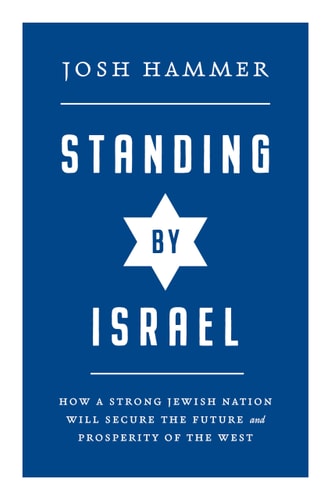
Israel and civilization: the fate of the Jewish nation and the destiny of the West

Hammer, Josh
"In Israel and Civilization, acclaimed journalist, legal expert, and pundit Josh Hammer makes a righteous case that the key to the prosperity of the West is the flourishing of the Jewish people and the Jewish State of Israel. Hammer's uplifting offense is our best defense against the enemies of the Jewish people's right to self-determination in their ancestral homeland. And as Hammer makes clear, manifesting the promise of Israel requires action by the United States and its allies. There can be no overstating the impact of the trauma of October 7, 2023, on the Jewish people. Yet the anti-Israel reactions the world over have been equally devastating. Rallies of hundreds of thousands explicitly or implicitly promoting Hamas violence; demonstrations of Ivy League professors celebrating the pogrom as awesome and exhilarating; so-called human rights organizations that refuse to unequivocally condemn the use of rape as a weapon of war; and a hydra of multiculturalism, postmodern relativism, and tolerance--it all threatens the physical and metaphysical survival of the West and our essential Jewish heritage. Preserving the best of what's been thought and said throughout history and ensuring that there will be centuries more requires a West that is proud of its Jewish heritage. In other words, the continued existence of the Jewish people is inextricably tied to the endurance of Western civilization. Israel is the center of the battle, and Israel and Civilization explains why and how the Jewish state must win."--
Radius Book Group 2025-03-18 293 pages

Return from Siberia

John Shallman
** Wall Street Journal , Publishers Weekly , and USA Today Bestseller!** In the lead-up to the Bolshevik Revolution, one young revolutionary is condemned to exile in Siberia; a hundred years later, his ancestors discover his story and learn just how much history has repeated itself. In the midst of running a long-shot political campaign, Democratic political consultant John Simon discovers a 100-year-old manuscript written by his grandfather Joseph—a brilliant young revolutionary whose exile to Siberia by the last czar of Russia is just the beginning of an extraordinary tale of survival, romance, and revolution. Return From Siberia chronicles not only the Simon family's relationship to each other and the past, but also the remarkable story of a young man who sacrificed everything for his political ideals. As Joseph's manuscript is translated, chapter-by-chapter, the Simon family is pulled deep into their ancestor’s story— in particular, the bitter rivalry between two brothers, whose competing visions of the American Dream are played out on the campaign trail and in their lives. Return from Siberia is a timely appraisal of modern politics and society juxtaposed with an inside look into the machinations of a young political mind 100 years ago. The true story documents an extraordinary time of political upheaval in Russia and Europe just prior to World War I while also drawing parallels to current day American politics and the current philosophical and ideological debates about immigration, Democratic Socialism, and Capitalism. Beyond the deep social, political, and philosophical themes, there is romance, adventure, betrayal, suspense, and the struggles of families today and in yesteryear. Return from Siberia illustrates how one modern family's connection to the past helps them resolve their future.
Skyhorse 2020-08-18 256 pages

Sandy Koufax: a lefty's legacy

Leavy, Jane
In an era when too many heroes have been toppled from too many pedestals, Sandy Koufax stands apart and alone, a legend who declined his own celebrity. As a pitcher, he was sublime, the ace of baseball lore. As a human being, he aspired to be the one thing his talent and his fame wouldn't allow: a regular guy. A Brooklyn kid, he was the product of the sedate and modest fifties who came to define and dominate baseball in the sixties. In Sandy Koufax: A Lefty's Legacy, former award-winning Washington Post sportswriter Jane Leavy delivers an uncommon baseball book, vividly re-creating the Koufax era, when presidents were believed and pitchers aspired to go the distance. He was only a teenager when Dodgers owner Walter O'Malley proclaimed him "the Great Jewish Hope" of the franchise. But it wasn't until long after the team had abandoned Brooklyn that the man became the myth. Old-fashioned in his willingness to play when he was injured and in his acute sense of responsibility to his team, Koutax answered to an authority higher than manager Walter Alston. When he refused to pitch the opening game of the 1965 World Series because it fell on Yom Kippur, the holiest day of the Jewish calendar, he inadvertently made himself a religious icon and an irrevocably public figure. A year later, he was gone -- done with baseball at age thirty. No other sports hero had retired so young, so well, or so completely. Despite Sandy Koufax's best efforts to protect his privacy, his legend has grown larger ever since. Part biography, part cultural history, Sandy Koufax: A Lefty's Legacy gets as close to that legend as he will allow. Through meticulous reporting and interviews with five hundred of his friends, teammates, and opponents, Leavy penetrates the mythology to discover a man more than worthy of myth.
HarperCollins 2002-09-17 282 pages

Firestorm: the great Los Angeles fires and America's new age of disaster

Soboroff, Jacob
"On the morning of January 7, 2025, a message pinged the phone of Jacob Soboroff, a national correspondent for NBC News. "Big Palisades fire. We are evacuating," his brother texted within minutes of the blaze engulfing the hillside behind the home where he and his pregnant wife were living. "Really bad." An attached photo showed a huge black plume rising from behind the house, an umbrella of smoke towering over everything they owned. Jacob rushed to the office of the bureau chief. "I should go. I grew up in the Palisades." Soon he was on the front line of the blaze-his first live report of what would turn out to be weeks covering unimaginable destruction, from both the Palisades Fire and the Eaton Fire, in Altadena. In the days to come, Soboroff appeared across the networks of NBC News as Los Angeles was ablaze, met with displaced residents and workers, and pressed Governor Gavin Newsom in an interview on MEET THE PRESS. But no story Soboroff has covered at home or abroad-the trauma of family separation at the border, the displacement of the war in Ukraine, the collapse of order in Haiti-could have prepared him for reporting live as the hallmarks of his childhood were engulfed in flames around him while his hometown burned to the ground. But for Soboroff, questions remained after the fires were controlled: what had he just witnessed? How could it have happened? Is it inevitable something like it will happen again? This set Soboroff off on months of reporting-with firefighters, fire victims, political leaders, academics, earth scientists, wildlife biologists, meteorologists and more-that made him keenly aware of how the misfortune of seeing his past carbonize was also a form of time travel into the dystopian world his children will inhabit. This is because the 2025 LA fires were not an isolated tragedy, but rather they are a harbinger-"the fire of the future," in the words of one senior emergency-management official. FIRESTORM is the story of the costliest wildfire in American history, the people it affected and the deeply personal connection to one journalist covering it. It is a love letter to Los Angeles, a yearning to understand the fires, and why America's new age of disaster we are living through portends that-without a reckoning of how Los Angeles burned-there is more yet, and worse, to come"-- Provided by publisher.
Mariner Books 2026-01-06 288 pages

The next 100 years: a forecast for the 21st century

Friedman, George
“Conventional analysis suffers from a profound failure of imagination. It imagines passing clouds to be permanent and is blind to powerful, long-term shifts taking place in full view of the world.” —George Friedman In his long-awaited and provocative new book, George Friedman turns his eye on the future—offering a lucid, highly readable forecast of the changes we can expect around the world during the twenty-first century. He explains where and why future wars will erupt (and how they will be fought), which nations will gain and lose economic and political power, and how new technologies and cultural trends will alter the way we live in the new century. The Next 100 Years draws on a fascinating exploration of history and geopolitical patterns dating back hundreds of years. Friedman shows that we are now, for the first time in half a millennium, at the dawn of a new era—with changes in store, including: • The U.S.-Jihadist war will conclude—replaced by a second full-blown cold war with Russia. • China will undergo a major extended internal crisis, and Mexico will emerge as an important world power. • A new global war will unfold toward the middle of the century between the United States and an unexpected coalition from Eastern Europe, Eurasia, and the Far East; but armies will be much smaller and wars will be less deadly. • Technology will focus on space—both for major military uses and for a dramatic new energy resource that will have radical environmental implications. • The United States will experience a Golden Age in the second half of the century. Written with the keen insight and thoughtful analysis that has made George Friedman a renowned expert in geopolitics and forecasting, The Next 100 Years presents a fascinating picture of what lies ahead. For continual, updated analysis and supplemental material, go to www.Stratfor.com
Doubleday 2009 253 pages

Forever free: the story of emancipation and Reconstruction

Foner, Eric
From one of our most distinguished historians, a new examination of the vitally important years of Emancipation and Reconstruction during and immediately following the Civil War–a necessary reconsideration that emphasizes the era's political and cultural meaning for today's America. In Forever Free, Eric Foner overturns numerous assumptions growing out of the traditional understanding of the period, which is based almost exclusively on white sources and shaped by (often unconscious) racism. He presents the period as a time of determination, especially on the part of recently emancipated black Americans, to put into effect the principles of equal rights and citizenship for all. Drawing on a wide range of long-neglected documents, he places a new emphasis on the centrality of the black experience to an understanding of the era. We see African Americans as active agents in overthrowing slavery, in helping win the Civil War, and–even more actively–in shaping Reconstruction and creating a legacy long obscured and misunderstood. Foner makes clear how, by war's end, freed slaves in the South built on networks of church and family in order to exercise their right of suffrage as well as gain access to education, land, and employment. He shows us that the birth of the Ku Klux Klan and renewed acts of racial violence were retaliation for the progress made by blacks soon after the war. He refutes lingering misconceptions about Reconstruction, including the attribution of its ills to corrupt African American politicians and “carpetbaggers,” and connects it to the movements for civil rights and racial justice. Joshua Brown's illustrated commentary on the era's graphic art and photographs complements the narrative. He offers a unique portrait of how Americans envisioned their world and time. Forever Free is an essential contribution to our understanding of the events that fundamentally reshaped American life after the Civil War–a persuasive reading of history that transforms our sense of the era from a time of failure and despair to a threshold of hope and achievement.
Knopf 2005 268 pages

The Book on Bush How George W. Bush (mis)leads America

Eric Alterman,Mark J. Green
When George W. Bush Became President in January 2001, he took office with a comfortably familiar surname, bipartisan rhetoric, and the promise of calming a public shaken by the convulsions of a contested election. Then, after the tragedy of 9/11, both the country and the world looked to him for leadership that could unite people behind great common goals. Instead, George W. Bush squandered the good will felt toward America, turned allies into adversaries, and ran what may well be the most radical and divisive administration in the history of the presidency. Carefully documented and with vivid detail, The Book on Bush traces the guiding ideology that runs through a wide range of W.'s policies. The Book on Bush is an invaluable resource that exposes plutocracy posing as patriotism and, in area after area, the encroachment of radical right-wing ideology onto a moderate country. Book jacket.
Penguin Books 2004 419 pages