3040 results for "Biography"

Elizabeth I and her circle

Doran, Susan
This is the story of Elizabeth I's inner circle and the crucial human relationships which lay at the heart of her personal and political life. Using a wide range of original sources--including private letters, portraits, verse, drama, and state papers--Susan Doran provides a vivid and often dramatic account of political life in Elizabethan England and the queen at its center, offering a deeper insight into Elizabeth's emotional and political conduct--and challenging many of the popular myths that have grown up around her.
Oxford University Press 2015 397 pages

The book rescuer: how a mensch from Massachusetts saved Yiddish literature for generations to come

Macy, Sue
Over the last forty years, Aaron Lansky has jumped into dumpsters, rummaged around musty basements, and crawled through cramped attics. He did all of this in pursuit of a particular kind of treasure, and he's found plenty. Lansky's treasure was any book written in Yiddish, the language of generations of European Jews. When he started looking for Yiddish books, experts estimated there might be about 70,000 still in existence. Since then, the MacArthur Genius Grant recipient has collected close to 1.5 million books, and he's finding more every day.
Simon & Schuster 2019-10-01 48 pages

Chopping onions on my heart: on losing and preserving culture

Ellis, Samantha
"Samantha's mother tongue is dying out. An urgent need to find out more becomes an expansive investigation into how to keep hold of her culture -- and when to let it go. The daughter of Iraqi-Jewish refugees, Samantha grew up surrounded by the noisy, vivid, hot sounds of Judeo-Iraqi Arabic. A language that's now on the verge of extinction. The realisation that she won't be able to tell her son he's 'living in the days of the aubergines' or 'chopping onions on my heart' opens the floodgates. The questions keep coming. How can she pass on the stories of displacement without passing on the trauma? Will her son ever love mango pickle? In her search for answers Samantha encounters demon bowls, the perils of kohl and the unexpected joys of fusion food. Her journey transports us from the clamour of Noah's Ark to the calm of the British Museum, from the Oxford School of Rare Jewish Languages to the banks of the River Tigris. As Samantha considers what we lose and keep, she also asks what we might need to let go of to preserve our culture and ourselves. This is a life-affirming memoir about resilience and repair, and the healing power of dancing to our ancestors' music, cooking up their recipes and sharing their stories"--Publisher's description.
Vintage Publishing 2025-04 270 pages

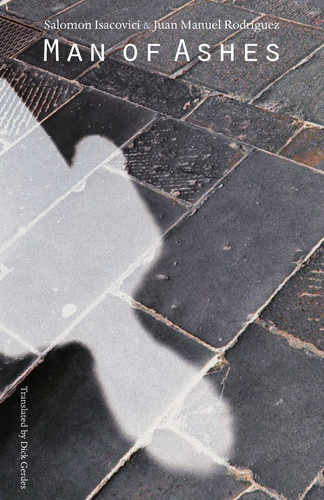
Man of ashes

Isacovici, Salomon
"A poignant, groundbreaking memoir that links the Holocaust and its aftermath to the safe haven that opened for camp survivors in Latin America at mid-century. The controversy surrounding the collaboration between Isacovici and Rodr guez remains an extraordinary opportunity to reflect on the thorny path of Jewish-Hispanic relations worldwide."-Ilan Stavans"Distinguished by geography as well as by its painful testimony. . . . Much of the memoir's early drama involves the creeping Nazi threat opposing Jews' wishful thinking-that the war might be ending and that 'it can't happen here.' . . . The author's family is shattered in Birkenau, but he survives Auschwitz with jobs peeling potatoes and mining coal at Jaworno, and he survives a gruesome death march as the Soviets advance. Isacovici is able to rejoin two brothers in a fruitless return to the family farm and to many European cities in search of a haven. He then joins the family of a woman with whom he has a serious romance, who end up with visas for Ecuador, where he feels an empathy for the suffering of the local Indians. . . . This account tells an unforgettable and unique story."-Kirkus ReviewsSalomon Isacovici died in 1998. Dick Gerdes is a professor of Spanish at George Mason University. Man of Ashes was first published in Mexico in 1990 as A7393: Hombre de cenizas and was awarded the Fernando Jeno Prize.
University of Nebraska Press 2002 244 pages

The diary of Rywka Lipszyc: found in Auschwitz by the Red Army in 1945 and first published in San Francisco in 2014

Lipszyc, Rywka
"Here is the extraordinary Diary of Rywka Lipszyc, finally published 70 years after it was created. Handwritten in a school notebook between October 1943 and April 1944, this remarkable diary depicts the nightmare of life under the Nazis in Poland's infamous Lodz ghetto--through the eyes of brilliant, 14-year-old Jewish girl"--Dust jacket flap.
Jewish Family and Children's Services Holocaust Center 2014 172 pages

Autobiography of an ex-white man: learning a new master narrative for America

Wolff, Robert Paul
Autobiography of an Ex-White Man is an intensely personal meditation on the nature of America by a White Philosopher who joined a Black Studies Department and found his understanding of the world transformed by the experience. The book begins with an autobiographical narrative of the events leading up to Wolff's transfer from a Philosophy Department to the W. E. B. Du Bois Department of Afro-American Studies at the University of Massachusetts, and his experiences in the Department with his new colleagues, all of whom had come to Academia from the Civil Rights Movement of the 1960s. Wolff discovered that the apparently simple act of moving across campus to a new Department in a new building worked a startling change in the way he saw himself, his university, and his country. Reading as widely as possible to bring himself up to speed in his new field of academic responsibility, Wolff realized after a bit that his picture of American history and culture was undergoing an irreversible metamorphosis. America, he realized, has from its inception been a land both of Freedom and of Bondage: Freedom for the few, and then for those who are White; Bondage at first for the many, and then for those who are not White. Slavery is thus not an aberration, an accident, a Peculiar Institution -- it is the essence and core of the American experience. Wolff's optimistic outlook leads him to express the hope that our acknowledging the realities of America's racial history and present will begin to tear down the formidable barrier to change. He sees this refashioning of the American story as a first step toward the crafting of a truly liberatory project. Robert Paul Wolff is Professor of Afro-American Studies at the University of Massachusetts-Amherst and the author of numerous books, including Introductory Philosophy and In Defense of Anarchism.
University of Rochester Press 2005 136 pages

An accidental sportswriter: a memoir

Lipsyte, Robert
Growing up, Robert Lipsyte was the smart-aleck fat kid, the bully magnet who went to the library instead of the ballpark. As the perpetual outsider, even into adulthood, his alienation from Jock Culture made him a rarity in the press box: the sportswriter who wasn't a sports fan. This feeling of otherness has colored Lipsyte's sports writing for fifty years, much of it spent as a columnist for the New York Times. He didn't follow particular athletes or teams; he wasn't awed by the access afforded by his press pass or his familiarity with the players in the locker room. The experience and insight earned over a half-century infuse An Accidental Sportswriter . Going beyond the usual memoir, Lipsyte has written "a memory loop, a circular search for lost or forgotten pieces in the puzzle of a life." In telling his own story, Lipsyte grapples with American sports and society—from Mickey Mantle to Bill Simmons—arguing that Jock Culture has seeped into our business, politics, and family life, and its definitions have become the standard to measure value. Full of wisdom and an understanding of American sports that contextualizes rather than celebrates athletes, An Accidental Sportswriter is the crowning achievement of a rich career and a book that will speak to us for years to come.
Ecco 2011 246 pages

Life and shape

Neutra, Richard Joseph
Since he followed it all of his life, Richard Neutra (1892-1970) must have relished the maxim of the Greek philosopher Socrates: "The unexamined life is not worth living." In his books, articles, lectures, correspondence, and even casual conversations, Neutra constantly examined, not only his own life, but the lives of others - present and past - and the human and natural world they inhabited. Nowhere was this truer than in his autobiography Life and Shape, first published in 1962, which now, after years of being out of print, has again happily come back to life. As opposed to Survival Through Design (1954), his superb collection of densely philosophical essays, Neutra took a different tack in Life and Shape, following a lighter and more deliberately relaxed approach. It was as if the usually serious and intense Neutra was giving himself permission to reveal his richly ironic sense of humor and to probe areas in his personal experience which he had not examined as closely before. These included hitherto unrecorded memories of his parents, siblings, and his childhood and education in imperial Vienna, his numbing experiences as an Austrian artillery officer in World War I, and the beginnings of his architectural consciousness in his response to the work of Otto Wagner, Adolf Loos, Erich Mendelsohn, Louis Sullivan, and Frank Lloyd Wright. As in the autobiographies of Sullivan and Wright, Life and Shape concentrates on Neutra's earlier years, both in Europe and America. While he naturally recounts his memories of such well-known commissions as the Lovell Health House (1929), his own Van der Leeuw Research House (1933) and the von Sternberg House (1935), he also muses on such less famous buildings as the small, and now virtually forgotten, Mosk House (1933). Life and Shape also confirms Neutra's obsession with the passage of time and his firm resolution never to waste it. Like Sullivan and Wright, Neutra eschewed writing a factual chronicle, and - at the age of 70 - composed instead a meditation on the aspects of his life and work that seemed, in retrospect, to be the most interesting and significant. He felt no need to try to "include everything" but rather to present an honest recounting of his memory of his life. In writing my own Richard Neutra and the Search for Modern Architecture [Oxford University Press, 1982; Rizzoli Press, 2006], I relied on Life and Shape when I wanted an account of Neutra's experiences told in his own authentic voice. For future generations of architects, historian, and readers, it is good to have it back. - Thomas S. Hines, UCLA Professor Emeritus of History and Architecture
Atara Press 2009 379 pages

The Holocaust odyssey of Daniel Bennahmias, Sonderkommando

Fromer, Rebecca
A poignant reminder of the ways enslaved Jews and others were forced to destroy their families and fellow prisoners In The Holocaust Odyssey , Rebecca Fromer leads us through the experiences of Danny Bennahmias, a Greek Jew of Italian citizenship whose forced labor as a Sonderkommando at Auschwitz included the disentangling of hundreds of thousands of gassed men, women, and children. The book is the result of a diligent collaboration. As it unfolds, it becomes a poignant reminder of the manner in which enslaved Jews and others were forced to destroy their families and fellow prisoners. It is a story of human decency, the spark of which remains against all odds.
University of Alabama 1993 151 pages