7908 results for "Science"

Frenemies: the epic disruption of the ad business (and everything else)

Auletta, Ken
An intimate and profound reckoning with the changes buffeting the $2 trillion global advertising and marketing business from the perspective of its most powerful players, by the bestselling author of Googled Advertising and marketing touches on every corner of our lives, and the industry is the invisible fuel powering almost all media. Complain about it though we might, without it the world would be a darker place. But of all the industries wracked by change in the digital age, few have been turned on their heads as dramatically as this one. Mad Men are turning into Math Men (and women--though too few), an instinctual art is transforming into a science, and we are a long way from the days of Don Draper. Frenemies is Ken Auletta's reckoning with an industry under existential assault. He enters the rooms of the ad world's most important players, meeting the old guard as well as new powers and power brokers, investigating their perspectives. It's essential reading, not simply because of what it reveals about this world, but because of the potential consequences: the survival of media as we know it depends on the money generated by advertising and marketing--revenue that is in peril in the face of technological changes and the fraying trust between the industry's key players.
Penguin Books 2019-06-04 373 pages

Reasoning about knowledge

Ronald Fagin,Joseph Y. Halpern,Yoram Moses,Moshe Vardi
Reasoning about knowledge—particularly the knowledge of agents who reason about the world and each other's knowledge—was once the exclusive province of philosophers and puzzle solvers. More recently, this type of reasoning has been shown to play a key role in a surprising number of contexts, from understanding conversations to the analysis of distributed computer algorithms. Reasoning About Knowledge is the first book to provide a general discussion of approaches to reasoning about knowledge and its applications to distributed systems, artificial intelligence, and game theory. It brings eight years of work by the authors into a cohesive framework for understanding and analyzing reasoning about knowledge that is intuitive, mathematically well founded, useful in practice, and widely applicable. The book is almost completely self-contained and should be accessible to readers in a variety of disciplines, including computer science, artificial intelligence, linguistics, philosophy, cognitive science, and game theory. Each chapter includes exercises and bibliographic notes.
MIT Press 2003 517 pages

The Genie in the Bottle The Fascinating Chemistry of Everyday Life

Joe Schwarcz,Joseph A. Schwarcz
The Genie in the Bottle makes science downright fun. Dr. Joe Schwarcz blends quirky anecdotes about everyday chemistry with engaging tales from the history of science. Get a different twist on licorice and travel to the dark side of the sun. Control stinky feet and bend spoons and minds. Learn about the latest on chocolate research, flax, ginkgo biloba, magnesium, and blueberries. Read about the ups of helium and the downs of drain cleaners. Find out why bug juice is used to color ice cream, how spies used secret inks, and how acetone changed the course of history. It's all there! "Dr. Joe" also solves the mystery of the exploding shrimp and, finally, he lets us in on the secret of the genie in the bottle.
Barnes & Noble 2001 311 pages

The silent world of doctor and patient

Katz, Jay
In this eye-opening look at the doctor-patient decision-making process, physician and law professor Jay Katz examines the time-honored belief in the virtue of silent care and patient compliance. Historically, the doctor-patient relationship has been based on a one-way trust—despite recent judicial attempts to give patients a greater voice through the doctrine of informed consent. Katz criticizes doctors for encouraging patients to relinquish their autonomy, and demonstrates the detrimental effect their silence has on good patient care. Seeing a growing need in this age of medical science and sophisticated technology for more honest and complete communication between physician and patients, he advocates a new, informed dialogue that respects the rights and needs of both sides. In a new foreword to this edition of The Silent World of Doctor and Patient , Alexander Morgan Capron outlines the changes in medical ethics practice that have occurred since the book was first published in 1984, paying particular attention to the hotly debated issues of physician-assisted suicide and informed consent in managed care.
Johns Hopkins University Press 2002-11 263 pages

The long emergency: surviving the converging catastrophes of the twenty-first century

Kunstler, James Howard
With his classics of social commentary "The Geography of Nowhere and "Home from Nowhere, James Howard Kunstler has established himself as one of the great commentators on American space and place. Now, with "The Long Emergency, he offers a shocking vision of a post-oil future. The last two hundred years have seen the greatest explosion of progress and wealth in the history of mankind. But the oil age is at an end. The depletion of nonrenewable fossil fuels is about to radically change life as we know it, and much sooner than we think. As a result of artificially cheap fossil-fuel energy we have developed global models of industry, commerce, food production, and finance that will collapse. "The Long Emergency tells us just what to expect after we pass the tipping point of global peak oil production and the honeymoon of affordable energy is over, preparing us for economic, political, and social changes of an unimaginable scale. Are we laboring under a Jiminy Cricket syndrome when we tell ourselves that alternative means of energy are just a few years away? Even once they are developed, will they ever be able to sustain us in the way that fossil fuels once did? What will happen when our current plagues of global warming, epidemic disease, and overpopulation collide to exacerbate the end of the oil age? Will the new global economy be able to persevere, or will we be forced to revert to the more agrarian, localized economy we once knew? Could corporations like Wal-Mart and McDonald's, built on the premise of cheap transportation, become a thing of the past? Will the misguided experiment of suburbia--considered a birthright and a reality by millions of Americans--collapse when the car culturebecomes obsolete? Riveting and authoritative. "The Long Emergency is a devastating indictment that brings new urgency and accessibility to the critical issues that will shape our future, and that we can no longer afford to ignore. It is bound to become a classic of social science.
Atlantic Monthly Press 2005 307 pages

Who says you're dead? medical & ethical dilemmas for the curious and concerned

Appel, Jacob M.
“An original, compelling, and provocative exploration of ethical issues in our society, with thoughtful and balanced commentary. I have not seen anything like it.” —Alan Lightman, author of Einstein’s Dreams Drawing upon the author’s two decades teaching medical ethics, as well as his work as a practicing psychiatrist, this profound and addictive little book offers up challenging ethical dilemmas and asks readers, What would you do? A daughter gets tested to see if she’s a match to donate a kidney to her father. The test reveals that she is not the man’s biological daughter. Should the doctor tell the father? Or the daughter? A deaf couple prefers a deaf baby. Should they be allowed to use medical technology to ensure they have a child who can’t hear? Who should get custody of an embryo created through IVF when a couple divorces? Or, when you or a loved one is on life support, Who says you’re dead? In short, engaging scenarios, Dr. Appel takes on hot-button issues that many of us will confront: genetic screening, sexuality, privacy, doctor-patient confidentiality. He unpacks each hypothetical with a brief reflection drawing from science, philosophy, and history, explaining how others have approached these controversies in real-world cases. Who Says You’re Dead? is designed to defy easy answers and to stimulate thought and even debate among professionals and armchair ethicists alike.
Algonquin Books of Chapel Hill 2019-10-08 327 pages

Asimov on Numbers

Isaac Asimov
Why computers and people can't use the same number system - and more! With the clear, engaging style for which The New York Times has praised him for "Explaining complex material better than any other living person," Isaac Asimov - author of over 180 books ranging from science and science fiction to history, religion, literature, and geography - startles and fascinates as only he can. Here is Asimov's utterly engrossing exploration of the miraculous universe of numbers - from man's first act of counting to the highest mathematics, from the smallest living creature to the dazzling reaches of farthest space.
Pocket Books 1978 286 pages

Administrative Behavior

Simon, Herbert A.
In this fourth edition of his ground-breaking work, Herbert A. Simon applies his pioneering theory of human choice and administrative decision-making to concrete organizational problems. To commemorate the fiftieth anniversary of the book's original publication, Professor Simon enhances his timeless observations on the human decision-making process with commentaries examining new facets of organizational behavior. Investigating the impact of changing social values and modem technology on the operation of organizations, the new ideas featured in this revised edition update a book that has become a worldwide classic. Named by Public Administration Review as "Book of the Half Century," Administrative Behavior is considered one of the most influential books on social science thinking, and was referred to by the Nobel Committee as "epoch-making." Written for managers and other professionals who wish to understand the decision-making processes at the heart of organization and management, it is also essential reading for students in business and management, economics, sociology, psychology computer science, government, and law.
The Macmillan Company 1957 259 pages

Matter and memory

Bergson, Henri
"In Matter and Memory, Henri Bergson presents a profound examination of the relationship between perception, memory, and consciousness, intertwining philosophical inquiry with scientific insight. Bergson's literary style is both accessible and incisive, characterized by fluid prose that invites readers into a complex exploration of how human experience is scaffolded by the interplay of physical matter and mental processes. This work is situated within the context of early 20th-century philosophy, as it responds critically to the mechanistic and reductionist tendencies of contemporary thought, signaling a shift towards emphasizing the dynamism of human experience and the fluidity of time. Henri Bergson, a prominent French philosopher and Nobel laureate, was deeply influenced by the rapid advancements in science and psychology during his time. His background in both philosophy and the natural sciences shaped his approach in Matter and Memory, where he sought to articulate an understanding of consciousness that accounts for lived experience, thus challenging rigid boundaries between the existential and the material. Bergson's keen observations of life, time, and memory are informed by personal introspections and a tireless exploration of the essence of being. Matter and Memory is essential reading for those interested in philosophy, cognitive science, and the foundations of modern thought. Bergson's insights challenge readers to reconsider the nature of reality and the processes of memory, making this work a crucial addition to the canon of philosophical discourse. The book's innovative perspective has influenced generations and remains a relevant touchstone for contemporary debates on consciousness and cognition." -- Amazon.
Zone Books 1988 284 pages

I, robot: the illustrated screenplay

Ellison, Harlan
Until the recent announcement of the Will Smith/Alex Proyas collaboration scheduled for release in 2004, numerous attempts had been made to adapt Isaac Asimov's classic story-cycle, I, ROBOT, to the motion picture medium. All efforts failed. In 1977, producers approached multiple award winning Harlan Ellison to take a crack at this 'impossible' project. He accepted, and produced an astonishing screenplay that Asimov felt would be 'The first really adult, complex, worthwhile science fiction movie ever made.' That screenplay is presented here in book format, brought to scintillating life by the illustrations of artist Mark Zug. After you read it, then decide: Is this not the greatest science fiction movie never made?
Ibooks 2004 271 pages

Decline and fall of the Freudian empire

Eysenck, Hans Jürgen
Hans Eysenck was one of the best-known research psychologists of thetwentieth century. Respected as a prolific author, he was unafraid to addresscontroversial topics. In Decline and Fall of the Freudian Empire, he placeshimself at the center of the debate on psychoanalytic theory, challengingthe state of Freudian theory and modern-day psychoanalytic practice andquestioning the premises on which psychoanalysis is based. In so doing, Eysenck illustrates the shortcomings of both psychoanalysis as a method ofcuring neurotic and psychotic behaviors, and of the theory of dreams andtheir interpretation. He also analyzes Freud's influence on anthropology andhis alleged contributions to science
Penguin Books 1986 224 pages

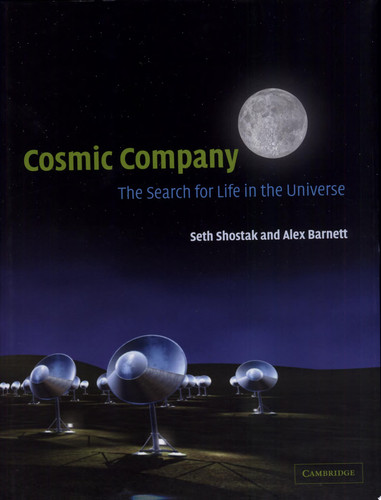
Cosmic company: the search for life in the universe

Shostak, G. Seth
In Cosmic Company, Seth Shostak and Alex Barnett ponder the possibility of aliens visiting the Earth, as well as the consequences of receiving a signal from the cosmos proving we're neither alone, nor the most intelligent life forms. They explain why scientists think life might exist on other worlds, and how we might contact it. Shostak and Barnett, experienced writers of popular astronomy, provide an accessible overveiw of the science and technology behind the search for life in the universe. Seth Shostak is a Senior Astronomer at the SETI Institute where he is involved in many of the outreach activities of the Institute, including editing the newsletter, overseeing the Web site, giving talks and writing magazine articles about SETI. He also teaches several informal education classes on astronomy and other topics in the Bay Area. Before coming to SETI, Seth did research work on galaxies using radio telescopes at observatories and universities in America and Europe. Alex Barnett is Programme Director at the National Space Centre. She is well-known in the science centre, planetarium and media worlds, particularly for public and educational programmes involving space and astronomy. She presents BBC's Final Frontier a space and astronomy programme.
Cambridge University Press 2003-10-30 161 pages

Perspective as symbolic form

Panofsky, Erwin
"Here at last is a published translation of this classic essay, available for many years in every major European language except English. It first appeared in 1927 ... and its status has since been established by the numerous commentators who have referred to it as the source of a new kind of interpretation of perspective." -- Robin Evans, AA Files Erwin Panofsky's "Perspective as Symbolic Form" is one of the great works of modern intellectual history, the legendary text that has dominated all art historical and philosophical discussions on the topic of perspective in this century. Finally available in English, this unrivaled example of Panofsky's early method places him within broader developments in theories of knowledge and cultural change. Here, drawing on a massive body of learning that ranges over Antique philosophy, theology, science, and optics as well as the history of art, Panofsky produces a type of "archeology" of Western representation that far surpasses the usual scope of art historical studies. Perspective in Panofsky's hands becomes a central component of a Western "will to form, " the expression of a schema linking the social, cognitive, psychological, and especially technical practices of a given culture into harmonious and integrated wholes. He demonstrates how the perceptual schema of each historical culture or epoch is unique and how each gives rise to a different but equally full vision of the world. Panofsky articulates these distinct spatial systems, explicating their particular coherence and compatibility with the modes of knowledge, belief, and exchange that characterized the cultures in which they arose. Our ownmodernity, Panofsky shows, is inseparable from its peculiarly mathematical expression of the concept of the infinite, within a space that is both continuous and homogenous. "Distributed for Zone Books"
Zone Books 1997 196 pages

Myth and meaning

Lévi-Strauss, Claude
Ever since the rise of science and the scientific method in the seventeenth century, we have rejected mythology as the product of superstitious and primitive minds. Only now are we coming to a fuller appreciation of the nature and role of myth in human history. In these five lectures originally prepared for Canadian radio, Claude Lévi-Strauss offers, in brief summations, the insights of a lifetime spent interpreting myths and trying to discover their significance for human understanding. The lectures begin with a discussion of the historical split between mythology and science and the evidence that mythic levels of understanding are being reintegrated in our approach to knowledge. In an extension of this theme, Professor Lévi-Strauss analyzes what we have called “primitive thinking” and discusses some universal features of human mythology. The final two lectures outline the functional relationship between mythology and history and the structural relationship between mythology and music.
Schocken Books 1979 58 pages

Manipulation: what it is, why it's bad, what to do about it

Sunstein, Cass R.
"New technologies are offering companies, politicians, and others unprecedented opportunity to manipulate us. Sometimes we are given the illusion of power - of freedom - through choice, yet the game is rigged, pushing us in specific directions that lead to less wealth, worse health, and weaker democracy. In, Manipulation, nudge theory pioneer and New York Times bestselling author, Cass Sunstein, offers a new definition of manipulation for the digital age, explains why it is wrong; and shows what we can do about it. He reveals how manipulation compromises freedom and personal agency, while threatening to reduce our well-being; he explains the difference between manipulation and unobjectionable forms of influence, including 'nudges'; and he lifts the lid on online manipulation and manipulation by artificial intelligence, algorithms, and generative AI, as well as threats posed by deepfakes, social media, and 'dark patterns,' which can trick people into giving up time and money. Drawing on decades of groundbreaking research in behavioral science, this landmark book outlines steps we can take to counteract manipulation in our daily lives and offers guidance to protect consumers, investors, and workers." --
Cambridge University Press 2025-08-28 219 pages

The dentist of Auschwitz: a memoir

Jacobs, Benjamin
For well over a century, the United States has witnessed a prolonged debate over organic evolution and teaching of the theory in the nation's public schools. The controversy that began with the publication of Darwin's Origin of the Species had by the 1920s expanded to include theologians, politicians, and educators. The Scopes trial of 1925 provided the growing antievolution movement with significant publicity and led to a decline in the teaching of evolution in public schools. George E. Webb details how efforts to improve science education in the wake of Sputnik resurrected antievolution sentiment and led to the emergence of "creation science" as the most recent expression of that sentiment. Creationists continue to demand "balanced treatment" of theories of creation and evolution in public schools, even though their efforts have been declared unconstitutional in a series of federal court cases. Their battles have been much more successful at the grassroots level, garnering support from local politicians and educators. Webb attributes the success of creationists primarily to the lack of scientific literacy among the American public. Although a number of published studies have dealt with specific aspects of the debate, The Evolution Controversy in America represents the first complete historical survey of the topic. In it Webb provides an analysis of one of the most intriguing debates in the history of American thought.
University Press of Kentucky 1995 231 pages

Hawksong

Atwater-Rhodes, Amelia
DANICA SHARDAE IS an avian shapeshifter, and the golden hawk’s form in which she takes to the sky is as natural to her as the human one that graces her on land. The only thing more familiar to her is war: It has raged between her people and the serpiente for so long, no one can remember how the fighting began. As heir to the avian throne, she’ll do anything in her power to stop this war—even accept Zane Cobriana, the terrifying leader of her kind’s greatest enemy, as her pair bond and make the two royal families one. Trust. It is all Zane asks of Danica—and all they ask of their people—but it may be more than she can give. A School Library Journal Best Books of the Year A VOYA Best Science Fiction, Fantasy, and Horror List selection
Bantam Doubleday Dell 2007-05-08 256 pages

Problems of Neurosis; a Book of Case Histories

Alfred Adler
THE science of Individual Psychology teaches us that the leit-motif of all neurosis and conflict is a sense of discouragement and inferiority. But the keynote of the practice of Individual Psychology is that "benevolent comradeship" which Adler tells us should characterize the attitude of the physician towards his patient.The sincerity of this utterance, and its full significance, can hardly be better known than by the Pupil, who has been asked, by the Teacher, to write some foreword to the latter's own work. Perhaps in such case the Pupil may he thought to fulfil his duty best in attempting to set out something he has learned, which others may wish to know.
CreateSpace Independent Publishing Platform 2018-01-30 130 pages