58,196 results in 0.08 seconds

Violation: justice, race and serial murder in the Deep South

Rose, David
Columbus, Georgia, has been run by the same tiny clique for over 100 years - the members of the all-white Big Eddy Club. This is the story of a fascinating and rotten community whose victims pay the ultimate price. Over eight terrifying months in the 1970s, seven elderly women were raped and murdered in Columbus, Georgia, a city of 200,000 people whose history and conservative values are typical of America's Deep South. The victims, who were strangled in their beds with their own stockings, were affluent and white, while the police believed from an early stage that the killer was black. In 1986, eight years after the last murder, an African-American, Carlton Gary, was convicted and sentenced to death. Though many in Columbus doubt his guilt, he is still on death row. Award-winning reporter David Rose has followed this case for almost a decade, while Gary and his lawyers have fought his legal appeals. He has uncovered important fresh evidence that was hidden from Gary's trial and that suggests that he is innocent, including a cast of the killer's teeth, made from a savage bite wound in the last victim's breast. However, as Rose's investigation proceeded, he came to realise that the dark saga of the Columbus stocking stranglings only makes sense against the background of the city's bloodstained history of racism, lynching and unsolved, politically motivated murder. 'Violation' is a tense and gripping drama, its pages filled with evocatively drawn characters, insidious institutions and the extraordinary connections that bind the past and present. A unique mélange of investigative journalism, true crime mystery, personal travelogue and historical scoop, the book is also a compelling, accessible and timely exploration of America's approach to race and criminal justice, addressing the corruption of legal due process as a tool of racial oppression.
Harper Perennial 2008 352 pages

Abraham: the first historical biography

Rosenberg, David
The world's major religions-Judaism, Christianity, and Islam-find a common root in one man: Abraham. Yet Abraham looms so large in the realm of world religions that he has remained a ward of the Divine rather than a flesh-and-blood citizen of Humanity. In his monumental new book, David Rosenberg provides a long-overdue history of the patriarch; while revealing that the original story embedded in the Bible is actually our oldest historical biography. We also discover that the wandering ascetic of tradition cannot explain our deep-seated feelings for Abraham and his God. The road that Abraham traveled was marked by signs of civilization that we still recognize: libraries, museums, hotels, and houses of worship. He is a sophisticated, educated Sumerian; an artisan who became the first Jew. Moreover, through Rosenberg's audacious translation of the Abraham story from Genesis, we learn that many of the core tenets of the monotheistic tradition-the idea of God's covenant and the soul-are Sumerian in origin. Rosenberg first finds Abraham at his father's workshop in the cosmopolitan city of ancient Ur and follows his journey through what is today the Middle East. What kind of baggage-emotional, material, and spiritual-would Abraham have taken with him on his migration to a new land? Abraham does more than present a founding spiritual figure and his dynamic relationships with father, wife, and son. We witness this man as he transforms his heritage into an anxious embrace of religion with secular culture-the human condition in which we are still enfolded today.
Basic Books 2006-03-20 342 pages

The Art of T'Shuva: The Teachings of HaRav Avraham Yitzhak HaCohen Kook

David Samson and Tzvi Fishman
While psychiatrists offer many theories about man's existential dilemma and pain, Rabbi Kook reveals that the real cause of humanity's suffering stems from mankind's severance from G-d. The solution, he teaches, is t'shuva. This commentary in English explains Rabbi Kook's writings on t'shuva in a clear, concise, and illuminating fashion.
Lambda Publishers, Inc. 1999-01-04 238 pages

Mohammed and the Rise of Islam

D. S. Margoliouth
Excerpt from Mohammed and the Rise of Islam The biographers Prophet Mohammed form a long series which it is impossible to end, but in which it would be honourable to find a place. The most famous of them is probably Sir Walter Raleigh, while the palm for eloquence and historical insight may well be awarded to Gibbon. During the time when Gibbon wrote, and for long after, historians mainly relied for their knowledge of the life of Mohammed on the Biography of Abu'l-Fida, who died in the year 722 A.H., 1322 A.D., of whose work Gagnier produced an indifferent edition. The scholars of the nineteenth century were naturally not satisfied with so late an authority; and they succeeded in bringing to light all the earliest documents preserved by the Mohammedans. About the Publisher Forgotten Books publishes hundreds of thousands of rare and classic books. Find more at www.forgottenbooks.com This book is a reproduction of an important historical work. Forgotten Books uses state-of-the-art technology to digitally reconstruct the work, preserving the original format whilst repairing imperfections present in the aged copy. In rare cases, an imperfection in the original, such as a blemish or missing page, may be replicated in our edition. We do, however, repair the vast majority of imperfections successfully; any imperfections that remain are intentionally left to preserve the state of such historical works.
Fb&c Limited 2015-06-02 586 pages

Peer review: a critical inquiry

Shatz, David
Peer review is the process by which submissions to journals and presses are evaluated with regard to suitability for publication. Armed with the results of numerous empirical studies, critics have leveled a variety of harsh charges against peer review such as: reviewers and editors are biased toward authors from prestigious institutions, peer review is biased toward established ideas, and it does a poor job of detecting errors and fraud. While an immense literature has sprouted on peer review in the sciences and social sciences, Peer Review is the first book-length, wide-ranging study of peer review that utilizes methods and resources of contemporary philosophy. Its six chapters cover the following topics: the tension between peer review and the liberal notion that truth emerges when ideas proliferate in the marketplace of ideas; arguments for and against blind review of submissions; the alleged conservatism of peer review; the anomalous nature of book reviewing; the status of non-peer-reviewed publications, such as invited articles or Internet publications, in tenure and promotion cases; and the future of peer review in the age of the Internet. The author has also included several key readings about peer review.
Rowman & Littlefield 2004-11-23 249 pages

It shouldn't be this hard to serve your country: our broken Government and the plight of Veterans

Shulkin, David J.
"David Shulkin was appointed by President Obama to save the broken Department of Veterans Affairs and was the only Obama holdover who served in the Cabinet within the Trump administration. In this book the former VA Secretary describes corruption in the Trump White House: how a group of wealthy men enabled by the President conspired to control and profit from the VA, with stunning implications for military veterans"--
PublicAffairs 2019-10-22 360 pages

Inside Comedy The Soul, Wit, and Bite of Comedy and Comedians of the Last Five Decades

David Steinberg
The world of comedy and comedians of the last five decades. By the man the New York Times calls a comic institution himself, the only comedian (twenty-six years in stand-up) to have made Elie Wiesel laugh, as well as having appeared on The Tonight Show (140 times, second only to Bob Hope, but who's counting). From the director of TV comedy series Mad About You, Seinfeld, Friends, Weeds and Curb Your Enthusiasm . Larry David: "I'm lucky. I know and love David Steinberg. You don't. Now's your chance. Don't blow it! "David has always been a comedy hero to me. One of his many gifts is the ability to inspire funny people to be even funnier, as you will discover in this truly hilarious, insightful book." --Martin Short From David Steinberg, a rabbi's son from Winnipeg, Canada, who at age fifteen enrolled at Hebrew Theological College in Chicago (the rabbinate wasn't for him) and four years later, entered the master's program in English literature at the University of Chicago, until he saw Lenny Bruce, the Blue Boy of Comedy, the coolest guy Steinberg had ever seen, and joined Chicago's Second City improvisational group, becoming, instead, the comedian's comedian, director, actor, working with, inspired by, teaching, and learning from the most celebrated, admired, complicated comedians, then and now--a funny, moving, provocative, insightful look into the soul, wit, and bite of comedy and comedians--a universe unto itself--of the last half-century. From the greats: George Burns, Lenny Bruce, Sid Caesar, Lucille Ball, Mel Brooks, and Carl Reiner, et al., to the newer greats: Carol Burnett, Steve Martin, Lily Tomlin, Billy Crystal, Bob Newhart, and the man for all comedy, Martin (Marty) Short; to the greats of right now: Chris Rock, Dave Chappelle, Julia Louis-Dreyfus, Wanda Sykes; and more . . . Steinberg, through stories, reminiscences, tales of directing, touring, performing, and, through the comedians themselves talking (from more than 75 interviews), makes clear why he loves comedy and comedians who have been by his side in his work, and in his life, for more than sixty years. Here are: Will Ferrell, Eric Idle, Whoopi Goldberg, Mike Myers, Groucho himself and the greatest of them all (at least of the last half century), Jonathan Winters . . .
University Press of Kentucky 2023 350 pages

Francis Bacon

Sylvester, David
On March 19, 1975, the Metropolitan Museum of Art in New York opened a major retrospective exhibition of Francis Bacon's work, an extremely rare distinction for a living painter. The show has focused renewed attention on one of the twentieth century's greatest artists and England's leading painter. Over a period of twelve years, from 1962 until 1974, the distinguished art critic David Sylvester conducted a series of extraordinarily revealing interviews with Francis Bacon. From the transcripts of these encounters was drawn this unusual book, which amounts to a statement by Bacon on his work and on art in general. Bacon is highly articulate about his aims as a painter and the ways in which he works, and about his life, responding always with vivacity and candor to Sylvester's searching questions. Bacon's obsessive effort to record and re-create the human form, his practice of making variations on old masters' paintings and on photographs, his dependence upon chance, his ideas for making sculptures, his views about the way his work has been interpreted, are only some of the subjects investigated in depth during these encounters. Few modern artists have ever spoken so openly about their work. In doing so, Francis Bacon tells us much more than one could have expected. This is a fascinating book not only about Bacon's work, but about the process of art itself.
Pantheon Books 1975 128 pages

A companion to gender studies

Philomena Essed,David Theo Goldberg,Audrey Kobayashi
A Companion to Gender Studies presents a unified and comprehensive vision of its field, and its new directions. It is designed to demonstrate in action the rich interplay between gender and other markers of social position and (dis)privilege, such as race, class, ethnicity, and nationality. Presents a unified and comprehensive vision of gender studies, and its new directions, injecting a much-needed infusion of new ideas into the field; Organized thematically and written in a lucid and lively fashion, each chapter gives insightful consideration to the differing views on its topic, and also clarifies each contributor's own position; Features original contributions from an international panel of leading experts in the field, and is co-edited by the well-known and internationally respected David Theo Goldberg.
Blackwell Pub 2005 561 pages

Racist culture: philosophy and the politics of meaning

Goldberg, David Theo
Racist Culture offers an anti-essentialist and non-reductionist account of racialized discourse and racist expression. Goldberg demonstrates that racial thinking is a function of the transforming categories and conceptions of social subjectivity throughout modernity. He shows that rascisms are often not aberrant or irrational but consistent with prevailing social conceptions, particularly of the reasonable and the normal. He shows too how this process is being extended and renewed by categories dominant in present day social sciences: "the West"; "the underclass"; and "the primitive". This normalization of racism reflected in the West mirrors South Africa an its use and conception of space. Goldberg concludes with an extended argument for a pragmatic, antiracist practice.
Blackwell 1993-08-20 313 pages

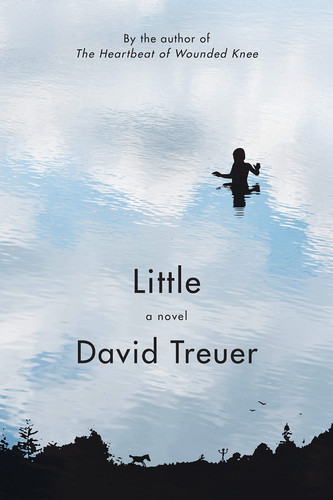
Little: a novel

Treuer, David
"'The grave we dug for my brother Little remained empty even after we filled it back in. And nobody was going to admit it.' So begins Little, first published by Graywolf Press in 1995 when David Treuer was just twenty-four. The narrative unfolds to reveal the deeply entwined stories of the three generations of Little's family, including Stan, a veteran of the Vietnam War who believes Little is his son; Duke and Ellis, the twins who built the first house in Poverty after losing their community to smallpox and influenza; Jeannette, the matriarch who loved both Duke and Ellis and who walked hundreds of miles to reunite with them. Each of these characters carries a piece of the mystery of Little's short life. With rhythmic and unadorned prose, Treuer uncovers in even the most frost-hardened ground the resilience and humor of life in Poverty. From the unbearable cruelty of the institutions that systematically unraveled Native communities at the turn of the century, to the hard and hallow emptiness of a child's grave, Treuer has orchestrated a moving account of kinship and survival. In his new introduction, Treuer, now among the foremost writers of his generation, reflects on the germ of this novel and how it fits into his lasting body of work centered on Native life. More than a quarter of a century later, Little proves as vital and moving as ever"--
Graywolf Press 2022 272 pages

Only the rich can play: how Washington works in the New Gilded Age

Wessel, David
"David Wessel's incredible tale of how Washington works-and why the rich keep getting richer-starts when a Silicon Valley entrepreneur concocts an idea that will save money on his taxes and spins it as a way to ostensibly help poor people. He organizes and pays for an effective lobbying effort that pushes his idea into law with little scrutiny or fine-tuning by congressional or Treasury tax experts-and few safeguards against abuse. With an unbeatable pair of high-profile sponsors, bumper-sticker simplicity and deft political marketing, the Opportunity Zone became an unnoticed part of the 2017 Trump tax bill. The gold rush followed immediately thereafter. In Only the Rich Can Play, Wessel follows the money to see who profited from this plan that was supposed to spur development of blighted areas and help people out of poverty: the Mandalay Bay Hotel in Las Vegas, the Portland (Oregon) Ritz-Carlton, the Mall of America, and self-storage facilities-lucrative areas where the one percent can park money profitably and avoid capital gains taxes. And the best part: unlike other provisions for eliminating capital gains taxes (inheritance, for example) you don't have to die to take advantage of this one. Wessel provides vivid portraits of the proselytizers, political influencers, motivational speakers, consultants, real estate dealmakers, and individual money-seekers looking to take advantage of this twenty-first century bonanza. He looks at places for which Opportunity Zones were supposedly designed (Baltimore, for example) and how little money they've drawn. And he finds a couple of places (Erie, PA) where zones are actually doing what they were supposed to, a lesson on how a better designed program might have helped more left-behind places. Readers will feel outraged as Wessel gives us the gritty reality, the dark underbelly of a system tilted in favor of the few, with the many left out in the cold"--
PublicAffairs 2021 337 pages