2501 results for "American History"

Critic's Choice, a Comedy

Ira Levin
This work has been selected by scholars as being culturally important and is part of the knowledge base of civilization as we know it. This work is in the public domain in the United States of America, and possibly other nations. Within the United States, you may freely copy and distribute this work, as no entity (individual or corporate) has a copyright on the body of the work. Scholars believe, and we concur, that this work is important enough to be preserved, reproduced, and made generally available to the public. To ensure a quality reading experience, this work has been proofread and republished using a format that seamlessly blends the original graphical elements with text in an easy-to-read typeface. We appreciate your support of the preservation process, and thank you for being an important part of keeping this knowledge alive and relevant.
Creative Media Partners, LLC 2021-09-10 136 pages

Modern Orthodox Judaism: a documentary history

Eleff, Zev
Modern Orthodox Judaism offers an extensive selection of primary texts documenting the Orthodox encounter with American Judaism that led to the emergence of the Modern Orthodox movement. Many texts in this volume are drawn from episodes of conflict that helped form Modern Orthodox Judaism. These include the traditionalists’ response to the early expressions of Reform Judaism, as well as incidents that helped define the widening differences between Orthodox and Conservative Judaism in the early twentieth century. Other texts explore the internal struggles to maintain order and balance once Orthodox Judaism had separated itself from other religious movements. Zev Eleff combines published documents with seldom-seen archival sources in tracing Modern Orthodoxy as it developed into a structured movement, established its own institutions, and encountered critical events and issues—some that helped shape the movement and others that caused tension within it. A general introduction explains the rise of the movement and puts the texts in historical context. Brief introductions to each section guide readers through the documents of this new, dynamic Jewish expression.
Jewish Publication Society 2016-07-01 520 pages

Antisemitism and the American far left

Norwood, Stephen H.
"Stephen H. Norwood has written the first systematic study of the American far left's role in both propagating and combating antisemitism. This book covers Communists from 1920 onward, Trotskyists, the New Left and its black nationalist allies, and the contemporary remnants of the New Left. Professor Norwood analyzes the deficiencies of the American far left's explanations of Nazism and the Holocaust. He explores far left approaches to militant Islam, from condemnation of its fierce antisemitism in the 1930s to recent apologies for jihad. Norwood discusses the far left's use of long-standing theological and economic antisemitic stereotypes that the far right also embraced. The study analyzes the far left's antipathy to Jewish culture, as well as its occasional efforts to promote it. He considers how early Marxist and Bolshevik paradigms continued to shape American far left views of Jewish identity, Zionism, Israel, and antisemitism"--
Cambridge University Press 2013-08-19 318 pages

The death and life of American labor: toward a new workers' movement

Aronowitz, Stanley
"Union membership in the United States has fallen below 11 percent, the lowest rate since before the New Deal. Longtime scholar of the American union movement Stanley Aronowitz argues that the labor movement as we have known it for most of the last 100 years is effectively dead. And he asserts that this death has been a long time coming--the organizing principles chosen by the labor movement at midcentury have come back to haunt the movement today. In an expansive survey of new initiatives, strikes, organizations and allies Aronowitz analyzes the possibilities of labor's renewal, and sets out a program for a new, broad, radical workers' movement"--
Verso 2015-09-15 192 pages

The rabbi's wife: the rebbetzin in American Jewish life

Schwartz, Shuly Rubin
2006 National Jewish Book Award, Modern Jewish Thought Long the object of curiosity, admiration, and gossip, rabbis' wives have rarely been viewed seriously as American Jewish religious and communal leaders. We know a great deal about the important role played by rabbis in building American Jewish life in this country, but not much about the role that their wives played. The Rabbi’s Wife redresses that imbalance by highlighting the unique contributions of rebbetzins to the development of American Jewry. Tracing the careers of rebbetzins from the beginning of the twentieth century until the present, Shuly Rubin Schwartz chronicles the evolution of the role from a few individual rabbis' wives who emerged as leaders to a cohort who worked together on behalf of American Judaism. The Rabbi’s Wife reveals the ways these women succeeded in both building crucial leadership roles for themselves and becoming an important force in shaping Jewish life in America.
New York University Press 2006-01-01 312 pages

An American Orthodox dreamer: Rabbi Joseph B. Soloveitchik and Boston's Maimonides School

Farber, Seth
Rabbi Joseph B. Soloveitchik, born in 1903 and scion of a preeminent Lithuanian Orthodox family, was one of the most towering intellectual figures of American Orthodoxy in the twentieth century. After receiving rabbinic ordination and completing his studies toward a Ph.D., he immigrated to America where he served as the Rosh Yeshiva at the Rabbi Isaac Elchanan Theological Seminary of Yeshiva University. As the leader of centrist Orthodoxy in America for more than fifty years, his many accomplishments included his founding of the Maimonides School in Boston in 1937. Rabbi Soloveitchik served as the intellectual and spiritual force behind the Maimonides School from its founding and was responsible for its innovative curriculum. Synthesizing American educational methodologies and European Orthodox approaches to education, the Maimonides School became a prototype for an American Orthodox educational institution. Unique among contemporary Orthodox day schools, the coeducational nature of the classes at Maimonides, and to some extent the curriculum, was groundbreaking. Characterized by academic excellence in both Judaic studies and other subjects, the school offered boys and girls exactly the same education. Rabbi Soloveitchik’s school was particularly innovative by offering Talmud classes to girls on the same level as boys. The Maimonides School became a paradigm for the fledgling Orthodox Jewish day school movement nationwide. The character of the education there influenced later developments in the Orthodox community, such as the emphasis on higher level Torah study for women. By articulating a philosophy that advocated both traditional Orthodoxy as well as modernism and Americanism, the school gradually affected Boston’s Orthodox community, which came to be guided by its principles. As Seth Farber points out, the school, once rejected by the Jewish establishment in Boston, was eventually embraced by it. A community that saw no contradiction between democratic values and traditional Orthodox lifestyle emerged in Boston. This modern Orthodox community ultimately represented a significant voice in Boston’s Jewish and America's Orthodox cultures.
University Press of New England 2004 201 pages

Thousands of Broadways: dreams and nightmares of the American small town

Pinsky, Robert
Broadway, the main street that runs through Robert Pinsky’s home town of Long Branch, New Jersey, was once like thousands of other main streets in small towns across the country. But for Pinsky, one of America’s most admired poets and its former Poet Laureate, this Broadway is the point of departure for a lively journey through the small towns of the American imagination. Thousands of Broadways explores the dreams and nightmares of such small towns—their welcoming yet suffocating, warm yet prejudicial character during their heyday, from the early nineteenth century through World War II. The citizens of quintessential small towns know one another extensively and even intimately, but fail to recognize the geniuses and criminal minds in their midst. Bringing the works of such figures as Mark Twain, William Faulkner, Alfred Hitchcock, Thornton Wilder, Willa Cather, and Preston Sturges to bear on this paradox, as well as reflections on his own time growing up in a small town, Pinsky explores how such imperfect knowledge shields communities from the anonymity and alienation of modern life. Along the way, he also considers how small towns can be small minded—in some cases viciously judgmental and oppressively provincial. Ultimately, Pinsky examines the uneasy regard that creative talents like him often have toward the small towns that either nurtured or thwarted their artistic impulses. Of living in a small town, Sherwood Anderson once wrote that "the sensation is one never to be forgotten. On all sides are ghosts, not of the dead, but of living people." Passionate, lyrical, and intensely moving, Thousands of Broadways is a rich exploration of this crucial theme in American literature by one of its most distinguished figures.
University of Chicago Press 2009-05-15 98 pages

Cry Havoc! The Great American Bring-down and how it Happened

Ralph de Toledano
In Cry Havoc!, legendary journalist Ralph de Toledano documents in chilling detail how a cabal of intellectuals, educrats, and politicians, manipulated by a well-financed, world-wide conspiracy, organized a strategy to undermine the American system -- and how this has been accomplished."Cry Havoc is must-reading." -- William F. Buckley, Jr."Cry Havoc is not only well written, but absolutely right." -- Prof. Herbert London
Anthem Books 2006 254 pages

Our roots are deep with passion: creative nonfiction collects new essays by Italian American writers

Gutkind, Lee,Herman, Joanna Clapps
In the twenty-one nonfiction narratives collected in Our Roots Are Deep with Passion, established and emerging writers with family ties to Italy reflect on the ways that their lives have been accented with uniquely Italian-American flavors. Several of the essays breathe new life into the time-honored theme of familyLouise DeSalvo honors her grandfather, nick-named "the drunk" because he spent his life of hard work drinking wine instead of water, and James Vescovi portrays the close of the stormy relationship between his father and grandmother. Other stories tackle the mystical side of Italian-American life, like Laura Valeri's account of a summer vacation se;ance in Sardinia that goes eerily awry. And elsewhere, Stephanie Susnjara charts the history of garlic in society and her kitchen, and Gina Barreca offers an unabashed confession of congenital jealousy. --Publisher description.
Other Press 2006-10-17 286 pages

City by city: dispatches from the American metropolis

Keith Gessen,Stephen Squibb
"A collection of essays--historical and personal--about the present and future of American cities Edited by Keith Gessen and Stephen Squibb, City by City is a collection of essays--historical, personal, and somewhere in between--about the present and future of American cities. It sweeps from Gold Rush, Alaska, to Miami, Florida, encompassing cities large and small, growing and failing. These essays look closely at the forces--gentrification, underemployment, politics, culture, and crime--that shape urban life. They also tell the stories of citizens whose fortunes have risen or fallen with those of the cities they call home. A cross between Hunter S. Thompson, Studs Terkel, and the Great Depression-era WPA guides to each state in the Union, City by City carries this project of American storytelling up to the days of our own Great Recession"--
n + 1/FARRAR, Straus and Giroux 2015-05-12 483 pages

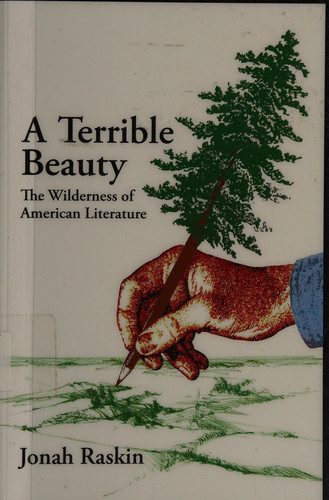
A terrible beauty: the wilderness of American literature

Raskin, Jonah
ABOUT THE BOOK Shortly before he published Walden; or Life in the Woods, Henry David Thoreau called ¿The library a wilderness of books.¿ He also noted that while Americans were ¿clearing the forest in our westward progress, we are accumulating a forest of books in our rear, as wild and unexplored as any of nature¿s primitive wildernesses.¿ In "A Terrible Beauty: the Wilderness of American Literature," Jonah Raskin takes a long close look at the forest of books that poets, novelists and essayists mapped and explored before and after Thoreau. The first work of cultural criticism to look back at writing in the United States from the perspective of the contemporary environmental crisis, Raskin offers insights for students, teachers and lovers of literature as well as for backpackers and hikers who have trekked across untrammeled forests, deserts and mountains. ABOUT THE AUTHOR Jonah Raskin, Phd, has taught American literature at Sonoma State University, the State University of New York at Stony Brook and as a Fulbright professor at the University of Antwerp and the University of Ghent in Belgium. The author of fifteen books, he earned his B.A. at Columbia College in New York, his M.A. at Columbia University and his Ph.D. at the University of Manchester, Manchester, England. He lives in northern California and has written for The San Francisco Chronicle, The L.A. Times, The Nation, The Redwood Coast Review and Catamaran.
Regent Press 2014 366 pages

The paradox of American democracy: elites, special interests, and the betrayal of the public trust

Judis, John B.
John B. Judis, one of our most insightful political commentators, most rational and careful thinkers, and most engaged witnesses in Washington, has taken on a challenge that even the most concerned American citizens shrink from: forecasting the American political climate at the turn of the century. The Paradox of American Democracy is a penetrating examination of our democracy that illuminates the forces and institutions that once enlivened it and now threaten to undermine it. It is the well-reasoned discussion we need in this era of unrestrained expert opinions and ideologically biased testimony. The disenchantment with our political system can be seen in decreasing voter turnout, political parties co-opted by consultants and large contributors, the corrupting influence of "soft money," and concern for national welfare subverted by lobbying organizations and special-interest groups. Judis revisits particular moments -- the Progressive Era, the New Deal, the 1960s -- to discover what makes democracy the most efficacious and, consequently, most inefficacious. What has worked in the past is a balancing act between groups of elites --- trade commissions, labor relations boards, policy groups -- whose mandates are to act in the national interest and whose actions are governed by a disinterested pursuit of the common good. Judis explains how the displacment of such elites by a new lobbying community in Whashington has given rise to the cynicism that corrodes the current political system. The Paradox of American Democracy goes straight to the heart of every political debate in this country.
Pantheon Books 2000-02-15 305 pages

In respect to egotism: studies in American Romantic writing

Porte, Joel
Joel Porte offers a timely reassessment of nineteenth century literature, focusing on the general question of the American Romantic ego and its varying modalities of self-creation, self-display, self-projection, and self-concealment. The book begins by exploring the status of the "text" in nineteenth-century American writing, the relationship of "rhetorical" reading to historical context, and the nature of "Romanticism" in an American setting. Porte then concentrates on the great authors of the period through a series of thematically linked but critically discrete essays on Brown, Irving, Parkman, Cooper, Poe, Emerson, Hawthorne, Thoreau, Melville, Frederick Douglass, Stowe, Whitman, and Dickinson. Throughout his important new study, Porte offers provocative reassessments of familiar texts while at the same time casting an illuminating critical eye on less well-known territory. Readers of this book will come away with increased respect for the achievement of American Romantic writers.
Cambridge University Press 1991-07-26 316 pages

Identity papers: contemporary narratives of American Jewishness

Meyers, Helene
Identity Papers argues that contemporary Jewish American literature revises our understanding of Jewishness and Jewish difference. Moving beyond the reductive labeling of texts and authors as “too Jewish” or “not Jewish enough,” and focusing instead on narratives that portray Jewish regeneration through feminist Orthodoxy, queerness, off-whiteness, and intermarriage, Helene Meyers resists a lachrymose view of contemporary Jewish American life. She argues that such gendered, sexed, and raced debates about Jewish identity become opportunities rather than crises, signs of creative potential rather than symptoms of assimilation and deracination. Thus, feminist debates within Orthodoxy are allied to Jewish continuity by Rebecca Goldstein, Allegra Goodman, and Tova Mirvis; the geography of Jewish identity is racialized by Alfred Uhry, Tony Kushner, and Philip Roth; and the works of Jyl Lynn Felman, Judith Katz, Lev Raphael, and Michael Lowenthal queer the Jewish family as they reveal homophobia to be an abomination. Even as Identity Papers expands Jewish literary horizons and offers much-needed alternatives to the culture wars between liberal and traditional Jews, it argues that Jewish difference productively troubles dominant narratives of feminist, queer, and whiteness studies. Meyers demonstrates that the evolving Jewish American literary renaissance is anything but provincial; rather, it is engaged with categories of difference central to contemporary academic discourses and our national life.
SUNY Press 2012-07-02 239 pages

The Ancient American Civilizations

Friedrich Katz
From small village communities to prosperous city-states that culminated in the magnificent empires of the Aztecs and Incas, this classic work traces the development of pre-Columbian America, its inhabitants, agriculture, and cultural sphere. "...a product of judicious reflection by an able mind fully abreast of a widely dispersed literature..."-- American Historical Review. "...a fine example of how a scholar can tap both archeological and historical resources to produce a lucid synthesis of an area."-- Latin American Research Review.
Orion Publishing Group, Limited 2001-10 400 pages