

58,196 results in 0.08 seconds

A potent spell: mother love and the power of fear
A psychotherapist explores the significant impact of the fear of child loss on mothers throughout history, revealing how such feelings affect mothers' lives at home, in the workplace, and in the social hierarchy.

The road to a free economy: shifting from a socialist system : the example of Hungary
The socialist world of Eastern Europe is undergoing its second revolution of the 20th century, moving away from a centralized government to one which is more democratic. One of the central questions of this transition is how economic mechanisms may be used to help effect the change. Focusing on the example of Hungary, this text examines the problems faced today by all Eastern European economies, in the light of the rapidly changing political situation. The author criticizes the current practice of state ownership, calling instead for the steady liberalization of the private sector. He proposes a "surgical operation for stabilization" that would put an end to inflation, balance budgets and open the way for more realistic market prices. The text also examines the political necessities for a successful economic transition. It outlines welfare policies necessary for the human execution of economic change and highlights the connections between political democracy and economic stabilization.

East Hampton: a history and guide
This guide to the historic Long Island town combines tours of six villages, with a guide to shopping, restaurants, and services

The zen of solo travel: a journey from anxiety to enlightenment

Know how
The goal of inquiry is to acquire knowledge of truths about the world. In this book, Jason Stanley argues that knowing how to do something amounts to knowing a truth about the world. When you learned how to swim, what happened is that you learned some truths about swimming. Knowledge of these truths is what gave you knowledge of how to swim. Something similar occurred with every other activity that you now know how to do, such as riding a bicycle or cooking a meal. Of course, when you learned how to swim, you didn't learn just any truth about swimming. You learned a special kind of truth about swimming, one that answers the question, 'How could you swim?' Know How develops an account of the kinds of answers to questions, knowledge of which explains skilled action. Drawing on work in epistemology, philosophy of mind, ethics, action theory, philosophy of language, linguistic semantics, and cognitive neuroscience, Stanley presents a powerful case that it is our success as inquirers that explains our capacity for skilful engagement with the world.

Knowledge and practical interests
"Jason Stanley presents a startling and provocative claim about knowledge: that whether or not someone knows a proposition at a given time is in part determined by his or her practical interests. Whether a true belief is knowledge is not merely a matter of supporting beliefs or reliability; in the case of knowledge, practical rationality and theoretical rationality are intertwined. Stanley defends this thesis against alternative accounts of the phenomena that motivate it, such as the claim that knowledge attributions are linguistically context-sensitive (contextualism about knowledge attributions), and the claim that the truth of a knowledge claim is somehow relative to the person making the claim (relativism about knowledge)."--BOOK JACKET.

Captain Canuck. Season 4. Invasion
On leave from service in Afghanistan, Lt. Tom Evans went AWOL to pursue his brother Michael to the Arctic. Tom eventually found Michael at an alien crash site, and both brothers emerged transformed by the artifact buried there. Michael gained psychic abilities, and Tom gained heightened strength and the ability to manifest impenetrable red armor, becoming Captain Canuck! The brothers also received a warning: their powers came from the Borealis, who would come to judge the Earth. Now the Borealis have arrived, and Earth has been found wanting. Captain Canuck--and the rest of the Chapterverse--is all that stands between us and complete annihilation.

Oedipus and beyond: a clinical theory
Psychoanalysis, entering its second century, is a vital yet divided discipline. A confusing array of mutually contradictory theories compete for the loyalty of clinicians and for the attention of all those interested in understanding human experience. In the classic Object Relations in Psychoanalytic Theory, Jay Greenberg and his coauthor Stephen Mitchell brought clarity to the confusion surrounding psychoanalytic disputes. They defined two competing models: the drive model, which addresses the private dimensions of experience; and the relational model, which reveals the relentlessly social aspect of our lives. Oedipus and Beyond builds on Greenberg's earlier contribution. Beginning with a brilliant critique of the conceptual framework of psychoanalysis, he provides fresh insight into Freud's theory, demonstrating how attempts to resolve some of its shortcomings have generated their own theoretical and clinical dilemmas.

Undemocratic: how unelected, unaccountable bureaucrats are stealing your liberty and freedom
"Jay Sekulow--one of America's most influential attorneys--explores the current political landscape in which bureaucracy has taken over our government and provides a practical roadmap to help take back our personal liberties. From Ellis Island to the Supreme Court in just two generations, Jay Sekulow is on a mission to defend the American right to individual freedom--and he will protect it from any threat, even if that includes our current administration. According to Jay, the warning signs were there before Obama was elected. This new and unprecedented attack on individual liberties became clear as soon as Obama came to power. The administration's focus on increasing the power of the government, decreasing individual autonomy, and suppressing dissent goes against all of the fundamental liberties outlined in the Constitution. As our government cracks down on leaks in their own operations and supports intrusions into individual privacy, personal freedom is lost. But Jay has a plan to fight back. With insights into Jay's legal strategies, Power Trip focuses on successful responses to previous Obama Administration overreach and acts as a guide to help Americans continue on this path. Jay shines a light on many abuses Americans are unaware of, and teaches us how to respond in effective ways, providing a roadmap for future victories. A welcome voice to conservative ears, Sekulow's point of view wholeheartedly supports those fighting to uphold personal liberties regardless of the administration in charge"--

On suicide: a discourse on voluntary death

The social neuroscience of empathy
In recent decades, empathy research has blossomed into a vibrant and multidisciplinary field of study. The social neuroscience approach to the subject is premised on the idea that studying empathy at multiple levels (biological, cognitive, and social) will lead to a more comprehensive understanding of how other people's thoughts and feelings can affect our own thoughts, feelings, and behavior. In these cutting-edge contributions, leading advocates of the multilevel approach view empathy from the perspectives of social, cognitive, developmental, and clinical psychology and cognitive/affective neuroscience. Chapters include a critical examination of the various definitions of the empathy construct; surveys of major research traditions based on these differing views (including empathy as emotional contagion, as the projection of one's own thoughts and feelings, and as a fundamental aspect of social development); clinical and applied perspectives, including psychotherapy and the study of empathy for other people's pain; various neuroscience perspectives; and discussions of empathy's evolutionary and neuroanatomical histories, with a special focus on neuroanatomical continuities and differences across the phylogenetic spectrum. The new discipline of social neuroscience bridges disciplines and levels of analysis. In this volume, the contributors' state-of-the-art investigations of empathy from a social neuroscience perspective vividly illustrate the potential benefits of such cross-disciplinary integration. Contributors : C. Daniel Batson, R. J. R. Blair, Karina S. Blair, Jerold D. Bozarth, Ann Buysse, Susan F. Butler, Michael Carlin, C. Sue Carter, Kenneth D. Craig, Mirella Dapretto, Jean Decety, Mathias Dekeyser, Ap Dijksterhuis, Robert Elliott, Natalie D. Eggum, Nancy Eisenberg, Norma Deitch Feshbach, Seymour Feshbach, Liesbet Goubert, Leslie S. Greenberg, Elaine Hatfield, James Harris, William Ickes, Claus Lamm, Yen-Chi Le, Mia Leijssen, Raymond S. Nickerson, Jennifer H. Pfeifer, Stephen W. Porges, Richard L. Rapson, Simone G. Shamay-Tsoory, Rick B. van Baaren, Matthijs L. van Leeuwen, Andries van der Leij, Jeanne C. Watson Social Neuroscience series

America hurrah and other plays
Jean-Claude van Itallie is one of the most distinguished playwrights of the American avant-garde. A keen deconstruction of American popular culture, the America Hurrah triptych served notice that here was a major new dramatic voice. America Hurrah and Other Plays is a definitive collection of the work of a major American playwright, with such works as Bag Lady, written in the voice of a deceptively insightful homeless woman; The Serpent, a fanciful interpretation of the story of Adam and Eve; The Traveller, which depicts a charismatic and brilliant artist recovering from a stroke; and van Itallie's dazzling play based on the Tibetan Book of the Dead.

Why the innocent plead guilty and the guilty go free: and other paradoxes of our broken legal system
"A senior federal judge's incisive, unsettling exploration of some of the paradoxes that the define the judiciary today: among them, why innocent people plead guilty, why high-level executives aren't prosecuted, why you won't get your day in court, and why the judiciary is curtailing its own constitutionally mandated power"--

The tree in the courtyard
A tree watches as five adults, two girls, and one boy come to live in the nearby factory annex and one of the girls sits by the attic window and writes in her diary, never leaving the building.

My fellow Americans--
Jack Lemmon and James Garner used to run the country. Now they're running for their lives! Framed.

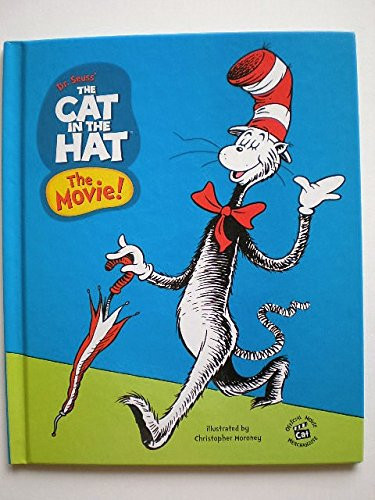
Dr. Seuss' The Cat in the Hat The Movie!
The Cat has arrived-- with a hat full of fun to save Conrad and Sally from a boring rainy afternoon. This rollicking retelling of the live-action major motion picture is perfect for reading aloud!
Homosexuality and the Politics of Truth
Psychiatrist Jeffrey Satinover examines recent research reported in medical journals (and the popular press). He finds many of these studies flawed and cites evidence that homosexuality is indeed changeable. He explains how psychology, biology, choice, and habit all interweave to produce deeply imbedded patterns of sexual behavior. The model Dr. Satinover develops is based on modern science and psychological understandings of habit, compulsion, and addiction. Homosexuality, he writes, "is one of the many forms of soul sickness that is innate to our fallen nature."

FROM SILK TO SILICON [Hardcover] [Jan 01, 2017] NA
BRAND NEW, Exactly same ISBN as listed, Please double check ISBN carefully before ordering.

Nacky Patcher and the curse of the dry-land boats: a novel
When thief and swindler Nacky Patcher and orphaned eleven-year-old Teedie Flinn discover a huge wrecked boat in a small mountain lake near their town, they try to unite all the inhabitants to help rebuild the vessel--an endeavor that forever changes all of their lives.
