15 results for "American History"

Like a Rolling Stone A Memoir

Jann S Wenner
In this New York Times bestseller, Rolling Stone founder, co-editor, and publisher Jann Wenner offers a "touchingly honest" and "wonderfully deep" memoir from the beating heart of classic rock and roll (Bruce Springsteen). Jann Wenner has been called by his peers "the greatest editor of his generation." His deeply personal memoir vividly describes and brings you inside the music, the politics, and the lifestyle of a generation, an epoch of cultural change that swept America and beyond. The age of rock and roll in an era of consequence, what will be considered one of the great watersheds in modern history. Wenner writes with the clarity of a journalist and an essayist. He takes us into the life and work of Bob Dylan, John Lennon, Mick Jagger, Bono, and Bruce Springsteen, to name a few. He was instrumental in the careers of Hunter S. Thompson, Tom Wolfe, and Annie Leibovitz. His journey took him to the Oval Office with his legendary interviews with Bill Clinton and Barack Obama, leaders to whom Rolling Stone gave its historic, full-throated backing. From Jerry Garcia to the Dalai Lama, Aretha Franklin to Greta Thunberg, the people Wenner chose to be seen and heard in the pages of Rolling Stone tried to change American culture, values, and morality. Like a Rolling Stone is a beautifully written portrait of one man's life, and the life of his generation.
Little Brown 2023-06-27 592 pages

Dilla Time The Life and Afterlife of J Dilla, the Hip-Hop Producer Who Reinvented Rhythm

Dan Charnas
WINNER OF THE PEN/ JACQUELINE BOGRAD WELD AWARD FOR BIOGRAPHY NEW YORK TIMES BESTSELLER “This book is a must for everyone interested in illuminating the idea of unexplainable genius.” —QUESTLOVE Equal parts biography, musicology, and cultural history, Dilla Time chronicles the life and legacy of J Dilla, a musical genius who transformed the sound of popular music for the twenty-first century. He wasn’t known to mainstream audiences, even though he worked with renowned acts like D’Angelo and Erykah Badu and influenced the music of superstars like Michael Jackson and Janet Jackson. He died at the age of thirty-two, and in his lifetime he never had a pop hit. Yet since his death, J Dilla has become a demigod: revered by jazz musicians and rap icons from Robert Glasper to Kendrick Lamar; memorialized in symphonies and taught at universities. And at the core of this adulation is innovation: a new kind of musical time-feel that he created on a drum machine, but one that changed the way “traditional” musicians play. In Dilla Time , Dan Charnas chronicles the life of James DeWitt Yancey, from his gifted childhood in Detroit, to his rise as a Grammy-nominated hip-hop producer, to the rare blood disease that caused his premature death; and follows the people who kept him and his ideas alive. He also rewinds the histories of American rhythms: from the birth of soul in Dilla’s own “Motown,” to funk, techno, and disco. Here, music is a story of Black culture in America and of what happens when human and machine times are synthesized into something new. Dilla Time is a different kind of book about music, a visual experience with graphics that build those concepts step by step for fans and novices alike, teaching us to “see” and feel rhythm in a unique and enjoyable way. Dilla’s beats, startling some people with their seeming “sloppiness,” were actually the work of a perfectionist almost spiritually devoted to his music. This is the story of the man and his machines, his family, friends, partners, and celebrity collaborators. Culled from more than 150 interviews about one of the most important and influential musical figures of the past hundred years, Dilla Time is a book as delightfully detail-oriented and unique as J Dilla’s music itself.
Picador 2023-01-31 480 pages

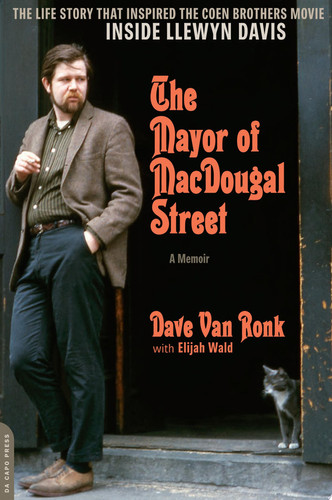
The Mayor of MacDougal Street [2013 Edition] A Memoir

Dave Van Ronk,Elijah Wald
Dave Van Ronk (1936-2002) was one of the founding figures of the 1960s folk revival, but he was far more than that. A pioneer of modern acoustic blues, a fine songwriter and arranger, a powerful singer, and one of the most influential guitarists of the '60s, he was also a marvelous storyteller, a peerless musical historian, and one of the most quotable figures on the Village scene. Featuring encounters with young stars-to-be like Bob Dylan and Joni Mitchell, The Mayor of MacDougal Street is a vivid evocation of a singular time and place--a feast not only for fans of folk music and blues, but for anyone interested in the music, politics, and spirit of a revolutionary period in American culture.
Hachette Books 2013-10-15 272 pages

Heavy Tales The Metal. The Music. The Madness. As Lived by Jon Zazula

Jon Zazula
Heavy Tales is the detailed, never before told story as lived by Jonny Zazula of how he founded Megaforce Records out of a flea market in New Jersey with his wife, Marsha and built a dynasty unmatched by others, forever changing the scope of Heavy Metal. The bands they worked with would go on to release some of the most prolific and important albums in heavy metal history, giving it its Golden Era. Jonny Zazula was a renegade youth who went from living on the New York City streets, to later working on Wall Street, and then moving unexpectedly towards the music business. In the winter of 1982, while working in a flea market, he received an unexpected demo tape from underground, unsigned band Metallica. Eager and determined to have the music heard by the entire world, Jonny Z and Marsha founded Megaforce Records in 1983, and soon after released Metallica's debut album, Kill 'Em All. Through this release Megaforce had cemented its position as the de-facto music label in America for Heavy Metal - but that's just the start. Heavy Tales details the stories of how Jonny Z worked miracles by managing and releasing albums by Metallica, Anthrax, Testament, Mercyful Fate, Raven, Overkill, Exciter, Stormtroopers of Death, Method of Destruction, Ace Frehley, King's X, Ministry, Mindfunk, Nudeswirl, Warren Haynes, Disco Biscuits and others, and how one night in 1984, he jokingly created Rap Metal before anyone else conceived the idea. With the foreword written by Chuck Billy, plus over 100 rare photographs unearthed from the MegaVault and photographer friends, Heavy Tales is the definitive American story of a family man with a dream, determined to prove to the world that heavy metal belonged on the stage, on the radio and in your living room.
Crazed Management LLC 2019-10-31 200 pages

Schoenberg and His School

Rene Leibowitz
This book talks about music. It incorporates modal and tonal music. It talks about Arnold Schoenberg, the founder of contempoary music, Alban Berg and how the past plays on contemporary music and Anton Webern and the future of contemporary music. As well as the structure of contemporary musical speech. René Leibowitz was a French composer, conductor, music theorist and teacher born in Warsaw, Poland. During the early 1930s, Leibowitz studied composition and orchestration with Ravel in Paris, where he was introduced to Schoenberg's Twelve-note technique by the German pianist and composer Erich Itor Kahn. He subsequently studied with Schoenberg's pupil Webern. Many of the works of the Second Viennese School were first heard in France at the International Festival of Chamber Music established by Leibowitz in Paris in 1947. Leibowitz was highly influential in establishing the reputation of the Second Viennese School, both through activity as a teacher in Paris after WWII and through his book Schoenberg et son ecole, published in 1947 and translated by Dika Newlin as Schoenberg and his School (US and UK editions 1949). This was among the earliest theoretical treatises written on Schoenberg's 12-tone method of composition. Leibowitz's advocacy of the Schoenberg school was taken further by his two most gifted pupils, each taking different paths in promoting the musics of Schoenberg, Webern and the development of serialism, namely Pierre Boulez and Jacques-Louis Monod. His American students include the composers Will Ogdon, Janet Maguire, and the avant-garde film director-animator John Whitney. As conductor, Leibowitz was active in many recording projects. One of the most widely circulated and most notable is a set of the Beethoven symphonies made for Reader's Digest Recordings; it was apparently the first recording of the symphonies to follow Beethoven's original metronome markings. In choosing this approach, Leibowitz was influenced by his friend and colleague Rudolf Kolisch. Leibowitz likewise made many recordings for Reader's Digest in their various compilation albums. He also wrote for Les Temps modernes, applying existentialist ideas to musicology.
Philosophical Library, Incorporated 1949 332 pages

Got a Revolution! The Turbulent Flight of Jefferson Airplane

Jeff Tamarkin
“Jeff Tamarkin is an able guide through the tangled history of one of the Sixties' most musically visionary bands.” — Rolling Stone From a renowned music journalist, a close-up portrait of Jefferson Airplane, chronicling the band's origins in 1965 San Francisco and their role in defining the sound and culture of 1960s and 1970s rock 'n' roll. The most successful and influential rock band to emerge from San Francisco during the 1960s, Jefferson Airplane created the sound of a generation. Their smash hits "Somebody to Love" and "White Rabbit" virtually invented the era's signature pulsating psychedelic music and, during one of the most tumultuous times in American history, came to personify the decade's radical counterculture and paved the way for other Bay Area music greats, including the Grateful Dead and Janis Joplin. Having worked closely with Jefferson Airplane for more than a decade, Tamarkin had unprecedented access to the band members, their families, friends, lovers, crew members, fellow musicians, cultural luminaries, even the highest-ranking politicians of the time. More than just a definitive history, Got a Revolution! is a rock legend unto itself.
Atria Books 2005-07-19 432 pages

The Beatles Please Please Me to with the Beatles

Bruce Spizer
Please Please Me and With The Beatles, along with their associated singles, introduced the Beatles first to England and then to several countries across the world, including Canada and the United States. Although often overlooked due to the excellence of the group' s later albums, these early albums contain the exciting songs that fueled Beatlemania. These albums showcased the songwriting talents of John Lennon and Paul McCartney, as well as incredible cover versions of songs from the group' s stage show. Had the Beatles not evolved and matured, the group would still be well respected for the quality of the recordings on these two albums.In addition to the usual chapters on the British, American and Canadian perspectives, the book contains chapters on the Decca audition and the EMI artists test session. There are also chapters on the recording sessions and album covers, as well as on the news, music and films of the era to place these albums in their proper context.It is a 9" x 9" hardcover book to match the other books in Bruce Spizer' s Beatles Album Series. It is 272 pages long and contains over 290 color and original black and white images.
498 Productions, LLC 2023-10-17 272 pages

Drug Themes in Science Fiction

Robert Silverberg,Dan J. Lettieri,William Blake
Dive into a compelling work of literary criticism with "Drug themes in science fiction" by the esteemed Robert Silverberg. This authoritative volume offers a meticulous exploration and comprehensive bibliography of drug-related themes across speculative fiction. Silverberg, a master of the genre, insightfully examines the diverse ways drugs-real and imagined-have been portrayed within American and English science fiction. From their roles in societal commentary to their impact on individual characters and narrative progression, this book uncovers the profound and often complex presence of psychoactive substances in literary imagination. It serves as both a critical analysis of recurring motifs and an invaluable reference for anyone researching the genre. For readers captivated by literary themes, the history of science fiction, or the enduring dialogue between human experience and altered states of consciousness, "Drug themes in science fiction" provides an essential, detailed, and timeless perspective on a fascinating corner of literature. This work has been selected by scholars as being culturally important, and is part of the knowledge base of civilization as we know it. This work is in the public domain in the United States of America, and possibly other nations. Within the United States, you may freely copy and distribute this work, as no entity (individual or corporate) has a copyright on the body of the work. Scholars believe, and we concur, that this work is important enough to be preserved, reproduced, and made generally available to the public. We appreciate your support of the preservation process, and thank you for being an important part of keeping this knowledge alive and relevant.
Creative Media Partners, LLC 2025-12-12 60 pages

The Beatles Magical Mystery Tour and Yellow Submarine

Bruce Spizer
The Beatles Magical Mystery Tour and Yellow Submarine is the latest installment in the Beatles Album Series by Beatles historian Bruce Spizer. The book covers the songs and projects undertaken by the Beatles shortly after completion of their album Sgt. Pepper's Lonely Hearts Club Band in April 1967. In following ten months, the group wrote and recorded the song "All You Need Is Love" for the Our World TV program that was broadcast by satellite throughout the world, wrote the songs for and filmed the TV spectacular Magical Mystery Tour , wrote the songs for their feature length cartoon film Yellow Submarine , and recorded the songs "Lady Madonna" and "Across The Universe" before heading to India to study transcendental meditation in mid-February 1968. The book covers these remarkable achievements from the British, American, and Canadian perspectives, and includes chapters on the packaging of the albums and the writing and recording of the songs. It also has chapters on how the Beatles influenced our world, the friendly rivalry between the Beatles and the Rolling Stones, the Beatles Saturday morning cartoons, dozens of fan recollections, and more. The book has over 150 images.
498 Productions, LLC 2021-10-12 208 pages

Symposium of the whole: a range of discourse toward an ethnopoetics

Rothenberg, Jerome,Rothenberg, Diane
Symposium of the Whole traces a discourse on poetry and culture that has profoundly influenced the art of our time, with precedents going back two centuries and more. Beginning with a reassertion of the complexity of poetry among peoples long labeled “primitive” and “savage,” many recent poets have sought to base a new poetics over the fullest range of human cultures. The attempt to define an ethnopoetics has been significantly connected with the most experimental and future-directed side of Romantic and modern poetry, both in the Western world and, increasingly, outside it. As a visionary poetics and as a politics, this complex redefinition of cultural and intellectual values has involved a rarely acknowledged collaboration between poets and scholars, who together have challenged the narrow view of literature that has excluded so many traditions. In this gathering, the Rothenbergs follow the idea of an ethnopoetics from predecessors such as Vico, Blake, Thoreau, and Tzara to more recent essays and manifestos by poets and social thinkers such as Olson, Eliade, Snyder, Turner, and Baraka. The themes range widely, from the divergence of oral and written cultures to the shaman as proto-poet and the reemergence of suppressed and rejected forms and images: the goddess, the trickster, and the “human universe.” The book’s three ethnographic sections demonstrate how various poetries are structured and composed, how they reflect meaning and worldview, and how they are performed in cultures where all art may be thought of as art-in-motion. Among the poetries discussed are the language of magic; West African drum language and poetry; the Huichol Indian language of reversals; chance operations in African divination poetry; picture-writings and action-writings from Australia and Africa; and American Indian sacred-clown dramas and traditional trickster narratives. The cumulative effect is a new reading of the poetic past and present—in the editors’ words, “a changed paradigm of what poetry was or now could come to be.”
University of California Press 2017 522 pages

Henry Rollins

Henry Rollins
These interviews with Henry Rollins conducted by RE/Search (and Search & Destroy) founder V. Vale focus on Henry's travels -- often to countries considered dangerous and off-limits. There are references to Punk Rock history, the Occupy movement, and numerous personal adventures and experiences over the past 30-plus years of combing the planet giving musical and Spoken Word performances, and generally being as creative and humorous as possible no matter what the situation may be . Whatever Henry wants to do, he does it while giving his full attention, like a kind of Zen master. RE/Search tries to reveal the full scope of his creativity, achievements and darkly sardonic perceptiveness and contempt for cliche. This book is full of both humor and inspiration.
RE/Search Publications 2012 124 pages

Burn, Baby! Burn! The Autobiography of Magnificent Montague

Magnificent Montague,Nathaniel Montague,Bob Baker
With his dynamic on-air personality and his trademark cry of "Burn, baby! BURN!" when spinning the hottest new records, Magnificent Montague was the charismatic voice of soul music in Chicago, New York, and Los Angeles from the mid-1950s to the mid-1960s. In this memoir Montague recounts the events of his momentous radio career, which ran from the era of segregation to that of the civil rights movement; as he does so, he also tells the broader story of a life spent in the passionate pursuit of knowledge, historical and musical. Like many black disc jockeys of his day, Montague played a role in his community beyond simply spreading the music of James Brown, Otis Redding, Aretha Franklin, and other prominent artists. Montague served as an unofficial spokesman for his black listeners, reflecting their beliefs and acting as a sounding board for their concerns. Montague was based in Los Angeles in 1965 when the Watts rioters seized on his incendiary slogan, turning the shout of musical appreciation into a rallying cry for racial violence. In Burn, Baby! BURN! Montague recalls these tumultuous times, including the personal struggle he faced over whether to remain true to his listeners or bend to political pressure and stop shouting his suddenly controversial slogan. Since the mid-1950s Montague had also expressed his passion for African American culture by becoming a zealous collector of artifacts of black history. He has built a monumental collection, taking time out from his collecting to become only the second African American to build his own radio station literally from the ground up. A compelling account of a rich and varied life, Burn, Baby! BURN! gives an insider's view of half a century of black history, told with on-the-air zest by the DJ/historian who was there to see it unfold.
University of Illinois Press 2003 192 pages

The terror of our days: four American poets respond to the Holocaust

Parmet, Harriet L.
Analyzes poetry by four Americans, none of whom directly experienced the Holocaust. For these poets, writing becomes a moral obligation as commemoration, catharsis, atonement, history, insistence on human sensitivities, resistance to brutalization, indifference, and flight from consequences. Plath attempts to work herself out of her private turmoil by using the Holocaust as a metaphor for this pain. While God and the Holocaust are equally impenetrable and unfathomable, Plath's recourse is to be found in Christian symbolism. Heyen, whose parents emigrated from Germany in 1928, leaving behind members of the family who became Nazis, felt driven to confront history as part of his own background. Stern, who grew up in the safety of America, must expiate this guilt by envisaging and transposing himself into the victims. When Rothenberg visited Poland, he realized that his parents' native town was only 15 miles from Treblinka, where nearly all of his relatives were murdered. The silence of the death camp created for him "a vacuum in which the dead are free to speak". States that if Adorno's proposition - "to write poetry after Auschwitz is barbaric" - were to be taken literally, it would undermine the validity of this endeavor. But poets from time immemorial did not permit their world to collapse because of catastrophe and calamity. Includes an introductory chapter addressing the issue raised by Adorno, as well as a survey and interpretation of the components of the Holocaust genre.
Lehigh University Press 2001-05 268 pages