60 results for "American History"

Edith Wharton

Lee, Hermione
Biographer Lee gives us a new Edith Wharton--tough, startlingly modern, as brilliant and complex as her fiction. Born in 1862, Wharton escaped the suffocating fate of the well-born female, traveled adventurously in Europe and eventually settled in France. She developed a forceful literary professionalism and thrived in a luminous society that included Bernard Berenson, Aldous Huxley and most famously Henry James, who here emerges more as peer than as master. Wharton's life was fed by nonliterary enthusiasms as well: houses and gardens, relief efforts during the Great War, and the culture of the Old World, which she never tired of absorbing. Yet intimacy eluded her: unhappily married and childless, her one brush with passion came and went in midlife, an affair intimately recounted here. Lee interweaves Wharton's life with the evolution of her writing, the full scope of which shows her to be far more daring than her stereotype as lapidarian chronicler of the Gilded Age.--From publisher description.
Alfred A. Knopf 2007 869 pages

The roads to modernity: the British, French, and American Enlightenments

Himmelfarb, Gertrude
In an elegant, eminently readable work, one of our most distinguished intellectual historians gives us a brilliant revisionist history. The Roads to Modernity reclaims the Enlightenment–an extraordinary time bursting with new ideas about human nature, politics, society, and religion--from historians who have downgraded its importance and from scholars who have given preeminence to the Enlightenment in France over concurrent movements in England and America. Contrasting the Enlightenments in the three nations, Himmelfarb demonstrates the primacy and wisdom of the British, exemplified in such thinkers as Adam Smith, David Hume, and Edmund Burke, as well as the unique and enduring contributions of the American Founders. It is their Enlightenments, she argues, that created a social ethic–humane, compassionate, and realistic–that still resonates strongly today, in America perhaps even more than in Europe. The Roads to Modernity is a remarkable and illuminating contribution to the history of ideas.
Vintage 2005-08-09 304 pages

A jury of her peers: American women writers from Anne Bradstreet to Annie Proulx

Showalter, Elaine
LITERARY STUDIES: GENERAL. Fascinating, incisive, intelligent and never afraid of being controversial, Elaine Showalter introduces us to more than 250 writers. Here are the famous and expected names, including Harriet Beecher Stowe, Willa Cather, Dorothy Parker, Flannery O'Connor, Gwendolyn Brooks, Grace Paley, Toni Morrison, and Jodi Picoult. And also many successful and acclaimed yet little-known writers, from the early American bestselling novelist Catherine Sedgwick to the Pulitzer Prize-winning playwright Susan Glaspell. A JURY OF HER PEERS is an irresistible invitation to discover great authors never before encountered and to return to familiar books with a deeper appreciation. It is a monumental work that enriches our understanding of American literary history and culture.
Virago 2010 679 pages

Facing the beast: courage, faith, and resistance in a new dark age

Wolf, Naomi
"From New York Times bestselling author Naomi Wolf, Facing the Beast is a devastating, detailed account of wrongthink, deplatforming, and an unexpected political, personal, and spiritual transformation that followed during one of the most divisive times in American history. In this uncompromising investigation into today's most urgent issues, Naomi Wolf uses her own wildly politicized pilgrimage-from New York Times bestselling author and high-level Democratic consultant to a journalist cast out from the elite political and social circles she once moved through-as a stunning narrative framework that is both chilling and incisive. Wolf's sin? Doing the job that good journalists once prided themselves on: asking questions, challenging authority, and, during one of the most politically divisive moments in modern history, exposing the many failures of the public health response during the COVID-19 pandemic by chronicling the dangerous descent of our democracy into tyranny, censorship, and totalitarianism. Unable to remain silent in the shadows and unwilling to collude with the mainstream, Wolf bravely covers topics that few other writers dare to address critically for fear of being deplatformed. Facing the Beast explores reproductive rights, medical freedom, the uncurious thought-policing of the "progressive" left, the Second Amendment, the criminal relationship between the FDA and Pfizer-Wolf's clear writing repeatedly shines light in the dark corners of our fractured society. A decades-long champion of free speech, freedom of the press, and the Constitution, Wolf found herself not only in the midst of a political rebirth but a spiritual transformation as well-one in which the events of the day could only be described in terms of good, evil, and a metaphysical quest on the nature of reality. For readers of Matt Taibbi, Glenn Greenwald, and Bari Weiss, Facing the Beast is a fearless indictment of legacy media and the political class, as well as a brutal reminder that searching for and defending the truth can be dangerous. "Naomi Wolf is one of the bravest, clearest-thinking people I know. The reason you hear the forces of repression so desperately trying to dismiss her is because she is right."-Tucker Carlson"--
Chelsea Green Publishing 2023 232 pages

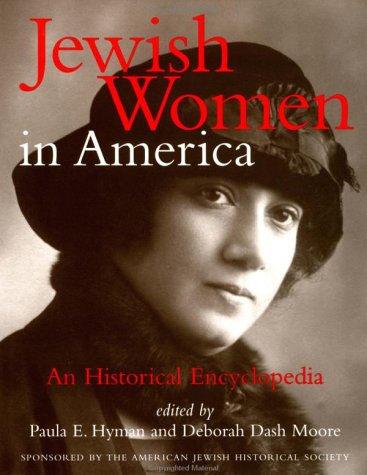
Jewish women in America: an historical encyclopedia

Paula Hyman,Deborah Dash Moore,Phyllis Holman Weisbard,American Jewish Historical Society
This encyclopedia provides the first standard reference work on the lives, history and activities of Jewish women in the United States. Covering a period which extends from the arrival of the first Jewish women in North America in 1654 to the present, this two-volume set presents the most comprehensive and detailed portrait of American Jewish women ever published, and brings together for the first time the wealth of recent scholarship on this subject. Includes: * Biographical entries on over 800 individual women. * 128 topical articles on organizations such as Hadassah, the National Council of Jewish Women, Mizrachi, and the Ladies' Garment Workers' Union. * Major essays on Jewish women's participation in the movement for women's suffrage, social reform, civil rights, and the recent women's movement. * The activities of Jewish women in politics, business, education, the arts, and religion. * A readable, inviting format with over 500 large photographs. * Bibliographies at the end of each entry which include overviews of major scholarship in the field, complete citations of more general works and citations of additional bibliographical and reference sources. * The comprehensive index includes citations to every substantive discussion in the entries as well as all proper names appearing in the text, such as organizations, book, song and film titles, schools, and individuals. The "Encyclopedia" provides information on American Jewish women in all fields of endeavor, and pays special attention to the work of women in the arts, academics, law, the labor movement, education, science, medicine, journalism and publishing, and on the lives of ordinary Jewish women during all time periods and in all regions of the United States.
Routledge 1997 1770 pages

P.S.: further thoughts from a lifetime of listening

Terkel, Studs
Millions of Studs Terkel fans have come to know the prizewinning oral historian through his landmark books—“The Good War”, Hard Times, Working, Will the Circle Be Unbroken?, and many others. Few people realize, however, that much of Studs’s best work was not collected into these thematic volumes and has, in fact, never been published. P.S. brings together these significant and deeply enjoyable writings for the first time. The pieces in P.S. reflect Studs’s wide-ranging interests and travels, as well as his abiding connection to his hometown, Chicago. Here we have a fascinating conversation with James Baldwin, possibly Studs’s finest interview with an author; pieces on the colorful history and culture of Chicago; vivid portraits of Studs’s heroes and cohorts (including an insightful and still timely interview with songwriter Yip Harburg, known for his “Brother, Can You Spare a Dime”); and the transcript of Studs’s famous broadcast on the Depression, the very moving essence of what was to become Hard Times. A fitting postscript to a lifetime of listening, P.S. is a truly Terkelesque display of Studs’s extraordinary range of talent and the amazing people he found to talk to.
New Press 2008-11-11 230 pages

The weekly standard: a reader, 1995-2005

William Kristol
Almost from the moment its inaugural issue appeared in September 1995, The Weekly Standard has been widely considered the nation's preeminent journal of political opinion and cultural commentary -- and the one magazine you've absolutely got to read if you want to keep up with American conservatism. Beyond reporting the events of the times, The Weekly Standard has played a central role in every major political drama of the past decade. In fact, so influential has it proved in Washington -- year in and year out, no matter which party controlled the White House -- that it's become a must-read for anyone who wants to understand American politics and society as a whole. Now, in The Weekly Standard: A Reader, editor William Kristol gathers together some of the very best articles and essays the magazine has published in its first decade. The dramas are here, of course: the "Republican Revolution" in Congress; Monica Lewinsky; the Florida recount of 2000; and, above all, 9/11 and the war on terrorism. And on hand to recount and reflect on them is The Weekly Standard's matchless, all-star stable of writers: Fred Barnes, David Brooks, Tucker Carlson, and P. J. O'Rourke, to name just a few. But there's always been much more to The Weekly Standard than just the week's news. So The Weekly Standard: A Reader is not merely an anthology of unsurpassed opinion journalism. Here readers will find an enormous treasury of timeless writing about dozens of subjects -- art, books, music, movies, you name it -- each handled with the same unique blend of insider savvy, reflective wisdom, and mordant wit that's earned The Weekly Standard an authoritative place in American public life.
HarperCollins 2005-09-06 538 pages

The Cold War & the university: toward an intellectual history of the postwar years

Noam Chomsky,Richard C. Lewontin,Ira Katznelson,Laura Nader,David Montgomery,Richard Ohmann,Immanuel Maurice Wallerstein,Raymond Siever,Howard Zinn
"The years following 1945 witnessed a massive change in American intellectual thought and in the life of American universities. The vast effort to mobilize intellectual talent during the war established new links between the government and the academy. After the war, many of those who had worked with the military or the Office of Strategic Services (OSS) took jobs in the burgeoning postwar structure of university-based military research and the intelligence agencies, bringing infusions of government money into many fields." "Little has been written about the long-term impact of this close association, despite considerable study of the McCarthy period's destructive impact on academic careers. The Cold War and the University is a groundbreaking collection of newly commissioned essays that takes a bold first step toward the reconstruction of this history. In it, some of the country's most prominent intellectuals use their own experiences to explore what happened to the university in the postwar years and why." "In wide-ranging and revealing essays, these writers show the many ways existing disciplines, such as anthropology, were affected by the Cold War ethos; they discuss the rise of new fields, such as area studies; and they explore the changing nature of dissent and academic freedom during and since the Cold War."--BOOK JACKET.Title Summary field provided by Blackwell North America, Inc. All Rights Reserved
New Press 1997 258 pages

Jews and the American soul: human nature in the twentieth century

Heinze, Andrew R.
What do Joyce Brothers and Sigmund Freud, Rabbi Harold Kushner and philosopher Martin Buber have in common? They belong to a group of pivotal and highly influential Jewish thinkers who altered the face of modern America in ways few people recognize. So argues Andrew Heinze, who reveals in rich and unprecedented detail the extent to which Jewish values, often in tense interaction with an established Christian consensus, shaped the country's psychological and spiritual vocabulary. Jews and the American Soul is the first book to recognize the central role Jews and Jewish values have played in shaping American ideas of the inner life. It overturns the widely shared assumption that modern ideas of human nature derived simply from the nation's Protestant heritage. Heinze marshals a rich array of evidence to show how individuals ranging from Erich Fromm to Ann Landers changed the way Americans think about mind and soul. The book shows us the many ways that Jewish thinkers influenced everything from the human potential movement and pop psychology to secular spirituality. It also provides fascinating new interpretations of Sigmund Freud, Alfred Adler, and Western views of the psyche; the clash among Protestant, Catholic, and Jewish moral sensibilities in America; the origins and evolution of America's psychological and therapeutic culture; the role of Jewish women as American public moralists, and more. A must-read for anyone interested in the contribution of Jews and Jewish culture to modern America.
Princeton University Press 2007 438 pages

Jews and the American soul: human nature in the twentieth century

Heinze, Andrew R.
What do Joyce Brothers and Sigmund Freud, Rabbi Harold Kushner and philosopher Martin Buber have in common? They belong to a group of pivotal and highly influential Jewish thinkers who altered the face of modern America in ways few people recognize. So argues Andrew Heinze, who reveals in rich and unprecedented detail the extent to which Jewish values, often in tense interaction with an established Christian consensus, shaped the country's psychological and spiritual vocabulary. Jews and the American Soul is the first book to recognize the central role Jews and Jewish values have played in shaping American ideas of the inner life. It overturns the widely shared assumption that modern ideas of human nature derived simply from the nation's Protestant heritage. Heinze marshals a rich array of evidence to show how individuals ranging from Erich Fromm to Ann Landers changed the way Americans think about mind and soul. The book shows us the many ways that Jewish thinkers influenced everything from the human potential movement and pop psychology to secular spirituality. It also provides fascinating new interpretations of Sigmund Freud, Alfred Adler, and Western views of the psyche; the clash among Protestant, Catholic, and Jewish moral sensibilities in America; the origins and evolution of America's psychological and therapeutic culture; the role of Jewish women as American public moralists, and more. A must-read for anyone interested in the contribution of Jews and Jewish culture to modern America.
Princeton University Press 2004 438 pages

San Francisco beat: talking with the poets

Meltzer, David
San Francisco Beat is an essential archive of the Beat Generation, a rich moment in a fortunate place. America-somnolent, conformist, and paranoid in the 1950s-was changed forever by a handful of people who refused an existence of drudgery and enterprise, opting instead for a life of personal, spiritual, and artistic adventure. In these intimate, free-wheeling conversations, a baker's dozen of the poets of San Francisco talk about the scene then and now, the traditions of poetry, and about anarchism, globalism, Zen, the Bomb, the Kabbalah, and the Internet. Thirty years ago, poet David Meltzer interviewed his poet friends for The San Francisco Poets. Now in San Francisco Beat he has combined these classic interviews with recent follow-up. San Francisco Beat features major new interviews with Philip Lamantia, Joanne Kyger, Gary Snyder, Jack Hirschman, Diane di Prima, Jack Micheline, Philip Whalen, and David Meltzer himself. David Meltzer is the author of many books of poetry, including Tens, The Name, Arrows: Selected Poetry 1957-1992, and No Eyes: Lester Young. He is the editor of Birth, The Secret Garden, Reading Jazz, and Writing Jazz, among other collections. His agit-smut fictions include The Agency Trilogy. Meltzer read poetry at the Jazz Cellar in the 1950s and in the 1960s fronted the band, Serpent Power. Meltzer teaches poetics at New College of California. Table of Contents/Interviewed Authors Preface Acknowledgments Diane di Prima (1999) William Everson (1971) Remembering Everson (1999) Lawrence Ferlinghetti I (1969) Lawrence Ferlinghetti II (1999) Jack Hirschman (1998) Joanne Kyger (1998) Philip Lamantia (1998) Michael McClure I (1971) Michael McClure II (1999) David Meltzer (1999) Jack Micheline (1994) Kenneth Rexroth (1971) Remembering Rexroth (1971) Gary Snyder (1999) Lew Welch (1971) Philip Whalen (1999) Bibliographies Preface Nothing is hidden; As of old All is clear as daylight -Anonymous haiku, 16th century San Francisco Beat: Talking with the Po
City Lights Books 2001-05 364 pages

New York Jew

Kazin, Alfred
In this book, Alfred Kazin, who for more than 30 years has been one of the central figures of America's intellectual life, takes us into his own life and times. His autobiography encompasses a personal story openly told; an inside look at New York's innermost intellectual circles; strong and intimate revelations of many of the most important writers of the century; and brilliantly astute observations of the literary accomplishments, atmosphere, and fads of the 1940s, 50s, and 60s in the context of America's shifting political gales.
Syracuse University Press 1996-08-01 307 pages

Ex-friends

Podhoretz, Norman
Allen Ginsberg, Lionel and Diana Trilling, Lillian Hellman, Hannah Arendt, and Norman Mailer -- all are ex-friends of Norman Podhoretz, the renowned editor and critic and leading member of the group of New York intellectuals who came to be known as "the Family." As only a family member could, Podhoretz tells the story of these friendships, once central to his life, and shows how the political and cultural struggles of the past fifty years made them impossible to sustain. With wit, piercing insight, and startling honesty, we are introduced as never before to a type of person for whom ideas were often matters of life and death, and whose passing from the scene has left so large a gap in American culture. Podhoretz was the trailblazer of the now-famous journey of a number of his fellow intellectuals from radicalism to conservatism -- a journey through which they came to exercise both cultural and political influence far beyond their number. With this fascinating account of his once happy and finally troubled relations with these cultural icons, Podhoretz helps us understand why that journey was undertaken and just how consequential it became. In the process we get a brilliantly illuminating picture of the writers and intellectuals who have done so much to shape our world. Combining a personal memoir with literary, social, and political history, this unique gallery of stern and affectionate portraits is as entertaining as a novel and at the same time more instructive about postwar American culture than a formal scholarly study. Interwoven with these tales of some of the most quixotic and scintillating of contemporary American thinkers are themes that are introduced, developed, and redeveloped in a variety of contexts, with each appearance enriching the others, like a fugue in music. It is all here: the perversity of brilliance; the misuse of the mind; the benightedness of people usually considered especially enlightened; their human foibles and olympian detachment; the rigors to be endured and the prizes to be won and the prices to be paid for the reflective life. Most people live their lives in a very different way, and at one point, in a defiantly provocative defense of the indifference shown to the things by which intellectuals are obsessed, Norman Podhoretz says that Socrates' assertion that the unexamined life was not worth living was one of the biggest lies ever propagated by a philosopher. And yet, one comes away from Ex-Friends feeling wistful for a day when ideas really mattered and when there were people around who cared more deeply about them than about anything else. Reading of a time when the finest minds of a generation regularly gathered in New York living rooms to debate one another with an articulateness, a passion, and a level of erudition almost extinct, we come to realize how enviable it can be to live a life as poignantly and purposefully examined as Norman Podhoretz's is in Ex-Friends.
Free Press 1999-02-21 244 pages

The violet hour: the Violet Quill and the making of gay culture

Bergman, David
The members of the literary circle known as the Violet Quill -- Christopher Cox, Robert Ferro, Michael Grumley, Andrew Holleran, Felice Picano, Edmund White, and George Whitmore -- collectively represent the aspirations and the achievement of gay writing during and after the gay liberation movement. This social history shows how the works of these authors both reflected and criticized the values, principles, and prejudices of the culture of gay liberation. In spinning many of the most important stories gay men told of themselves in the short period between the 1969 Stonewall Riots and the devastation of the AIDS epidemic during the 1980s, the Violet Quill exerted an enormous influence on gay culture.
Columbia University Press 2004-07-06 304 pages

Artists' SoHo: 49 episodes of intimate history

Kostelanetz, Richard
How a little-known industrial neighborhood in New York unintentionally became a nexus of creative activity for a brief burst of time. During the 1960s and 1970s in New York City, young artists exploited an industrial wasteland to create spacious studios where they lived and worked, redefining the Manhattan area just south of Houston Street. Its use fueled not by city planning schemes but by word-of-mouth recommendations, the area soon grew to become a world-class center for artistic creation indeed, the largest urban artists' colony ever in America--let alone the world. Richard Kostelanetz's Artists' SoHo not only examines why the artists came and how they accomplished what they did but also delves into the lives and works of some of the most creative personalities who lived there during that period, including Nam June Paik, Robert Wilson, Meredith Monk, Richard Foreman, Hannah Wilke, George Macuinas, and Alan Suicide. Gallerists followed the artists in fashioning themselves, their homes, their buildings, and even their streets into transiently prominent exhibition and performance spaces. SoHo pioneer Richard Kostelanetz's extensively researched intimate history is framed within a personal memoir that unearths myriad perspectives: social and cultural history, the changing rules for residency and ownership, the ethos of the community, the physical layouts of the lofts, the types of art produced, venues that opened and closed, the daily rhythm, and the gradual invasion of "new people." Artists' SoHo also explores how and why this fertile bohemia couldn't last forever. As wealthier people paid higher prices, galleries left, younger artists settled elsewhere, and the neighborhood became a "SoHo Mall" of trendy stores and restaurants. Compelling and often humorous, Artists' SoHo provides an analysis of a remarkable neighborhood that transformed the art and culture of New York City over the past five decades.
Empire State Editions, an imprint of Fordham University Press 2015 272 pages

The mural at the Waverly Inn: a portrait of Greenwich Village bohemians

Sorel, Edward
The Waverly Inn has been a landmark in New York’s Greenwich Village since the 1920’s. But since 2006, when Vanity Fair editor Graydon Carter bought and refurbished the restaurant, it has also been one of the most sought after destinations in the city. And while we can’t guarantee you a reservation there, we can bring you the wonderful, witty mural by Edward Sorel that graces its walls. Sorel--whose caricatures and drawings regularly appear in The New Yorker and on its cover--chose forty Greenwich Village greats from the past 150 years to cavort in bacchanalian splendor. Each of the 40 makes a solo appearance in these pages alongside a charming, telling vignette of his or her life by Dorothy Gallagher, then appears in a foldout of the entire mural at the back of the book. Here you will find Walt Whitman being attacked by a ferocious Truman Capote butterfly; Jane Jacobs, Gertrude Vanderbilt Whitney and Willa Cather playing ring-around the rosy; those famous denizens of the White Horse Tavern, Dylan Thomas--who breakfasted on beer and lunched on brandy--and Jack Kerouac, typing his long roll of a novel. Anais Nin appears nude, which, Gallagher points out, was her usual state. Norman Mailer admires himself in a reflecting pond. Here, too, are Djuna Barnes and Edna St. Vincent Millay, Jackson Pollack and James Baldwin, Thelonius Monk, Bob Dylan, and Joan Baez, Andy Warhol and Fran Lebowitz, Margaret Sanger, Marlon Brando, and many others. The Mural at the Waverly Inn is an enduring delight to treasure and to give.
Pantheon Books 2008 56 pages