28 results for "American History"

The Fifties

David Halberstam
The Fifties is a sweeping social, political, economic, and cultural history of the ten years that Halberstam regards as seminal in determining what our nation is today. Halberstam offers portraits of not only the titans of the age: Eisenhower Dulles, Oppenheimer, MacArthur, Hoover, and Nixon, but also of Harley Earl, who put fins on cars; Dick and Mac McDonald and Ray Kroc, who mass-produced the American hamburger; Kemmons Wilson, who placed his Holiday Inns along the nation's roadsides; U-2 pilot Gary Francis Powers; Grace Metalious, who wrote Peyton Place; and "Goody" Pincus, who led the team that invented the Pill. A NEW YORK TIMES BESTSELLER "From the Trade Paperback edition.
Random House Value Publishing 1996-04 411 pages

The age of American unreason

Jacoby, Susan
From the Publisher: A cultural history of the last forty years, The Age of American Unreason focuses on the convergence of social forces-usually treated as separate entities-that has created a perfect storm of anti-rationalism. These include the upsurge of religious fundamentalism, with more political power today than ever before; the failure of public education to create an informed citizenry; and the triumph of video over print culture. Sparing neither the right nor the left, Jacoby asserts that Americans today have embraced a universe of "junk thought" that makes almost no effort to separate fact from opinion
Pantheon Books 2008 356 pages

The Identity Trap

Mounk, Yascha
Named a Best Book of the Year by The Economist , Financial Times , Inc. , Prospect Magazine , and The Conversation “The most comprehensive and reasonable story of this shift that has yet been attempted . . . Mounk has told the story of the Great Awokening better than any other writer who has attempted to make sense of it.” — The Washington Post “An intellectual tour de force about the origins of identity politics and the threat it presents to genuine, honest, old-fashioned liberalism.” — Bret Stephens, The New York Times “Among the most insightful and important books written in the last decade on American democracy and its current torments, because it also shows us a way out of the trap.” —Jonathan Haidt, author of The Righteous Mind , and coauthor of The Coddling of the American Mind “Outstanding.” — David Brooks, The New York Times A fascinating account of the origins of “wokeness”—and a trenchant explanation for why the noble goals of identity politics are doomed to fail For much of history, societies have violently oppressed ethnic, religious, and sexual minorities. It is no surprise that many came to believe that members of mar­ginalized groups need to take pride in their identity to resist injustice. But over the past decades, a healthy appreciation for the culture and heritage of minority groups transformed into our contemporary form of identity politics, a counterproductive obsession with group identity. This new ideology denies that members of different groups can truly understand each other and insists that the way governments treat their citizens should depend on the color of their skin. This, Yascha Mounk argues, is the identity trap. Those who battle for these ideas are often full of good intentions. But they ultimately stand in the way of the genuine equality we desperately need. Mounk was one of the first to warn of the risks that right-wing populists pose to American democracy, a danger that remains as serious as ever. But as he shows here, the identitarian left and the populist right actually reinforce each other; to vanquish one, it is necessary to oppose both. In The Identity Trap , Mounk provides the most ambitious and comprehensive account to date of the origins, consequences, and limitations of “wokeness.” He shows how postmodernism, postcolonialism, and critical race theory conquered many college campuses and forged an “identity synthesis” that gained tremendous influence in business, media, and government by 2020. Finally, Mounk makes a nuanced philosophical case for why these ideas are so counterproductive—and why universal, humanist values can best serve the vital goal of true equality. The Identity Trap provides truth and clarity where they are needed most.
Penguin USA 2025-09-23 432 pages

The Point of It All A Lifetime of Great Loves and Endeavors

Charles Krauthammer
NEW YORK TIMES BESTSELLER - A powerful collection of the influential columnist's most important works--featuring rare speeches and a major new essay about today's populist movements and the future of global democracy "Charles will be remembered as one of the greatest public intellects of his generation."--John McCain In his decades of work as America's preeminent political commentator, whether writing about statecraft and foreign policy or reflecting on more esoteric topics such as baseball, spaceflight and medical ethics, Charles Krauthammer elevated the opinion column to a form of art. This collection features the columns, speeches and unpublished writings that showcase the best of his original thought and his last, enduring words on the state of American politics, the nature of liberal democracy and the course of world history. The book also includes a deeply personal section offering insight into Krauthammer's beliefs about what mattered most to him: friendship, family and the principles he lived by. The Point of It All is a timely demonstration of what made Charles Krauthammer the most celebrated American columnist and political thinker of his generation, a revealing look at the man behind the words and a lasting testament to his belief that anyone with an open and honest mind can grapple deeply with the most urgent questions in politics and in life.
Diversified Publishing 2018 544 pages

100 people who are screwing up America

Goldberg, Bernard
The number one New York Times bestselling author of Bias delivers another bombshell—this time aimed at . . . 100 People Who Are Screwing Up America No preaching. No pontificating. Just some uncommon sense about the things that have made this country great—and the culprits who are screwing it up. Bernard Goldberg takes dead aim at the America Bashers (the cultural elites who look down their snobby noses at "ordinary" Americans) . . . the Hollywood Blowhards (incredibly ditzy celebrities who think they're smart just because they're famous) . . . the TV Schlockmeisters (including the one whose show has been compared to a churning mass of maggots devouring rotten meat) . . . the Intellectual Thugs (bigwigs at some of our best colleges, whose views run the gamut from left wing to far left wing) . . . and many more. Goldberg names names, counting down the villains in his rogues' gallery from 100 all the way to 1—and, yes, you-know-who is number 37. Some supposedly "serious" journalists also made the list, including the journalist-diva who sold out her integrity and hosted one of the dumbest hours in the history of network television news. And there are those famous miscreants who have made America a nastier place than it ought to be—a far more selfish, vulgar, and cynical place. But Goldberg doesn't just round up the usual suspects we have come to know and detest. He also exposes some of the people who operate away from the limelight but still manage to pull a lot of strings and do all sorts of harm to our culture. Most of all, 100 People Who Are Screwing Up America is about a country where as long as anything goes, as one of the good guys in the book puts it, sooner or later everything will go. This is serious stuff for sure. But Goldberg will also make you laugh as he harpoons scoundrels like the congresswoman who thinks there aren't enough hurricanes named after black people, and the environmentalist to the stars who yells at total strangers driving SUVs—even though she tools around the country in a gas-guzzling private jet. With Bias, Bernard Goldberg took us behind the scenes and exposed the way Big Journalism distorts the news. Now he has written a book that goes even further. This time he casts his eye on American culture at large—and the result is a book that is sure to become the voice of all those Americans who feel that no one is speaking for them on perhaps the most vital issue of all: the kind of country in which we want to live.
HarperCollins 2005-07-05 305 pages

God's Harvard A Christian College on a Mission to Save America

Hanna Rosin
Since 2000, America s most ambitious young evangelicals have been making their way to Patrick Henry College, a small Christian school just outside the nation s capital. Most of them are homeschoolers whose idealism and discipline put the average American teenager to shame. At "God s Harvard" they are groomed to become tomorrow s elite. Diplomas in hand, they are dispatched to the front lines of politics, entertainment, and science, where they will lead the battle to take back a godless nation. Hanna Rosin spent a year and a half embedded at the college, following students from the campus to the White House, Congress, conservative think tanks, Hollywood, and other centers of influence. Her account captures this nerve center of the evangelical movement at a moment of maximum influence and also of crisis, as it struggles to avoid the temptations of modern life and still remake the world in its own image. "
HarperCollins Publishers 2008-09-08 312 pages

The Great American Broadcast A Celebration of Radio's Golden Age

Leonard Maltin
The popular authority on movies, television, and video now tunes in to the Golden Age of Radio. This fascinating and long-overdue celebration of the way things were includes... -- Behind the scenes stories about Orson Welles, Lucille Ball, Jack Benny, Bob Hope, Kirk Douglas, Joan Crawford, Bette Davis, and many, many others -- The history of radio soap operas, westerns, variety shows, comedies, and thrillers -- Hundreds of revealing personal interviews with radio legends -- More than 125 rare photographs and illustrations
Penguin Publishing Group 2000 324 pages

The weekly standard: a reader, 1995-2005

William Kristol
Almost from the moment its inaugural issue appeared in September 1995, The Weekly Standard has been widely considered the nation's preeminent journal of political opinion and cultural commentary -- and the one magazine you've absolutely got to read if you want to keep up with American conservatism. Beyond reporting the events of the times, The Weekly Standard has played a central role in every major political drama of the past decade. In fact, so influential has it proved in Washington -- year in and year out, no matter which party controlled the White House -- that it's become a must-read for anyone who wants to understand American politics and society as a whole. Now, in The Weekly Standard: A Reader, editor William Kristol gathers together some of the very best articles and essays the magazine has published in its first decade. The dramas are here, of course: the "Republican Revolution" in Congress; Monica Lewinsky; the Florida recount of 2000; and, above all, 9/11 and the war on terrorism. And on hand to recount and reflect on them is The Weekly Standard's matchless, all-star stable of writers: Fred Barnes, David Brooks, Tucker Carlson, and P. J. O'Rourke, to name just a few. But there's always been much more to The Weekly Standard than just the week's news. So The Weekly Standard: A Reader is not merely an anthology of unsurpassed opinion journalism. Here readers will find an enormous treasury of timeless writing about dozens of subjects -- art, books, music, movies, you name it -- each handled with the same unique blend of insider savvy, reflective wisdom, and mordant wit that's earned The Weekly Standard an authoritative place in American public life.
HarperCollins 2005-09-06 538 pages

A house of cards: baseball card collecting and popular culture

Bloom, John
Baseball card collecting carries with it images of idealized boyhoods in the sprawling American suburbs of the postwar era. Yet since the mid-1970s, it has grown from a pastime for children to a big money pursuit taken seriously by adults. This work employs interviews with collectors, dealers, and hobbyists to ask what this hobby tells us about nostalgia, work, play, masculinity, and race and gender relations among collectors. These interviews reveal the hobby's alienating, lonely and unfulfilling aspects, and demonstrate the nostalgia experienced among collectors for the ideal childhood world many middle class white males experienced in the postwar years, when baseball card collecting was a form of play, not a money-making enterprise. The work links this nostalgia to anxieties about de-industrialization and the rise of the civil rights, feminist, and gay rights movements. It examines the gendered nature of swap meets as well as the views of masculinity expressed by the collectors: is the purpose of baseball card collecting to form a community of adults to reminisce or to inculcate young men with traditional masculine values? Is it to establish "connectedness" or to make money? Are collectors striving to reinforce the dominant culture or question it through their attempts to create their own meaning out of what are, in fact, mass-produced commercial artifacts?
University of Minnesota Press 1997 142 pages

More real life rock: the wilderness years, 2014-2021

Marcus, Greil
This book, a sequel and companion volume to Marcus's Real Life Rock: The Complete Top Ten Columns, 1986-2014, is a collection of hundreds of items from the crisscrossing spectrum of culture and politics throughout the tumultuous past six years of American life. Tracking the evolution of national identity during the convulsive Trump administration, Marcus spotlights the most whip-smart cultural artifacts to compose a mosaic portrait of American society, replete with unexpected heroes and villains, absurdity and its consequences, humor and despair, terror and defiance--as seen through media, music, and more. Bursting with Marcus's effortless, no-nonsense, unapologetic verve, this book features seventy-three columns from 2014 through February 2021
Yale University Press 2022 331 pages

The Devil's playground: a century of pleasure and profit in Times Square

Traub, James
As Times Square turns 100, New York Times Magazine contributing writer James Traub tells the story of how this mercurial district became one of the most famous and exciting places in the world. The Devil’s Playground is classic and colorful American history, from the first years of the twentieth century through the Runyonesque heyday of nightclubs and theaters in the 1920s and ’30s, to the district’s decline in the 1960s and its glittering corporate revival in the 1990s. First, Traub gives us the great impresarios, wits, tunesmiths, newspaper columnists, and nocturnal creatures who shaped Times Square over the century since the place first got its name: Oscar Hammerstein, Florenz Ziegfeld, George S. Kaufman, Damon Runyon, Walter Winchell, and “the Queen of the Nightclubs,” Texas Guinan; bards like A. J. Liebling, Joe Mitchell, and the Beats, who celebrated the drug dealers and pimps of 42nd Street. He describes Times Square’s notorious collapse into pathology and the fierce debates over how best to restore it to life. Traub then goes on to scrutinize today’s Times Square as no author has yet done. He writes about the new 42nd Street, the giant Toys “R” Us store with its flashing Ferris wheel, the new world of corporate theater, and the sex shops trying to leave their history behind. More than sixty years ago, Liebling called Times Square “the heart of the world”—not just the center of the world, though this crossroads in Midtown Manhattan was indeed that, but its heart. From the dawn of the twentieth century through the 1950s, Times Square was the whirling dynamo of American popular culture and, increasingly, an urban sanctuary for the eccentric and the untamed. The name itself became emblematic of the tremendous life force of cities everywhere. Today, Times Square is once again an awe-inspiring place, but the dark and strange corners have been filled with blazing light. The most famous street character on Broadway, “the Naked Cowboy,” has his own website, and Toys “R” Us calls its flagship store in Times Square “the toy center of the universe.” For the giant entertainment corporations that have moved to this safe, clean, and self-consciously gaudy spot, Times Square is still very much the center of the world. But is it still the heart?
Random House 2004-03-16 313 pages

Pop culture and the dark side of the American dream: con men, gangsters, drug lords, and zombies

Cantor, Paul A.
The many con men, gangsters, and drug lords portrayed in popular culture are examples of the dark side of the American dream. Viewers are fascinated by these twisted versions of heroic American archetypes, like the self-made man and the entrepreneur. Applying the critical skills he developed as a Shakespeare scholar, Paul A. Cantor finds new depth in familiar landmarks of popular culture. He invokes Shakespearean models to show that the concept of the tragic hero can help us understand why we are both repelled by and drawn to figures such as Vito and Michael Corleone or Walter White. Beginning with Huckleberry Finn and ending with The Walking Dead , Cantor also uncovers the link between the American dream and frontier life. In imaginative variants of a Wild West setting, popular culture has served up disturbing--and yet strangely compelling--images of what happens when people move beyond the borders of law and order. Cantor demonstrates that, at its best, popular culture raises thoughtful questions about the validity and viability of the American dream, thus deepening our understanding of America itself.
University Press of Kentucky 2019 207 pages

Breathless Homicidal Slime Mutants The Art of the Paperback

Steven Brower
A visually dynamic homage to the paperback. In 1968, John Leonard, then editor of The New York Times Book Review , listed the many merits of mass-market paperbacks: "They can be stuffed in purses, left in buses, dropped in toilets, used as coasters, eaten and thrown away. Their covers can be ripped off! Their spines can be broken! To buy a paperback today is to buy the means of revenging oneself on Western culture." Fast-forward forty years. Leonard’s affectionately flippant assessment may need to be revised as the explosion of digital media threatens the livelihood of the printed word. More than an act of revenge on Western culture, to buy a paperback may be a means of preserving one of its more charismatic—and socially, politically, and aesthetically influential—species. Breathless Homicidal Slime Mutants celebrates the mass-market paperback and gives it its due. A vibrant tour that starts with books from the late nineteenth century up to today, examining the most popular genres—mystery, romance, Westerns, how-to, cooking, and diet, and highbrow literature packaged for the broader audience—it focuses on the history of the art and design of the format and how it is inseparable from the history of American literacy, tastes, and mores of the twentieth century.
National Geographic Books 2012-09-18 304 pages

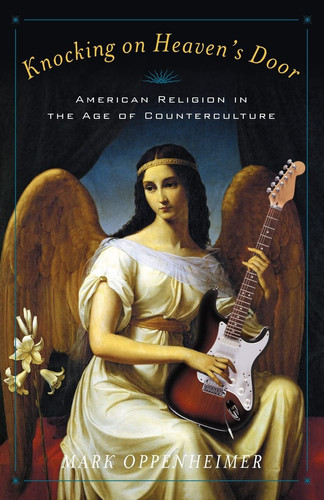
Knocking on Heaven's Door American Religion in the Age of Counterculture

Mark Oppenheimer
A witty and provocative reappraisal of the impact of the cultural upheavals of the sixties on American religious life What happened to American religion during the cultural revolution of the 1960s and early 1970s? The era has long been associated with the ascendancy of Eastern religions and fringe cults. But in this provocative book, Mark Oppenheimer demonstrates that contrary to conventional wisdom, most Americans did not turn on, tune in, and drop out of mainstream religious groups during the Age of Aquarius. Instead, many Americans brought the counterculture with them to their churches and temples, changing the face of American religion. Introducing us to America's first gay ministers and first female priests, to hippie Jews and folk-singing Catholics, Oppenheimer demonstrates that this was an era of extraordinary religious vitality. Drawing on a rich range of archival material as well as interviews with many of the protagonists, Knocking on Heaven's Door offersa wry and iconoclastic reappraisal of the ways in which the upheavals of the sixties changed America's relationship with God.
Yale University Press 2003 284 pages

Henry Rollins

Henry Rollins
These interviews with Henry Rollins conducted by RE/Search (and Search & Destroy) founder V. Vale focus on Henry's travels -- often to countries considered dangerous and off-limits. There are references to Punk Rock history, the Occupy movement, and numerous personal adventures and experiences over the past 30-plus years of combing the planet giving musical and Spoken Word performances, and generally being as creative and humorous as possible no matter what the situation may be . Whatever Henry wants to do, he does it while giving his full attention, like a kind of Zen master. RE/Search tries to reveal the full scope of his creativity, achievements and darkly sardonic perceptiveness and contempt for cliche. This book is full of both humor and inspiration.
RE/Search Publications 2012 124 pages

Strangeland: how Britain stopped making sense

Sopel, Jon
From Jon Sopel, bestselling author and presenter of hit podcast The News Agents , comes an incisive examination of post-Brexit Britain and what it means for our future. 'I like and trust Jon Sopel and you should too' JOE LYCETT 'A thrilling, nerve-wracking book. You couldn't make the last ten years up; thanks to Jon Sopel, you don't have to' PETER FRANKOPAN 'A hugely entertaining and quite traumatic rollercoaster' ARMANDO IANNUCCI 'Acute and unflinching - Sopel deploys his foreign correspondent skills on home shores as well as far ones, and brings together the story of a tumultuous few years on both sides of the Atlantic' MISHAL HUSAIN Returning to the UK in some ways has been disconcerting - or maybe discombobulating would be a better word. It is, after all, my home; it is where I grew up, a country I love and am proud of. But either it' s changed, or I have. Maybe both. It just feels like a strange land. After eight years of political reporting in the US, Jon Sopel returned home to the UK to find a very different place than the one he left. In his first book since launching the global hit podcast The News Agents , Jon explores what has happened to the country he once knew. Either Britain has changed dramatically, or he has. Perhaps it' s both. As a second Trump administration begins, and a new chapter of American history exerts its influence over our own isle, Strangeland paints an unforgettable portrait of a country gone through the looking glass.
Ebury Press 2025-05-29 352 pages