8 results for "Biography"

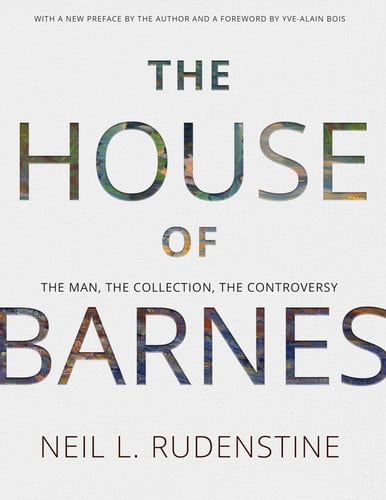
The house of Barnes: the man, the collection, the controversy

Rudenstine, Neil L.
"The House of Barnes: The Man, The Collection, The Controversy is a beautifully written study of the extraordinary art collector and volatile personality Albert C. Barnes. The book places him in the context of his own era, shedding new light on the ideas and movements (about art collecting, education, and aesthetics) that shaped so much of his thinking"--
The American Philosophical Society 2024 229 pages

My broken language: a memoir

Hudes, Quiara Alegría
"Quiara Alegria Hudes was the sharp-eyed girl on the stairs while her family danced in her grandmother's tight South Philly kitchen, "frizzy hair cut short, bangs teased into stiff clouds, sweat glistening in the summer fog, pamper-butt babies weaving between legs." Quiara was awed by her aunts and uncles and cousins, but haunted by the secrets of the family and the unspoken stories of the barrio -- even as she tried to find her own voice in the sea of language around her, written and spoken, English and Spanish, bodies and books, Western art and sacred altars. Her family became her private pantheon, a gathering of powerful orishas with tragic wounds and she vowed to tell their stories--but first she'd have to get off the stairs and join the dance; she'd have to find her langauge. This is an inspired exploration of home, family, memory, and belonging, narrated by the obsessed girl who fought to become an artist so she could capture the world she loved in all its wild and delicate beauty"--
One World 2021 316 pages

Prison blossoms: anarchist voices from the American past

Berkman, Alexander
In 1892, unrepentant anarchists Alexander Berkman, Henry Bauer, and Carl Nold were sent to the Western Pennsylvania State Penitentiary for the attempted assassination of steel tycoon Henry Clay Frick. Searching for a way to continue their radical politics and to proselytize among their fellow inmates, these men circulated messages of hope and engagement via primitive means and sympathetic prisoners. On odd bits of paper, in German and in English, they shared their thoughts and feelings in a handwritten clandestine magazine called "Prison Blossoms." This extraordinary series of essays on anarchism and revolutionary deeds, of prison portraits and narratives of homosexuality among inmates, and utopian poems and fables of a new world to come not only exposed the brutal conditions in American prisons, where punishment cells and starvation diets reigned, but expressed a continuing faith in the "beautiful ideal" of communal anarchism
Belknap Press of Harvard University Press 2011-05-05 253 pages

The education of a university president

Wachman, Marvin
Marvin Wachman's parents were Russian Jewish immigrants with little formal education. Yet they instilled in their son the values of education, self-improvement, and perseverance. Because of Wachman's beliefs in human progress, he learned not only how to survive in hard times, but how to flourish. A newly minted PhD, Wachman served in World War II as a combat platoon sergeant where he was further drawn to teaching by his desire for work of lasting value. He proved a man of vision and administrative ability, qualities that suited him to lead two great universities renowned for their commitment to extending educational opportunity. During the Civil Rights era, Wachman served as the president of Lincoln University, the country's oldest historically Black college; later he guided Temple University to greater fiscal security, and under his leadership, education programs for Temple students were launched in Europe and Asia ."The Education of a University President" recalls Wachman's distinguished career in education and his steadfast dedication to liberal values.
Temple University Press 2005 206 pages