13 results for "Biography"

I was a Doctor in Auschwitz

Perl, Gisella
Gisella Perl's memoir is the extraordinarily candid account of women's extreme efforts to survive Auschwitz. With writing as powerful as that of Charlotte Delbo and Ruth Kluger, her story individualizes and therefore humanizes a victim of mass dehumanization. Perl accomplished this by representing her life before imprisonment, in Auschwitz and other camps, and in the struggle to remake her life. It is also the first memoir by a woman Holocaust survivor and establishes the model for understanding the gendered Nazi policies and practices targeting Jewish women as racially poisonous. Perl's memoir is also significant for its inclusion of the Nazis' Roma victims as well as in-depth representations of Nazi women guards and other personnel. Unlike many important Holocaust memoirs, Perl's writing is both graphic in its horrific detail and eloquent in its emotional responses. One of the memoir's major historical contributions is Perl's account of being forced to work alongside Dr. Josef Mengele in his infamous so-called clinic and using her position to save the lives of other women prisoners. These efforts including infanticide and abortion, topics that would remain silenced for decades and, unfortunately, continue to be marginalized from all too many Holocaust accounts. After decades out of print, this new edition will ensure the crucial place of Perl's testimony on Holocaust memory and education.
Aver Company Publishers, Incorporated 1979 189 pages

The Hooligan's return: a memoir

Manea, Norman
Romanian exile Norman Manea’s internationally acclaimed memoir/novel, now available to English-language readers At the center of The Hooligan’s Return is the author himself, always an outcast, on a bleak lifelong journey through Nazism and communism to exile in America. But while Norman Manea’s book is in many ways a memoir, it is also a deeply imaginative work, traversing time and place, life and literature, dream and reality, past and present. Autobiographical events merge with historic elements, always connecting the individual with the collective destiny. Manea speaks of the bloodiest time of the twentieth century and of the emergence afterward of a global, competitive, and sometimes cynical modern society. Both a harrowing memoir and an ambitious epic project, The Hooligan’s Return achieves a subtle internal harmony as anxiety evolves into a delicate irony and a burlesque fantasy. Beautifully written and brilliantly conceived, this is the work of a writer with an acute understanding of the vast human potential for both evil and kindness, obedience and integrity.
Yale University Press 2013-10-22 385 pages

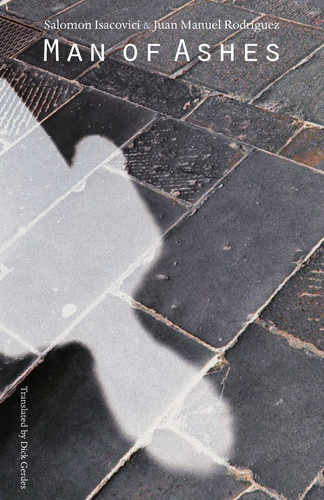
Man of ashes

Isacovici, Salomon
"A poignant, groundbreaking memoir that links the Holocaust and its aftermath to the safe haven that opened for camp survivors in Latin America at mid-century. The controversy surrounding the collaboration between Isacovici and Rodr guez remains an extraordinary opportunity to reflect on the thorny path of Jewish-Hispanic relations worldwide."-Ilan Stavans"Distinguished by geography as well as by its painful testimony. . . . Much of the memoir's early drama involves the creeping Nazi threat opposing Jews' wishful thinking-that the war might be ending and that 'it can't happen here.' . . . The author's family is shattered in Birkenau, but he survives Auschwitz with jobs peeling potatoes and mining coal at Jaworno, and he survives a gruesome death march as the Soviets advance. Isacovici is able to rejoin two brothers in a fruitless return to the family farm and to many European cities in search of a haven. He then joins the family of a woman with whom he has a serious romance, who end up with visas for Ecuador, where he feels an empathy for the suffering of the local Indians. . . . This account tells an unforgettable and unique story."-Kirkus ReviewsSalomon Isacovici died in 1998. Dick Gerdes is a professor of Spanish at George Mason University. Man of Ashes was first published in Mexico in 1990 as A7393: Hombre de cenizas and was awarded the Fernando Jeno Prize.
University of Nebraska Press 2002 244 pages

Listening to the languages of the people: Lazare Sainéan on Romanian, Yiddish, and French

Davis, Natalie Zemon
"This tale of great achievements and great disappointments offers a fresh perspective on the interplay between scholarship and political sentiment in the late nineteenth and early twentieth centuries. Lazăr Șăineanu (1859-1934), linguist and folklorist, was a pioneer in his native Romania, seeking out the popular elements in culture along with high literary ones. He was the first to publish a study of Yiddish as a genuine language, and he uncovered Turkish features in Romanian language and customs. He also made an index of hundreds of Romanian folktales. Yet when he sought Romanian citizenship and a professorship, he was blocked by powerful figures who thought Jews could not be Romanians and who fancied the origins of Romanian culture to be wholly Latin. Faced with anti-Semitism, some of his friends turned to Zionism. Instead he tried baptism, which brought him only mockery and shame. Hoping to find a polity to which he could belong, Șăineanu moved with his family to Paris in 1900 and became Lazare Sainéan. There he made innovative studies of French popular speech and slang, culminating in his great work on the origins of that language. Once again, he was contributing to the development of a national tongue. Even then, while welcomed by literary scholars, Sainéan was unable to get a permanent university post. Though a naturalized citizen of France, he felt himself a foreigner, an "intruder," into his old age"--
Central European University Press 2022-10-15 188 pages

Arnold Daghani's memories of Mikhailowka: the illustrated diary of a slave labour camp survivor

Daghani, Arnold
Arnold Daghani (1909-85) came from a German-speaking Jewish family in Suczawa, then in the Austro-Hungarian Empire, now Romania. His understated narrative of his experiences in the slave labour camp at Mikhailowka, south west Ukraine (1942-43), presented here in its first English book edition, provides a day-by-day account of the chilling experiences of Jewish slave labourers. It is written in a compelling style and illustrated by watercolours and drawings that Daghani made secretly in captivity and smuggled out of the camp and a Romanian ghetto. It includes an extraordinary account of the couple's escape and the shooting of over three hundred prisoners. The uniqueness of Daghani's Holocaust testimony lies in his role as an artist which led to his (and his wife's) escape from the camp and their survival. The camps in Ukraine have been under-investigated and the diary provides significant material. It was used as the basis of investigations in the 1960s into war crimes in the slave labour camps in Ukraine, helping to bring attention to the region and providing some form of recognition for those who suffered there. This richly illustrated and scrupulously edited book is distinguished from more conventional Holocaust memoirs by focusing on fundamental questions of historical testimony and the problems of representation in both words and images. Daghani's diary is contextualized on the basis of wide-ranging new historical, archival and art historical research in essays that document the artist's attempts to achieve justice and reconciliation. They locate the diary in relation to contemporary issues on migration and statelessness, genocide and trauma, self-reflection and memory. The diary is both art and document, addressing how we understand and construct history. It enables readers to engage with the Holocaust via the viewpoint of an individual, making statistics more meaningful and history less distant.
Vallentine Mitchell 2009 243 pages

Notes from the other side of night

Pilon, Juliana Geran
Notes from the Other Side of Night is a diary-memoir written upon Juliana Geran Pilon's return to her native Romania in 1975, which she had left along with her family when she was just fourteen. Poetically weaving together modern insight and realities with childhood perceptions, Pilon tells the haunting stories of her parents, grandparents, neighbors, and friends. Although the scenery of her native home had remained essentially unchanged since her childhood, Pilon recalls streets that are no more, homes and churches that have been demolished. Yet, the hills and forests, the flowers and mountains, the heat of old Bucharest, remained the same. The scenes and characters described in this book are simply unforgettable. Despite the many tragedies it describes--anti-semitism, political imprisonment, and judicial execution were ruthless realities under communism--Notes from the Other Side of Night is not a depressing book. Pilon writes with a detached melancholy about events and characters that illustrate Hannah Arendt's terrifying "banality of evil." But she remembers, as well, those few who managed to remain human beings until the end. Ultimately, hope triumphs in this memoir. This edition includes a new foreword, which discusses the initial writing and publication of this and previous editions.
Transaction Publishers 2014 148 pages

The wasted generation: memoirs of the Romanian journey from capitalism to socialism and back

Brucan, Silviu
In this vivid memoir, Silviu Brucan traces half a century of East European history, bringing to life the drama of a generation caught between the 1944 communist revolution and the 1989 anticommunist revolution. Brucan himself was at the heart of political power from World War II through the formation of a new government after the overthrow of Nicolae Ceausescu. After participating in the antifascist underground movement in World War II, he became acting editor of Romania's leading communist daily. He served as Romania's ambassador to the United States and then as its ambassador to the United Nations. He later grew disenchanted with the Ceausescu regime, becoming a prime mobilizer of popular support for reform and subsequently one of the leaders of the National Salvation Front. Brucan's insider position gave him a unique perspective on the inner workings of the Gheorghiu-Dej and Ceausescu regimes as well as of the political machinations of Soviet and other East European leaders. He reveals for the first time the details - available nowhere else - of secret meetings between communist leaders: the 1944 conspiracy with King Michael against the German occupation; the extraordinary 1945 meeting between Gheorghe Gheorghiu-Dej and Joseph Stalin when the Soviet dictator decided that Georghiu-Dej and not Ana Pauker should lead the Romanian Communist Party; the secret mission assigned to Gheorghiu-Dej by Nikita Khrushchev during the 1956 revolution to install Janos Kadar as leader of the communist party; the 1958 Khrushchev-Gheorghiu-Dej meeting after a bear hunt in the Carpathians, which appeared to be a chat between two canny old peasants but concluded with Khrushchev's decision to withdraw Soviet troops from Romania; and Ceausescu's astute maneuver to seize power while Gheorghiu-Dej was on his deathbed. Brucan then recounts the real story behind the 1989 revolution, which was rooted in earlier plots to overthrow Ceausescu. He traces his own memorable transformation from staunch communist to outspoken critic of the regime, weaving his own story within the larger framework of his country's transformation and hopes for the future.
Westview Press 1993 227 pages

The Green Shirts and the others: a history of Fascism in Hungary and Romania

Nagy-Talavera, Nicholas M.
This book is a newly revised edition of Nicholas M. Nagy-Talavera’s classic work The Green Shirts and the Others published by the Hoover Institution Press in 1970. This book is the standard work in English on the history of fascism in Romania and Hungary. The Green Shirts and the Others is the first comprehensive and comparative work in English on the history of the fascist movements in Hungary and Romania. The author presents an objective account of the history of the two countries from 1918 to 1945 and the role of fascist movements during these years. He considers the rise of these movements, the Arrow Cross in Hungary and the Legion of the Archangel Michael in Romania. He considers their evolution and growth during the interwar period, as well as during the tragic periods in which each movement came to power in its respective country. The author then draws conclusions and parallels from the comparative history of the two movements. The author, Nicholas M. Nagy-Talavera, was a leading American expert on the history of Hungary and Romania during the interwar period and World War II. He was a professor of history at California State University, Chico. His other books include Nicolae Iorga: A Biography.
Center for Romanian Studies 2021 548 pages

Nicolae Iorga: a biography

Nagy-Talavera, Nicholas M.
The Romanian historian Nicolae Iorga played a critical role in the history of his country for more than fifty years until his tragic death in 1940. The author of more than 1,200 books and 20,000 articles, Iorga was one of the most prolific scholars of all time. In recognition of his academic achievements, Iorga received honorary doctorates from universities around the world. Nicolae Iorga is the first comprehensive biography of one of the most important European cultural and political personalities of the first half of the twentieth century. It considers Iorga not only as a historian, politician, journalist, literary critic, playwright, writer, poet, and linguist, but also as an orator, teacher, and a human being. Written by Nicholas M. Nagy-Talavera, a leading American scholar, and based on archival sources and family documents, this book is the first biography to present a complete portrait of the world-renowned historian Nicolae Iorga.
Center for Romanian Studies 1998-01-01 543 pages