24 results for "Business"

Measure of a man: from Auschwitz survivor to presidents' tailor

Greenfield, Martin,Hall, Wynton
He's been called "America's greatest living tailor" and "the most interesting man in the world." Now, for the first time, Holocaust survivor Martin Greenfield tells his incredible life story. Taken from his Czechoslovakian home at age fifteen and transported to the Nazi concentration camp at Auschwitz with his family, Greenfield came face to face with "Angel of Death" Dr. Joseph Mengele and was divided forever from his parents, sisters, and baby brother. In haunting, powerful prose, Greenfield remembers his desperation and fear as a teenager alone in the death camp—and how an SS soldier's shirt dramatically altered the course of his life. He learned how to sew; and when he began wearing the shirt under his prisoner uniform, he learned that clothes possess great power and could even help save his life. Measure of a Man is the story of a man who suffered unimaginable horror and emerged with a dream of success. From sweeping floors at a New York clothing factory to founding America’s premier custom suit company, Greenfield built a fashion empire. Now 86 years old and working with his sons, Greenfield has dressed the famous and powerful of D.C. and Hollywood, including Presidents Dwight Eisenhower, Bill Clinton, and Barack Obama, celebrities Paul Newman, Leonardo DiCaprio, and Jimmy Fallon, and the stars of Martin Scorsese's films. Written with soul-baring honesty and, at times, a wry sense of humor, Measure of a Man is a memoir unlike any other—one that will inspire hope and renew faith in the resilience of man.
Regnery History 2016-08-22 234 pages

Bloomberg by Bloomberg

Bloomberg, Michael,Winkler, Matthew
"The original Bloomberg by Bloomberg was published in 1997 and focused primarily on the genesis of the financial software, data, and media company, Bloomberg L.P. Bloomberg began his career at the securities brokerage Salomon Brothers, before forming Bloomberg L.P. in 1981 and spending the next twenty years as its Chairman and CEO. Bloomberg by Bloomberg featured insights and anecdotes from Bloomberg's illustrious career and advice for aspiring entrepreneurs. In 2001, Bloomberg became the 108th Mayor of New York City, and he was reelected for two more terms. Thus, Bloomberg by Bloomberg, Second Edition will feature additional content highlighting Bloomberg's time as mayor of NYC and how it affected his principles"--
Wiley 2019-01-07 244 pages

From the ground up: a journey to reimagine the promise of America

Schultz, Howard,Gordon, Joanne
"From the longtime CEO and chairman of Starbucks, a bold, dramatic work about the new responsibilities that leaders, businesses, and citizens share in American society today--as viewed through the intimate lens of one man's life and work. What do we owe one another? How do we channel our drive, ingenuity, even our pain, into something more meaningful than individual success? And what is our duty in the places where we live, work, and play? These questions are at the heart of the American journey. They are also ones that Howard Schultz has grappled with personally since growing up in the Brooklyn housing projects and while building Starbucks from eleven stores into one of the world's most iconic brands. In From the Ground Up, Schultz looks for answers in two interwoven narratives. One story shows how his conflicted boyhood--including experiences he has never before revealed--motivated Schultz to become the first in his family to graduate from college, then to build the kind of company his father, a working-class laborer, never had a chance to work for: a business that tries to balance profit and human dignity. A parallel story offers a behind-the-scenes look at Schultz's unconventional efforts to challenge old notions about the role of business in society. From health insurance and free college tuition for part-time baristas to controversial initiatives about race and refugees, Schultz and his team tackled societal issues with the same creativity and rigor they applied to changing how the world consumes coffee. Throughout the book, Schultz introduces a cross-section of Americans transforming common struggles into shared successes. In these pages, lost youth find first jobs, aspiring college students overcome the yoke of debt, post-9/11 warriors replace lost limbs with indomitable spirit, former coal miners and opioid addicts pave fresh paths, entrepreneurs jump-start dreams, and better angels emerge from all corners of the country. From the Ground Up is part candid memoir, part uplifting blueprint of mutual responsibility, and part proof that ordinary people can do extraordinary things. At its heart, it's an optimistic, inspiring account of what happens when we stand up, speak out, and come together for purposes bigger than ourselves. Here is a new vision of what can be when we try our best to lead lives through the lens of humanity."--Dust jacket.
Random House 2019 352 pages

Birdseye: the adventures of a curious man

Kurlansky, Mark
While working as a fur trapper in Labrador, Canada, Clarence Birdseye encountered an age-old problem: bad food and an unappealing, unhealthy diet. However, he observed that fresh vegetables wetted and left outside in the Arctic winds froze in a way that maintained their integrity after thawing. As a result, he developed his patented Birdseye freezing process and started the company that still bears his name. Birdseye forever changed the way we preserve, store, and distribute food, and the way we eat. Mark Kurlansky’s vibrant and affectionate narrative reveals Clarence Birdseye as a quintessential “can-do” American inventor—his other patents include an electric sunlamp, a harpoon gun to tag finback whales, and an improved incandescent lightbulb—and shows how the greatest of changes can come from the simplest of ideas and the unlikeliest of places.
Anchor 2013-02-12 288 pages

Am I being too subtle? straight talk from a business rebel

Zell, Sam
"The traits that make Sam Zell one of the world's most successful entrepreneurs also make him one of the most surprising, enigmatic, and entertaining mavericks in American business. Self-made billionaire Sam Zell consistently sees what others don't. From finding a market for overpriced Playboy magazines among his junior high classmates, to buying real estate on the cheap after a market crash, to investing in often unglamorous industries with long-term value, Zell acts boldly on supply and demand trends to grab the first-mover advantage. And he can find opportunity virtually anywhere--from an arcane piece of legislation to a desert meeting in Abu Dhabi. "If everyone is going left, look right," Zell often says. To him, conventional wisdom is nothing but a reference point. Year after year, deal after deal, he shuts out the noise of the crowd, gathers as much information as possible, then trusts his own instincts. He credits much of his independent thinking to his parents, who were Jewish refugees from World War II. Talk to any two people and you might get wild swings in their descriptions of Zell. A media firestorm ensued when the Tribune Company went into bankruptcy a year after he agreed to steward the enterprise. At the same time, his razor-sharp instincts are legendary on Wall Street, and he has sponsored over a dozen IPOs. He's known as the Grave Dancer for his strategy of targeting troubled assets, yet he's created thousands of jobs. Within his own organization, he has an inordinate number of employees at every level who are fiercely loyal and have worked for him for decades. Zell's got a big personality; he is often contrarian, blunt, and irreverent, and always curious and hardworking. This is the guy who started wearing jeans to work in the 1960s, when offices were a sea of gray suits. He's the guy who told The Wall Street Journal in 1985, "If it ain't fun, we don't do it." He rides motorcycles with his friends, the Zell's Angels, around the world and he keeps ducks on the deck outside his office. As he writes: "I simply don't buy into many of the made-up rules of social convention. The bottom line is: If you're really good at what you do, you have the freedom to be who you really are." Am I Being Too Subtle?--a reference to Zell's favorite way to underscore a point--takes readers on a ride across his business terrain, sharing with honesty and humor stories of the times he got it right, when he didn't, and most important, what he learned in the process. This is an indispensable guide for the next generation of disrupters, entrepreneurs, and investors"--
Portfolio/Penguin 2017-05-09 229 pages

Frozen in time: Clarence Birdseye's outrageous idea about frozen food

Kurlansky, Mark
"This biography--perfect for middle-grade readers--tells the life story of Clarence Birdseye, the man who revolutionized the frozen food industry, and is adapted from Mark Kurlansky's adult work Birdseye: The Adventures of a Curious Man. Adventurer and inventor Clarence Birdseye had a fascination with food preservation that led him to develop and patent the Birdseye freezing process and start the company that still bears his name today. His limitless curiosity spurred his other inventions, including the electric sunlamp, an improved incandescent lightbulb, and a harpoon gun to tag finback whales. This true story of an early entrepreneur is as thrilling as the story of Steve Jobs or Mark Zuckerberg. Includes an 8-page black-and-white photo insert"--
Delacorte Press 2014 165 pages

The art of being unreasonable: lessons in unconventional thinking

Broad, Eli
Eli Broad?s embrace of "unreasonable thinking" has helped him build two Fortune 500 companies, amass personal billions, and use his wealth to create a new approach to philanthropy. He has helped to fund scientific research institutes, K-12 education reform, and some of the world?s greatest contemporary art museums. By contrast, "reasonable" people come up with all the reasons something new and different can?t be done, because, after all, no one else has done it that way. This book shares the "unreasonable" principles-from negotiating to risk-taking, from investing to hiring-that have made Eli Broad such a success.
John Wiley & Sons 2012-05-08 192 pages

The piratization of Russia: Russian reform goes awry

Goldman, Marshall I.
In 1991, a small group of Russians emerged from the collapse of the Soviet Union and enjoyed one of the greatest transfers of wealth ever seen, claiming ownership of some of the most valuable petroleum, natural gas and metal deposits in the world. By 1997, five of those individuals were on Forbes Magazine's list of the world's richest billionaires. These self-styled oligarchs were accused of using guile, intimidation and occasionally violence to reap these rewards. Marshall I. Goldman argues against the line that the course adopted by President Yeltsin was the only one open to Russ
Routledge 2003 289 pages

Julius Rosenwald: repairing the world

Diner, Hasia R.
Julius Rosenwald (1862-1932) rose from modest means as the son of a peddler to immense wealth at the helm of Sears, Roebuck. Yet his most defining legacy stands not upon his business acumen but on the pioneering changes he introduced to the practice of philanthropy. While few may recall Rosenwald's name--he refused to have it attached to the buildings, projects, or endowments he supported--his passionate support of Jewish and African American causes continues to influence lives to this day. This biography of Julius Rosenwald explores his attitudes toward his own wealth and his distinct ideas about philanthropy, positing an intimate connection between his Jewish consciousness and his involvement with African Americans. The book shines light on his belief in the importance of giving in the present to make an impact on the future, and on his encouragement of beneficiaries to become partners in community institutions and projects. Rosenwald emerges from these pages as a compassionate man whose generosity and wisdom transformed the practice of philanthropy itself.
Yale University Press 2017-10-24 237 pages

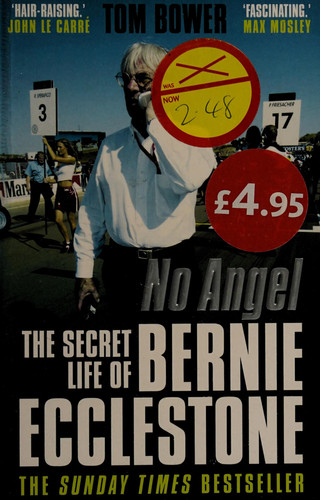
No angel: the secret life of Bernie Ecclestone

Bower, Tom
'I'm no angel.' Bernie Ecclestone Born into poverty, Bernie Ecclestone has made himself a billionaire by developing the world's second most popular sport - Formula One racing. Private, mysterious and some say sinister, the eighty-year-old criss-crosses the globe in his private jet, mixing with celebrities, statesmen and sporting heroes. His success is not just in creating a multibillion-pound global business but in resisting repeated attempts to snatch the glittering prize from his control. Ecclestone has never before revealed how he graduated from selling second-hand cars in London's notorious Warren Street to become the major player he is today. He has finally decided to reveal his secrets: the deals, the marriages, the disasters and the successes in Formula One racing, in Downing Street, in casinos, on yachts and in the air. Surprisingly, he has granted access to his inner circle to Tom Bower, described by Ecclestone as 'The Undertaker' - the man who buries reputations - and has given him access to all his friends and enemies. All have been told by Ecclestone, 'Tell him the truth, good or bad.' No Angel is a classic rags-to-riches story, the unique portrayal of a unique man and an intriguing insight into Formula One racing, business and the human spirit. Tom Bower is the author of nineteen books, including biographies of Robert Maxwell, Mohamed Fayed, Gordon Brown, Richard Branson, Conrad Black and more recently, Simon Cowell.
Faber 2012 433 pages

So much to do: a full life of business, politics, and confronting fiscal crises

Ravitch, Richard
Every city and every state needs a Richard Ravitch. In sixty years on the job, whether working in business or government, he was the man willing to tackle some of the most complex challenges facing New York. Trained as a lawyer, he worked briefly for the House of Representatives, then began his career in his family's construction business. He built high-profile projects like the Whitney Museum and Citicorp Center but his primary energy was devoted to building over 40,000 units of affordable housing including the first racially integrated apartment complex in Washington, D.C. He dealt with architects, engineers, lawyers, bureaucrats, politicians, union leaders, construction workers, bankers, and tenants—virtually all of the people who make cities and states work. It was no surprise that those endeavors ultimately led to a life of public service. In 1975, Ravitch was asked by then New York Governor Hugh Carey to arrange a rescue of the New York State Urban Development Corporation, a public entity that had issued bonds to finance over 30,000 affordable housing units but was on the verge of bankruptcy. That same year, Ravitch was at Carey's side when New York City's biggest banks said they would no longer underwrite its debt and he became instrumental to averting the city's bankruptcy. Throughout his career, Ravitch divided his time between public service and private enterprise. He was chairman of the Metropolitan Transportation Authority from 1979 to 1983 and is generally credited with rebuilding the system. He turned around the Bowery Savings Bank, chaired a commission that rewrote the Charter of the City of New York, served on two Presidential Commissions, and became chief labor negotiator for Major League Baseball. Then, in 2008, after Governor Eliot Spitzer resigned in a prostitution scandal and New York State was in a post-financial-crisis meltdown, Spitzer's successor, David Paterson, appointed Ravitch Lieutenant Governor and asked him to make recommendations regarding the state's budgeting plan. What Ravitch found was the result of not just the economic downturn but years of fiscal denial. And the closer he looked, the clearer it became that the same thing was happening in most states. Budgetary pressures from Medicaid, pension promises to public employees, and deceptive budgeting and borrowing practices are crippling our states' ability to do what only they can do—invest in the physical and human infrastructure the country needs to thrive. Making this case is Ravitch's current public endeavor and it deserves immediate attention from both public officials and private citizens.
PublicAffairs 2014-04-29 254 pages

Mine's bigger: Tom Perkins and the making of the greatest sailing machine ever built

Kaplan, David A.
Tom Perkins had a dream. It wasn't to get rich, acquire power, or marry into fame. As the man most responsible for creating Silicon Valley, he had done all that. His venture-capital firm, Kleiner Perkins Caufield & Byers, remains the most celebrated money machine since the Medicis. He'd helped found Genentech and fund Google. And in 2006 his resignation from the Hewlett-Packard board triggered the revelation of a spying scandal that dominated the front pages. Along the way, he also managed to get himself convicted of manslaughter in France and become Danielle Steel's Husband No. 5. No, as he hit his seventies, Perkins wanted to create the biggest, fastest, riskiest, highest-tech, most self-indulgent sailboat ever—the "perfect yacht." His fantasy would be a modern clipper ship—as long as a football field, forty-two feet wide, with three masts each rising twenty stories toward the heavens. This $130 million square-rigger—The Maltese Falcon—would evoke the era of magnificent vessels that raced across the oceans in the nineteenth century. But the Falcon is more than a tribute to the past. Gone are all the deckhands to climb the yardarms. Gone is the intricate rigging that helped give the square-riggers of yore their impressive look. Instead, the Falcon's giant carbon-fiber masts are entirely freestanding and rotate by computer. The bridge looks like something out of Star Trek. And the fifteen huge sails unfurl at the touch of a screen. In short, this is a revolutionary machine—the most significant advance in sailing in 150 years. With keen storytelling and biting wit, Newsweek's David A. Kaplan takes us behind the scenes of an extraordinary project and inside the mind of a larger-than-life character. We discover why any sane man would gamble a sizeable chunk of his net worth on a boat; we meet the cast of engineers who conspired with him; and we learn about the other two monumental yachts just built by gazillionaires that Perkins is ever eyeing. In a battle of egos on the high seas, Perkins loves to preen, "Mine's better! Mine's Bigger!" On the Falcon's climactic maiden voyage across the Mediterranean—sixteen hundred nautical miles from Istanbul to Malta to the Riviera—we revel with Perkins as his creation surges along at record-breaking speeds. This is the biography of a remarkable boat and the man who built it. More than a tale of technology, Mine's Bigger is a profile of ambition, hubris, and the imagination of a legendary entrepreneur.
HarperCollins 2007-07-03 267 pages