

9 results for "Computers"

Doppelganger: a trip into the mirror world
"What if you woke up one morning and found you'd acquired another self--a double who was almost you and yet not you at all? What if that double shared many of your preoccupations but, in a twisted, upside-down way, furthered the very causes you'd devoted your life to fighting against? Not long ago, the celebrated activist and public intellectual Naomi Klein had just such an experience--she was confronted with a doppelganger whose views she found abhorrent but whose name and public persona were sufficiently similar to her own that many people got confused about who was who. Destabilized, she lost her bearings, until she began to understand the experience as one manifestation of a strangeness many of us have come to know but struggle to define: AI-generated text is blurring the line between genuine and spurious communication; New Age wellness entrepreneurs turned anti-vaxxers are scrambling familiar political allegiances of left and right; and liberal democracies are teetering on the edge of absurdist authoritarianism, even as the oceans rise. Under such conditions, reality itself seems to have become unmoored. Is there a cure for our moment of collective vertigo? Naomi Klein is one of our most trenchant and influential social critics, an essential analyst of what branding, austerity, and climate profiteering have done to our societies and souls. Here she turns her gaze inward to our psychic landscapes, and outward to the possibilities for building hope amid intersecting economic, medical, and political crises. With the assistance of Sigmund Freud, Jordan Peele, Alfred Hitchcock, and bell hooks, among other accomplices, Klein uses wry humor and a keen sense of the ridiculous to face the strange doubles that haunt us--and that have come to feel as intimate and proximate as a warped reflection in the mirror. Combining comic memoir with chilling reportage and cobweb-clearing analysis, Klein seeks to smash that mirror and chart a path beyond despair. Doppelganger asks: What do we neglect as we polish and perfect our digital reflections? Is it possible to dispose of our doubles and overcome the pathologies of a culture of multiplication? Can we create a politics of collective care and undertake a true reckoning with historical crimes? The result is a revelatory treatment of the way many of us think and feel now--and an intellectual adventure story for our times"--

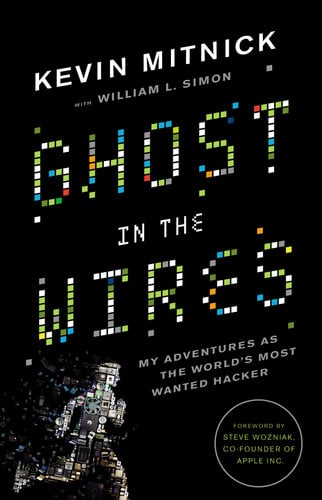
Ghost in the wires: my adventures as the world's most wanted hacker
Kevin Mitnick was the most elusive computer break-in artist in history. He accessed computers and networks at the world's biggest companies--and however fast the authorities were, Mitnick was faster, sprinting through phone switches, computer systems, and cellular networks. He spent years skipping through cyberspace, always three steps ahead and labeled unstoppable. But for Kevin, hacking wasn't just about technological feats-it was an old fashioned confidence game that required guile and deception to trick the unwitting out of valuable information. Driven by a powerful urge to accomplish the impossible, Mitnick bypassed security systems and blazed into major organizations including Motorola, Sun Microsystems, and Pacific Bell. But as the FBI's net began to tighten, Kevin went on the run, engaging in an increasingly sophisticated cat and mouse game that led through false identities, a host of cities, plenty of close shaves, and an ultimate showdown with the Feds, who would stop at nothing to bring him down. Ghost in the Wires is a thrilling true story of intrigue, suspense, and unbelievable escape, and a portrait of a visionary whose creativity, skills, and persistence forced the authorities to rethink the way they pursued him, inspiring ripples that brought permanent changes in the way people and companies protect their most sensitive information
Dark territory: the secret history of cyber war
"As cyber-attacks dominate front-page news, as hackers displace terrorists on the list of global threats, and as top generals warn of a coming cyber war, few books are more timely and enlightening than Dark Territory: The Secret History of Cyber War, by Slate columnist and Pulitzer Prize-winning journalist Fred Kaplan. Kaplan probes the inner corridors of the National Security Agency, the beyond-top-secret cyber units in the Pentagon, the "information warfare" squads of the military services, and the national security debates in the White House, to tell this never-before-told story of the officers, policymakers, scientists, and spies who devised this new form of warfare and who have been planning--and (more often than people know) fighting--these wars for decades. From the 1991 Gulf War to conflicts in Haiti, Serbia, Syria, the former Soviet republics, Iraq, and Iran, where cyber warfare played a significant role, Dark Territory chronicles, in fascinating detail, a little-known past that shines an unsettling light on our future"--

Direct from Dell: strategies that revolutionized an industry
In 1983, Michael S. Dell, then an incoming freshman at the University of Texas at Austin, drove away from his parents' Houston home in a white BMW he'd bought selling subscriptions to his hometown newspaper. In the backseat were three personal computers. Today, he is the Chairman and Chief Executive Officer of Dell Computer Corporation, an $18 billion company, the second-largest manufacturer and marketer of computers in the world. Founded on a deceptively simple premise--to deliver high-performance computer systems directly to the end user--Dell Computer is the envy of its competition, constantly growing at five times the industry rate, and a perennial darling of Wall Street: its stock is up more than 36,000 percent this decade, and more than 200 percent in the last year. In Direct From Dell, Michael Dell himself tells the incredible story of Dell Computer's successful rise, beginning in his college dorm room with $1,000 in capital. In these pages, you'll see the formation of a great visionary--and a great company. You'll meet the young Dell who, at the tender age of eight, had already begun looking "to eliminate unnecessary steps" and who, as a numbers-loving adolescent, was inspired by a newfound fascination with computers to save his money to buy a coveted Apple II--only to promptly take it apart. You'll encounter a young visionary who, upon witnessing the inefficiencies of an exploding industry, challenged conventional wisdom and set out to do nothing less than beat IBM at its own game. In so doing, Dell forever changed the way things "had always been done" in the computer industry. You'll also see the birth of a Dell hallmark--the direct model--which, in its ability to reach the customer directly, eliminated not only a substantial middleman markup but also the possibility of costly excess inventory, setting the stage for other extraordinary achievements. In an industry notorious for its unreliable service, Dell utilized its direct customer relationships to pioneer the concept of customer "support"--and didn't rest until the caliber of its service was rivaled only by the quality of its products and its speed of delivery. But the story of Dell Computer is no fairy tale. Marked by uncharacteristically rapid growth, the company was faced with challenges that could have threatened its very existence. From forays into retail to under- (and over-) developed product lines, Dell learned some hard lessons along the way--and emerged stronger as a result. The strategies born of those times--unrivaled speed to market; superior customer service; a fierce commitment to producing constantly high-quality custom-made systems--heralded what has perhaps been the company's crowning achievement: an early exploitation of the Internet. One of the first companies to actually make money online, Dell is now selling more than $12 million worth of systems per day over www.dell.com. Not just for CEOs or those in high tech, the strategies revealed in Direct From Dell are invaluable to managers in a broad cross section of industries. From starting a successful business to pioneering computer sales and service over the Internet, Dell shares his perspectives on: Why it's infinitely better for any business starting out to have too little capital, rather than too much How studying your customers--not your competition--will give you a greater competitive edge Why it can be life-threatening to your company to pursue too many good ideas--or to grow too fast Why it's essential to run a P&L on every area of your business Why your people prose a greater threat to the health of your business than your competition does How you can exploit your competition's weakness by exposing its greatest strength How integrating your business virtually can make the difference between being quick--and being dead Revealing nothing less than a new model for doing business in the information age, Direct From Dell is both an extraordinary business success story and a manifesto for revolutionizing any industry.

The boy who could change the world: the writings of Aaron Swartz
In his too-short life, Aaron Swartz reshaped the Internet, questioned our assumptions about intellectual property, and touched all of us in ways that we may not even realize. His tragic suicide in 2013 at the age of twenty-six after being aggressively prosecuted for copyright infringement shocked the nation and the world. Here for the first time in print is revealed the quintessential Aaron Swartz: besides being a technical genius and a passionate activist, he was also an insightful, compelling, and cutting essayist. With a technical understanding of the Internet and of intellectual property law surpassing that of many seasoned professionals, he wrote thoughtfully and humorously about intellectual property, copyright, and the architecture of the Internet. He wrote as well about unexpected topics such as pop culture, politics both electoral and idealistic, dieting, and lifehacking. Including three in-depth and previously unpublished essays about education, governance, and cities, The Boy Who Could Change the World contains the life's work of one of the most original minds of our time.

The great divergence: America's growing inequality crisis and what we can do about it
The income gap in America has been blamed on everything from computers to immigration, but its causes and consequences call for a patient, non-partisan exploration. Noah explains not only how this "Great Divergence" has come about, but why it threatens American democracy--and most important, how we can begin to reverse it

Why nothing works: the anthropology of daily life
This book is about cults, crime, and shoddy goods, and the shrinking dollar. It's about porno parlors, and sex shops, and men kissing in the streets. It's about daughters shaking up, women on the rampage, marriages postponed, divorces on the rise, and no one having kids. It's about old ladies getting mugged and raped, people shoved in front of trains, and shoot-outs at gas pumps. And letters that take weeks to get delivered, waiters who throw food at you, rude sales help, and computers that bill you for things you never bought. It's about broken benches, waterless fountains, cracked windows, dirty toilets, crater-filled roads, graffiti-covered buildings, slashed paintings, toppled statues, stolen books. It's about shoelaces that break in a week, bulbs that keep burning out, pens that won't write, cars that rust, stamps that don't stick, stitches that don't hold, buttons that pop off, zippers that jam, planes that lose their engines, reactors that leak, dams that burst, roofs that collapse... It's about astrologers, shamans, exorcists, witches, and angels in space suits... It's about a lot of other things that are new and strange in America today. —from the Introduction

Workers at risk: voices from the workplace
Workers at Risk is a powerful and moving documentary of workers routinely exposed to toxic chemicals. Products and services we all depend on—glass bottles, computers, processed foods and fresh flowers, dry cleaning, medicines, even sculpture and silkscreened toys—are produced by workers in constant contact with more than 63,000 commercial chemicals. For many of them, the risk of death is a way of life. More than seventy of them speak here of their jobs, their health, and the difficult choices they face in coming to grips with the responsibilities, risks, fears, and satisfactions of their work. Some struggle for information and acknowledgment of their health risks; others struggle to put out of their minds the dangers they know too well. Through extensive interviews, the authors have captured in these voices that double bind of the chemical worker: "If I had known that it would be that lethal, that it could give me or one of my children cancer, I would have refused to work. But it's a matter of survival and we just don't consider all these things. Meanwhile, we've got to make money to survive."
