23 results for "Economics"

Think Like a Freak The Authors of Freakonomics Offer to Retrain Your Brain

Steven D. Levitt,Stephen J. Dubner
Now in Paperback—the New York Times bestseller—and follow up to the revolutionary bestsellers Freakonomics and SuperFreakonomics—with a new author Q&A. With their trademark blend of captivating storytelling and unconventional analysis, Steven D. Levitt and Stephen J. Dubner take us inside their thought process and teach us all how to think a bit more productively, more creatively, more rationally. In Think Like A Freak, they offer a blueprint for an entirely new way to solve problems, whether your interest lies in minor lifehacks or major global reforms. The topics range from business to philanthropy to sports to politics, all with the goal of retraining your brain. Along the way, you’ll learn the secrets of a Japanese hot-dog-eating champion, the reason an Australian doctor swallowed a batch of dangerous bacteria, and why Nigerian e-mail scammers make a point of saying they’re from Nigeria. Levitt and Dubner plainly see the world like no one else. Now you can too. Never before have such iconoclastic thinkers been so revealing—and so much fun to read.
HarperCollins 2015-07-07 304 pages

Making Sense Conversations on Consciousness, Morality, and the Future of Humanity

Sam Harris
A New York Times New and Noteworthy Book From the bestselling author of Waking Up and The End of Faith, an adaptation of his wildly popular, often controversial podcast "Civilization rests on a series of successful conversations." --Sam Harris Sam Harris--neuroscientist, philosopher, and bestselling author--has been exploring some of the most important questions about the human mind, society, and current events on his podcast, Making Sense. With over one million downloads per episode, these discussions have clearly hit a nerve, frequently walking a tightrope where either host or guest--and sometimes both--lose their footing, but always in search of a greater understanding of the world in which we live. For Harris, honest conversation, no matter how difficult or controversial, represents the only path to moral and intellectual progress. This book includes a dozen of the best conversations from Making Sense, including talks with Daniel Kahneman, Timothy Snyder, Nick Bostrom, and Glenn Loury, on topics that range from the nature of consciousness and free will, to politics and extremism, to living ethically. Together they shine a light on what it means to "make sense" in the modern world.
HarperCollins Publishers 2021-08-17 464 pages

Misbehaving: the making of behavioral economics

Thaler, Richard H.
"Coupling recent discoveries in human psychology with a practical understanding of incentives and market behavior, Thaler enlightens readers about how to make smarter decisions in an increasingly mystifying world. He reveals how behavioral economic analysis opens up new ways to look at everything from household finance to assigning faculty offices in a new building, to TV game shows, the NFL draft, and businesses like Uber"--Amazon.
W. W. Norton 2016-06-28 415 pages

The Rise of Superman Decoding the Science of Ultimate Human Performance

Steven Kotler
A Wall Street Journal bestseller. In this groundbreaking book, New York Times bestselling author Steven Kotler decodes the mystery of ultimate human performance. Drawing on over a decade of research and firsthand reporting with dozens of top action and adventure sports athletes like big wave legend Laird Hamilton, big mountain snowboarder Jeremy Jones, and skateboarding pioneer Danny Way, Kotler explores the frontier science of "flow," an optimal state of consciousness in which we perform and feel our best. Building a bridge between the extreme and the mainstream, The Rise of Superman explains how these athletes are using flow to do the impossible and how we can use this information to radically accelerate performance in our own lives. At its core, this is a book about profound possibility; about what is actually possible for our species; about where--if anywhere--our limits lie.
Amazon Publishing 2021-09-07 254 pages

Focus: The Hidden Driver of Excellence

Goleman, Daniel
In Focus, psychologist and journalist Daniel Goleman delves into the science of attention in all its varieties, presenting a long-overdue discussion of this little-noticed and underrated mental asset that matters enormously for how we navigate life. Attention works much like a muscle: use it poorly and it can wither; work it well and it grows. In an era of unstoppable distractions, Goleman persuasively argues that now more than ever we must learn to sharpen focus if we are to contend with, let alone thrive in, a complex world. Goleman analyzes attention research as a threesome: inner, other, and outer focus. He shows why high-performers need all three kinds of focus, as demonstrated by rich case studies from fields as diverse as competitive sports, education, the arts, and business. Those who excel rely on what Goleman calls smart practice that helps them improve habits, add new skills, and sustain excellence. Combining cutting-edge research with practical findings, Focus reveals what distinguishes experts from amateurs and stars from average performers.
HARPER PAPERBACKS 2015-05-05 320 pages

The evolutionary bases of consumption

Saad, Gad
The Evolutionary Bases of Consumption by Gad Saad applies Darwinian principles in understanding our consumption patterns and the products of popular culture that most appeal to individuals. The first and only scholarly work to do so, this is a captivating study of the adaptive reasons behind our behaviors, cognitions, emotions, and perceptions. This lens of analysis suggests how we come to make selections such as choosing a mate, the foods we eat, the gifts that we offer, and more. It also highlights how numerous forms of dark side consumption, including pathological gambling, compulsive buying, pornographic addiction, and eating disorders, possess a Darwinian etiology. Engaging and diverse in scope, the book maps consumption phenomena onto four key Darwinian modules: survival, reproduction, kin selection, and reciprocal altruism. As an interesting proposal, the author suggests that media and advertising contents exist in their particular forms because they are a reflection of our evolved human nature - negating the notion that they exist through the reverse causal link, as proposed by social constructivists. The link between evolutionary theory and consumption behaviors is detailed throughout the book via an examination of (among many others): appearance-enhancing products and services; financial and physical risk-taking; use of sexual imagery and the depictions of women in advertising; and television programs, movies, songs, music videos, literature, religion, and art. The Evolutionary Bases of Consumption will appeal to evolutionists who desire to explore new areas wherein evolutionary theory can be applied; consumer and marketing scholars who wish to learn about the ways in which biological-and evolutionary-based theorizing can be infused into the consumer behavior/marketing/advertising disciplines; as well as other interdisciplinary scholars interested in gaining knowledge about the power of evolutionary theory in explaining a wide range of behavioral phenomena.
Lawrence Erlbaum Associates 2007 339 pages

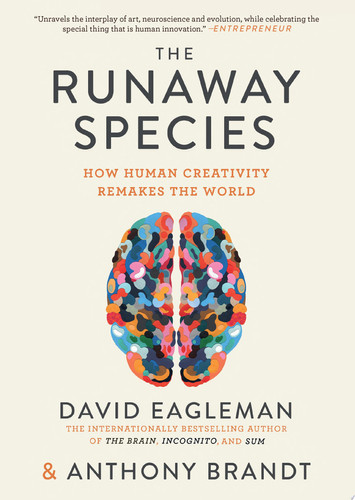
The Runaway Species How Human Creativity Remakes the World

David Eagleman,Anthony Brandt
This enlightening examination of creativity looks “at art and science together to examine how innovations . . . build on what already exists and rely on three brain operations: bending, breaking and blending” ( The Wall Street Journal ) The Runaway Species is a deep dive into the creative mind, a celebration of the human spirit, and a vision of how we can improve our future by understanding and embracing our ability to innovate. David Eagleman and Anthony Brandt seek to answer the question: what lies at the heart of humanity’s ability—and drive—to create? Our ability to remake our world is unique among all living things. But where does our creativity come from, how does it work, and how can we harness it to improve our lives, schools, businesses, and institutions? Eagleman and Brandt examine hundreds of examples of human creativity through dramatic storytelling and stunning images in this beautiful, full–color volume. By drawing out what creative acts have in common and viewing them through the lens of cutting–edge neuroscience, they uncover the essential elements of this critical human ability, and encourage a more creative future for all of us. “ The Runaway Species approach[es] creativity scientifically but sensitively, feeling its roots without pulling them out.” — The Economist
Catapult 2018-06-19 304 pages

This is your brain on sports: the science of underdogs, the value of rivalry, and what can we learn from the T-shirt cannon

Wertheim, L. Jon,Sommers, Sam
This is Your Brain on Sports is the book for sports fans searching for a deeper understanding of the games they watch and the people who play them. Sports Illustrated executive editor and bestselling author L. Jon Wertheim teams up with Tufts psychologist Sam Sommers to take readers on a wild ride into the inner world of sports. Through the prism of behavioral economics, neuroscience, and psychology, they reveal the hidden influences and surprising cues that inspire and derail us—on the field and in the stands—and by extension, in corporate board rooms, office settings, and our daily lives. In this irresistible narrative romp, Wertheim and Sommers usher us from professional football to the NBA to Grand Slam tennis, from the psychology of athletes self-handicapping their performance in the boxing ring or the World Series, to an explanation of why even the glimpse of a finish line can lift us beyond ordinary physical limits. They explore why Tom Brady and other starting NFL quarterbacks all seem to look like fashion models; why fans of teams like the Cubs, Mets, and any franchise from Cleveland love rooting for a loser; why the best players make the worst coaches; why hockey goons (and fans) would rather fight at home than on the road; and why the arena t-shirt cannon has something to teach us about human nature. In short, this book is an entertaining and thought-provoking journey into how psychology and behavioral science collide with the universe of wins-and-losses, coaching changes, underdogs, and rivalry games. — Boston Globe, Best Books of 2016, Sports
Three Rivers Press 2017-02-07 288 pages

Moral Calculations Game Theory, Logic, and Human Frailty

Laszlo Mero
Are people ever rational? Consider this: You auction off a one-dollar bill to the highest bidder, but you set the rules so that the second highest bidder also has to pay the amount of his last bid, even though he gets nothing. Would people ever enter such an auction? Not only do they, but according to Martin Shubik, the game's inventor, the average winning bid (for a dollar, remember) is $3.40. Many winners report that they bid so high only because their opponent "went completely crazy." This game lies at the intersection of three subjects of eternal fascination: human psychology, morality, and John von Neumann's game theory. Hungarian game-theorist Laszlo Mero introduces us to the basics of game theory, including such concepts as zero-sum games, Prisoner's Dilemma and the origins of altruism; shows how game theory is applicable to fields ranging from physics to politics; and explores the role of rational thinking in the context of many different kinds of thinking. This fascinating, urbane book will interest everyone who wonders what mathematics can tell us about the human condition.
Springer New York 2012-10-17 276 pages

The Leaders We Need And What Makes Us Follow

Michael Maccoby,Tim Scudder
There is one irrefutable definition of a leader: someone with followers. Without followers, there is no leader. But people follow a leader in different ways and for different reasons. Leadership is a relationship between leaders and followers. This relationship depends on the qualities of both leaders and followers in a particular context. Someone can be a leader in one context but not in another. In this revised edition of The Leaders We Need and What Makes Us Follow Michael Maccoby with Tim Scudder show how leadership relationships can improve organizations and societies and be developmental for both leaders and followers. The book delves deeply into the dynamics of followership, answering questions such as the following. Why do people follow a leader? Why do we sometimes follow bad leaders? Why do we sometimes turn against leaders we once admired? How have the values of followers been changing? To collaborate more productively, both leaders and followers need to develop their Personality Intelligence. The more complex and interdependent work becomes, the more organizations need people who are engaged in their work. Personality Intelligence as it is described in this book equips us to understand each other, our drives, values, fears, hopes, and dreams. It combines intellectual and emotional intelligence, both head and heart. It is aided by personality assessments, such as the Strength Development Inventory (SDI) that give leaders and followers a shared language that helps in avoiding conflict and developing strengths. Based on the authors' extensive experience, this book provides examples from many different organizations in different countries of how Personality Intelligence has improved relationships at work. Although the myth of the single leader persists, most organizations need a leadership team, including three types of leaders: Strategic, Operational, and Networking. They typically have different personalities, but they are most effective if they develop and practice a leadership philosophy that describes their organizational purpose, the practical values essential to accomplish that purpose, the moral basis for decisions, and the definition of results. Increasingly the Millennial generation who share an Interactive social character want to work at organizations with a purpose and values that improve society. This book is not a quick-fix or a list of steps to success, but it will make you think more deeply about why people will or will not follow you and how you can become the kind of leader your followers need.
Personal Strengths Publishing, Incorporated 2017-05 198 pages

Handbook of stress, medicine, and health

Cary L. Cooper
A vast amount of research linking stress and health has been done throughout the last decade in the fields of heart disease, cancer, chronic fatigue syndrome, and many other potentially stress-related illnesses. The Handbook of Stress, Medicine, and Health brings together the most distinguished authors in the world and presents the role of stress in illness and health. This exciting book sets the agenda for the new field of stress medicine. Filled with valuable practical information, this comprehensive resource investigates the health effects of life events and work. The physiological impact of critical life changes is discussed, and general occupational stress as well as the stress, from exposure on the job to HIV and AIDS are examined. The relationship between personality types, behavior patterns, and the risk of disease is explored. The guide also reviews the importance of social support during times of illness. It details how families can help alleviate or exacerbate stress. The Handbook offers guidelines for preventing and treating stress-related illnesses and includes insightful steps for coping with the stress of cancer. The Handbook of Stress, Medicine, and Health provides-under one cover-an overview of research, important information that can readily be used, plus recommendations for the direction of future study.
CRC Press 1996 388 pages

The life and work of an eminent psychologist

Lazarus, Richard S.
This book is an intellectual and personal history of Richard Lazarus, a psychologist whose pioneering research and theories in stress, coping, and emotion continue to have a worldwide influence. The author interweaves the account of his personal life and career with the developments of psychology as an academic discipline during the past five decades. His reminiscences offer glimpses of academic life, university politics, and also his growing contacts with the European and Japanese colleagues who invited him to lecture. The book concludes with his thoughts about aging, retirement, and issues of life and death.
Springer 1998-04-15 312 pages

DECISION TIME! Better Decisions for a Better Life

Richard Davidson
Where you are in life today is the result of all of the past decisions which you have made or which have been made for you in response to the various situations and events, both expected and unexpected, that have impacted your life. The decisions that you will make from this point forward will determine the degree to which your future will be positive or negative. "Decision Time!" describes the subjective and multi-variable nature of real life decisions and demonstrates techniques for making complex decisions with ease and insight. "Decision Time!" provides guidance for many different decision-making situations with both personal and business aspects. Topics with examples from life include games, negotiation, the challenge of financing a college education, starting a small business, purchasing/shopping, family relationships, getting the government to listen to you, investments, and many more. "Decision Time!" gives you insight into the decision-making process as applied to both small and large choices you will face. It includes dynamic aspects, cultural effects, and morality as applied to decision-making for individuals, teams, and societies. "Decision Time!" prepares you to face the continuous impact of decision situations confidently and without hesitation.
Richard Davidson 2007-08 176 pages

Industrial Psychology

Charles S. Myers
This work has been selected by scholars as being culturally important, and is part of the knowledge base of civilization as we know it. This work is in the "public domain in the United States of America, and possibly other nations. Within the United States, you may freely copy and distribute this work, as no entity (individual or corporate) has a copyright on the body of the work. Scholars believe, and we concur, that this work is important enough to be preserved, reproduced, and made generally available to the public. We appreciate your support of the preservation process, and thank you for being an important part of keeping this knowledge alive and relevant.
Creative Media Partners, LLC 2022-10-27 252 pages

Decision Theory and Decision Behaviour

A. Rapoport
The book treats two approaches to decision theory: (1) the normative, purporting to determine how a 'perfectly rational' actor ought to choose among available alternatives; (2) the descriptive, based on observations of how people actually choose in real life and in laboratory experiments. The mathematical tools used in the normative approach range from elementary algebra to matrix and differential equations. Sections on different levels can be studied independently. Special emphasis is made on 'offshoots' of both theories to cognitive psychology, theoretical biology, and philosophy.
Palgrave Macmillan UK 1998-01-28 469 pages

Psychology and Industrial Efficiency Industrial Psychology

Hugo Münsterberg
Psychology and Industrial Efficiency. By Hugo Münsterberg. Our aim is to sketch the outlines of a new science which is to intermediate between the modern laboratory psychology and the problems of economics: the psychological experiment is systematically to be placed at the service of commerce and industry. So far we have only scattered beginnings of the new doctrine, only tentative efforts and disconnected attempts which have started, sometimes in economic, and sometimes in psychological, quarters. The time when an exact psychology of business life will be presented as a closed and perfected system lies very far distant. But the earlier the attention of wider circles is directed to its beginnings and to the importance and bearings of its tasks, the quicker and the more sound will be the development of this young science. What is most needed to-day at the beginning of the new movement are clear, concrete illustrations which demonstrate the possibilities of the new method. In the following pages, accordingly, it will be my aim to analyze the results of experiments which have actually been carried out, experiments belonging to many different spheres of economic life. But these detached experiments ought always at least to point to a connected whole; the single experiments will, therefore, always need a general discussion of the principles as a background. In the interest of such a wider perspective we may at first enter into some preparatory questions of theory. They may serve as an introduction which is to lead us to the actual economic life and the present achievements of experimental psychology.
CreateSpace Independent Publishing Platform 2014-10-21 150 pages

Magnolia Street

Louis Golding
In Magnolia Street, where Jews and Christians live on opposite sides of the road, feuds and alliances, gossip and good humour thrive. This is a classic saga of working-class life in 1920s Manchester. First published in 1932, it was a bestseller. "I loved this book... it is basically a painting in words about a small street in Doomingtom (Manchester, England). The street is divided into Jewish and Gentile sides; the Gentiles have 2 major social venues - the pub and the barbers; the Jews have 2 major social gathering places - the grocer shop and the synagogue. Never the twain shall meet, until one of the incidents occurs that bring the two sides together for the first time... The beauty of this book is the way that each of the characters is drawn, how they fit into their families and into the street. The characters really come to life! It was just a joy to read."--Liz, Goodreads
Rare Treasure Editions 2025-10-03 38 pages