8 results for "Environment"

Eight Weeks to Optimum Health A Proven Program for Taking Full Advantage of Your Body's Natural Healing Power

Andrew Weil
The Eight-Week Program sets up a foundation for healthy living that is preventative in the broadest sense. Not only does Dr. Weil provide information with which you can keep your body's inherent healing system in peak working order as you encounter the challenges of day-to-day life; he also shows you how to construct a lifestyle that will protect you from premature illness and disability, and teaches practices and skills that will enable you to prepare for any eventual health crisis you may face. With clearly explained and authoritatively informed recommendations, Dr. Weil guides you in fine-tuning your current eating habits - to eat less fat and animal protein, more whole grains and other complex carbohydrates, and more fruits and vegetables - so that your diet becomes more nutritious and increasingly beneficial to general health (he also includes simple, flavorful recipes to help you make the dietary changes quickly and easily). He shows how walking and stretching will satisfy all your exercise requirements throughout your life, and provides a gradual plan by which you can make brisk forty-five-minute walks and some simple stretches part of your weekly regimen. Dr. Weil recommends the addition of four antioxidant supplements - vitamins C and E, selenium, and mixed carotenes - to further protect your healing system. He provides instruction in five basic breathing exercises that can impart both greater relaxation and energy. He discusses the benefits and techniques of visualization. He explains ways to overcome sleeping problems; to test and filter your water supply; to eliminate toxins from your diet; and to avoid environmental hazards such as the sun's ultraviolet rays. He suggestsways to make art, music, and the natural world more important parts of your life. For those who wish to experiment further, he outlines several projects and activities such as cleansing fasts. There are a dozen additional programs that concentrate on the specific needs of pregnant
Ballantine 1998 288 pages

Troubled Water What's Wrong with What We Drink

Seth M. Siegel
New York Times bestselling author Seth M. Siegel shows how our drinking water got contaminated, what it may be doing to us, and what we must do to make it safe. If you thought America’s drinking water problems started and ended in Flint, Michigan, think again. From big cities and suburbs to the rural heartland, chemicals linked to cancer, heart disease, obesity, birth defects, and lowered IQ routinely spill from our taps. Many are to blame: the EPA, Congress, a bipartisan coalition of powerful governors and mayors, chemical companies, and drinking water utilities—even NASA and the Pentagon. Meanwhile, the bottled water industry has been fanning our fears about tap water, but bottled water is often no safer. The tragedy is that existing technologies could launch a new age of clean, healthy, and safe tap water for only a few dollars a week per person. Scrupulously researched, Troubled Water is full of shocking stories about contaminated water found throughout the country and about the everyday heroes who have successfully forced changes in the quality and safety of our drinking water. And it concludes with what America must do to reverse decades of neglect and play-it-safe inaction by government at all levels in order to keep our most precious resource safe.
St. Martin's Publishing Group 2020-11-10 352 pages

Social Learning and Clinical Psychology

Julian B. Rotter
2017 Reprint of 1954 First. Full facsimile of the original edition, not reproduced with Optical Recognition Software. The main idea in Julian Rotter's social learning theory is that personality represents an interaction of the individual with his or her environment. One cannot speak of a personality, internal to the individual, that is independent of the environment. Neither can one focus on behavior as being an automatic response to an objective set of environmental stimuli. Rather, to understand behavior, one must take both the individual (i.e., his or her life history of learning and experiences) and the environment (i.e., those stimuli that the person is aware of and responding to) into account. Rotter describes personality as a relatively stable set of potentials for responding to situations in a particular way. Julian B. Rotter has been cited as one of the 100 most eminent psychologists of the 20th century and is still much cited.
Martino Fine Books 2017-02-02 466 pages

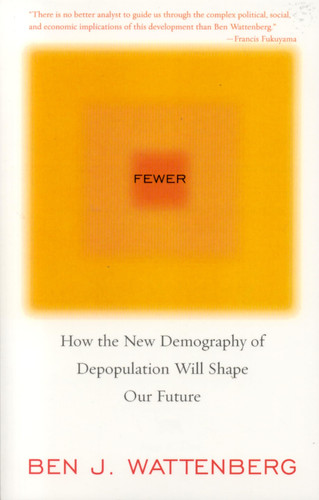
Fewer How the New Demography of Depopulation Will Shape Our Future

Ben J. Wattenberg
For at least 650 years, since the time of the Black Plague, the world's population has headed in only one direction: up. But within a few decades the number of people on earth will level off and then will likely decline over an extended period of time. In Fewer, the author explains how and why birthrates and fertility rates are now falling at an alarming rate in countries throughout the world--both modern and less developed. And he explores the major implications--for world politics, the environment, and the international economy--of this momentous shift. Illustrated with 23 clarifying charts.
Bloomsbury Academic 2004 241 pages

Raising Children Toxic Free How to Keep Your Child Safe from Lead, Asbestos, Pesticides, and Other Environmental Hazards

Herbert L. Needleman,Philip J. Landrigan
Avon provides you with a variety of information childcare and parenting books that meet the needs of consumers. These titles cover a diverse range of parenting concerns such as baby naming, finding an ideal nanny and even environmental issues that affect children.Ease the worries of all parents by ordering plenty of these terrific books.
HarperCollins Publishers 1995-11 272 pages

The Teacch Approach to Autism Spectrum Disorders

Gary B. Mesibov,Victoria Shea,Eric Schopler
TEACCH (Treatment and Education of Autistic and related Communication-handicapped Children) has grown over the past three decades from a small clinic for children to an internationally recognized treatment and support modality for individuals of all ages with autism spectrum disorders. In The TEACCH Approach to Autism Spectrum Disorders, the program’s founders and their colleagues explain its methods and philosophy based on an understanding and respect for "the culture of autism." The TEACCH program focuses on persons with autism and the development of instruction and supports based on each individual’s skills, interests, and needs. It draws from the research literature in psychology and neuropsychology to create activities and environments that are organized to emphasize meaningfulness—an approach that has proved crucial to an autistic individual’s ability to learn, comprehend, and apply learning across situations. The TEACCH Approach to Autism Spectrum Disorders explains how: - TEACCH targets critical areas in executive functioning, engagement, communication, and social skills. - Strategies can be tailored to an individual’s unique developmental and functional level. - Parents become involved in all phases of intervention as collaborators, cotherapists, and advocates. - The program can be introduced and adapted for individuals of all ages, from preschool children to adults. - Professionals can be trained in the program and its methods. This progressive program offers individuals with autism, their families, teachers, and therapists both optimism and useful strategies, without minimizing the condition or its effects. All clinicians working with people with autism will find The TEACCH Approach to Autistic Spectrum Disorders a valuable resource.
Springer US 2012-07-20 212 pages

Our Synthetic Environment

Murray Bookchin,Lewis Herber
2018 Reprint of 1962 Edition. Full facsimile of the original edition, not reproduced with Optical Recognition software. Bookchin wrote Our Synthetic Environment under the pseudonym Lewis Herber. This was one of the first books of the modern period in which an author espoused an ecological and environmentalist worldview. It predates Silent Spring (1962) by Rachel Carson, a more widely known book on the same topic widely credited as starting the environmental movement. "At the time of its publication, Our Synthetic Environment was the most comprehensive and enlightened book on the environmental crisis. Many other books on this topic have been published since, but none, I believe, as comprehensive." --René Dubos
Martino Fine Books 2018-07-11 328 pages