13 results for "Environment"

The encyclopedia of trouble and spaciousness

Solnit, Rebecca
The incomparable Rebecca Solnit, author of more than a dozen acclaimed, prizewinning books of nonfiction including Men Explain Things To Me , brings the same dazzling writing to the essays in The Encyclopedia of Trouble and Spaciousness ; hailed by the Los Angeles Times as "globally wide-ranging and topically urgent and the Boston Globe as "luminous and precise.". As the title suggests, the territory of Solnit's concerns is vast, and in her signature alchemical style she combines commentary on history, justice, war and peace, and explorations of place, art, and community, all while writing with the lyricism of a poet to achieve incandescence and wisdom. Gathered here are celebrated iconic essays along with little-known pieces that create a powerful survey of the world we live in, from the jungles of the Zapatistas in Mexico to the splendors of the Arctic. This rich collection tours places as diverse as Haiti and Iceland; movements like Occupy Wall Street and the Arab Spring; an original take on the question of who did Henry David Thoreau's laundry; and a searching look at what the hatred of country music really means. Solnit moves nimbly from Orwell to Elvis, to contemporary urban gardening to 1970s California macramé and punk rock, and on to searing questions about the environment, freedom, family, class, work, and friendship. It's no wonder she's been compared in Bookforum to Susan Sontag and Annie Dillard and in the San Francisco Chronicle to Joan Didion. The Encyclopedia of Trouble and Spaciousness proves Rebecca Solnit worthy of the accolades and honors she's received. Rarely can a reader find such penetrating critiques of our time and its failures leavened with such generous heapings of hope. Solnit looks back to history and the progress of political movements to find an antidote to despair in what many feel as lost causes. In its encyclopedic reach and its generous compassion, Solnit's collection charts a way through the thickets of our complex social and political worlds. Her essays are a beacon for readers looking for alternative ideas in these imperiled times.
Trinity University Press 2015 334 pages

The Lede Dispatches from a Life in the Press

Calvin Trillin
NEW YORK TIMES BESTSELLER • A fascinating portrait of journalism and the people who make it, told through pieces collected from the incomparable six-decade career of bestselling author and longtime New Yorker writer Calvin Trillin “ The Lede contains profiles . . . that are acknowledged classics of the form and will be studied until A.I. makes hash out of all of us.”—Dwight Garner, The New York Times LONGLISTED FOR THE PEN/DIAMONSTEIN-SPIELVOGEL AWARD I’ve been writing about the press almost as long as I’ve been in the game. At some point, it occurred to me that disparate pieces from various places in various styles amounted to a picture from multiple angles of what the press has been like over the years since I became a practitioner and an observer. Calvin Trillin has reported serious pieces across America for The New Yorker, covered the civil rights movement in the South for Time, and written comic verse for The Nation . But one of his favorite subjects over the years—a superb fit for his unique combination of reportage and humor—has been his own professional environment: the American press. In The Lede, Trillin gathers his incisive, often hilarious writing on reporting, reporters, and the media world that is their orbit. He writes about a legendary crime reporter in Miami, a swashbuckling New York Times reporter, and an erudite film critic in Dallas who once a week transformed himself from an appreciator of the French nouvelle vague into a crude connoisseur of movies like Mother Riley Meets the Vampire . There are pieces on the House of Lords aspirations of a North American press baron, the paucity of gossip columns in Russia, the embroilment of a weekly newspaper in a missing person case, and the founding of a publication called Beautiful Spot: A Magazine of Parking . Uniting all of this is Trillin’s signature combination of empathy, humor, and graceful prose. The Lede is an unparalleled portrait of one of our fundamental American institutions from a master journalist.
Random House 2025-02-18 336 pages

Social mobility in industrial society

Lipset, Seymour Martin,Bendix, Reinhard
"Where else but in America," captains of industry are fond of saying, "could a penniless immigrant like Andrew Carnegie achieve so much?" "Any place else that has reached the same stage of industrial development," is the answer implicit in Social Mobility. The authors conclude, somewhat surprisingly, that is not noticeably easier to pull oneself up by the bootstraps in the "Land of Opportunity" than it is in a number of other countries. The very process of industrialization, with its growing demands for skilled management, prevents an elite in any nation form permanently establishing itself in a position of exclusive superiority. Even in states where neither political institutions nor official ideologies favor upward mobility, increasing industrialization requires a growing--and, consequently, a changing--elite class. The authors are concerned primarily with mobility in the total population, with movements into and out of the working class, though they report extensively on the social origins of business leaders in various countries. They deal, too, with the different values of different societies and with the motivation of the socially mobile. Solidly based on examination of studies in more than ten languages and of raw data from unpublished works, this is the first attempt in thirty years to bring together in one volume what is known of social mobility around the world. Here is the first systematic comparison of mobility patterns in such diverse countries as Sweden and Italy, Great Britain and Japan--a comparison backed by statistics and given added meaning by discussions of the causes and consequences of mobility. The authors analyze in detail the political implications of mobility and they explore the relationship between education and mobility. Their discussions of factors making for success or failure in school, of the role of intelligence in mobility, of the effects on children of growing up in various environments, and of the varying personalities of the mobile and non-mobile bring together the work of both psychologists and sociologists. This title is part of UC Press's Voices Revived program, which commemorates University of California Press’s mission to seek out and cultivate the brightest minds and give them voice, reach, and impact. Drawing on a backlist dating to 1893, Voices Revived makes high-quality, peer-reviewed scholarship accessible once again using print-on-demand technology. This title was originally published in 1959.
Univ of California Press 2018-10-23 332 pages

French modern: norms and forms of the social environment

Rabinow, Paul
In this study of space and power and knowledge in France from the 1830s through the 1930s, Rabinow uses the tools of anthropology, philosophy, and cultural criticism to examine how social environment was perceived and described. Ranging from epidemiology to the layout of colonial cities, he shows how modernity was revealed in urban planning, architecture, health and welfare administration, and social legislation.
University of Chicago Press 1995-12-01 454 pages

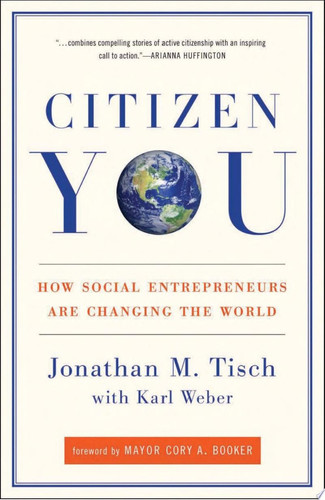
Citizen You How Social Entrepreneurs Are Changing the World

Jonathan Tisch,Karl Weber
Just when the world needs it most, a new style of social engagement is emerging: Active Citizenship. A key member of one of New York’s most civic-minded families—one that has supported many of America’s notable institutions and deserving programs—Jonathan Tisch has devoted a lifetime to “active citizenship.” It’s an idea that uses the power of practical creativity and grassroots participation to solve seemingly intractable problems. In Citizen You , Tisch challenges readers to join this movement and points the way toward making our world a better place, one person and one neighborhood at a time. Tisch has filled Citizen You with accounts of people who you’ll meet, such inspirational individuals as: Scott Harrison, who has used the networking and marketing skills he developed as a night club promoter to help over a million people in the developing world get access for the first time to clean, safe drinking water. Steffi Coplan, whose Broadway2Broadway project brought out the hidden musical talents of kids at an inner city school. Eric Schwarz, who decided to do something about America’s under-performing schools, and parlayed a single classroom mentoring project into the nationwide Citizens Schools movement. Chris Swan, who is training a new generation of “citizen engineers” to make sure that the projects they build aren’t just structurally sound but also environmentally and socially sustainable. Dave Nelson, who traded his role as an executive at IBM for a job at a struggling nonprofit that teaches kids about the power of entrepreneurship—and discovered a host of new challenges and rewards in the process. Through these and many other remarkable stories, you’ll learn how today’s active citizens are transforming thinking about social change. Rather than short-term fixes and hand-me-down charity, they’re striving to build sustainable, systemic solutions to our most challenging problems, building and empowering communities rather than fostering dependency. And they’re using a host of new tools, from online networking and private-public partnerships to corporate engagement and social entrepreneurship, to redefine how change can happen. Citizen You is a potent antidote to pessimism. At a time of unprecedented challenges on the national and world stage, when active citizenship is not a choice but a necessity, Citizen You dares us to reshape the social, political, and intellectual structures that have long confined us, and offers fresh thinking that redefines the very concept of activism. For more information and ideas about how to be an active citizen go to www.citizenyou.org
Crown 2011-05-03 288 pages

The Belief in a Just World A Fundamental Delusion

Melvin Lerner
The "belief in a just world" is an attempt to capmre in a phrase one of the ways, if not the way, that people come to terms with-make sense out of-find meaning in, their experiences. We do not believe that things just happen in our world; there is a pattern to events which conveys not only a sense of orderli ness or predictability, but also the compelling experience of appropriateness ex pressed in the typically implicit judgment, "Yes, that is the way it should be." There are probably many reasons why people discover or develop a view of their environment in which events occur for good, understandable reasons. One explanation is simply that this view of reality is a direct reflection of the way both the human mind and the environment are constructed. Constancies, patterns which actually do exist in the environment-out there-are perceived, represented symbolically, and retained in the mind. This approach cenainly has some validity, and would probably suffice, if it were not for that sense of "appropriateness," the pervasive affective com ponent in human experience. People have emotions and feelings, and these are especially apparent in their expectations about their world: their hopes, fears, disappointments, disillusionment, surprise, confidence, trust, despondency, anticipation-and certainly their sense of right, wrong, good, bad, ought, en titled, fair, deserving, just.
Springer US 2013-05-25 210 pages

The next Los Angeles: the struggle for a livable city

Gottlieb, Robert,Freer, Regina,Vallianatos, Mark,Dreier, Peter
Los Angeles's history is a story of conflicting visions. Most historians, journalists, and filmmakers have focused on L.A. as a bastion of corporate greed, business boosterism, political corruption, cheap labor, exploited immigrants, and unregulated sprawl. The Next Los Angeles tells a different story: that of the reformers and radicals who have struggled for alternative visions of social and economic justice. The authors chronicle efforts of progressive social movements that worked throughout the twentieth century to create a more livable, just, and democratic Los Angeles. These movements—what the authors call Progressive L.A.—have produced a new kind of labor movement, community-oriented environmentalism, and multi-ethnic coalition politics. This book shows how reformers have fought to transform a city characterized by huge economic disparities, concrete-encased rivers, and an endless landscape of subdivisions, freeways, and malls into a progressive model for regions around the country. The Next Los Angeles includes a decade-by-decade historical snapshot of the city's progressive social movements and an in-depth exploration of key trends that are remaking L.A. at the beginning of the twenty-first century. It examines L.A.'s changing political landscape, including grassroots initiatives to construct a new agenda for social transformation. At once a history, a policy analysis, and a road map for a progressive future, this book provides an exciting portrayal of a city on the cutting edge of many of the social, economic, and environmental changes sweeping across America.
University of California Press 2005-01-17 279 pages

An Appeal To Reason : A Cool Look At Global Warming

Nigel Lawson
Global warming is an issue on which everyone - from layman to scientist, besides politicians, economists, policy makers and businessmen - has a stake, and an opinion that often borders on the extreme. In this persuasively argued work, Nigel Lawson calls for a fresh look at global warming, without in any way discounting the importance of the subject. Lawson carefully and succinctly examines all aspects of the debate: the science, the economics, the politics and the ethics. He concludes that conventional wisdom on global warming is suspect on a number o grounds; that global warming is not the devastating threat to the planet it is widely alleged to be; and that the remedy being proposed is, for very good reasons, not politically attainable; and even if it were, it would be worse than the warming it is supposed to avert. This hard-hitting response, argued with logic, common sense and wit, is particularly relevant to India, given that as a prime mover of the so-called 'Basic' countries (Brazil, South Africa, India and China) India is at the forefront of the environment debate, and that policies on emissions applicable to developed nations would have a direct impact on its rapid economic development - and livelihoods.
HarperCollins Publishers India 2010-12-28 192 pages

Helping Young Refugees and Immigrants Succeed Public Policy, Aid, and Education

G. Holton
In a unique effort, this book brings together, for the first time, scholarly analyses by eminent researchers of the historical, social, legal, and cultural influences on the young newcomers' lives as well as reports by practitioners in major aid organizations about the concrete work that their organizations have been carrying out.
Palgrave Macmillan US 2010-10-18 316 pages

The Qualitative-Quantitative Distinction in the Social Sciences

B. Glassner,Jonathan Moreno
Without of course adopting a Platonic metaphysics, the eighteenth-century philosophes were Grecophiles who regarded the Athenian philosophers as their intellectual forbearers and mentors. So powerful was their identification with c1assification that ancient ideas were taken as keys to the design of the modem world, but usually the ideas were taken separately and as divided from their systematic context. The power of number was an idea the En lightenment thinkers deployed with their legendary passion and vigor, particularly as an instrument for social reconstruction. It is no exaggemtion to say that the role of quantities in contemporary social scientific theorizing cannot be understood with any depth absent a recollection of the philosophes' axial development of the notion of quantification. It is a commonplace that for the philosophes progress required releasing human abilities to have power over nature. Aprerequisite for this power was knowledge of the underlying causes of natural events, knowledge that required quantitative precision. Enlightenment thinkers were sufficiently aware of themselves as products of their time to appreciate the importance of a liberal social environment to the knowledge enterprise; the supposition that the reverse is also the case, that enhanced knowledge could advance social conditions, came easily.
Springer Netherlands 2010-12-25 236 pages

The decomposition of sociology

Horowitz, Irving Louis
Sociology, writes Irving Louis Horowitz, has changed from a central discipline of the social sciences to an ideological outpost of political extremism. As a result, the field is in crisis. Some departments have been shut down, others cut back, research programs have dried up, and the growth of professional organizations and student enrollments have been either curbed or atrophied. In The Decomposition of Sociology, Professor Horowitz, for four decades a leading social scientist, offers a frank and full account of the maelstrom engulfing this field. Horowitz pulls no punches in this provocative volume. He charges that much contemporary sociological theory has degenerated into pure critique, strongly influenced by Marxist dogmatism. Such thinking has a strong element of anti-American and anti-Western bias, in which all questions have one answer--the evil of capitalism--and all problems one solution--the good of socialism. In criminology, for instance, he shows that high crime rates are seen as an expression of capitalist disintegration, and criminal behavior a covert expression of radical action. Indeed, in one area after another, Horowitz shows how this same formulaic thinking dominates the field, resulting in a crude reductionist view of contemporary social life. At a time when the world is moving closer to the free market and democratic norms, he concludes, such reductionist tendencies and ideological posturings are outmoded. Horowitz offers an alternative. He urges a larger vision of the social sciences, one in which universities, granting agencies and research institutes provide an environment in which research may be untainted by partisan agencies--where policy choices will not be hindered by the prevailing cultural climate. He counsels sociologists to move away from blind advocacy, to meet the challenges of the twenty-first century by incorporating the knowledge of other times and places, and to take into account the shrinking globe--in short, to develop and maintain a new set of universal standards in this era of a world culture. Here then is an eloquent plea for a revolution in sociology, written by one of the field's foremost figures. It offers as well a cautionary tale about the potentially devastating effect of ideology on scholarly pursuits.
Oxford University Press 1993 282 pages

Imagining Zion

S. Ilan Troen
This timely book tells the fascinating story of how Zionists colonizers planned and established nearly 700 agricultural settlements, towns, and cities from the 1880s to the present. This extraordinary activity of planners, architects, social scientists, military personnel, politicians, and settlers is inextricably linked to multiple contexts: Jewish and Zionist history, the Arab/Jewish conflict, and the diffusion of European ideas to non-European worlds. S. Ilan Troen demonstrates how professionals and settlers continually innovated plans for both rural and urban frontiers in response to the competing demands of social and political ideologies and the need to achieve productivity, economic independence, and security in a hostile environment. In the 1930s, security became the primary challenge, shaping and even distorting patterns of growth. Not until the 1993 Oslo Accords, with prospects of compromise and accommodation, did planners again imagine Israel as a normal state, developing like other modern societies. Troen concludes that if Palestinian Arabs become reconciled to a Jewish state, Israel will reassign priority to the social and economic development of the country and region.
Yale University Press 2011-03-11 360 pages