6 results for "Evolution"

Why is the Penis Shaped Like That? And Other Reflections on Being Human

Jesse Bering
"Titillating and provocative essays from one of the freshest voices in science today -- Why do testicles hang the way they do? Is there an adaptive function to the female orgasm? What does it feel like to want to kill yourself? Does "free will" really exist? And why is the penis shaped like that anyway? In Why Is the Penis Shaped Like That?, the research psychologist and award-winning columnist Jesse Bering features more than thirty of his most popular essays from Scientific American and Slate, as well as two new pieces, that take readers on a bold and captivating journey through some of the most taboo issues related to evolution and human behavior. Exploring the history of cannibalism, the neurology of people who are sexually attracted to animals, the evolution of human body fluids, the science of homosexuality, and serious questions about life and death, Bering astutely covers a generous expanse of our kaleidoscope of quirks and origins. With his characteristic irreverence and trademark cheekiness, Bering leaves no topic unturned or curiosity unexamined, and he does it all with an audaciously original voice. Whether you are interested in the psychological history behind the many facets of sexual desire or the evolutionary patterns that have dictated our current mystique and phallic physique, Why Is the Penis Shaped Like That? is bound to create lively discussion and debate for years to come"--
Transworld Publishers Limited 2012 320 pages

Neural Darwinism: the theory of neuronal group selection

Edelman, Gerald M.
Already the subject of considerable pre-publication discussion, this magisterial work by one of the nation's leading neuroscientists presents a radically new view of the function of the brain and nervous system. Its central idea is that the nervous system in each individual operates as a selective system resembling natural selection in evolution, but operating by different mechanisms. By providing a fundamental neural basis for categorization of the things of this world it unifies perception, action, and learning. The theory also completely revises our view of memory, which it considers to be a dynamic process of recategorization rather than a replicative store of attributes. This has deep implications for the interpretation of various psychological states from attention to dreaming. Neural Darwinism ranges over many disciplines, focusing on key problems in developmental and evolutionary biology, anatomy, physiology, ethology, and psychology. This book should therefore prove indispensable to advanced undergraduate and graduate students in these fields, to students of medicine, and to those in the social sciences concerned with the relation of behavior to biology. Beyond that, this far-ranging theory of brain function is bound to stimulate renewed discussions of such philosophical issues as the mind-body problem, the origins of knowledge, and the perceptual basis of language.
Basic Books 1987-12-06 371 pages

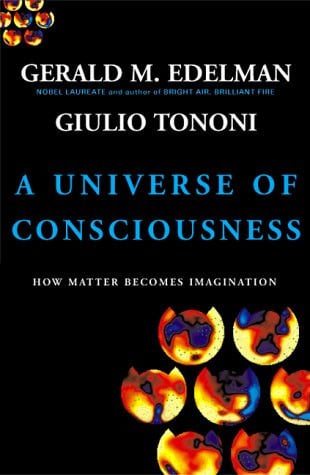
A universe of consciousness: how matter becomes imagination

Edelman, Gerald Maurice
In A Universe of Consciousness, Gerald Edelman builds on the radical ideas he introduced in his monumental trilogy-Neural Darwinism, Topobiology, and The Remembered Present-to present for the first time an empirically supported full-scale theory of consciousness. He and the neurobiolgist Giulio Tononi show how they use ingenious technology to detect the most minute brain currents and to identify the specific brain waves that correlate with particular conscious experiences. The results of this pioneering work challenge the conventional wisdom about consciousness.
Basic Books 2000 274 pages

The politics of women's biology

Hubbard, Ruth
For a range of historical and contemporary issues in eugenics, human evolution, and procreative technology, Ruth Hubbard explains why scientific descriptions and choices should not generalize human, or female, attributes without acknowledging the realities of people's lives. Sophisticated in its analysis, yet not at all technical in its exposition, this book will find a wide readership among feminists, the general public, and the scientific community.
Rutgers University Press 1990 229 pages

Creativity: the human brain in the age of innovation

Goldberg, Elkhonon
Drawing on a number of cutting-edge discoveries from brain research as well as on his own insights as a neuroscientist and neuropsychologist, Goldberg presents a wide-ranging discussion of history, culture, and evolution to arrive at an original understanding of the nature of human creativity. He discusses the origins of language, the nature of several neurological disorders, animal cognition, virtual reality, and even artificial intelligence. Included are his bold predictions about the future directions of creativity and innovation in society, and how they will change the ways the human brain develops and ages
Oxford University Press 2018 274 pages