6 results for "Folklore"

Eating animals

Foer, Jonathan Safran
From the Publisher: Jonathan Safran Foer spent much of his teenage and college years oscillating between omnivore and vegetarian. But on the brink of fatherhood-facing the prospect of having to make dietary choices on a child's behalf-his casual questioning took on an urgency. His quest for answers ultimately required him to visit factory farms in the middle of the night, dissect the emotional ingredients of meals from his childhood, and probe some of his most primal instincts about right and wrong. Brilliantly synthesizing philosophy, literature, science, memoir and his own detective work, Eating Animals explores the many fictions we use to justify our eating habits-from folklore to pop culture to family traditions and national myth-and how such tales can lull us into a brutal forgetting. Marked by Foer's profound moral ferocity and unvarying generosity, as well as the vibrant style and creativity that made his previous books, Everything is Illuminated and Extremely Loud and Incredibly Close, widely loved, Eating Animals is a celebration and a reckoning, a story about the stories we've told-and the stories we now need to tell.
Back Bay Books/Little, Brown and Co 2010 341 pages

The Long Journey Home Re-Visioning the Myth of Demeter and Persephone for Our Time

Christine Downing
The story of the mother-and-daughter goddesses Demeter and Persephone has seized the imagination of people in every age, from ancient times to the present. Considered today by many to be the archetypal myth for women, it touches on timeless themes in every life, such as the male-female relationship, love between women, initiations into puberty and old age, the mother-daughter bond, death, and ecological renewal. Christine Downing has combined essays, prose, poetry, and even performance art with her own insightful commentary to shed new light on the myth's ancient meanings and to offer new insights in its implications for contemporary men and women.
Shambhala Publications 2001-05-01 320 pages

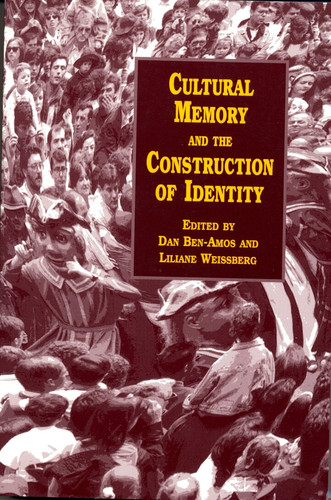
Cultural memory and the construction of identity

Dan Ben-Amos,Liliane Weissberg
This volume explores the dynamics of cultural memory in a variety of contexts. How do we remember persons, objects, events? Memory seems so personal, but, at the same time, it is shaped by collective experience and public representations. Newspapers, television, and even celebrations and festivities mark for us not only who we are, but also who we were and how we lived. Cultural Memory and the Construction of Identity brings together scholars of folklore, literature, history, and communication to explore the dynamics of cultural memory in a variety of contexts. The authors show how memory is shaped and how it operates in uniting society and creating images that attain the value of truth even if they deviate from fact. They point to the relationship between this memory and our notion of "culture." They also discuss this cultural memory on the level of everyday life. Building on research in the field, their contributions clearly show that cultural memory has become the creative invention of the past in service of both the present and an imagined future.
Wayne State University Press 1999 333 pages

Language and Myth

Ernst Cassirer
In this important study Ernst Cassirer analyzes the non-rational thought processes that go to make up culture. He demonstrates that beneath both language and myth there lies an unconscious "grammar" of experience, whose categories and canons are not those of logical thought. He shows that this prelogical "logic" is not merely an undeveloped state of rationality, but something basically different, and that this archaic mode of thought still has enormous power over even our most rigorous thought, in language, poetry and myth. The author analyzes brilliantly such seemingly diverse (yet related) phenomena as the metaphysics of the Bhagavat Gita, the Melanesian concept of Mana, the Naturphilosophie of Schelling, modern poetry, Ancient Egyptian religion, and symbolic logic. He covers a vast range of material that is all too often neglected in studies of human thought. These six essays are of great interest to the student of philosophy or the philosophy of science, the historian, or the anthropologist. They are also remarkably timely for students of literature, what with the enormous emphasis placed upon "myth" in modern literary speculation. This book is not superficial speculation by a dabbler, but a penetrating study by one of the most profound and sensitive philosophic minds of our time.
Dover Publications, Incorporated 2013-12-03 128 pages