13 results for "Future Technology"

The age of AI: and our human future

Kissinger, Henry,Schmidt, Eric,Huttenlocher, Daniel P.
"Artificial Intelligence (AI) is transforming human society in fundamental and profound ways. Not since the Age of Reason have we changed how we approach security, economics, order, and even knowledge itself. In the Age of AI, three deep and accomplished thinkers come together to consider what AI will mean for us all."
Back Bay Books, Little, Brown and Company 2022 266 pages

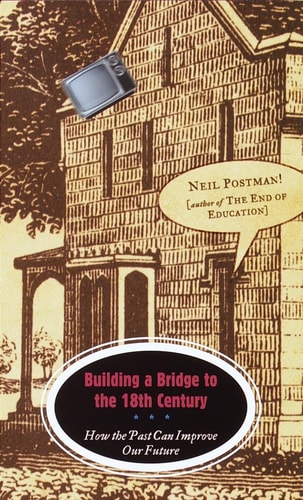
Building a bridge to the 18th century: how the past can improve our future

Postman, Neil
In Building a Bridge to the 18th Century , acclaimed cultural critic Neil Postman offers a cure for the hysteria and hazy values of the postmodern world. Postman shows us how to reclaim that balance between mind and machine in a dazzling celebration of the accomplishments of the Enlightenment-from Jefferson's representative democracy to Locke's deductive reasoning to Rousseau's demand that the care and edification of children be considered an investment in our collective future. Here, too, is the bold assertion that Truth is invulnerable to fashion or the passing of time. Provocative and brilliantly argued, Building a Bridge to the 18th Century illuminates a navigable path through the Information Age-a byway whose signposts, it turns out, were there all along.
Knopf 2000-10-10 213 pages

Liquid surveillance: a conversation

Bauman, Zygmunt
Today the smallest details of our daily lives are tracked and traced more closely than ever before, and those who are monitored often cooperate willingly with the monitors. From London and New York to New Delhi, Shanghai and Rio de Janeiro, video cameras are a familiar and accepted sight in public places. Air travel now commonly involves devices such as body-scanners and biometric checks that have proliferated in the wake of 9/11. And every day Google and credit-card issuers note the details of our habits, concerns and preferences, quietly prompting customized marketing strategies with our active, all too often zealous cooperation. In today's liquid modern world, the paths of daily life are mobile and flexible. Crossing national borders is a commonplace activity and immersion in social media increasingly ubiquitous. Today's citizens, workers, consumers and travellers are always on the move but often lacking certainty and lasting bonds. But in this world where spaces may not be fixed and time is boundless, our perpetual motion does not go unnoticed. Surveillance spreads in hitherto unimaginable ways, responding to and reproducing the slippery nature of modern life, seeping into areas where it once had only marginal sway. In this book the surveillance analysis of David Lyon meets the liquid modern world so insightfully dissected by Zygmunt Bauman. Is a dismal future of moment-by-moment monitoring closing in, or are there still spaces of freedom and hope? How do we realize our responsibility for the human beings before us, often lost in discussions of data and categorization? Dealing with questions of power, technology and morality, this book is a brilliant analysis of what it means to be watched - and watching - today.
Polity Press 2013 182 pages

Present shock: when everything happens now

Rushkoff, Douglas
"An award-winning author explores how the world works in our age of "continuous now" Back in the 1970s, futurism was all the rage. But looking forward is becoming a thing of the past. According to Douglas Rushkoff, "presentism" is the new ethos of a society that's always on, in real time, updating live. Guided by neither history nor long term goals, we navigate a sea of media that blend the past and future into a mash-up of instantaneous experience. Rushkoff shows how this trend is both disorienting and exhilarating. Without linear narrative we get both the humiliations of reality TV and the associative brilliance of The Simpsons. With no time for long term investing, we invent dangerously compressed derivatives yet also revive sustainable local businesses. In politics, presentism drives both the Tea Party and the Occupy movement. In many ways, this was the goal of digital technology--outsourcing our memory was supposed to free us up to focus on the present. But we are in danger of squandering this cognitive surplus on trivia. Rushkoff shows how we can instead ground ourselves in the reality of the present tense. "--
Penguin Books 2014-02-25 296 pages

The best that money can't buy: beyond politics, poverty, & war

Fresco, Jacque
Jacque Fresco envisions a global civilization in which science and technology are applied with human and environmental concern to secure, protect, and encourage a more humane world for all people. This book offers a possible way out of our recurring cycles of boom and recession, famine, poverty, a declining environment, and territorial conflicts where peace is merely the interval between wars. It outlines an attainable, humane social design of the near future where human rights are no longer paper proclamations but a way of life. The Best That Money Can't Buy is a challenge to all people to work toward a society in which all of the world's resources become the common heritage of all of the earth's people. It is accompanied by 70 color photos of Fresco's original designs, which illuminate the fulfilling lifestyle of a global, resource-based economy.
Global Cyber-Visions 2002 168 pages

Too much magic: wishful thinking, technology, and the fate of the nation

Kunstler, James Howard
""Too Much Magic" is what Kunstler sees in the bright visions of a future world dreamed up by optimistic souls who believe technology will solve all our problems. In Too Much Magic, Kunstler articulates a number of issues relating to the unsustainability of our high-energy lifestyle, including: The pernicious cult of "Happy Motoring" and our desire to preserve an ailing and backwards automotive industry at all costs; The upcoming demise of suburbia and the mass migration and demographic shifts that will ensue; The inadequacy of both renewable energy sources and alternative fossil fuels such as biodiesel, tar sands, and shale oil and gas to make up the energy shortfall when our conventional sources of fuel dry; The effect of the continuing increase in global population even after resource shortfalls of oil and fossil fuels become acute; How the diminishing returns of technology collide with hypercomplexity to scuttle our wishes for an easy way out of our epochal predicaments. With vision and clarity of thought, and an antic, comic spirit, Kunstler argues that the time for magical thinking and hoping for miracles is over, and the time to begin preparing for the long emergency has begun."--Jacket.
Atlantic Monthly Press 2012 245 pages

Future imperfect: technology and freedom in an uncertain world

Friedman, David D.
Future Imperfect describes and discusses a variety of technological revolutions that might happen over the next few decades, their implications, and how to deal with them. Topics range from encryption and surveillance through biotechnology and nanotechnology to life extension, mind drugs, virtual reality, and artificial intelligence. One theme of the book is that the future is radically uncertain. Technological changes already begun could lead to more or less privacy than we have ever known, freedom or slavery, effective immortality or the elimination of our species, and radical changes in life, marriage, law, medicine, work, and play. We do not know which future will arrive, but it is unlikely to be much like the past. It is worth starting to think about it now.
Cambridge University Press 2008-07-21 351 pages

The aesthetics of computing

Gelernter, David Hillel
'A brand name in computer science' (New York Times), David Gelertner has revolutionised computing with his work in the field of parallel processing. In this provocative new book, he urges the importance of a criterion of beauty in valuing the best of computers and software alike, and deplores the effects of a two cultures approach that sees beauty and computing as incompatible concepts. Technically accessible, wittily argued and stimulatingly visionary, Gelertner's book provides a manifesto for all future computer users, programmers, designers and manufacturers to follow into the next century.
Weidenfeld & Nicolson 1998 149 pages

Competing for the future: how digital innovations are changing the world

Kressel, Henry
Everybody knows that digital technology has revolutionized our economy and our lifestyles. But how many of us really understand the drivers behind the technology - the significance of going digital; the miniaturization of circuit boards; the role of venture capital in financing the revolution; the importance of research and development? How many of us understand what it takes to make money from innovative technologies? Should we worry about manufacturing going offshore? What is the role of India and China in the digital economy? Drawing on a lifetime's experience in the industry, as an engineer, a senior manager and as a partner in a venture capital firm, Henry Kressel offers an expert personalized answer to all these questions. He explains how the technology works, why it matters, how it is financed and what the key lessons are for public policy.
Cambridge University Press 2007-04-16 399 pages

Ursula Franklin speaks: thoughts and afterthoughts, 1986-2012

Franklin, Ursula M.,Freeman, Sarah Jane
As a distinguished scientist, pacifist, and feminist, Ursula Franklin has been regularly invited by diverse groups to share her insights into the social and political impacts of science and technology. This collection contains twenty-two of Franklin's speeches and five interviews from 1986 to 2012 that have been retrieved and restored from audio and visual recordings with the help of her collaborator, Jane Freeman. These speeches and interviews, available here in print for the first time, stress the increased need for discernment and principled dialogue among Canadians. Although civic life for many Canadians has changed drastically in the past five decades, the basic principles of building and maintaining peaceful communities remain unchanged. Addressing practices of education, research, and civic life, Franklin looks to the past as well as the future to suggest collective ways of cultivating discernment and of advancing human betterment. As a whole, the collection reveals the evolution of Franklin's perspective: a perspective that is further elaborated in her afterthoughts that form the book's introduction and conclusion. Although her speeches and interviews are often critical of the status quo, Ursula Franklin Speaks is a fundamentally optimistic book, grounded in the conviction of the human capacity for compassion and understanding.
McGill-Queen's University Press 2014 256 pages