20 results for "History"

The pope at war: the secret history of Pius XII, Mussolini, and Hitler

Kertzer, David I.
"The Pope at War is the third in a trilogy of books about Pope Pius XII's response to the rise of Fascism and Nazism. It tells the dramatic story of Pope Pius XII's struggle to respond to the Second World War, the Holocaust, and the ongoing Nazi attempts to exterminate the Jews of Europe. It is the first book dealing with the war to make extensive use of the newly opened Vatican archives for the war years. It is based, as well, on thousands of documents from the Italian, German, French, British, and American archives. Among the many new discoveries brought to light is the discovery that within weeks of becoming pope in 1939, Pius XII entered into secret negotiations with Hitler through Hitler's emissary, a Nazi Prince who was married to the daughter of the King of Italy and who was very close to Hitler. The negotiations were kept so secret that not even the German ambassador to the Holy See was informed of them. The book also offers new insight into the thinking behind Pius XII's decision to maintain good relations with the German government during the war, including keeping the Germans happy while they occupied Rome in 1943-44. And throughout, David I. Kertzer shows the active role of the Italian Church hierarchy in promoting the Axis war while the pope, who as bishop of Rome was responsible for the Italian hierarchy, offered his silent blessings and cast his public speeches in such a way that both sides could claim support for their cause"--
Oxford University Press 2022 621 pages

The myth of Hitler's pope: how Pope Pius XII rescued Jews from the Nazis

Dalin, David G.
Was Pope Pius XII secretly in league with Adolf Hitler? No, says Rabbi David G. Dalin, but there was a cleric in league with Hitler: the grand mufti of Jerusalem, Hajj Amin al-Husseini. As Pope Pius XII worked to save Jews from the Nazis, the grand mufti became Hitler’s staunch ally and a promoter of the Holocaust, with a legacy that feeds radical Islam today. In this shocking and thoroughly documented book, Rabbi Dalin explodes the myth of Hitler’s pope and condemns the mythmakers for not only rewriting history, but for denying the testimony of Holocaust survivors, hijacking the Holocaust for unseemly political ends, and ignoring the real threat to the Jewish people.
Regnery History 2023-06-06 209 pages

The light of Christ: an introduction to Catholicism

White, Thomas Joseph
The Light of Christ provides an accessible presentation of Catholicism that is grounded in traditional theology, but engaged with a host of contemporary questions or objections. Inspired by the theologies of Iranaeus, Thomas Aquinas and John Henry Newman, and rooted in a post-Vatican II context, Fr. Thomas Joseph White presents major doctrines of the Christian religion in a way that is comprehensible for non-specialists: knowledge of God, the mystery of the Trinity, the Incarnation and the atonement, the sacraments and the moral life, eschatology and prayer. At the same time, The Light of Christ also addresses topics such as evolution, the modern historical study of Jesus and the Bible, and objections to Catholic moral teaching. Touching on the concerns of contemporary readers, Fr. White examines questions such as whether Christianity is compatible with the findings of the modern sciences, do historical Jesus studies disrupt or confirm the teaching of the faith, and does history confirm the antiquity of Catholic claims. This book serves as an excellent introduction for young professionals with no specialized background in theology who are interested in learning more about Catholicism, or as an introduction to Catholic theology. It will also serve as a helpful text for theology courses in a university context. As Fr. White states in the book’s introduction: “This is a book that offers itself as a companion. I do not presume to argue the reader into the truths of the Catholic faith, though I will make arguments. My goal is to make explicit in a few broad strokes the shape of Catholicism. I hope to outline its inherent intelligibility or form as a mystery that is at once visible and invisible, ancient and contemporary, mystical and reasonable.”
The Catholic University of America Press 2017-09-15 316 pages

Corpus Christi: the Eucharist in late medieval culture

Rubin, Miri
This book studies later medieval culture (c. 1150-1500) through its central symbol: the eucharist. From the twelfth century onward the eucharist was designed by the Church as the foremost sacrament. The claim that this ritual brought into presence Christ's own body, and offered it to believers, underpinned the sacramental system and the clerical meditation upon which it depended. The book explores the context in which the sacramental world was created and the cultural processes through which it was disseminated, interpreted and used. With attention to the variety of eucharistic meanings and practices, the book moves from the "design" of the eucharist in the twelfth century to its redesign in the sixteenth--a story of the emergence of a symbol, its use and interpretation and final transformation.
Cambridge University Press 1991 432 pages

Set all afire: a novel about Saint Francis Xavier

De Wohl, Louis
Saint Francis Xavier's life is, in itself, a dramatic story. With humility and deep religious conviction, the famous Catholic novelist Louis de Wohl takes us into the mind and heart of this great missionary and saint who went by order of St. Ignatius of Loyola to "set all afire" in the Orient. Louis de Wohl captivates the reader as he follows Xavier's life from student days in Paris, through his meeting with Ignatius, his rather reluctant conversion, and his travels as one of the first Jesuits. The story takes the reader from Europe to Goa, India, Malaysia, Japan, and finally, to an island off the coast of China, where the exiled Xavier dies virtually alone. The book captures the dramatic struggles and inspiring zeal of this remarkable saint, giving at the same time an enthralling picture of the age in which he lived.
Ignatius Press 1991 280 pages

Gay and Catholic: accepting my sexuality, finding community, living my faith

Tushnet, Eve
In this first book from an openly lesbian and celibate Catholic, widely published writer and blogger Eve Tushnet recounts her spiritual and intellectual journey from liberal atheism to faithful Catholicism and shows how gay Catholics can love and be loved while adhering to Church teaching. Eve Tushnet was among the unlikeliest of converts. The only child of two atheist academics, Tushnet was a typical Yale undergraduate until the day she went out to poke fun at a gathering of philosophical debaters, who happened also to be Catholic. Instead of enjoying mocking what she termed the zoo animals, she found herself engaged in intellectual conversation with them and, in a move that surprised even her, she soon converted to Catholicism. Already self-identifying as a lesbian, Tushnet searched for athird way in the seeming two-option system available to gay Catholics: reject Church teaching on homosexuality or reject the truth of your sexuality. Gay and Catholic is the fruit of Tushnet's searching: what she learned in studying Christian history and theology and her articulation of how gay Catholics can pour their love and need for connection into friendships, community, service, and artistic creation.
Ave Maria Press 2014 215 pages

Anything but yes: a novel of Anna del Monte, Jewish citizen of Rome, 1749

Davidow, Joie
"This beautiful work of historical fiction was inspired by the diary of an actual 18th-century Roman Jewish girl, imprisoned by the Catholic Church because someone with a grudge offered her to the Church. Anything But Yes is the true story of a young woman's struggle to defend her identity in the face of relentless attempts to destroy it. In 1749, 18-year-old Anna del Monte was seized at gunpoint from her home in Rome's Jewish ghetto and thrown into a convent cell at the Casa dei Convertiti, the house of converts. With no access to the outside world, she withstood isolation, sleep deprivation, endless lectures, and threats and promises. If Anna were to utter the simple word "yes," she would risk forced baptism, which meant never returning to her home and losing contact with any Jew-including her own family-for the rest of her life. Even in Italy today, few people know the full story of Rome's Jewish ghetto, the abduction of Jews, or the popes who were intent on forcibly converting every non-Catholic living in the long shadow of the Vatican. Young girls and small children were the primary targets of these forced conversions, for they were most vulnerable. But Anna del Monte was different. She was strong, brilliant, and educated, and wrote a diary of her experiences. Her diary became lost for more than 200 years but was rediscovered in Israel in 1989. Anything But Yes is based on Anna's diary and Joie Davidow's extensive research on life in the 18th-century Roman Jewish ghetto and its personalities, traditions, foods, and dialect"--
Monkfish Book Publishing Company 2023 233 pages

Heaven can wait: Purgatory in Catholic devotional and popular culture

Pasulka, D. W.
After purgatory was officially defined by the Catholic Church in the thirteenth century, its location became a topic of heated debate and philosophical speculation: Was purgatory located on the earth, or within it? Were its fires real or figurative? Diana Walsh Pasulka offers a groundbreaking historical exploration of spatial and material concepts of purgatory, beginning with scholastic theologians William of Auvergne and Thomas Aquinas, who wrote about the location of purgatory and questioned whether its torments were physical or solely spiritual. In the same period, writers of devotional literature located purgatory within the earth, near hell, and even in Ireland. In the early modern era, a counter-movement of theologians downplayed purgatory's spatial dimensions, preferring to depict it in abstract terms--a view strengthened during the French Enlightenment, when references to purgatory as a terrestrial location or a place of real fire were ridiculed by anti-Catholic polemicists and discouraged by the Church. The debate surrounding purgatory's materiality has never ended: even today members of post-millennial ''purgatory apostolates'' maintain that purgatory is an actual, physical place. Heaven Can Wait provides crucial insight into the theological problem of purgatory's materiality (or lack thereof) over the past seven hundred years. --Provided by publisher
Oxford University Press 2015 207 pages

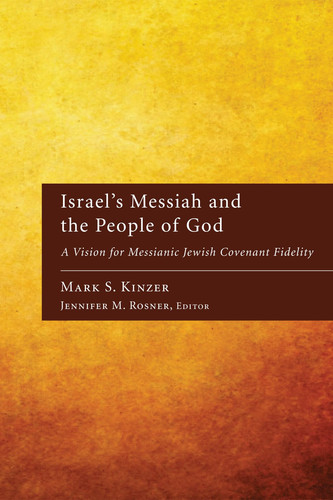
Israel's messiah and the people of God: a vision for Messianic Jewish covenant fidelity

Kinzer, Mark
Israel's Messiah and the People of God presents a rich and diverse selection of essays by theologian Mark Kinzer, whose work constitutes a pioneering step in Messianic Jewish theology. Including several pieces never before published, this collection illuminates Kinzer's thought on topics such as Oral Torah, Jewish prayer, eschatology, soteriology, and Messianic Jewish-Catholic dialogue. This volume offers the reader numerous portals into the vision of Messianic Judaism offered in Kinzer's Postmissionary Messianic Judaism (2005). An introductory essay by editor Jennifer M. Rosner sets Kinzer's thought and writings in context.
Cascade Books 2011-01-07 221 pages

Why Catholics are right

Coren, Michael
"Anti-Catholicism has become the last acceptable prejudice in what passes for polite society and has become so obvious and so pronounced that to even repeat the fact seems banal." Columnist, television host, author, and practicing Catholic, Michael Coren examines critical aspects of Catholicism as they are encountered, understood, and more importantly, misunderstood, today. For some, Catholicism is the only permanent, absolute body of truth, while for others it is the last permanent, absolute body that has to be opposed and stopped. Opening with a frank discussion of the abuse scandal, Why Catholics Are Right confronts four key issues in Catholic history-the Crusades, the Inquisition, the Holocaust, and Galileo-often used by critics of the Catholic Church to undermine its position and authority. Michael Coren looks at Catholics and theology, explaining what and why Catholics believe what they do-Papal Infallibility, the Immaculate Conception, the Church rather than the Bible alone. Finally, he sets out the pro-life position, and why it is crucial to the Catholic Faith. In this challenging, provocative, and personal book, Michael Coren draws on history, politics, and theology to present the arguments for the truth of Catholicism, and its vital message for the world. As he comments, "The importance of Catholicism is that in a culture where various forms of religious and atheistic fundamentalism, crass materialism, and clawing decadence eat away at civility and civilization the only permanent, consistent and logically complete alternative is the Roman Catholic Church."
Gracewing 2012 228 pages

The oil has not run dry: the story of my theological pathway

Baum, Gregory
"Born to a Jewish mother and Protestant father in 1923 Berlin, Gregory Baum has devoted his career to a humanistic approach to Catholicism. In The Oil Has Not Run Dry, Baum shares recollections about his lifelong commitment to theology, his atypical views, and his evolving understanding of the Catholic Church's message. Baum's reflects on his groundbreaking work with the Second Vatican Council (1962 65) and how it helped to open the Church to a new understanding of outsiders--one that advocated cooperation with world religions in support of peace and justice and respected secular philosophies committed to truth and social solidarity. Later embracing Latin American liberation theology, he became a leading thinker of the Catholic Left in Canada, adopting radical positions that initially earned support from Canadian bishops in the 1970s. Diverging from official Catholic doctrines regarding women and sexual ethics, Baum eventually left the priesthood, but continued to teach theology and remained active in the Church. The Oil Has Not Run Dry also discusses the contrast between Catholicism in Quebec and English-speaking North America, and the ways in which Baum sees Quebec's culture as more marked by social solidarity. This significant difference has inspired his decision to present in his own writings the original development of Catholic thought in Quebec to an English-speaking readership. Gregory Baum is professor emeritus in the Faculty of Religious Studies at McGill University and the author of Fernand Dumont: A Sociologist Turns to Theology and Truth and Relevance: Catholic Theology in French Quebec since the Quiet Revolution. "--
McGill-Queen's University Press 2016 259 pages

The writings of Teresa de Cartagena

Teresa de Cartagena
Translation, with full explanatory notes, of the two works of Teresa de Cartagena, the fifteenth-century Spanish nun. This affordable, engaging and important translation of Teresa de Cartagena's works significantly expands and enriches the current canon of medieval women writers. ANNE CLARK BARTLETT, DePAUL UNIVERSITY Teresa de Cartagena was born in Burgos in about 1415-20, into a powerful family of Jewish origin. All we know of Teresa comes from her work: she was deaf and not physically strong, she was a nun, and - perhaps the source of her resilience -she was well-educated, above all in religion and moral philosophy. Deaf from early womanhood, her consolatory treatise Grove of the Infirm is a reflection on the spiritual benefits of illness; her second work, Wonder at the Works of God , was apparently written to counter the contention of her critics that a handicapped woman had nothing of value to say. This artful manipulation of the familiar devotional genre of "the treatise of consolation" reveals a woman writer intimately familiar with the cultural practices of her era; overall, both works allow a rare glimpse into the world of women in fifteenth-century Spain. DAYLE SEIDENSPINNER-NUNEZ is Professor in the Department of Romance Languages and Literature at the University of Notre Dame.
D.S. Brewer 1998 152 pages

Holy dissent: Jewish and Christian mystics in Eastern Europe

Glenn Dynner
The religious communities of early modern Eastern Europe?particularly those with a mystical bent?are typically studied in isolation. Yet the heavy Slavic imprint on Jewish popular mysticism and pervasive Judaizing tendencies among Christian dissenters call into question the presumed binary quality of Jewish-Christian interactions. In Holy Dissent: Jewish and Christian Mystics in Eastern Europe, editor Glenn Dynner presents twelve essays that chart contacts, parallels, and mutual influences between Jewish and Christian mystics. With cutting-edge research on folk healers, messianists, Hasidim, and Christian sectarians, this volume presents instances of rich cultural interchange and bold border transgression. Holy Dissent is divided into two sections: "Jewish Mystics in a Christian World" and "Christianizing Jews, Judaizing Christians." In these essays, readers learn that Jewish and Christian folk healers consulted each other and learned from common sources; that the founder of Hasidism, Rabbi Israel Ba'al Shem Tov, likely drew inspiration from Christian ascetics; that Christian peasants sought and obtained audience with Hasidic masters; that Jewish mystics openly Christianized; and that Christian mystics openly Judaized. In contrast to prevailing models that present Jewish and Christian cultures as either rigidly autonomous or ambiguously hybrid, Holy Dissent charts specific types of religio-cultural exchange and broadens our conception of how cultures interact. The scholarship in this volume is notably fresh and significant and makes an important contribution across disciplines. Jewish and Christian studies scholars as well as historians of Eastern Europe will benefit from the analysis of Holy Dissent.
Wayne State University Press 2011 406 pages

The World Jewish Congress, 1936-2016

World Jewish Congress
"A history of the World Jewish Congress (WJC) from its founding in 1936 through 2016. Among the topics covered are the WJC's role during World War II; the WJC's contribution to the International Military Tribunal at Nuremberg; post-WWII attitudes to and relationships with Jews living in Germany; the WJC's relationship and interaction with the State of Israel; the WJc's role and impact at the United Nations; the WJC's diplomatic efforts on behalf of North African Jewry during the 1950's and 1960's; materialization of the Holocaust at Auschwitz-Birkenau; the WJC's role in launching the Jewish-Vatican dialogue; advocacy on behalf of Soviet Jewry; the WJC's role in the campaign to repeal the UN's "Zionism is Racism" resolution; forcing Swiss banks to disgorge Holocaust-era assets belonging to Jews; the Kurt Walheim Affair; the WJC's interaction with communist countries; the WJC's role regarding terrorist attacks on Jewish institutions in Buenos Aires; the World Jewish Congress today; and WJC President Ronald S. Lauder's vision of the Jewish future"--
World Jewish Congress 2017 341 pages