176 results for "History"

The Dawn of Everything

DAVID GRAEBER
INSTANT NEW YORK TIMES BESTSELLER A dramatically new understanding of human history, challenging our most fundamental assumptions about social evolution—from the development of agriculture and cities to the origins of the state, democracy, and inequality—and revealing new possibilities for human emancipation. For generations, our remote ancestors have been cast as primitive and childlike—either free and equal innocents, or thuggish and warlike. Civilization, we are told, could be achieved only by sacrificing those original freedoms or by taming our baser instincts. In their major New York Times bestseller, The Dawn of Everything , David Graeber and David Wengrow fundamentally challenge these assumptions and recast our understanding of human history. We will never again see the past in the same way. Drawing on pathbreaking research in archaeology and anthropology, Graeber and Wengrow reveal how history becomes a far more interesting place once we learn to throw off our conceptual blinders and perceive what’s really there. If humans did not spend 95 percent of their evolutionary past in tiny bands of hunter-gatherers, what were they doing during all that time? If agriculture and cities did not mean a plunge into hierarchy and domination, then what kinds of social and economic organizations did they lead to? The answers are often unexpected, and suggest that the course of human history may be less set in stone, and more open to playful, hopeful possibilities, than we tend to assume. Destined to be a classic, The Dawn of Everything signals a paradigm shift, profoundly transforming our understanding of the human past and making space to imagine new forms of freedom, new ways of organizing society. This is a monumental book of formidable intellectual and political range, animated by curiosity, moral vision, and hopefulness.
St Martins Press 2023-04-04 692 pages

After 1177 B. C.: the survival of civilizations

Cline, Eric H.
"In this gripping sequel to his bestselling 1177 B.C., Eric Cline tells the story of what happened after the Bronze Age collapsed-why some civilizations endured, why some gave way to new ones, and why some disappeared foreverAt the end of the acclaimed history 1177 B.C., many of the Late Bronze Age civilizations of the Aegean and Eastern Mediterranean lay in ruins, undone by invasion, revolt, natural disasters, famine, and the demise of international trade. An interconnected world that had boasted major empires and societies, relative peace, robust commerce, and monumental architecture was lost and the so-called First Dark Age had begun. Now, in After 1177 B.C., Eric Cline tells the compelling story of what happened next, over four centuries, across the Aegean and Eastern Mediterranean world. It is a story of resilience, transformation, and success, as well as failures, in an age of chaos and reconfiguration.After 1177 B.C. tells how the collapse of powerful Late Bronze Age civilizations created new circumstances to which people and societies had to adapt. Those that failed to adjust disappeared from the world stage, while others transformed themselves, resulting in a new world order that included Phoenicians, Philistines, Israelites, Neo-Hittites, Neo-Assyrians, and Neo-Babylonians. Taking the story up to the resurgence of Greece marked by the first Olympic Games in 776 B.C., the book also describes how world-changing innovations such as the use of iron and the alphabet emerged amid the chaos. Filled with lessons for today about why some societies survive massive shocks while others do not, After 1177 B.C. reveals why this period, far from being the First Dark Age, was a new age with new inventions and new opportunities"--
Princeton University Press 2024-04-16 314 pages

The right side of history: how reason and moral purpose made the West great

Shapiro, Ben
Shapiro argues that Western freedoms are built upon the twin notions that every human being is made in God's image and that human beings were created with reason capable of exploring God's world. These values gave us the birth of science, the dream of progress, human rights, prosperity, peace, and artistic beauty. Jerusalem and Athens were the foundations of the Magna Carta and the Declaration of Independence; civilizations that rejected Jerusalem and Athens have collapsed into dust. Now we are in the process of abandoning Judeo-Christian values and Greek natural law, favoring instead moral subjectivism and the rule of passion. And we are watching our civilization collapse ... -- adapted from information provided
Broadside Books, an imprint of HarperCollinsPublishers 2019 256 pages

1177 B.C.: the year civilization collapsed

Cline, Eric H.
"In 1177 B.C., marauding groups known only as the "Sea Peoples" invaded Egypt. The pharaoh's army and navy managed to defeat them, but the victory so weakened Egypt that it soon slid into decline, as did most of the surrounding civilizations. After centuries of brilliance, the civilized world of the Bronze Age came to an abrupt and cataclysmic end. Kingdoms fell like dominoes over the course of just a few decades. No more Minoans or Mycenaeans. No more Trojans, Hittites, or Babylonians. The thriving economy and cultures of the late second millennium B.C., which had stretched from Greece to Egypt and Mesopotamia, suddenly ceased to exist, along with writing systems, technology, and monumental architecture. But the Sea Peoples alone could not have caused such widespread breakdown. How did it happen? In this major new account of the causes of this "First Dark Ages," Eric Cline tells the gripping story of how the end was brought about by multiple interconnected failures, ranging from invasion and revolt to earthquakes, drought, and the cutting of international trade routes. Bringing to life the vibrant multicultural world of these great civilizations, he draws a sweeping panorama of the empires and globalized peoples of the Late Bronze Age and shows that it was their very interdependence that hastened their dramatic collapse and ushered in a dark age that lasted centuries. A compelling combination of narrative and the latest scholarship, 1177 B.C. sheds new light on the complex ties that gave rise to, and ultimately destroyed, the flourishing civilizations of the Late Bronze Age--and that set the stage for the emergence of classical Greece"--
Princeton University Press 2015-09-22 241 pages

The age of American unreason

Jacoby, Susan
From the Publisher: A cultural history of the last forty years, The Age of American Unreason focuses on the convergence of social forces-usually treated as separate entities-that has created a perfect storm of anti-rationalism. These include the upsurge of religious fundamentalism, with more political power today than ever before; the failure of public education to create an informed citizenry; and the triumph of video over print culture. Sparing neither the right nor the left, Jacoby asserts that Americans today have embraced a universe of "junk thought" that makes almost no effort to separate fact from opinion
Pantheon Books 2008 356 pages

In the American Grain

William Carlos Williams
2017 Reprint of 1925 Edition. Full facsimile of the original edition, not reproduced with Optical Recognition software. Although admired by D. H. Lawrence, this modern classic went generally unnoticed during the years after its publication in 1925. Yet it is "a fundamental book, essential if one proposes to come to terms with American literature" (Times Literary Supplement). William Carlos Williams was not a historian, but he was fascinated by the texture of American history. Beginning with Columbus's discovery of the Indies and moving on through Sir Walter Raleigh, Cotton Mather, Daniel Boone, George Washington, Ben Franklin, Aaron Burr, Edgar Allan Poe, and Abraham Lincoln, Williams found in the fabric of familiar episodes new shades of meaning and configurations of character. He brought a poetic imagination to the task of reconstructing a live tradition for Americans, and what results is one of the finest works of prose to have been penned by any writer of the twentieth century.
Martino Fine Books 2017-09-14 244 pages

The Roman world, 44 BC-AD 180

Goodman, Martin
The Roman World 44 BC - AD 180 deals with the transformation of the Mediterranean regions, northern Europe and the Near East by the military autocrats who ruled Rome during this period. The book traces the impact of imperial politics on life in the city of Rome itself and in the rest of the empire, arguing that, despite long periods of apparent peace, this was a society controlled as much by fear of state violence as by consent. Martin Goodman examines the reliance of Roman emperors on a huge military establishment and the threat of force. He analyses the extent to which the empire functioned as a single political, economic and cultural unit and discusses, region by region, how much the various indigenous cultures and societies were affected by Roman rule. The book has a long section devoted to the momentous religious changes in this period, which witnessed the popularity and spread of a series of elective cults and the emergence of rabbinic Judaism and Christianity from the complex world of first-century Judaea. This book provides a critical assessment of the significance of Roman rule for inhabitants of the empire, and introduces readers to many of the main issues currently faced by historians of the early empire. This new edition, incorporating the finds of recent scholarship, includes a fuller narrative history, expanded sections on the history of women and slaves and on cultural life in the city of Rome, many new illustrations, an updated section of bibliographical notes, and other improvements designed to make the volume as useful as possible to students as well as the general reader.
Routledge 2012 413 pages

Mankind: the story of all of us

Wolfman, Marv
From the producers of America the Story of Us comes the epic tale ofthe rise of civilization. The 12-hour series spans the first flourishing ofcivilization in Mesopotamia through the discovery of America. Groundbreakingproduction techniques bring to life the greatest landmarks and milestones ofhuman achievement. CGI rebuilds lost worlds; large scale reenactments replaycritical battles; innovative use of interactive maps dynamically illustrates thekey factors that gave rise to civilization across the globe. MANKIND: The Story of All of Us emphasizes the simultaneity of thehuman adventure - how ancient Egypt thrived while Stonehenge was being built;China was at its zenith while Europe was plunged into the Dark Ages. HISTORYcaptures the danger, action, struggle, heroism, and adrenaline of MANKIND:The Story of All of Us !
Silver Dragon Books, Inc 2012 120 pages

Between Past and Future

Arendt, Hannah
Arendt’s penetrating observations of the modern world, based on a profound knowledge of the past, constitute a major contribution to political philosophy. In this book she describes the perplexing crises which modern society faces as a result of the loss of meaning of the traditional key words of justice, reason, responsibility, virtue, and glory. Through a series of eight exercises, she shows how we can redistill once more the vital essence of these concepts.
Plume 1978 306 pages

The Oxford handbook of Jewish studies

Martin Goodman
The Oxford Handbook of Jewish Studies is part of a major new series of Oxford Handbooks. The volume on Jewish Studies reflects the aim of the series to produce distinctive and original surveys of today's interests and directions in the Humanities and Social Sciences. The Handbook covers all the main areas currently taught and researched as part of Jewish Studies in universities throughout the world, especially in Europe, the United States, and Israel. The span of the volume chronologically and geographically is thus enormous, but all contributors have in common their expertise in the study of the history, literature, religion, and culture of the Jews. Jewish Studies is a comparatively young discipline which has grown over the past fifty years in a somewhat undisciplined way. In a period of great upheaval for Jews following the Holocaust, the creation of the State of Israel, the emergence of new forms of dialogue between Jews and Christians, deepening divisions between secular and religious Jews, and unprecedented assimilation by diaspora Jews to the wider culture, the study of Jewish traditions and history has rarely been dispassionate. This is a good time to examine where we are and where the subject is going. There have been some attempts in recent years to encapsulate current conclusions about particular aspects of Jewish Studies, but these other works aim to provide compendia of agreed facts rather than a survey of interests and directions such as is found in the Oxford Handbook. The Handbook begins with an examination of Jewish Studies as an academic discipline in its own right. The first half of the volume is organized chronologically, followed by sections on languages and literature, general aspects of religion, and other branches of Jewish Studies which have each accumulated a considerable corpus of scholarship over the past half-century. This substantial volume of c. 400,000 words reflects the current state of scholarship as analysed by an international team of experts in the different and varied fields represented within contemporary Jewish Studies.
Oxford University Press 2002-12-12 1037 pages

How we got here: the 70's, the decade that brought you modern life (for better or worse)

Frum, David
For many, the 1970s evoke the Brady Bunch and the birth of disco. In this first, thematic popular history of the decade, David Frum argues that it was the 1970s, not the 1960s, that created modern America and altered the American personality forever. A society that had valued faith, self-reliance, self-sacrifice, and family loyalty evolved in little more than a decade into one characterized by superstition, self-interest, narcissism, and guilt. Frum examines this metamorphosis through the rise to cultural dominance of faddish psychology, astrology, drugs, religious cults, and consumer debt, and profiles such prominent players of the decade as Werner Erhard, Alex Comfort, and Jerry Brown. How We Got Here is lively and provocative reading.
Basic Books 2000-12-07 421 pages

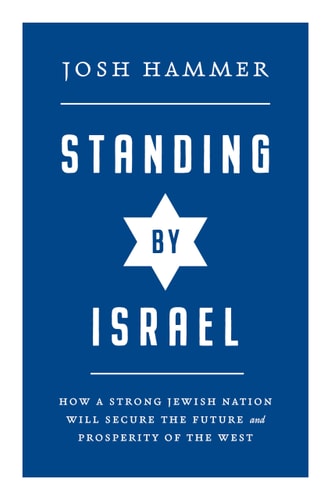
Israel and civilization: the fate of the Jewish nation and the destiny of the West

Hammer, Josh
"In Israel and Civilization, acclaimed journalist, legal expert, and pundit Josh Hammer makes a righteous case that the key to the prosperity of the West is the flourishing of the Jewish people and the Jewish State of Israel. Hammer's uplifting offense is our best defense against the enemies of the Jewish people's right to self-determination in their ancestral homeland. And as Hammer makes clear, manifesting the promise of Israel requires action by the United States and its allies. There can be no overstating the impact of the trauma of October 7, 2023, on the Jewish people. Yet the anti-Israel reactions the world over have been equally devastating. Rallies of hundreds of thousands explicitly or implicitly promoting Hamas violence; demonstrations of Ivy League professors celebrating the pogrom as awesome and exhilarating; so-called human rights organizations that refuse to unequivocally condemn the use of rape as a weapon of war; and a hydra of multiculturalism, postmodern relativism, and tolerance--it all threatens the physical and metaphysical survival of the West and our essential Jewish heritage. Preserving the best of what's been thought and said throughout history and ensuring that there will be centuries more requires a West that is proud of its Jewish heritage. In other words, the continued existence of the Jewish people is inextricably tied to the endurance of Western civilization. Israel is the center of the battle, and Israel and Civilization explains why and how the Jewish state must win."--
Radius Book Group 2025-03-18 293 pages

Jerusalem: the biography

Sebag Montefiore, Simon
Jerusalem is the universal city, the capital of two peoples, the shrine of three faiths; it is the prize of empires, the site of Judgement Day and the battlefield of today's clash of civilizations. From King David to Barack Obama, from the birth of Judaism, Christianity and Islam to the Israel-Palestine conflict, this is the epic history of three thousand years of faith, slaughter, fanaticism and coexistence. How did this small, remote town become the Holy City, the "center of the world" and now the key to peace in the Middle East? In a gripping narrative, Simon Sebag Montefiore reveals this ever-changing city in its many incarnations, bringing every epoch and character blazingly to life. Jerusalem's biography is told through the wars, love affairs and revelations of the men and women -- kings, empresses, prophets, poets, saints, conquerors and whores -- who created, destroyed, chronicled and believed in Jerusalem. As well as the many ordinary Jerusalemites who have left their mark on the city, its cast varies from Solomon, Saladin and Suleiman the Magnificent to Cleopatra, Caligula and Churchill; from Abraham to Jesus and Muhammad; from the ancient world of Jezebel, Nebuchadnezzar, Herod and Nero to the modern times of the Kaiser, Disraeli, Mark Twain, Lincoln, Rasputin, Lawrence of Arabia and Moshe Dayan. Drawing on new archives, current scholarship, his own family papers and a lifetime's study, Montefiore illuminates the essence of sanctity and mysticism, identity and empire in a unique chronicle of the city that many believe will be the setting for the Apocalypse. This is how Jerusalem became Jerusalem, and the only city that exists twice -- in heaven and on earth. - Publisher.
Weidenfeld & Nicolson 2011 638 pages

All That Is Solid Melts Into Air

Berman Marshall
"A bubbling caldron of ideas . . . Enlightening and valuable." —Mervyn Jones, New Statesman. The political and social revolutions of the nineteenth century, the pivotal writings of Goethe, Marx, Dostoevsky, and others, and the creation of new environments to replace the old—all have thrust us into a modern world of contradictions and ambiguities. In this fascinating book, Marshall Berman examines the clash of classes, histories, and cultures, and ponders our prospects for coming to terms with the relationship between a liberating social and philosophical idealism and a complex, bureaucratic materialism. From a reinterpretation of Karl Marx to an incisive consideration of the impact of Robert Moses on modern urban living, Berman charts the progress of the twentieth-century experience. He concludes that adaptation to continual flux is possible and that therein lies our hope for achieving a truly modern society.
Touchstone 1983-02

The storm before the calm: America's discord, the crisis of the 2020s, and the triumph beyond

Friedman, George
Friedman identifies an 80-year "institutional cycle" and a 50-year "socio-economic cycle" that has seen the formation of the industrial classes, baby boomers, and the middle classes. These two major cycles are converging on the late 2020s -- and the world will have to endure upheaval and possible conflict. He outlines upcoming challenges, shifts in corporate structures, and new trends resulting from longer life expectancy. As the role of the United States changes, will it lead to increased strength and stability, or critical crises?
Anchor Books, a division of Penguin Random House 2021-01-12 256 pages

Roll over Beethoven: the return of cultural strife

Aronowitz, Stanley
Product Description The question of culture has become central for a new generation of scholars raised in a world of television and mass production. At the same time debates about culture have become a point of reference for criticism of current trends in academia and society, variously defended or derided on the grounds of "multiculturalism," "canonicity," and political correctness." In his re-examination off these debates, Stanley Aronowitz traces the history of the cultural issue - in both its British and American manifestations - and relates it to the contemporary rethinking of the nature of knowledge and culture. Roll Over Beethoven analyzes topics as diverse as the history of American radicalism, the sociology if science, the impact of the Library of Congress on the organization of knowledge, and the institutionalization of film studies. Aronowitz's account of recent controversies over "political correctness" reveals that the current culture wars reflect profound differences among scholars over the proper role of the university and the character of legitimate intellectual knowledge. Within this broad reappraisal of the cultural question, which is embedded in the intellectual history of the 20th century, Aronowitz offers an "interpretive genealogy" of cultural studies that describes both the evolution of the field and the political and social contexts in which it developed. He argues that cultural studies exhibit a tendency toward transgression that is rarely explicit but always present and, at its best, not merely interdisciplinary but anti-disciplinary. From Publishers Weekly In this "interpretive genealogy of cultural studies," sociologist Aronowitz ( The Politics of Identity ) offers a history of this field with an eye toward examining how the nature of intellectual knowledge is defined. Though the book meanders from present-day politics to the historical debate over "high" and "low" culture to the role of the New Left in popular culture, Aronowitz's style is fairly accessible. Some arguments are undeveloped, as when he urges the Left to vigorously support the First Amendment but then suggests that "any community has a right to set limits on what it considers acceptable speech." In a chapter on the cultural politics of the Popular Front, Aronowitz offers an engaging memoir of his Bronx boyhood, recalling his rich encounters with classical and popular music and his study of political economy at a Communist Party school; he then analyzes novels and plays of the era, defending them against charges of populist oversimplification. After addressing current debates over the idea of an academic "canon," he notes that "virtually any significant educational innovation already has a history somewhere in the annals of the American academic system." Copyright 1993 Reed Business Information, Inc. From Library Journal Through his books on the labor movement, social theory, education theory, and the politics of science, Aronowitz has become one of the most interesting intellectuals on the contemporary scene. His latest work traces the emergence of "Cultural Studies" and emphasizes its invigorating impact on the humanities and social sciences. Written in an entertaining and informative style, Roll Over Beethoven could become the book that helps introduce large numbers of readers to the exciting new field of cultural interpretation. Individual chapters explore such topics as "high" versus "low" culture, culture and politics in the 1930s, the state of popular culture in contemporary America, and the relationship of cultural studies to the literary and philosophical canon. Along the way, Aronowitz offers a sophisticated critique of the revanchist critics of the modern university (Allan Bloom, William Bennett, et al.). This is a first-rate text that deserves the widest possible readership. - Kent Worcester, Social Science Research Council, New York Copyright 1993 Reed Business Information, Inc.
Wesleyan University Press 1993 277 pages

On looking into the Abyss: untimely thoughts on culture and society

Himmelfarb, Gertrude
A collection of seven essays (published previously or delivered as lectures, but extensively revised here) attacking fashionable academic movements in contemporary America, such as postmodernism and deconstruction. Uses the attitude of these movements towards the Holocaust as a critical touchstone. Argues that the "New History's" attempt to describe daily life under the Nazis excludes any understanding of the evil inherent in the society and effectively writes the Nazi leadership out of history. Shows that deconstruction's denial of any genuine historical reality tends towards Holocaust denial, connecting this with Heidegger's and de Man's refusal to condemn their Nazi past. Describes how some postmodern historians, such as Hayden White, have tried to find a middle way between denial of reality in dealing with the Holocaust and a conventional narrative approach.
Knopf 1994-02-08 192 pages