17 results for "History"

The right side of history: how reason and moral purpose made the West great

Shapiro, Ben
Shapiro argues that Western freedoms are built upon the twin notions that every human being is made in God's image and that human beings were created with reason capable of exploring God's world. These values gave us the birth of science, the dream of progress, human rights, prosperity, peace, and artistic beauty. Jerusalem and Athens were the foundations of the Magna Carta and the Declaration of Independence; civilizations that rejected Jerusalem and Athens have collapsed into dust. Now we are in the process of abandoning Judeo-Christian values and Greek natural law, favoring instead moral subjectivism and the rule of passion. And we are watching our civilization collapse ... -- adapted from information provided
Broadside Books, an imprint of HarperCollinsPublishers 2019 256 pages

Ill fares the land

Judt, Tony
In "Ill Fares The Land," Tony Judt, one of our leading historians and thinkers, reveals how we have arrived at our present dangerously confused moment and offers the language we need to address our common needs, rejecting the nihilistic individualism of the far right and the debunked socialism of the past. To find a way forward, Judt argues that we must look to our not so distant past and to social democracy in action: to re-enshrining fairness over mere efficiency.
Penguin Press 2010 237 pages

Israel and civilization: the fate of the Jewish nation and the destiny of the West

Hammer, Josh
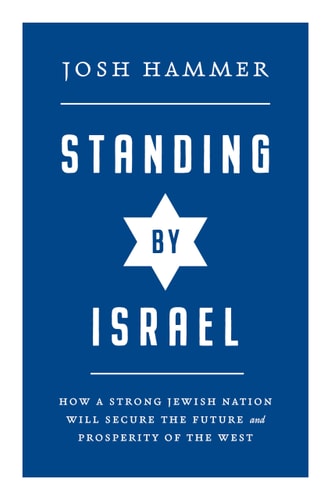
"In Israel and Civilization, acclaimed journalist, legal expert, and pundit Josh Hammer makes a righteous case that the key to the prosperity of the West is the flourishing of the Jewish people and the Jewish State of Israel. Hammer's uplifting offense is our best defense against the enemies of the Jewish people's right to self-determination in their ancestral homeland. And as Hammer makes clear, manifesting the promise of Israel requires action by the United States and its allies. There can be no overstating the impact of the trauma of October 7, 2023, on the Jewish people. Yet the anti-Israel reactions the world over have been equally devastating. Rallies of hundreds of thousands explicitly or implicitly promoting Hamas violence; demonstrations of Ivy League professors celebrating the pogrom as awesome and exhilarating; so-called human rights organizations that refuse to unequivocally condemn the use of rape as a weapon of war; and a hydra of multiculturalism, postmodern relativism, and tolerance--it all threatens the physical and metaphysical survival of the West and our essential Jewish heritage. Preserving the best of what's been thought and said throughout history and ensuring that there will be centuries more requires a West that is proud of its Jewish heritage. In other words, the continued existence of the Jewish people is inextricably tied to the endurance of Western civilization. Israel is the center of the battle, and Israel and Civilization explains why and how the Jewish state must win."--
Radius Book Group 2025-03-18 293 pages

The Anglo-Dutch moment: essays on the Glorious Revolution and its world impact

Jonathan I. Israel
Much new research and writing on the Glorious Revolution of 1688-91 in England, Scotland, Ireland and North America, and on the Dutch role in the Revolution, has materialized in the last few years in connection with the tercentenary celebrations of 1988 and 1989 and the various accompanying conferences, symposia, and exhibitions in Britain, the Netherlands and the United States. There has also been a spate of associated publications. This is, however, the first large-scale work to emerge from the tercentenary commemoration, and the first to attempt to bring together the main strands of the new research and writing for the general reader and for the student, placing the English Revolution of 1688-89 for the first time in its full British, European and American setting, and showing how fundamentally our picture of the Revolution itself, as well as the Revolutionary process of 1688-91 as a whole, is now being transformed.
Cambridge University Press 1991-07-26 502 pages

The invention of power: popes, kings, and the birth of the West

Bueno de Mesquita, Bruce
In the tradition of Why Nations Fail , this book solves one of the great puzzles of history: Why did the West become the most powerful civilization in the world? Western exceptionalism--the idea that European civilizations are freer, wealthier, and less violent--is a widespread and powerful political idea. It has been a source of peace and prosperity in some societies, and of ethnic cleansing and havoc in others. Yet in The Invention of Power , Bruce Bueno de Mesquita draws on his expertise in political maneuvering, deal-making, and game theory to present a revolutionary new theory of Western exceptionalism: that a single, rarely discussed event in the twelfth century changed the course of European and world history. By creating a compromise between churches and nation-states that, in effect, traded money for power and power for money, the 1122 Concordat of Worms incentivized economic growth, facilitated secularization, and improved the lot of the citizenry, all of which set European countries on a course for prosperity. In the centuries since, countries that have had a similar dynamic of competition between church and state have been consistently better off than those that have not. The Invention of Power upends conventional thinking about European culture, religion, and race and presents a persuasive new vision of world history.
PublicAffairs 2024-01-23 352 pages

The creation of feminist consciousness: from the Middle Ages to eighteen-seventy

Lerner, Gerda
A pioneer in women's studies and long-term activist for women's issues, and a past president of the Organization of American Historians, Gerda Lerner is one of the founders and foremost scholars of Women's History. The Creation of Patriarchy, the first book in her two-volume magnum opus Women and History (1986) received wide review attention and much acclaim, winning the prestigious Joan Kelly Prize of the American Historical Association for the best work on Women's History that year. Ms hailed the book for providing "a grand historical framework that was impossible even to imagine before the enlightenment about women's place in the world provided by her earlier work and that of other feminist scholars." New Directions for Women said it "may well be the most important work in feminist theory to appear in our generation." Patriarchy traced the development of the ideas, symbols, and metaphors by which men institutionalized their domination of women. Now, in The Creation of Feminist Consciousness, the eagerly awaited concluding volume of Women and History, Lerner documents the twelve-hundred-year struggle of women to free their minds from patriarchal thought, to create Women's History, and to achieve a feminist consciousness. In a richly documented narrative filled with inspiring portraits of women, Lerner ranges from the Middle Ages to the late 19th century, tracing several important ways by which women strove for autonomy and equality. One of the most remarkable sections examines over twelve hundred years of feminist Bible criticism. Since objections to women's thinking, teaching, and speaking in public were based on biblical authority--most notably, passages from Genesis and the writings of St. Paul--women returned again and again to these texts, in an attempt to subvert patriarchal dominance and establish their equality with men. This survey of biblical criticism allows Lerner to illustrate her most important insight--the discontinuity of women's history. She describes how women's history was not passed on from generation to generation, forcing women in effect to reinvent the wheel over and over again. In a series of fascinating portraits of individual women who resisted patriarchal indoctrination, Lerner discusses women mystics such as Hildegard of Bingen, Julian of Norwich and later Protestant mystics, and brings to life the many women of great literary talent, from Christine de Pisan to Louise Labe to Emily Dickinson, who simply bypassed patriarchal thought and created alternate worlds for themselves. Documenting the 1,200 year struggle of women to free their minds from patriarchal thought, create a women's history, and achieve a feminist consciousness, this brilliant work charts new ground for feminist theory, the history of ideas, and the development of women's place in our intellectual tradition.
Oxford University Press 1993 395 pages

The Western illusion of human nature: with reflections on the long history of hierarchy, equality and the sublimation of anarchy in the West, and comparative notes on other conceptions of the human condition

Sahlins, Marshall
Reflecting the decline in college courses on Western Civilization, Marshall Sahlins aims to accelerate the trend by reducing "Western Civ" to about two hours. He cites Nietzsche to the effect that deep issues are like cold baths; one should get into and out of them as quickly as possible. The deep issue here is the ancient Western specter of a presocial and antisocial human nature: a supposedly innate self-interest that is represented in our native folklore as the basis or nemesis of cultural order. Yet these Western notions of nature and culture ignore the one truly universal character of human sociality: namely, symbolically constructed kinship relations. Kinsmen are members of one another: they live each other's lives and die each other's deaths. But where the existence of the other is thus incorporated in the being of the self, neither interest, nor agency or even experience is an individual fact, let alone an egoistic disposition. -- Description from http://www.press.uchicago.edu (Oct. 24, 2011).
Prickly Paradigm Press 2008-06-24 112 pages

Origins: the ancient Near Eastern background of some modern western institutions

Hallo, William W.
"Origins" is the first fully comprehensive study of the debt owed by modern western culture to Ancient Near Eastern civilization - a debt touched upon by standard histories of the Ancient Near East but never as systematically investigated as here by William W. Hallo. The author, who has devoted a lifetime to the study of the Ancient Near East, places the emphasis on the way the Ancient Near East continues to shape our Western world. He takes an in-depth look at the ancient origins of many institutions that are most essential to contemporary life - and most often taken for granted. In the exploration of the "first half of history," Hallo shows that modern ideas of urbanism and the formation of capital were first developed between 3000-500 BC and that aspects of 20th-century agriculture, manufacturing and trade go back to ancient Mesopotamia, Egypt and Israel. Special attention is given to the role played by women, arguing that this was an often non-traditional one; for example, women are shown to have been among the first authors in history who are actually known by their names. The scope of the work is vast: Hallo methodically examines a wide range of topics, from the order of the alphabet to the coronation of kings, and from schooling to the calendar. An intriguing touch is provided by sections on games and on the world's oldest cookbooks. This ground-breaking study leaves the reader with a full appreciation of the legacy of the Ancient Near East to modern Western society, in all its aspects. It will be essential reading for researchers and general readers alike who are interested in the cultural history of the West as well as the history of the Ancient Near East.
E.J. Brill 1996 362 pages

Western supremacy: triumph of an idea?

Bessis, Sophie
Sophie Bessis tells the story of the West's relationship with the world it came to dominate - from the conquest of the Americas, through the slave trade and the Scramble for Africa, the White Man's burden, Manifest Destiny and the growth of scientific racism, to decolonisation, the ideology of development and structural adjustment. Western Supremacy is the history of colonial and developmentalist thought. Starting with the Enlightenment idea of universality it traces how this facilitated a notion of the West rooted in a Hellenic inheritance systematically shorn of Egyptian or Arab influences. Though the hierarchy of races has now given way to the hierarchy of development, Bessis argues that developmentalism is the new incarnation of the West's paradoxical aspiration to lead the world into universalism whilst maintaining its own supremacy. An extraordinary tour-de-force which will fascinate everybody who has an interest in globalization, development and the history of ideas.
Zed Books 2003-04 290 pages

Inauthentic culture and its philosophical critics

Newman, Jay
Despite the pervasive feeling that much of the culture of Western democracies has increasingly become inauthentic or phoney, contemporary cultural critics and observers have paid little attention to the traditional philosophical criticism of inauthentic culture that began with Socrates, Aristophanes, and Plato and was applied, reworked, and extended by such philosophical cultural critics as St Augustine, Erasmus, Voltaire, Nietzsche, and Thorstein Veblen. This new study in the philosophy of culture and the history of ideas illuminates the problem of inauthentic culture and draws on the Western intellectual tradition to show that our contemporary problem is actually an old and enduring one.
McGill-Queen's University Press 1997 218 pages

The Crusades and the Near East

Conor Kostick
The crusades are often seen as epitomising a period when hostility between Christian West and the Muslim Near East reached an all time high. As this edited volume reveals, however, the era was one which saw both conflict and cohabitation. Tackling such questions as whether medicinal and architectural innovations came to Europe as a direct result of the Crusades, and why and how peace treaties and intermarriages were formed between the different cultures, this distinguished group of contributors reveal how the Holy Wars led on the one hand to a reinforcement of the beliefs and identities of each side, but on the other to a growing level of cultural exchange and interaction. This volume breaks new ground in not only exploring the conflict between the Christian and the Muslim worlds, but also the impact of this conflict on the cultural evolution of European and Near Eastern thought and practices. Utilising the latest scholarship and original studies of the sources, this survey sheds new light on the cultural realities of East-West relations and marks a new departure for studies of the crusades. Contributors include John France, Yehoshua Frenkel, Chris Wright, Natasha Hodgson, A.V. Murray, Sini Kangas, Léan Ní Chléirigh, Susan Edgington, Jürgen Krüger, Yvonne Friedman and Bernard Hamilton.
Routledge 2011 271 pages

How the west was lost

Boot, Alexander
What made the West western ? And has Western civilisation found modernity but lost itself? This provocative and stimulating polemic argues that western culture and civilisation have been destroyed not only in, but indeed by, modernity. How the West Was Lost argues that all modern upheavals the Reformation, the English, American, French and Russian Revolutions, the Napoleonic Wars, the American Civil War, both World Wars can only be understood if seen as resulting in an assault on the core values of the West. At its heart lies the belief that the central conflict of our time is cultural and that traditional culture and civilised society have been under attack ever since the Enlightenment. The author traces the development of Western civilisation from its origins paradoxically in the East and examines what he sees as its inexorable decline in all forms of art and all walks of life. He asks uncomfortable questions about politics, philosophy, psychology and religion and suggests answers which are provocative and unorthodox. This book is a bold and challenging attempt to present a new concept of modern history for our complacent times. The results are often unexpected but always original and invigorating."
I.B. Tauris 2016-01-30 350 pages

Scale, space, and canon in ancient literary culture

Netz, Reviel
"The key methodological commitment of this book, then, is to the study of literary culture as a whole. From this follow certain other methodological consequences. Studying literary culture as a whole implies an attention to overall patterns more than to individual details. I thus regularly offer statistics and maps. While I do make many qualitative pronouncements, these are, with a few exceptions, generalizing and impressionistic, and not based on close readings. Studying the regularities of literary culture as a whole also implies adopting a perspective which need not have been available to the ancient actors themselves (they had pursued their own practices, without necessarily pausing to consider their literary culture as a whole). For this reason, I make no effort to identify the authors' concepts and am content to deploy my own observer's concepts throughout. The result is a book very different from traditional classical philology. The complex footnote with its plethora of primary and secondary sources is almost entirely avoided (my footnotes, instead, merely point to the key, recent studies with which the reader, wishing to pursue a point of detail, may begin her research ). Only rarely do I offer close readings of individual passages or reconstructions of the meanings of original terms. Fortunately for me, traditional philology now has few champions and I will not spend time arguing against the straw man of the philological critic. Instead, I will apologize to him "--
Cambridge University Press 2019 890 pages

From empires to imperialism: the state and the rise of bourgeois civilisation

Kagarlitsky, Boris
"Translated from the original Russian, this book analyzes the economic development of leading European empires and the United States of America. The author exposes the myths of the spontaneous emergence of the market economy and the role of government as a disincentive towards private initiative, when for centuries the state power has been carrying out a "coercing to the market" with all its strength. This book presents a somewhat epic depiction of the development of Western hegemonic powers within the capitalist world system, from the struggles of the late Middle Ages to the rise and crisis of the American Empire. It both develops and questions some of the traditional assumptions of the world-system theory, arguing that it was very much the political form of the state that shaped capitalism as we know it and that, though the existence of a hegemonic power results from the logic of the system, hegemony is often missing in reality.A major work of historical Marxist theory, this book is essential reading for students of international political economy, globalisation and the crisis of capitalism. This book is also ideal for students of politics, history, economics and international relations"--
Routledge 2014 363 pages