75 results for "History"

Tyranny of the minority: why American democracy reached the breaking point

Levitsky, Steven,Ziblatt, Daniel
"A call to reform our antiquated political institutions before it's too late--from the New York Times bestselling authors of How Democracies Die. America is undergoing a massive experiment: It is moving, in fits and starts, toward a multiracial democracy, something few societies have ever done. But the prospect of change has sparked an authoritarian backlash that threatens the very foundations of our political system. Why is democracy under assault here, and not in other wealthy, diversifying nations? And what can we do to save it? With the clarity and brilliance that made their first book, How Democracies Die, a global bestseller, Harvard professors Steven Levitsky and Daniel Ziblatt offer a coherent framework for understanding these volatile times. They draw on a wealth of examples--from 1930s France to present-day Thailand--to explain why and how political parties turn against democracy. They then show how our Constitution makes us uniquely vulnerable to attacks from within: It is a pernicious enabler of minority rule, allowing partisan minorities to consistently thwart and even rule over popular majorities. Most modern democracies--from Germany and Sweden to Argentina and New Zealand--have eliminated outdated institutions like elite upper chambers, indirect elections, and lifetime tenure for judges. The United States lags dangerously behind. In this revelatory book, Levitsky and Ziblatt issue an urgent call to perfect our national experiment. It's a daunting task, but we have remade our country before--most notably, after the Civil War and during the Progressive Era. And now we are at a crossroads: America will either become a multiracial democracy or cease to be a democracy at all"--
Crown 2023 368 pages

Midnight in Washington: how we almost lost our democracy and still could

Schiff, Adam B.
"From the congressman who led the first impeachment of Donald J. Trump, the vital inside account of American democracy in its darkest hour, and a warning that the forces of autocracy unleashed by Trump remain as potent as ever. In the years leading up to the election of Donald Trump, Congressman Adam Schiff had already been sounding the alarm over the resurgence of autocracy around the world, and the threat this posed to the United States. But as he led the probe into Donald Trump's Russia and Ukraine-related abuses of presidential power, Schiff came to the terrible conclusion that the principal threat to American democracy now came from within. In Midnight in Washington, Schiff argues that the Trump presidency has so weakened our institutions and compromised the Republican Party that the peril will last for years, requiring unprecedented vigilance against the growing and dangerous appeal of authoritarianism. The congressman chronicles step by step just how our democracy was put at such risk, and traces his own path to meeting the crisis--from serious prosecutor, to congressman with an expertise in national security and a reputation for bipartisanship, to liberal lightning rod, scourge of the right, and archenemy of a president. Schiff takes us inside his team of impeachment managers and their desperate defense of the constitution amid the rise of a distinctly American brand of autocracy. Deepening our understanding of prominent public moments, Schiff reveals the private struggles, the internal conflicts, and the triumphs of courage that came with defending the republic against a lawless president--but also the slow surrender of people that he had worked with and admired to the dangerous immorality of a president engaged in an historic betrayal of his office. Schiff's fight for democracy is one of the great dramas of our time, told by the man who became the president's principal antagonist. It is a story that began with Trump but does not end with him, taking us through the disastrous culmination of the presidency and Schiff's account of January 6, 2021, and how the anti-democratic forces Trump unleashed continue to define his party, making the future of democracy in America more uncertain than ever."--Publisher's website.
Random House 2022-08-16 518 pages

Trumpocracy: the corruption of the American Republic

Frum, David
"As the President of the United States, Donald Trump continually voices admiration for brutal strongmen such as Russia's Vladimir Putin, the Philippines' Roderigo Duterte, Turkey's Recep Tayyip Erdogan, and Egypt's Abedel Fattah el-Sisi. He has threatened the American mainstream media, obsessed over leaks, and worked mostly through executive orders. Some Americans still believe this is part of a carefully crafted plan to bring authoritarianism to our country. As Frum reveals, carefully crafted or not, this is where Trump is taking us. In this thoughtful and hard-hitting book, he issues a warning for democracy and America's future: all over the world countries are being destroyed by similar populist bumblers, making impulsive decisions and ignoring traditions, Quietly, steadily, he and his administration are damaging the tenets and accepted practices of American democracy, perhaps irrevocably. As Trump and his family enrich themselves, the presidency itself falls into the hands of the generals and financiers who surround him. During his own White House tenure, Frum witnessed the ways the presidency is limited not by law, but by tradition, propriety, and public outcry, all now weakened. Whether the Trump presidency lasts 2, 4, or 8 more years, he has changed the nature of the office for the worse, and likely for decades. In this powerful and eye-opening book, Frum makes clear that the hard work of recovery starts at home. Trumpocracy outlines how Trump could push America towards illiberalism, what the consequences could be for our nation and our everyday lives, and what we can do to prevent it"--
Harper 2018-01-16 301 pages

Public Opinion by Walter Lippmann

Walter Lippmann
"Public Opinion" is the fascinating study of the role of citizens in a democracy by Walter Lippmann, an American writer, reporter and political commentator. Lippmann's notable career spanned decades and produced some of the most important journalism in American history. He was the first to introduce the concept of the Cold War, received many awards, including two Pulitzer Prizes, and wrote thousands of articles and columns, earning him the title of the "Great Elucidator". "Public Opinion" is Lippmann's assessment of a functional democratic government and the role that citizens play in the democracy. Lippmann examines the dilemmas presented in revolutionary periods of history and raises doubts on the ability of citizens to effectively govern themselves. He draws important attention to the media's role in shaping public perceptions and opinions and presciently warns against the power of propaganda. Lippmann's work exploring modern democracy, how it functions, and what situations most threaten its success have made "Public Opinion" a staple in the field of political science. Lippmann's work was far ahead of its time in understanding the dangers of propaganda and his conclusions remain relevant and thought-provoking nearly a century later.
Editorial Benei Noaj 2010-11 276 pages

The demagogue's playbook: the battle for American democracy from the founders to Trump

Posner, Eric A.
A New York Times Book Review Editor's Pick What Happens to Democracy When a Demagogue Comes to Power? "It is hard to imagine understanding the Trump presidency and its significance without reading this book.” —Bob Bauer, Former Chief Counsel to President Barack Obama What—and who—is a demagogue? How did America’s Founders envision the presidency? What should a constitutional democracy look like—and how can it be fixed when it appears to be broken? Something is definitely wrong with Donald Trump’s presidency, but what exactly? The extraordinary negative reaction to Trump’s election—by conservative intellectuals, liberals, Democrats, and global leaders alike—goes beyond ordinary partisan and policy disagreements. It reflects genuine fear about the vitality of our constitutional system. The Founders, reaching back to classical precedents, feared that their experiment in mass self-government could produce a demagogue: a charismatic ruler who would gain and hold on to power by manipulating the public rather than by advancing the public good. President Trump, who has played to the mob and attacked institutions from the judiciary to the press, appears to embody these ideas. How can we move past his rhetoric and maintain faith in our great nation? In The Demagogue’s Playbook , acclaimed legal scholar Eric A. Posner offers a blueprint for how America can prevent the rise of another demagogue and protect the features of a democracy that help it thrive—and restore national greatness, for one and all. “Cuts through the hyperbole and hysteria that often distorts assessments of our republic, particularly at this time.” — Alan Taylor, winner of the 2014 Pulitzer Prize for History
St. Martin's Griffin 2021-06-29 320 pages

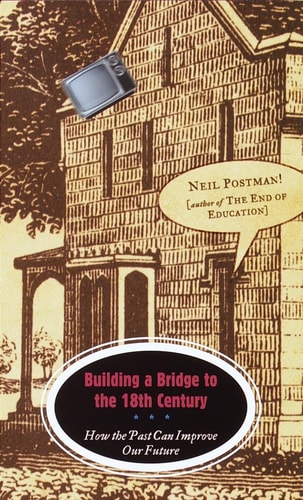
Building a bridge to the 18th century: how the past can improve our future

Postman, Neil
In Building a Bridge to the 18th Century , acclaimed cultural critic Neil Postman offers a cure for the hysteria and hazy values of the postmodern world. Postman shows us how to reclaim that balance between mind and machine in a dazzling celebration of the accomplishments of the Enlightenment-from Jefferson's representative democracy to Locke's deductive reasoning to Rousseau's demand that the care and edification of children be considered an investment in our collective future. Here, too, is the bold assertion that Truth is invulnerable to fashion or the passing of time. Provocative and brilliantly argued, Building a Bridge to the 18th Century illuminates a navigable path through the Information Age-a byway whose signposts, it turns out, were there all along.
Knopf 2000-10-10 213 pages

The pursuit of liberty: how Hamilton vs. Jefferson ignited the lasting battle over power in America

Rosen, Jeffrey
In The Pursuit of Liberty, Jeffrey Rosen explores the clashing visions of Hamilton and Jefferson about how to balance liberty and power in a debate that continues to define--and divide--our country: Jefferson championed states' rights and individual liberties, while Hamilton pushed for a strong Federal government and a powerful executive. This ongoing tug-of-war has shaped all the pivotal moments in American history, including Abraham Lincoln's fight against slavery and southern secession, the expansion of federal power under Franklin Roosevelt's New Deal, and Ronald Reagan's and Donald Trump's conservative push to shrink the size of the federal government. Rosen also shows how Hamilton and Jefferson's disagreement over how to read the Constitution has shaped landmark debates in Congress and the Supreme Court about executive power, from John Marshall's early battles with Andrew Jackson to the current divisions among the justices on issues from presidential immunity to control over the administrative state. More than ever, the clash between Hamiltonian and Jeffersonian ideals resonates today in our most urgent national debates over the question of whether modern presidents are consolidating power and subverting the Constitution -- the very threat to American democracy that both Hamilton and Jefferson were determined to avoid. The Pursuit of Liberty is a compelling history of the opposing forces that have shaped our country since its founding, and the ongoing struggle to define the balance between liberty and power. -- Provided by publisher.
Simon & Schuster 2025 419 pages

A power governments cannot suppress

Zinn, Howard
“Zinn writes with an enthusiasm rarely encountered in the leaden prose of academic history. . .” – New York Times Book Review A Power Governments Cannot Suppress is Howard Zinn’s major new collection of essays on American history, class, immigration, justice, and ordinary citizens who have made a difference. Howard Zinn unlocks America’s current political/ ethical crisis and challenges us to confront power for the common good. Bringing a profoundly human perspective to the diverse subjects he writes about – the Founding Fathers, government dishonesty, winning the war on terrorism, respecting the holocaust, defending the rights of immigrants – Zinn approaches history from an active, engaged point of view. He writes, “America’s future is linked to how we understand our past. For this reason, writing about history, for me, is never a neutral act.” Zinn opens the book with an essay titled “If History is to be Creative,” a reflection on the role and responsibility of the engaged historian. “To think that history-writing must aim simply to recapitulate the failures that dominate the past,” writes Zinn, “is to make historians collaborators in an endless cycle of defeat.” “If history is to be creative, to anticipate a possible future without denying the past, it should, I believe, emphasize new possibilities by disclosing those hidden episodes of the past when, even if in brief flashes, people showed their ability to resist, to join together, and occasionally win. I am supposing, or perhaps only hoping, that our future may be found in the past’s fugitive moments of compassion rather than in its solid centuries of warfare.” Buzzing with ideas, stories, and anecdotes spanning from the Revolutionary War and the War with Mexico through to World War II, Vietnam, 9/11, and the U.S. occupation of Iraq, Zinn’s view of American history is not a praise of famous leaders, but those who rebelled against them in the name of social justice. While writing extensively on current events and the consequences of U.S. policy in Afghanistan and Iraq, Zinn also dedicates entire chapters to troublemakers like Henry David Thoreau, Eugene Debs, Philip Berrigan, Italian immigrants Sacco & Vanzetti, and heralds not the soldiers who fought for George Washington, but those who deserted the Revolutionary Army because of intolerable mistreatment from elitist commanding officers. For Zinn, the voices and stories of ordinary working Americans, immigrants, working people, and soldiers comprise the real storyline of our history. Featuring essays penned over an eight-year period, A Power Governments Cannot Suppress is Howard Zinn’s first writerly work in several years, an invaluable post-9/11-era addition to the themes that run through his bestselling classic, A People’s History Of the United States. "Thank you, Howard Zinn. Thank you for telling us what none of our leaders are willing to: The truth. And you tell it with such brilliance, such humanity. It is a personal honor to be able to say I am a better citizen because of you." —Michael Moore “This brilliant new book – like Howard Zinn’s presence, and his whole life, is the best possible antidote to political despair. Read it, and rejoin the struggle for a human world and a foreign policy that’s good for children.” – Daniel Ellsberg
City Lights 2007 293 pages

Ill fares the land

Judt, Tony
In "Ill Fares The Land," Tony Judt, one of our leading historians and thinkers, reveals how we have arrived at our present dangerously confused moment and offers the language we need to address our common needs, rejecting the nihilistic individualism of the far right and the debunked socialism of the past. To find a way forward, Judt argues that we must look to our not so distant past and to social democracy in action: to re-enshrining fairness over mere efficiency.
Penguin Press 2010 237 pages

The Story of American Freedom

Eric Foner
Freedom: a promised land, a battle ground, America's cultural bond and fault line. In this history, Eric Foner describes the concept of freedom, not as a fixed set of inherited ideas, but as something that has evolved through time, being altered - or even entirely reinvented - by the various groups of people who have claimed a right to it. Foner shows how freedom's meaning has been shaped not only in political debates and treatises, but on plantations and picket lines, in parlours and bedrooms. Its cast of characters ranges from Thomas Jefferson, through Margaret Sanger, to Franklin D. Roosevelt; from former slaves seeking to breathe real meaning into emancipation, to the union organizers and women's rights advocates of our time.
University of Cape Town 1994 22 pages

Democracy in One Book Or Less How It Works, Why It Doesn't, and Why Fixing It Is Easier Than You Think

David Litt
Bill Bryson meets Thomas Frank in this deeply insightful, unexpectedly hilarious story of how politicians hijacked American democracy and how we can take it back The democracy you live in today is different--completely different--from the democracy you were born into. You probably don't realize just how radically your republic has been altered during your lifetime. Yet more than any policy issue, political trend, or even Donald Trump himself, our redesigned system of government is responsible for the peril America faces today. What explains the gap between what We, the People want and what our elected leaders do? How can we fix our politics before it's too late? And how can we truly understand the state of our democracy without wanting to crawl under a rock? That's what former Obama speechwriter David Litt set out to answer. Poking into forgotten corners of history, translating political science into plain English, and traveling the country to meet experts and activists, Litt explains how the world's greatest experiment in democracy went awry. (He also tries to crash a party at Mitch McConnell's former frat house. It goes poorly.) The result of Litt's journey is something you might not have thought possible: a page-turner about the political process. You'll meet the Supreme Court justice charged with murder, learn how James Madison's college roommate broke the Senate, encounter a citrus thief who embodies what's wrong with our elections, and join Belle the bill as she tries to become a law (a quest far more harrowing than the one in Schoolhouse Rock!). Yet despite his clear-eyed assessment of the dangers we face, Litt remains audaciously optimistic. He offers a to-do list of bold yet achievable changes--a blueprint for restoring the balance of power in America before it's too late.
HarperCollins Publishers 2020-06-16 592 pages

The great experiment: how to make diverse democracies work

Mounk, Yascha
* SELECTED FOR BARACK OBAMA'S SUMMER READING LIST 2022 * 'Anyone interested in the future of liberal democracy should read this book' ANNE APPLEBAUM -- One of our most important political thinkers looks to the greatest challenge of our time: how to live together equally and peacefully in diverse democracies. It's easy to be pessimistic about the fate of democracy in multi-ethnic societies. At the end of the Second World War, fewer than one in twenty-five people living in the UK were born abroad; now it is one in seven. The history of humankind is a story of us versus them, and the project of diverse democracies is a relatively new one - it is, in other words, a great experiment. How do identity groups with different ideologies and beliefs live together? Is it possible to embark on a democracy with shared values if our values are at odds? Yascha Mounk argues that group identity is both deeply rooted and malleable. No community is beyond conciliation: groups are moving towards cooperation across the world. The Great Experiment offers a profound understanding of the problem behind all our other problems, and genuine hope for our capacity to solve it.
Bloomsbury 2023 356 pages

The bill of obligations: the ten habits of good citizens

Haass, Richard
"A bold guide to how we must re-envision citizenship if American democracy is to survive The United States faces dangerous threats from Russia, China, North Korea, Iran, terrorists, climate change, and future pandemics, but the greatest peril to the country comes not from abroad but from within, from none other than ourselves. The question facing us is whether we are prepared to do what is necessary to save our democracy. The Bill of Obligations is a bold call for change. In these pages, New York Times bestselling author Richard Haass argues that the very idea of citizenship must be revised and expanded if American democracy is to endure. The Bill of Rights is at the center of our Constitution, yet our most intractable conflicts often emerge from contrasting views as to what our rights ought to be. As former Supreme Court Justice Stephen Breyer pointed out, "Many of our cases, the most difficult cases, are not about right versus wrong. They are about right versus right." Rights alone, however, do not provide a strong enough foundation for a democracy to succeed in the twenty-first century. But there is a cure: to place obligations on the same footing with rights. The ten obligations that Haass introduces here are essential for healing our divisions and safeguarding the future of our country. These obligations re-envision what it means to be an American citizen. They are not a burden, but rather commitments that we make to fellow citizens and to the government to uphold our democracy and fight back against the growing apathy, anger, selfishness, and division that threaten us all. Through an expert blend of civics, history, and political analysis, this book illuminates how Americans can rediscover and recover the attitudes and behaviors that have contributed so much to this country's success over the centuries. As Richard Haass argues, "We get the government and the country we deserve. Getting the one we need, however, is up to us." The Bill of Obligations gives citizens across the political spectrum a plan of action to achieve it"--
Penguin Press 2023 217 pages

The return of Marco Polo's world: war, strategy, and American interests in the twenty-first century

Kaplan, Robert D.
"A bracing assessment of U.S. foreign policy and world disorder over the past two decades, anchored by a major new Pentagon-commissioned essay about changing power dynamics among China, Eurasia, and America--from the renowned geopolitical analyst and bestselling author of The Revenge of Geography and The Coming Anarchy. In the late thirteenth century, Marco Polo began a decades-long trek from Venice to China. The strength of that Silk Road--the trade route between Europe and Asia--was a foundation of Kublai Khan's sprawling empire. Now, in the early twenty-first century, the Chinese regime has proposed a land-and-maritime Silk Road that duplicates exactly the route Marco Polo traveled. In the major lead essay, recently released by the Pentagon's Office of Net Assessment, Robert D. Kaplan lays out a blueprint of the world's changing power politics that recalls the late thirteenth century. As Europe fractures from changes in culture and migration, Eurasia coheres into a single conflict system. China is constructing a land bridge to Europe. Iran and India are trying to link the oil fields of Central Asia to the Indian Ocean. America's ability to influence the power balance in Eurasia is declining. This is Kaplan's first collection of essays since his classic The Coming Anarchy was published in 2000. Drawing on decades of firsthand experience as a foreign correspondent and military embed for The Atlantic, as well as encounters with preeminent realist thinkers, Kaplan outlines the timeless principles that should shape America's role in a turbulent world: a respect for the limits of Western-style democracy; a delineation between American interests and American values; an awareness of the psychological toll of warfare; a projection of power via a strong navy; and more. From Kaplan's immediate thoughts on President Trump ("On Foreign Policy, Donald Trump Is No Realist," 2016) to a frank examination of what will happen in the event of war with North Korea ("When North Korea Falls," 2006), The Return of Marco Polo's World is a vigorous and honest reckoning with the difficult choices the United States will face in the years ahead. "These essays constitute a truly pathbreaking, brilliant synthesis and analysis of geographic, political, technological, and economic trends with far-reaching consequences. The Return of Marco Polo's World is another work by Robert D. Kaplan that will be regarded as a classic."--General David Petraeus (U.S. Army, Ret.)"--
Random House 2018 280 pages

What It Took to Win A History of the Democratic Party

Michael Kazin
A New York Times Book Review Editors’ Choice A most anticipated book of 2022 at Vulture and Kirkus Reviews A leading historian tells the story of the United States’ most enduring political party and its long, imperfect, and newly invigorated quest for “moral capitalism,” from Andrew Jackson to Joseph Biden. The Democratic Party is the world’s oldest mass political organization. But what has the party stood for through the centuries, and how has it managed to succeed in elections and govern? In What It Took to Win , the eminent historian Michael Kazin tells the story of the party’s longtime commitment to promoting “moral capitalism,” a system that mixes entrepreneurial freedom with the welfare of workers. Yet the party that championed the rights of the white working man also vigorously protected or furthered the causes of slavery, segregation, and Native American removal. With its evolution toward a more inclusive, egalitarian vision, the party won durable victories for Americans of all backgrounds. But it has also struggled to hold together a majority coalition and advance a persuasive agenda. Kazin traces the party’s fortunes through vivid character sketches of its key thinkers and doers, from William Jennings Bryan to Eleanor Roosevelt to Barack Obama. Throughout, Kazin reveals the rich interplay of personality, belief, strategy, and policy that defines the life of the Democratic Party and outlines the core components of a political legacy that President Joe Biden and his co-partisans rely on today as they seek to revitalize the American political experiment.
Picador 2023-02-28 432 pages

Democratic enlightenment: philosophy, revolution, and human rights 1750-1790

Israel, Jonathan
The Enlightenment shaped modernity. Western values of representative democracy and basic human rights and freedoms form an interlocking system that derives directly from the Enlightenment's philosophical revolution. This is uncontested--yet remarkably few historians or philosophers have attempted to trace the process of ideas from the political and social turmoil of the late eighteenth century to the present day. This is precisely what Jonathan Israel does in the third part of his revisionist series. He demonstrates that the Enlightenment was an essentially revolutionary process, driven by philosophical debate. From 1789, its impetus came from a small group of philosophe-revolutionnaires. Not aligned to any of the social groups represented in the French National Assembly, they nonetheless forged "la philosophie moderne"--in effect Radical Enlightenment ideas--into a world-transforming ideology that had a lasting impact in Latin America, Canada and eastern Europe as well as the countries from which it sprang. --
Oxford University Press 2013-01-17 1066 pages

Democratic enlightenment: philosophy, revolution, and human rights 1750-1790

Israel, Jonathan
The Enlightenment shaped modernity. Western values of representative democracy and basic human rights and freedoms form an interlocking system that derives directly from the Enlightenment's philosophical revolution. This is uncontested--yet remarkably few historians or philosophers have attempted to trace the process of ideas from the political and social turmoil of the late eighteenth century to the present day. This is precisely what Jonathan Israel does in the third part of his revisionist series. He demonstrates that the Enlightenment was an essentially revolutionary process, driven by philosophical debate. From 1789, its impetus came from a small group of philosophe-revolutionnaires. Not aligned to any of the social groups represented in the French National Assembly, they nonetheless forged "la philosophie moderne"--in effect Radical Enlightenment ideas--into a world-transforming ideology that had a lasting impact in Latin America, Canada and eastern Europe as well as the countries from which it sprang. --
Oxford University Press 2011-08-11 1066 pages

Social Choice and Individual Values

Kenneth Joseph Arrow
2012 Reprint of 1951 Edition. Exact facsimile of the original edition, not reproduced with Optical Recognition Software. Kenneth Arrow's monograph "Social Choice and Individual Values" and a theorem within it created modern social choice theory, a rigorous melding of social ethics and voting theory with an economic flavor. The work culminated in what Arrow called the "General Possibility Theorem," better known thereafter as Arrow's (impossibility) theorem. The theorem states that, absent restrictions on either individual preferences or neutrality of the constitution to feasible alternatives, there exists no social choice rule that satisfies a set of plausible requirements. The result generalizes the voting paradox, which shows that majority voting may fail to yield a stable outcome.
Martino Fine Books 2012-09 110 pages