4 results for "History"

Why the Dreyfus Affair matters

Begley, Louis
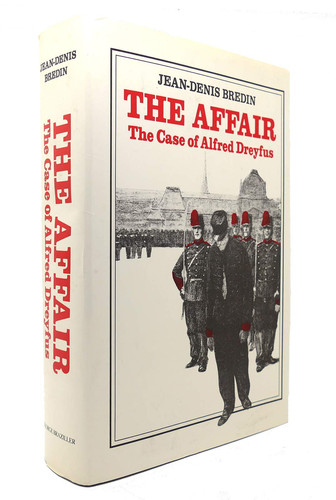
In December 1894, Captain Alfred Dreyfus, a brilliant French artillery officer and a Jew of Alsatian descent, was court-martialed for selling secrets to the German military attaché in Paris based on perjured testimony and trumped-up evidence. The sentence was military degradation and life imprisonment on Devil's Island, a hellhole off the coast of French Guiana. Five years later, the case was overturned, and eventually Dreyfus was completely exonerated. Meanwhile, the Dreyfus Affair tore France apart, pitting Dreyfusards - committed to restoring freedom and honor to an innocent man convicted of a crime committed by another - against nationalists, anti-Semites, and militarists who preferred having an innocent man rot to exposing the crimes committed by ministers of war and the army's top brass in order to secure Dreyfus's conviction.
Yale University Press 2009 249 pages

The Jew accused: three anti-Semitic affairs (Dreyfus, Beilis, Frank), 1894-1915

Lindemann, Albert S.
Discusses social and political conditions bearing on antisemitism and philosemitism in France, Russia, and the American South as background for the Dreyfus Affair, the Beilis ritual murder trial, and the trial and lynching of Leo Frank. Declares that comparison helps to understand each of these affairs. Antisemitism is based on realities enhanced by fantasy: in the 19th century it increased because of the growth in the number and influence of Jews, as well as domestic and international political conditions. In all three trials, official antisemitism played little part either in directing suspicion at the particular defendants or in the prosecution: in all three, there was circumstantial evidence that at first seemed credible. Public debate, however, turned on antisemitism and philosemitism. also describes massive Jewish defense efforts, especially in the USA, in connection with all three trials.
Cambridge University Press 1991 301 pages

The Dreyfus affair: a trilogy

Whyte, George R.
The cause celebre of the 19th century, the Dreyfus Affair destabilized French society (1894-1906) and reverberated across the world. Its repercussions continue to this day. A deliberate miscarriage of justice, the public degradation of an innocent Jewish officer and his incarceration on Devil's Island, espionage, intrigue, media pressure, vehement antisemitism and political skulduggery--all these elements, based on historical records, are contained in George R. Whyte's trilogy of plays which also focuses on Emile Zola's letter to the President of France, J'Accuse, arguably history's most famous plea for human rights.
Oberon Books 2010 126 pages