179 results for "History"

Where law ends: inside the Mueller investigation

Weissmann, Andrew
In May 2017, Robert Mueller was tapped to lead an inquiry into Russian interference in the 2016 presidential election, coordination by foreign agents with Donald Trump's campaign, and obstruction of justice by the president. Mueller assembled a "dream team" of top prosecutors, and for the next twenty-two months, the investigation was a black box and the subject of endless anticipation and speculation--until April 2019, when the special counsel's report was released. In Where Law Ends, legendary prosecutor Andrew Weissmann--a key player in the Special Counsel's Office--finally pulls back the curtain to reveal exactly what went on inside the investigation, including the heated debates, painful deliberations, and mistakes of the team--not to mention the external efforts by the president and Attorney General William Barr to manipulate the investigation to their political ends. Weissmann puts the reader in the room as Mueller's team made their most consequential decisions, such as whether to subpoena the president, whether to conduct a full financial investigation of Trump, and whether to explicitly recommend obstruction charges against him. Weissmann also details for the first time the debilitating effects that President Trump himself had on the investigation, through his dangling of pardons and his constant threats to shut down the inquiry and fire Mueller, which left the team racing against the clock and essentially fighting with one hand tied behind their backs. In Where Law Ends, Weissmann conjures the camaraderie and esprit de corps of the investigative units led by the enigmatic Mueller, a distinguished public servant who is revealed here, in a way we have never seen him before, as a manager, a colleague, and a very human presence. Weissmann is as candid about the team's mistakes as he is about its successes, and is committed to accurately documenting the historic investigation for future generations to assess and learn from. Ultimately, Where Law Ends is a story about a team of public servants, dedicated to the rule of law, tasked with investigating a president who did everything he could to stand in their way.
Random House 2020 402 pages

The dead hand: Reagan, Gorbachev and the untold story of the Cold War arms race

Hoffman, David E.
During the Cold War, superpowers amassed nuclear arsenals containing the explosive power of one million Hiroshimas. The Soviet Union secretly plotted to create the "Dead Hand," a system designed to launch an automatic retaliatory nuclear strike on the United States, and developed a fearsome biological warfare machine. President Ronald Reagan, hoping to awe the Soviets into submission, pushed hard for the creation of space-based missile defenses. This, the first full account of how the arms race finally ended, provides an unprecedented look at the inner motives and secret decisions of each side.
Icon 2011 577 pages

The pope at war: the secret history of Pius XII, Mussolini, and Hitler

Kertzer, David I.
"The Pope at War is the third in a trilogy of books about Pope Pius XII's response to the rise of Fascism and Nazism. It tells the dramatic story of Pope Pius XII's struggle to respond to the Second World War, the Holocaust, and the ongoing Nazi attempts to exterminate the Jews of Europe. It is the first book dealing with the war to make extensive use of the newly opened Vatican archives for the war years. It is based, as well, on thousands of documents from the Italian, German, French, British, and American archives. Among the many new discoveries brought to light is the discovery that within weeks of becoming pope in 1939, Pius XII entered into secret negotiations with Hitler through Hitler's emissary, a Nazi Prince who was married to the daughter of the King of Italy and who was very close to Hitler. The negotiations were kept so secret that not even the German ambassador to the Holy See was informed of them. The book also offers new insight into the thinking behind Pius XII's decision to maintain good relations with the German government during the war, including keeping the Germans happy while they occupied Rome in 1943-44. And throughout, David I. Kertzer shows the active role of the Italian Church hierarchy in promoting the Axis war while the pope, who as bishop of Rome was responsible for the Italian hierarchy, offered his silent blessings and cast his public speeches in such a way that both sides could claim support for their cause"--
Oxford University Press 2022 621 pages

Grand delusion: the rise and fall of American ambition in the Middle East

Simon, Steven
"A longtime American foreign policy insider's biting and definitive reckoning with the high cost of this country's ambitious meddling in the Middle East-and its bitter end The culmination of almost 40 years of expertise and insider policy access, Grand Delusion is Steven Simon's tour de force, offering a comprehensive yet analytical tour of U.S. involvement in the Middle East. Simon begins with the Reagan administration, when the Middle East shifted from a group of faraway and frequently squabbling nations to an urgent opportunity for America to (in Reagan's words) "serve the cause of world peace and the future of mankind." Assuring citizens that "we owe it to ourselves and to our children" to be a force for peace in the region, Reagan fired the starting gun on decades of profound American involvement. As the U.S. economy became increasingly reliant on oil and as policy and diplomatic momentum gathered, the Middle East became more and more central to foreign policy, and more and more likely to be the subject of grand rhetoric, until the Obama administration ended an era by turning away from the region. Grand Delusion explores the motivations, approach, and legacy of each administration up to today, showing us a complex spiderweb of intertwined events-from Lebanese civil conflict to shifting Iranian domestic politics, to Saudi Arabia's quest for security-through the lens of a Washington policy process frequently ruled by cognitive bias, wishful thinking, and outright malfeasance. Simon's sharp sense of humor and incisive analytical powers bring a complex history to life. Despite an impressive DC resume-he rose to become the National Security Council senior director for Middle Eastern and North African affairs-Simon never fails to tell the truth as he sees it. He challenges the nature of American commitment to Israel; disputes the popular narrative of Desert Storm as a "good war"; and calls out the enormous consequences of our mistakes, particularly for victims of American military action. As Grand Delusion shows, this story is only occasionally impressive, and frequently disgraceful. But it's a story with deep and enduring resonance for the future of both the U.S. and the Middle East"--
Penguin Press 2023-04-11 478 pages

Showdown: the inside story of how Obama fought back against Boehner, Cantor, and the Tea Party

Corn, David
The veteran political journalist and New York Times bestselling author goes behind the scenes at the White House to recount the dramatic tale of a pivotal period in the Obama presidency, from the game-changing 2010 midterm elections to the beginning of the critical 2012 campaign season—a tumultuous time that tested the president as never before and set the stage for a titanic clash over the future of the nation After Barack Obama's first two years as president—during which he navigated the United States through its severest economic crisis since the Great Depression while managing wars in Afghanistan and Iraq—he was faced with a bitterly divided nation and an emboldened political opposition dedicated to impeding his presidency. What followed was a year of political crises and fierce battles that would transform Obama and profoundly shape the terrain for the next election. In Showdown , astute political journalist David Corn chronicles and examines this crucial time in the Obama presidency and its impact on the nation's future. Drawing on interviews with White House officials, Obama's inner circle, members of Congress, and others, Corn takes the reader into the Oval Office and the back rooms on Capitol Hill for a fast-paced and gripping account of the major events as they unfolded: the controversial tax-cut deal with Congress in December 2010; the repeal of Don't Ask/Don't Tell; the passage of the New START treaty; the near shutdown of the government in early 2011; the revolutionary Arab spring; the killing of Osama bin Laden; the intense, high-wire debt-ceiling negotiations (in which intransigent House Republicans risked the nation's financial standing); House Speaker John Boehner's erratic maneuvers during the rise and fall of the grand bargain; and the face-off between Obama and congressional Republicans over how best to create jobs. Corn captures the dilemmas faced by a president assailed by disappointed progressives and defiantly obstructionist Republicans determined to see his defeat. Here is a chief executive trying to balance the cross-cutting demands of governance and politics while handling unending challenges at home and abroad. The book reveals a thoughtful leader with a cool head who is unafraid to take risks and make tough choices, a steely battler who successfully turned his enemies' obstinacy to his advantage. Obama has often frustrated supporters, but Corn shows how the president, who often puts pragmatism ahead of partisan demands, has craftily operated within a hostile conservative political climate, looking to win the long game, achieve progressive goals, and, ultimately, win reelection. A vivid and powerful account of White House decision-making, Showdown offers a unique and enlightening look at the turbulent American political scene during one of the most consequential moments of the nation's history, and explains the fascinating and complicated leader at the heart of this vortex.
William Morrow 2012-03-20 420 pages

We are not one: a history of America's fight over Israel

Alterman, Eric
"In We Are Not One, historian Eric Alterman traces this debate from its nineteenth-century origins. Following Israel's 1948-1949 War of Independence (called the "nakba" or "catastrophe" by Palestinians), few Americans, including few Jews, paid much attention to Israel or the challenges it faced. Following the 1967 Six-Day War, however, almost overnight support for Israel became the primary component of American Jews' collective identity. Over time, Jewish organizations joined forces with conservative Christians and neoconservative pundits and politicos to wage a tenacious fight to define Israel's image in the US media, popular culture, Congress, and college campuses. Deeply researched, We Are Not One reveals how our consensus on Israel and Palestine emerged and why, today, it is fracturing"--
Basic Books 2022-11 502 pages

On China

Kissinger, Henry
"In this sweeping and insightful history, Henry Kissinger turns for the first time at book-length to a country he has known intimately for decades, and whose modern relations with the West he helped shape. Drawing on historical records as well as his conversations with Chinese leaders over the past forty years, Kissinger examines how China has approached diplomacy, strategy, and negotiation throughout its history, and reflects on the consequences for the global balance of power in the 21st century. Since no other country can claim a more powerful link to its ancient past and classical principles, any attempt to understand China's future world role must begin with an appreciation of its long history. For centuries, China rarely encountered other societies of comparable size and sophistication; it was the "Middle Kingdom," treating the peoples on its periphery as vassal states. At the same time, Chinese statesmen--facing threats of invasion from without, and the contests of competing factions within--developed a canon of strategic thought that prized the virtues of subtlety, patience, and indirection over feats of martial prowess. In 'On China', Kissinger examines key episodes in Chinese foreign policy from the classical era to the present day, with a particular emphasis on the decades since the rise of Mao Zedong. He illuminates the inner workings of Chinese diplomacy during such pivotal events as the initial encounters between China and modern European powers, the formation and breakdown of the Sino-Soviet alliance, the Korean War, Richard Nixon's historic trip to Beijing, and three crises in the Taiwan Straits. Drawing on his extensive personal experience with four generations of Chinese leaders, he brings to life towering figures such as Mao, Zhou Enlai, and Deng Xiaoping, revealing how their different visions have shaped China's modern destiny. With his singular vantage on U.S.-China relations, Kissinger traces the evolution of this fraught but crucial relationship over the past 60 years, following its dramatic course from estrangement to strategic partnership to economic interdependence, and toward an uncertain future. With a final chapter on the emerging superpower's 21st-century world role, 'On China' provides an intimate historical perspective on Chinese foreign affairs from one of the premier statesmen of the 20th century"--
Penguin 2012 604 pages

Reign of terror: how the 9/11 era destabilized America and produced Trump

Ackerman, Spencer
"An examination of the profound impact that the War on Terror had in pushing American politics and society in an authoritarian direction for an entire generation, at home and abroad, the United States has waged an endless conflict known as the War on Terror. In addition to multiple ground wars, it has pioneered drone strikes and industrial-scale digital surveillance, as well as detaining people indefinitely and torturing them. These conflicts have yielded neither peace nor victory, but they have transformed America. What began as the persecution of Muslims and immigrants has become a normalized, paranoid feature of American politics and security, expanding the possibilities for applying similar or worse measures against other targets at home. A politically divided country turned the War on Terror into a cultural and then tribal struggle, first on the ideological fringes and ultimately expanding to conquer the Republican Party, often with the timid acquiescence of the Democratic Party. Today's nativist resurgence walked through a door opened by the 9/11 era. Reign of Terror will show how these policies created a foundation for American authoritarianism and, though it is not a book about Donald Trump, it will provide a critical explanation of his rise to power and the sources of his political strength. It will show that Barack Obama squandered an opportunity to dismantle the War on Terror after killing Osama bin Laden. That mistake turns out to have been portentous. By the end of his tenure, the war metastasized into a broader and bitter culture struggle in search of a demagogue like Trump to lead it. A union of journalism and intellectual history, Reign of Terror will be a pathbreaking and definitive book with the power to transform how America understands its national security policies and their catastrophic impact on its civic life"--
Viking, an imprint of Penguin Random House LLC 2021 428 pages

India and Pakistan: continued conflict or cooperation?

Wolpert, Stanley A.
Beginning in 1947, when 'India and Pakistan were born to conflict', renowned India scholar Stanley Wolpert provides an authoritative, accessible primer on what is potentially the world's most dangerous crisis. He concisely distills sixty-three years of complex history, tracing the roots of the relationship between these two antagonists, explaining the many attempts to resolve their disputes, and assessing the dominant political leaders. While the tragic Partition left many urgent problems, none has been more difficult than the problem over Kashmir, claimed by both India and Pakistan. This intensely divisive issue has triggered two conventional wars, killed some 100,000 Kashmiris, and almost ignited two nuclear wars since 1998, when both India and Pakistan openly emerged as nuclear-weapon states. In addition to providing a comprehensive perspective on the origin and nature of this urgent conflict, Wolpert examines all the proposed solutions and concludes with a road map for a brighter future for South Asia.
University of California Press 2010-09-13 126 pages

The silenced majority: stories of uprisings, occupations, resistance, and hope

Goodman, Amy
""Amy Goodman has taken investigative journalism to new heights of exciting, informative, and probing analysis."-Noam Chomsky Amy Goodman and Denis Moynihan began writing a weekly column, "Breaking the Sound Barrier," for King Features Syndicate in 2006. This timely new sequel to Goodman's New York Times bestseller of the same name gives voice to the many ordinary people standing up to corporate and government power-and refusing to be silent. The Silenced Majority pulls back the veil of corporate media reporting to dig deep into the politics of "climate apartheid," the implications of the Fukushima nuclear disaster, the movement to halt the execution of Troy Anthony Davis, and the globalization of dissent "From Tahrir Square to Liberty Plaza." Throughout Goodman and Moynihan show the power of ordinary people to change their media-and change the world. Amy Goodman is a multiple New York Times best-selling author and the host and executive producer of Democracy Now! a daily independent news program airing on more than one thousand television and radio stations. Time named Democracy Now! its "Pick of the Podcasts," along with NBC's Meet the Press. Goodman is the first journalist to receive the Right Livelihood Award, widely known as the "Alternative Nobel Prize." Denis Moynihan, since helping co-found Democracy Now! as an independent production company in 2002, has participated in the organization's growth, focusing primarily on distribution, infrastructure development, and coordinating complex live broadcasts from all continents (save Antarctica). He lives in Denver, Colorado. "--
Haymarket Books 2012 345 pages

The return of Marco Polo's world: war, strategy, and American interests in the twenty-first century

Kaplan, Robert D.
"A bracing assessment of U.S. foreign policy and world disorder over the past two decades, anchored by a major new Pentagon-commissioned essay about changing power dynamics among China, Eurasia, and America--from the renowned geopolitical analyst and bestselling author of The Revenge of Geography and The Coming Anarchy. In the late thirteenth century, Marco Polo began a decades-long trek from Venice to China. The strength of that Silk Road--the trade route between Europe and Asia--was a foundation of Kublai Khan's sprawling empire. Now, in the early twenty-first century, the Chinese regime has proposed a land-and-maritime Silk Road that duplicates exactly the route Marco Polo traveled. In the major lead essay, recently released by the Pentagon's Office of Net Assessment, Robert D. Kaplan lays out a blueprint of the world's changing power politics that recalls the late thirteenth century. As Europe fractures from changes in culture and migration, Eurasia coheres into a single conflict system. China is constructing a land bridge to Europe. Iran and India are trying to link the oil fields of Central Asia to the Indian Ocean. America's ability to influence the power balance in Eurasia is declining. This is Kaplan's first collection of essays since his classic The Coming Anarchy was published in 2000. Drawing on decades of firsthand experience as a foreign correspondent and military embed for The Atlantic, as well as encounters with preeminent realist thinkers, Kaplan outlines the timeless principles that should shape America's role in a turbulent world: a respect for the limits of Western-style democracy; a delineation between American interests and American values; an awareness of the psychological toll of warfare; a projection of power via a strong navy; and more. From Kaplan's immediate thoughts on President Trump ("On Foreign Policy, Donald Trump Is No Realist," 2016) to a frank examination of what will happen in the event of war with North Korea ("When North Korea Falls," 2006), The Return of Marco Polo's World is a vigorous and honest reckoning with the difficult choices the United States will face in the years ahead. "These essays constitute a truly pathbreaking, brilliant synthesis and analysis of geographic, political, technological, and economic trends with far-reaching consequences. The Return of Marco Polo's World is another work by Robert D. Kaplan that will be regarded as a classic."--General David Petraeus (U.S. Army, Ret.)"--
Random House 2018 280 pages

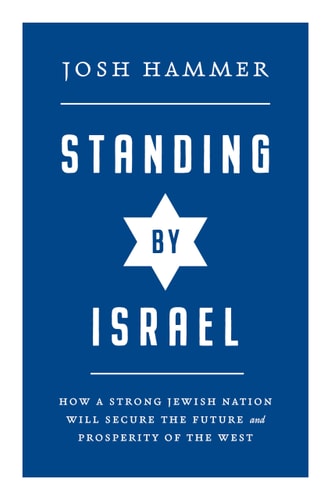
Israel and civilization: the fate of the Jewish nation and the destiny of the West

Hammer, Josh
"In Israel and Civilization, acclaimed journalist, legal expert, and pundit Josh Hammer makes a righteous case that the key to the prosperity of the West is the flourishing of the Jewish people and the Jewish State of Israel. Hammer's uplifting offense is our best defense against the enemies of the Jewish people's right to self-determination in their ancestral homeland. And as Hammer makes clear, manifesting the promise of Israel requires action by the United States and its allies. There can be no overstating the impact of the trauma of October 7, 2023, on the Jewish people. Yet the anti-Israel reactions the world over have been equally devastating. Rallies of hundreds of thousands explicitly or implicitly promoting Hamas violence; demonstrations of Ivy League professors celebrating the pogrom as awesome and exhilarating; so-called human rights organizations that refuse to unequivocally condemn the use of rape as a weapon of war; and a hydra of multiculturalism, postmodern relativism, and tolerance--it all threatens the physical and metaphysical survival of the West and our essential Jewish heritage. Preserving the best of what's been thought and said throughout history and ensuring that there will be centuries more requires a West that is proud of its Jewish heritage. In other words, the continued existence of the Jewish people is inextricably tied to the endurance of Western civilization. Israel is the center of the battle, and Israel and Civilization explains why and how the Jewish state must win."--
Radius Book Group 2025-03-18 293 pages

In wartime: stories from Ukraine

Judah, Tim
From one of the finest journalists of our time comes a definitive, boots-on-the-ground dispatch from the front lines of the conflict in Ukraine. Ever since Ukraine's violent 2014 revolution, followed by Russia's annexation of Crimea, the country has been at war. Misinformation reigns, more than two million people have been displaced, and Ukrainians fight one another on a second front--the crucial war against corruption. With In Wartime , Tim Judah lays bare the events that have turned neighbors against one another and mired Europe's second-largest country in a conflict seemingly without end. In Lviv, Ukraine's western cultural capital, mothers tend the graves of sons killed on the other side of the country. On the Maidan, the square where the protests that deposed President Yanukovych began, pamphleteers, recruiters, buskers, and mascots compete for attention. In Donetsk, civilians who cheered Russia's President Putin find their hopes crushed as they realize they have been trapped in the twilight zone of a frozen conflict. Judah talks to everyone from politicians to poets, pensioners, and historians. Listening to their clashing explanations, he interweaves their stories to create a sweeping, tragic portrait of a country fighting a war of independence from Russia--twenty-five years after the collapse of the USSR.
Tim Duggan Books 2016 257 pages

Putinism: Russia and its future with the West

Laqueur, Walter
"A timely, topical book grounding Russia's recent turn towards conservativism in pre-1917 culture and explaining what this shift could mean for the rest of the world" ; "There is no question that tensions between Russia and America are on the rise. The forced annexation of Crimea, the downing of Malaysia Airlines flight 17, and the Russian government's treatment of homosexuals have created diplomatic standoffs and led to a volley of economic sanctions. Much of the blame for Russia's recent hostility towards the West has fallen on steely-eyed President Vladimir Putin, and Americans have begun to wonder if they are witnessing the rebirth of Cold War-style dictatorship. Not so fast, argues veteran historian Walter Laqueur. For two decades Laqueur has been ahead of the curve, predicting events in post-Soviet Russia with uncanny accuracy. In Putinism, he deftly demonstrates how three long-standing pillars of Russian ideology: a strong belief in the Orthodox Church, a sense of Eurasian 'manifest destiny, ' and a fear of foreign enemies, continue to exert a powerful influence on the Russian populace. As a result, Putin may well be much more a servant of his people than we think. Topical and provocative, Putinism contains much more than historical analysis. Looking to the future, Laqueur explains how the tendency to view Russia as a Cold War relic is dangerous and premature. Russia can, and will, continue to challenge the West so it is in our best interest to figure out exactly who it is we are facing--and what they want--before it is too late"
Thomas Dunne Books 2015-06-30 271 pages

The White House years

Kissinger, Henry
In this first volume of his memoirs, Dr Kissinger covers his first four years (1969-1973) as Assistant to the President for National Security Affairs, and President Nixon's closest adviser on foreign policy. It is undoubtedly the most significant book to come out of the Nixon Administration. Among the countless great and critical moments Dr Kissinger recalls are his first meeting with Nixon, his secret trip to China, the first SALT negotiation, the Jordan crisis of 1970, the India-Pakistan war of 1971, and the historic summit meetings in Peking and Moscow. He covers the major controversies over Indochina policy during that period, including events in Laos, the overthrow of Cambodia's Prince Sihanouk, his secret talks with the North Vietnamese in Paris, his 'Peace is at hand' press conference, and the breakdown of the talks that led to the 'Christmas bombing' of 1972. He offers his insight s into the Middle East conflicts, Sadat's break with the Soviets, the election of Salvador Allende in Chile, issues of defence strategy, and relations with Europe and Japan. Other highlights are his relationship with Nixon, brilliant portraits of major foreign leaders, and his views as to the handling of crises and the art of diplomacy. Few men have wielded as much influence in the arena of American foreign policy as Henry Kissinger. This record makes an invaluable and lasting contribution to the history of this crucial time.
Weidenfeld and Nicolson 1979 1521 pages

Israel: the will to prevail

Danon, Danny
Danny Danon has been a vocal opponent of disengaging in the Gaza Strip and West bank, and transforming the stalemate "two state/one state" dialogue to include regional partners, at times standing in direct opposition to his own party's leadership. A well-known and frequent speaker in the global arena, he is the rising voice for a fresh movement toward nationalism among the generation of Israelis currently coming to power. Here, Danon shares this vision with the world. It is a bold and uncompromising stance in the face of attacks on Israel's sovereignty by other Middle Eastern nations as the United States sends mixed signals of support to further its own goals in the region. Danon dissects the missteps and wrong turns that Israel's politicians have taken in the past by working to appease the United States and not offend their neighbors, instead of prioritizing their nation's own viability. With electrifying zeal, he tackles the challenges Israel faces today to undo what he sees as a consequence brought on by years of acquiescence to US policy. Danon believes "US pressure on Israel is hurting Israel and will do nothing to advance peace". Danon leads the charge toward a victorious future with an invitation for the United States and the Middle East to participate in, and not just dictate, Israel's international relations and policies (as opposed to an Israel cuckolded with an endless array of caveats toward those who would see it fall). No stranger to controversy, Danon's unabashed insights are a welcome revelation in the current quagmire of Middle-East international relations. A leading speaker to both Jewish groups and Christian Conservatives, the LA Jewish Journal says "What Danny says is what Bibi is actually thinking." For Danny Danon, this is only the beginning.
Palgrave Macmillan 2012-09-04 230 pages

The storm before the calm: America's discord, the crisis of the 2020s, and the triumph beyond

Friedman, George
Friedman identifies an 80-year "institutional cycle" and a 50-year "socio-economic cycle" that has seen the formation of the industrial classes, baby boomers, and the middle classes. These two major cycles are converging on the late 2020s -- and the world will have to endure upheaval and possible conflict. He outlines upcoming challenges, shifts in corporate structures, and new trends resulting from longer life expectancy. As the role of the United States changes, will it lead to increased strength and stability, or critical crises?
Anchor Books, a division of Penguin Random House 2021-01-12 256 pages

A world in disarray: American foreign policy and the crisis of the old order

Haass, Richard
"A valuable primer on foreign policy: a primer that concerned citizens of all political persuasions--not to mention the president and his advisers--could benefit from reading." -- The New York Times An examination of a world increasingly defined by disorder and a United States unable to shape the world in its image, from the president of the Council on Foreign Relations Things fall apart; the center cannot hold. The rules, policies, and institutions that have guided the world since World War II have largely run their course. Respect for sovereignty alone cannot uphold order in an age defined by global challenges from terrorism and the spread of nuclear weapons to climate change and cyberspace. Meanwhile, great power rivalry is returning. Weak states pose problems just as confounding as strong ones. The United States remains the world's strongest country, but American foreign policy has at times made matters worse, both by what the U.S. has done and by what it has failed to do. The Middle East is in chaos, Asia is threatened by China's rise and a reckless North Korea, and Europe, for decades the world's most stable region, is now anything but. As Richard Haass explains, the election of Donald Trump and the unexpected vote for "Brexit" signals that many in modern democracies reject important aspects of globalization, including borders open to trade and immigrants. In A World in Disarray , Haass argues for an updated global operating system--call it world order 2.0--that reflects the reality that power is widely distributed and that borders count for less. One critical element of this adjustment will be adopting a new approach to sovereignty, one that embraces its obligations and responsibilities as well as its rights and protections. Haass also details how the U.S. should act towards China and Russia, as well as in Asia, Europe, and the Middle East. He suggests, too, what the country should do to address its dysfunctional politics, mounting debt, and the lack of agreement on the nature of its relationship with the world. A World in Disarray is a wise examination, one rich in history, of the current world, along with how we got here and what needs doing. Haass shows that the world cannot have stability or prosperity without the United States, but that the United States cannot be a force for global stability and prosperity without its politicians and citizens reaching a new understanding.
The Penguin Press 2017 339 pages