35 results for "History"

1968: the year that rocked the world

Kurlansky, Mark
To some, 1968 was the year of sex, drugs, and rock and roll. Yet it was also the year of the Martin Luther King, Jr., and Bobby Kennedy assassinations; the riots at the Democratic National Convention in Chicago; Prague Spring; the antiwar movement and the Tet Offensive; Black Power; the generation gap; avant-garde theater; the upsurge of the women's movement; and the beginning of the end for the Soviet Union. Mark Kurlansky brings to life the cultural and political history of that pivotal year, when television's influence on global events first became apparent, and spontaneous uprisings occurred simultaneously around the world. Encompassing the diverse realms of youth and music, politics and war, economics and the media, 1968 shows how twelve volatile months transformed who we were as a people -- and led us to where we are today.
Random House 2005 441 pages

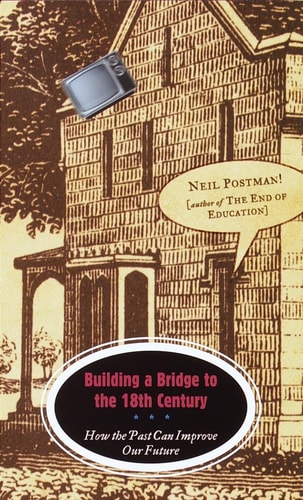
Building a bridge to the 18th century: how the past can improve our future

Postman, Neil
In Building a Bridge to the 18th Century , acclaimed cultural critic Neil Postman offers a cure for the hysteria and hazy values of the postmodern world. Postman shows us how to reclaim that balance between mind and machine in a dazzling celebration of the accomplishments of the Enlightenment-from Jefferson's representative democracy to Locke's deductive reasoning to Rousseau's demand that the care and edification of children be considered an investment in our collective future. Here, too, is the bold assertion that Truth is invulnerable to fashion or the passing of time. Provocative and brilliantly argued, Building a Bridge to the 18th Century illuminates a navigable path through the Information Age-a byway whose signposts, it turns out, were there all along.
Knopf 2000-10-10 213 pages

A history of the twentieth century

Gilbert, Martin
Martin Gilbert brings readers up to date in this rich historical narrative of the contradictory events of the last fifty years. Volume II ended in 1951, as the world recovered from World War II, and the nuclear threat increased. In this volume, Gilbert recalls the Cold War and communism--including McCarthyism, the Soviet and Warsaw Pact, the Berlin Wall--and the wars, from Korea to Vietnam to Bosnia. He moves from Poland's Solidarity Movement to Ireland's Bloody Sunday, from Pol Pot and his killing fields to the dissolution of the Soviet Union. Mao began a cultural revolution, Martin Luther King, Jr. and John F. Kennedy were assassinated, and Beijing's Tiananamen Square shocked the world. Technology and medicine advanced in leaps and bounds as the society struggled to catch up. Art, literature, and music, as well as epidemics and natural disasters, all have their place here. Many of the events are described through the words of those who were present. As in the previous two volumes, Gi
W. Morrow 1997 1088 pages

Ill fares the land

Judt, Tony
In "Ill Fares The Land," Tony Judt, one of our leading historians and thinkers, reveals how we have arrived at our present dangerously confused moment and offers the language we need to address our common needs, rejecting the nihilistic individualism of the far right and the debunked socialism of the past. To find a way forward, Judt argues that we must look to our not so distant past and to social democracy in action: to re-enshrining fairness over mere efficiency.
Penguin Press 2010 237 pages

A history of the modern world

Palmer, R. R.,Colton, Joel
This brilliant and highly readable history of modern Europe in its international setting explores the heritage of the West since the Renaissance, closely relating the trajectories of individual nations to European civilization as a whole.For this eighth edition, Professors Palmer and Colton have revised their classic account in light of recent momentous events (the dissolution of the Soviet Union, the end of the Cold War, the near-demise of communism, the reunification of Germany) and the transformed world that has emerged in their wake. On the brink of the twenty-first century, this world faces new challenges - among them, the fragile environment and the population explosion. By means of its incomparable depth and scope, this volume provides a superior context for understanding the past, negotiating the present and preparing for the future.
McGraw-Hill 1995 1259 pages

The world: a brief introduction

Haass, Richard
"This book is designed to provide readers with the background and building blocks they need in order to answer for themselves the critical questions about what is taking place around the world and why. It explains what makes each region of the world tick, the many challenges globalization presents, and the most influential countries, events, and ideas. Its aim is to help readers become more informed, discerning citizens, better able to arrive at sound, independent judgments and less vulnerable to being misled"--
Penguin Press 2020 378 pages

1959: the year everything changed

Kaplan, Fred M.
Acclaimed national security columnist and noted cultural critic Fred Kaplan looks past the 1960s to the year that really changed America While conventional accounts focus on the sixties as the era of pivotal change that swept the nation, Fred Kaplan argues that it was 1959 that ushered in the wave of tremendous cultural, political, and scientific shifts that would play out in the decades that followed. Pop culture exploded in upheaval with the rise of artists like Jasper Johns, Norman Mailer, Allen Ginsberg, and Miles Davis. Court rulings unshackled previously banned books. Political power broadened with the onset of Civil Rights laws and protests. The sexual and feminist revolutions took their first steps with the birth control pill. America entered the war in Vietnam, and a new style in superpower diplomacy took hold. The invention of the microchip and the Space Race put a new twist on the frontier myth. Vividly chronicles 1959 as a vital, overlooked year that set the world as we know it in motion, spearheading immense political, scientific, and cultural change Strong critical acclaim: "Energetic and engaging" ( Washington Post ); "Immensely enjoyable . . . a first-rate book" ( New Yorker ); "Lively and filled with often funny anecdotes" ( Publishers Weekly ) Draws fascinating parallels between the country in 1959 and today Drawing fascinating parallels between the country in 1959 and today, Kaplan offers a smart, cogent, and deeply researched take on a vital, overlooked period in American history.
Wiley 2010-04-19 322 pages

Media events: the live broadcasting of history

Dayan, Daniel
Constituting a new television genre, live broadcasts of "historic" events have become, in effect, world rituals--high holidays of mass communication. Daniel Dayan and Elihu Katz show us that these media events have the potential for transforming societies as they transfix viewers around the globe. The authors apply this original thesis to public spectacles such as the Olympic Games, Anwar el-Sadat's journey to Jerusalem, the wedding of Prince Charles and Lady Diana, John.
Harvard University Press 1992-02-01 306 pages

Love, poverty and war: journeys and essays

Hitchens, Christopher
Love, Poverty and War: Journeys and Essays showcases the Hitchens' rejection of consensus and cliché, whether he's reporting from abroad in Indonesia, Kurdistan, Iraq, North Korea, or Cuba, or when his pen is targeted mercilessly at the likes of William Clinton, Mother Theresa ("a fanatic, a fundamentalist and a fraud"), the Dalai Lama, Noam Chomsky, Mel Gibson and Michael Bloomberg. Hitchens began the nineties as a "darling of the left" but has become more of an "unaffiliated radical" whose targets include those on the "left," who he accuses of "fudging" the issue of military intervention in the Balkans, Afghanistan and Iraq. Yet, as Hitchens shows in his reportage, cultural and literary criticism, and opinion essays from the last decade, he has not jumped ship and joined the right but is faithful to the internationalist, contrarian and democratic ideals that have always informed his work.
Atlantic Books 2021-05 475 pages

A short history of the twentieth century

Lukacs, John
"The historian John Lukacs offers a concise history of the twentieth century--its two world wars and cold war, its nations and leaders. The great themes woven through this spirited narrative are inseparable from the author's own intellectual preoccupations: the fading of liberalism, the rise of populism and nationalism, the achievements and dangers of technology, and the continuing democratization of the globe. The historical twentieth century began with the First World War in 1914 and ended seventy-five years later with the collapse of the Soviet Empire in 1989. The short century saw the end of European dominance and the rise of American power and influence throughout the world. The twentieth century was an American century--perhaps the American century. Lukacs explores in detail the phenomenon of national socialism (national socialist parties, he reminds us, have outlived the century), Hitler's sole responsibility for the Second World War, and the crucial roles played by his determined opponents Churchill and Roosevelt. Between 1939 and 1942 Germany came closer to winning than many people suppose. Lukacs casts a hard eye at the consequences of the Second World War--the often misunderstood Soviet-American cold war--and at the shifting social and political developments in the Far and Middle East and elsewhere. In an eloquent closing meditation on the passing of the twentieth century, he reflects on the advance of democracy throughout the world and the limitations of human knowledge" -- Publisher website
The Belknap Press of Harvard University Press 2013-10-07 230 pages

Selected essays: 1934-1943

Weil, Simone
Introducing the Selected Works of Simone Weil Weil's many essays written over her short life cover a very wide range of topics. This important collection contains several that have been long unavailable. There is deep integrity in this diverse collection. Many are directed to social and political topics, written in Weil's distinctive way of commenting on contemporary issues through historical writing. Weil wrote in her great work The Need for Roots that humans beings need roots in the universe; this rootedness comes through their lived history. Often Weil is treated as if she were constantly trying to posit timeless truths, but as these essays make evident, Weil offers to her readers a sense of truth as we discover it and live with it in our concrete historical circumstances. This analogical and historical thinking is particularly clear in the several essays that come from her last days while working for the Free French in London, during which she meditated on the philosophical renewal of France after the war. SELECTED WORKS: First and Last Notebooks: Supernatural Knowledge / ISBN 978-1-4982-3919-6 Seventy Letters: Personal and Intellectual Windows on a Thinker / ISBN 978-1-4982-3920-2 Selected Essays, 1934-1943: Historical, Political and Moral Writings / ISBN 978-1-4982-3921-9
Wipf & Stock 2015-12-22 231 pages