
11 results for "History"

Israel and civilization: the fate of the Jewish nation and the destiny of the West

Hammer, Josh
"In Israel and Civilization, acclaimed journalist, legal expert, and pundit Josh Hammer makes a righteous case that the key to the prosperity of the West is the flourishing of the Jewish people and the Jewish State of Israel. Hammer's uplifting offense is our best defense against the enemies of the Jewish people's right to self-determination in their ancestral homeland. And as Hammer makes clear, manifesting the promise of Israel requires action by the United States and its allies. There can be no overstating the impact of the trauma of October 7, 2023, on the Jewish people. Yet the anti-Israel reactions the world over have been equally devastating. Rallies of hundreds of thousands explicitly or implicitly promoting Hamas violence; demonstrations of Ivy League professors celebrating the pogrom as awesome and exhilarating; so-called human rights organizations that refuse to unequivocally condemn the use of rape as a weapon of war; and a hydra of multiculturalism, postmodern relativism, and tolerance--it all threatens the physical and metaphysical survival of the West and our essential Jewish heritage. Preserving the best of what's been thought and said throughout history and ensuring that there will be centuries more requires a West that is proud of its Jewish heritage. In other words, the continued existence of the Jewish people is inextricably tied to the endurance of Western civilization. Israel is the center of the battle, and Israel and Civilization explains why and how the Jewish state must win."--
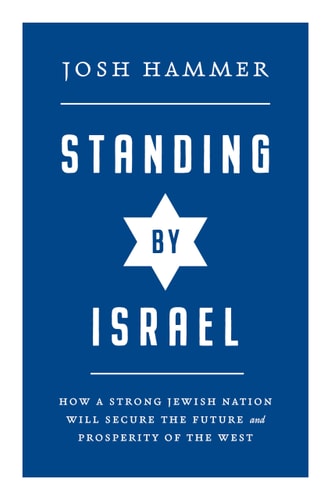
Radius Book Group 2025-03-18 293 pages

The pity of it all: a history of the Jews in Germany, 1743-1933

Elon, Amos
Presents a cultural history of German Jewry from Moses Mendelssohn's arrival in Berlin until the end of the Weimar Republic. Refers to antisemitism in a number of contexts: Mendelssohn is hailed by German intellectuals as an exception among the Jews; acceptance of the Jew was sometimes soon followed by rejection; despite or because of disproportionate Jewish contributions to culture and society, Jews are viewed as foreigners; rights are granted only to rich and useful Jews; despite Jewish patriotism, Jews are often portrayed as traitors and subversives. Among the prominent Jews discussed are Heinrich Heine, whose ambivalence toward Germans reflected their ambivalence toward him, and Walther Rathenau who was assassinated by radical nationalists whose activities the Weimar Republic was unable to curb. The section devoted to the latter reveals how Weimar's weaknesses opened the door of power to the Nazis.
Metropolitan Books 2002-11 446 pages

Jews and the American soul: human nature in the twentieth century

Heinze, Andrew R.
What do Joyce Brothers and Sigmund Freud, Rabbi Harold Kushner and philosopher Martin Buber have in common? They belong to a group of pivotal and highly influential Jewish thinkers who altered the face of modern America in ways few people recognize. So argues Andrew Heinze, who reveals in rich and unprecedented detail the extent to which Jewish values, often in tense interaction with an established Christian consensus, shaped the country's psychological and spiritual vocabulary. Jews and the American Soul is the first book to recognize the central role Jews and Jewish values have played in shaping American ideas of the inner life. It overturns the widely shared assumption that modern ideas of human nature derived simply from the nation's Protestant heritage. Heinze marshals a rich array of evidence to show how individuals ranging from Erich Fromm to Ann Landers changed the way Americans think about mind and soul. The book shows us the many ways that Jewish thinkers influenced everything from the human potential movement and pop psychology to secular spirituality. It also provides fascinating new interpretations of Sigmund Freud, Alfred Adler, and Western views of the psyche; the clash among Protestant, Catholic, and Jewish moral sensibilities in America; the origins and evolution of America's psychological and therapeutic culture; the role of Jewish women as American public moralists, and more. A must-read for anyone interested in the contribution of Jews and Jewish culture to modern America.
Princeton University Press 2007 438 pages

Jews and the American soul: human nature in the twentieth century

Heinze, Andrew R.
What do Joyce Brothers and Sigmund Freud, Rabbi Harold Kushner and philosopher Martin Buber have in common? They belong to a group of pivotal and highly influential Jewish thinkers who altered the face of modern America in ways few people recognize. So argues Andrew Heinze, who reveals in rich and unprecedented detail the extent to which Jewish values, often in tense interaction with an established Christian consensus, shaped the country's psychological and spiritual vocabulary. Jews and the American Soul is the first book to recognize the central role Jews and Jewish values have played in shaping American ideas of the inner life. It overturns the widely shared assumption that modern ideas of human nature derived simply from the nation's Protestant heritage. Heinze marshals a rich array of evidence to show how individuals ranging from Erich Fromm to Ann Landers changed the way Americans think about mind and soul. The book shows us the many ways that Jewish thinkers influenced everything from the human potential movement and pop psychology to secular spirituality. It also provides fascinating new interpretations of Sigmund Freud, Alfred Adler, and Western views of the psyche; the clash among Protestant, Catholic, and Jewish moral sensibilities in America; the origins and evolution of America's psychological and therapeutic culture; the role of Jewish women as American public moralists, and more. A must-read for anyone interested in the contribution of Jews and Jewish culture to modern America.
Princeton University Press 2004 438 pages

Judaism on trial: Jewish-Christian disputations in the Middle Ages

Hyam Maccoby
Hyam Maccoby's now classic study focuses on the major Jewish—Christian disputations of medieval Europe: those of Paris (1240), Barcelona (1263), and Tortosa (1413–14). It examines the content of these theological confrontations with a sense of present-day relevance, while also discussing the use made of scriptural proof-texts. Part I provides a general thematic consideration of the three disputations and their social and historical background. Part II is a complete translation of the account of the Barcelona Disputation written by Nahmanides, one of the greatest figures in the history of Jewish learning, and was Jewish spokesman at the disputation. Part III contains Jewish and Christian accounts of the Paris and Tortosa disputations.
Vallentine Mitchell 1993 245 pages

Nine American Jewish thinkers

Konvitz, Milton R.
The nine American Jews of whom Milton Konvitz writes are philosophers, jurists, or rabbis, widely known and readily accepted as American Jewish thinkers. Their work reflects all essential Jewish values. Each person in his own way has dedicated his work to the betterment of life and the advancement of human ideals. In this sense, their Jewishness is not defined by religion alone. Americanism permeated all they thought and all they did. Konvitz argues that in the complex modern world, secularists often serve God more handsomely than do members of synagogues or churches. For example, when the Supreme Court in 1954 (with Felix Frankfurter playing a key role behind the scenes) agreed to outlaw segregation of the races in public schools, was the Court's action secular or religious? When Congress passed the statute known as the Americans with Disabilities Act, requiring equal treatment of handicapped persons, was the action secular or religious? Is a minimum wage act secular or religious? Is Medicaid a secular or a religious act? Konvitz believes the distinction is not useful, or even possible. The book is divided into three parts, reflecting Konvitz's range of intellectual interests. The nine essays offer concise intellectual biographies of three American Jewish philosophers, three Supreme Court Justices, and three rabbis. The philosophers-Horace M. Kallen, Morris Raphael Cohen, and Sidney Hook-are world-renowned. The jurists-Louis D. Brandeis, Benjamin N. Cardozo, and Felix Frankfurter-hold prominent places in American legal history. And the three rabbis-Leo Jung, Robert Gordis, and Jacob Agus-are known wherever Jewish thought is studied. By treating with equal seriousness the lives and writings of both religious and secularist thinkers, the author intentionally minimizes the conventional antagonism and frequent conflict between religion and secularism. An unusual feature of the book is the fact that the author was a close friend of six of the persons whose lives and work are examined, allowing him a perceptive insight into their character and thought. Although the book is about serious subjects, its graceful style makes the contents easily accessible to lay persons as well as scholars and students of Judaica.
Transaction Publishers 2000 173 pages

A chosen calling: Jews in science in the twentieth century

Efron, Noah J.
Scholars have struggled for decades to explain why Jews have succeeded extravagantly in modern science. A variety of controversial theories from such intellects as C. P. Snow, Norbert Wiener, and Nathaniel Weyl have been promoted. Snow hypothesized an evolved genetic predisposition to scientific success. Wiener suggested that the breeding habits of Jews sustained hereditary qualities conducive for learning. Economist and eugenicist Weyl attributed Jewish intellectual eminence to "seventeen centuries of breeding for scholars." Rejecting the idea that Jews have done well in science because of uniquely Jewish traits, Jewish brains, and Jewish habits of mind, historian of science Noah J. Efron approaches the Jewish affinity for science through the geographic and cultural circumstances of Jews who were compelled to settle in new worlds in the early twentieth century. Seeking relief from religious persecution, millions of Jews resettled in the United States, Palestine, and the Soviet Union, with large concentrations of settlers in New York, Tel Aviv, and Moscow. Science played a large role in the lives and livelihoods of these immigrants: it was a universal force that transcended the arbitrary Old World orders that had long ensured the exclusion of all but a few Jews from the seats of power, wealth, and public esteem. Although the three destinations were far apart geographically, the links among the communities were enduring and spirited. This shared experience of facing the future in new worlds, both physical and conceptual provided a generation of Jews with opportunities unlike any their parents and grandparents had known. The tumultuous recent century of Jewish history, which saw both a methodical campaign to blot out Europe's Jews and the inexorable absorption of Western Jews into the societies in which they now live, is illuminated by the place of honor science held in Jewish imaginations. Science was central to their dreams of creating new worlds - welcoming worlds - for a persecuted people. This provocative work will appeal to historians of science as well as scholars of religion, Jewish studies, and Zionism
Johns Hopkins University Press 2014-06 149 pages

Love, work, and death: Jewish life in medieval Umbria

Toaff, Ariel
The latter part of the thirteenth century is regarded as a key period in the history of Italian Jewry. During that time many Jewish communities sprang up in the regions of central and northern Italy. Their appearance marked a turning-point in the history of Jews in the Italian peninsula as the Jewish presence had previously been focused on Rome and the south. In this much-acclaimed study, originally published in Italian, Ariel Toaff captures all the intricacies of everyday life in the medieval Jewish communities of Umbria. A thorough examination of Hebrew and Italian archival sources enables him to characterize in detail the defining features of Jewish life in the region at that time and to show clearly how the common stereotype of a single, undifferentiated Jewish community does not reflect the reality. Instead, he presents a picture of a complex society that--far from being a 'mere' minority and somewhat isolated--actually contributed greatly to contemporary society and played a significant role in shaping it, while at the same time also being influenced by the surrounding Christian society. Professor Toaff elaborates contemporary Jewish traditions and practices associated with love, marriage, food, work, sickness, and death in the context of everyday social relations between Christians and Jews. In so doing he presents a full and fascinating reconstruction of the Jewish life of the period that faithfully reflects the links and divides between the two communities. Engagingly written, Love, Work, and Death: Jewish Life in Medieval Umbria will be of interest to the general reader, while its detailed references to archival documentation make it a particularly valuable source for students of medieval Jewish history and specialists in the social history of medieval and Renaissance Italy.
Littman Library of Jewish Civilization 1996 297 pages