12 results for "History"

The significance of Yavneh and other essays in Jewish hellenism

Cohen, Shaye J. D.
This volume collects thirty essays by Shaye J.D. Cohen. First published between 1980 and 2006, these essays deal with a wide variety of themes and texts: Jewish Hellenism; Josephus; the Synagogue; Conversion to Judaism; Blood and Impurity; the boundary between Judaism and Christianity. What unites them is their philological orientation. Many of these essays are close studies of obscure passages in Jewish and Christian texts. The essays are united too by their common assumption that the ancient world was a single cultural continuum; that ancient Judaism, in all its expressions and varieties, was a Hellenism; and that texts written in Hebrew share a world of discourse with those written in Greek. Many of these essays are well-known and have been much discussed in contemporary scholarship. Among these are: The Significance of Yavneh (the title essay), Patriarchs and Scholarchs, Masada: Literary Tradition, Archaeological Remains, and the Credibility of Josephus, Epigraphical Rabbis, The Conversion of Antoninus, Menstruants and the Sacred in Judaism and Christianity, and A Brief History of Jewish Circumcision Blood.
Mohr Siebeck 2010 614 pages

Howl

Jacobson, Howard
In the aftermath of October 7, Ferdinand Draxler walks the streets of London in despair. Everything has changed - the sights, the sound, the spirit. He too is not who he was. Is he at the crossroads of history or is it just a bend in the cul-de-sac of his own gloomy nature? The son of a Holocaust survivor who accuses him of cowardice and the father of a daughter who sees him as complicit in genocide, Draxler fixates on bad news. He shouts at the television. He carries his own tin of paint to cover up graffiti. The staffroom at the primary school of which he is headmaster has become a battlefield of inflamed opinion he does nothing to quiet. His wife, Charmian, is a beacon of calm, but even she isn't sure she can save Ferdie from himself. 'Don't worry about me,' he tells her. 'I don't have what it takes to go mad.' -- Source other than Library of Congress.
Jonathan Cape 2026-03-03 294 pages

Jewish priorities: sixty-five proposals for the future of our people

David Hazony
"Imagine having the entire Jewish people over for dinner--and hosting a raucous, creative, riveting debate about their collective future. Jewish Priorities offers, for the first time, a wide-ranging, ambitious, and genuinely "pan-Jewish" conversation. Encompassing more than sixty top authors from around the Jewish world--Israelis and Diaspora writers; younger influencers and veteran opinion leaders; rabbinic and communal leaders, journalists and scholars, and literary and cultural figures, ranging from secular to ultra-Orthodox--each contributor offers a different priority for the Jewish people. In the process, Jewish Priorities captures the tremendous breadth, depth, and passionate commitment that has long defined this unique community in history. These essays are all original and come from some of our greatest luminaries--thought leaders like Natan Sharansky, Dara Horn, Yossi Klein Halevi, Ruth Wisse, Shaul Magid, David Wolpe, Fania Oz-Salzberger, and many more. Their topics vary widely, from Zionism and antisemitism to education and philanthropy; from the Holocaust to Jewish intimacy; from the quest for God to the failure of Jewish institutions, to the best way to study the Torah in an age of viral videos. Jewish Priorities offers an unprecedented snapshot of the cultural, political, and religious currents driving an entire generation of Jews--but also the deepest aspirations and dreams of this beautiful, unique people at a pivotal moment in our history."
Wicked Son Books, an imprint of Post Hill Press 2023-10-24 509 pages

The legacy of Islamic antisemitism: from sacred texts to solemn history

Bostom, Andrew G.
Islamic antisemitism is as old as Islam itself, and is not a mere borrowing from non-Muslim sources, as has been claimed. The Legacy of Islamic Antisemitism provides comprehensive, meticulously documented evidence that a readily discernible, uniquely Islamic antisemitism—specific Muslim hatred of Jews—has been expressed continuously since the advent of Islam. Writing in 1971, S.D. Goitein, the pre-eminent scholar of Muslim-Jewish relations as revealed in the Geniza documentary record of the high Middle Ages (950-1250 C.E.), employed the term antisemitism, “…in order to differentiate animosity against Jews from the discrimination practiced by Islam against non-Muslims in general. Our scrutiny of the Geniza material has proved the existence of ‘antisemitism’ in the time and the area considered here…”. Goitein cited as concrete proof of his assertion that a unique strain of Islamic Jew hatred was extant at that time (i.e., up to a millennium ago)—exploding the common assumption of its absence—the fact that letters from the Geniza material, “…have a special word for it and, most significantly, one not found in the Bible or in Talmudic literature…but one much used and obviously coined in the Geniza period.” Important examples of antisemitic motifs in the foundational Muslim texts are presented: from the Koran and Koranic exegesis by the greatest classical and modern Muslim commentators; the hadith (words and deeds of the Muslim prophet Muhammad as recorded by pious Muslim transmitters), the sira (earliest Muslim biographies of Muhammad), as well as the writings of influential Muslim jurists, theologians, and scholars, from the Middle Ages through the contemporary era. These primary sources, and seminal secondary analyses translated here for the first time into English such as Hartwig Hirschfeld’s mid 1880s essays on Muhammad’s subjugation of the Jews of Medina, and George Vajda’s elegant, comprehensive 1937 study of the hadith—detail the sacralized rationale for Islam’s anti-Jewish bigotry. Numerous complementary historical accounts illustrate the resulting the plight of Jewish communities in the Muslim world across space and time, culminating in the genocidal threat posed to the Jews of Israel today. The Legacy of Islamic Antisemitism debunks the conventional wisdom which continues to assert that Muslim Jew hatred is entirely a 20th century phenomenon, a loose amalgam of re-cycled medieval Christian Judeophobic motifs, calumnies from the Czarist Russia “Protocols of the Elders of Zion”, and standard Nazi propaganda, that only arose after the advent of the Zionist movement and the protracted Arab-Jewish conflict over all of the lands comprising the original 1922 Mandate for historical Palestine. Scholars, educators, and interested lay readers will find this collection an invaluable resource for understanding the phenomenon of Muslim antisemitism, past and present. An updated Author’s Preface for this new edition—which includes materials through January 3, 2020—elucidates the current global pandemic of Muslim Antisemitism, and its resulting violent manifestations, in Israel, Western Europe, and the United States. Doctrinal drivers of this hatred, as espoused by iconic Muslim religious leaders representing the pinnacles of institutional Islamic religious education—both Sunni and Shiite—are introduced. This compendious, timely exposé rivets upon freshly translated samples of modern, seminal Koranic glosses—rife with Jew-hatred—which shape current understandings of Islam’s holy book, and Islam itself, by the Muslim masses. The new Preface concludes with a focused discussion about why non-Muslim religious leaders, especially Jews, must admonish institutional Islam to begin its own process, akin to Vatican II/Nostre Aetate, of expunging at least the most virulent Jew-hating motifs from Islam’s core theology.
[Independently published ; printed by Amazon] 2020 825 pages

Tradition in an untraditional age: essays on modern Jewish thought

Sacks, Jonathan
Tradition in an Untraditional Age, first published in 1990, explores the challenges of secularisation, assimilation and antisemitism, through analyses of thinkers including R. Samson Raphael Hirsch, R. Moses Sofer, R. Abraham Isaac Kook, R. Joseph Soloveitchik, Franz Rosenzweig and Martin Buber, as well as studies of topics including the Holocaust, Jewish-Christian dialogue, Jewish economic ethics and religious alienation and return. It also sets out an agenda for future Jewish thought.
Maggid Books 2023 318 pages

The limits of Orthodox theology: Maimonides' thirteen principles reappraised

Shapiro, Marc B.
It is commonly asserted that Maimonides' famous Thirteen Principles are the last word in Orthodox Jewish theology. This is a very popular notion, and is often repeated by scholars from all camps in Judaism. Yet such a position ignores the long history of Jewish theology in which Maimonides' Principles have been subject to great dispute. The book begins with a discussion of the significance of the Principles and illustrates how they assumed such a central place in traditional Judaism. Each principle is then considered in turn: the reasons underlying Maimonides' formulations are expounded and the disputes that have arisen concerning them are discussed in detail. Marc B. Shapiro's authoritative analysis makes it quite clear that the notion that Maimonides' Principles are the last word in traditional Jewish theology is a misconception, and that even Maimonides himself was not fully convinced of every aspect of his formulations. Although structured around Maimonides' Principles, this book can also be seen as an encyclopedia of traditional Jewish thought concerning the central issues of Jewish theology. The diversity of opinion in Jewish tradition on such issues as God, Creation, and the Revelation of the Torah is sure to surprise readers.
Littman Library of Jewish Civilization 2011 221 pages

The encyclopedia of Jewish prayer: Ashkenazic and Sephardic rites = [Entsiḳlopedyah shel tefilah be-nusaḥ Ashkenaz u-Sefarad]

Nulman, Macy
Fifteen years in the making, The Encyclopedia of Jewish Prayer is a monumental achievement. Never before has such a comprehensive resource been available to those searching for answers to questions on Jewish prayer. Macy Nulman has provided, in one unique, accessible volume, information on each and every prayer recited in the Ashkenazic and Sephardic traditions, creating an invaluable tool for study or quick reference. Prayer books are essentially cumulative anthologies that evolved over time as new prayers were added. Study of these prayers reveals insights into the history of Judaism, providing a deeper appreciation of the heritage that has sustained the Jewish people throughout the centuries. This volume, through its encyclopedic format, makes such a study easy and enjoyable. Arranged alphabetically by prayer, the encyclopedia entries include extensive liturgical information on the prayers, their composers and development, the laws and customs surrounding them, and their place in the service. All prayers, including not only prayers recited in the synagogue, but also the Grace After Meals and the prayers to be said before going to bed, prayers for special occasions such as weddings and circumcisions, prayers for the funeral ritual and for private devotion, are featured. The entries make extensive use of cross-referencing and bibliographical information to facilitate further study. In addition, the author discusses the many poetic insertions, known as piyyutim, recited on special Sabbaths, Holy Days, and festivals. Concise and easy to consult, The Encyclopedia of Jewish Prayer contains several indexes: two title indexes - one in Hebrew and one in transliteration - as well as an index of biblical verses and a name index. Additionally, a glossary defining technical terms and vocabulary associated with the prayers is provided. This important, one-of-a-kind reference volume is ideal for scholars, students, and others who want to know more about Jewish tradition.
J. Aronson 1996-02-01 429 pages

Theodore Bikel's the city of light

Bikel, Theodore,Bikel, Aimee Ginsburg
"A young Jewish boy strolls through Vienna and witnesses acts of anti-Semitism during the Jewish holiday of Hanukkah. At night he dreams of a superhero, Judah Maccabee, who appears to defend Vienna's Jews. When he awakes, he knows there will be no Maccabean rescue and he weeps. Years pass, the boy, now an old man, returns to Vienna and sees the Jewish community and the Temple have been restored. He looks for the eternal light in his Temple and can't find it. Then suddenly it becomes clear to him: The light was there all the time; it was in his own heart"--
MomentBooks 2019 62 pages

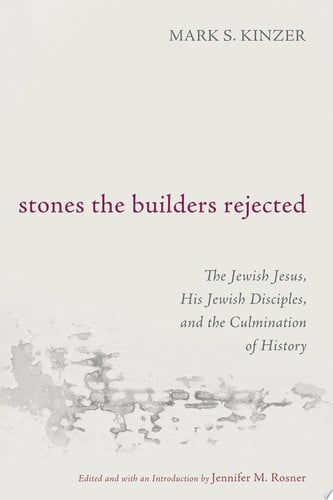
Stones the builders rejected: the Jewish Jesus, his Jewish disciples, and the culmination of history

Kinzer, Mark,Rosner, Jennifer M.
"Since the groundbreaking publication of Postmissionary Messianic Judaism (2005), Mark Kinzer has challenged theologians and religious leaders to consider the essential ecumenical vocation of Jewish disciples of Jesus. Proposing a bilateral ecclesiology in solidarity with Israel, he argued that the overcoming of Christian supersessionism required a robust affirmation of the distinctive calling of Jews within the community of Jesus the Messiah. In this way, Kinzer's work put the issue of Jewish followers of Jesus on the theological agenda for those seeking a reparative reconfiguration of the relationship between the church and the Jewish people. In recent years, Kinzer has attended to the theological implications of this perspective and has widened his focus to include not only the Messianic Jewish movement but also Jews within Catholic, Orthodox, and Protestant churches. The present collection of essays reflects this wider concern. According to Kinzer, the theological stones of contention are Christology conceived of as Messianology, ecclesiology understood as Israelology, and eschatology imagined as Zionology. Moreover, it is the presence of Jewish disciples of Jesus that concretizes these theological abstractions in the form of Jewish flesh and blood, summoning Jews and Christians to rethink their relationship to one another in ways that express their essential mutual dependence." --
Cascade Books 2024-06-04 217 pages