11 results for "History"

The invention of the land of Israel

Sand, Shlomo
What is a homeland? When does it become a national territory? Why have so many people been willing to die for such places throughout the twentieth century? What is the essence of the Promised Land? Following the acclaimed and controversial The Invention of the Jewish People, Shlomo Sand examines the mysterious sacred land that has become the site of the longest-running national struggle of the twentieth and twenty-first centuries. The Invention of the Land of Israel deconstructs the age-old legends surrounding the Holy Land and the prejudices that continue to suffocate it. Sand's account dissects the concept of "historical right" and tracks the creation of the modern concept of the "Land of Israel" by nineteenth-century Evangelical Protestants and Jewish Zionists. This invention, he argues, not only facilitated the colonization of the Middle East and the establishment of the State of Israel, it is also what is threatening the existence of the Jewish state today.--From publisher description.
Verso 2012-11-20 295 pages

The idea of Israel: a history of power and knowledge

Pappé, Ilan
"Since its foundation in 1948, Israel has drawn on Zionism, the movement behind its creation, to provide a sense of self and political direction. In this groundbreaking new work, Ilan Pappe looks at the continued role of Zionist ideology. The Idea of Israel considers the way Zionism operates outside of the government and military in areas such as the country’s education system, media, and cinema, and the uses that are made of the Holocaust in supporting the state’s ideological structure.
Verso 2014 346 pages

How I stopped being a Jew

Sand, Shlomo
"Shlomo Sand was born in 1946, in a displaced person's camp in Austria, to a Jewish mother and non-Jewish father; the family later migrated to Palestine. As a young man, Sand came to question his Jewish identity, even that of a "secular Jew." With this meditative and thoughtful mixture of essay and personal recollection, he articulates the problems at the center of modern Jewish identity. How I Stopped Being a Jew discusses the negative effects of the Israeli exploitation of the "chosen people" myth and its "holocaust industry." Sand criticizes the fact that, in the current context, what "Jewish" means is, above all, not being Arab and reflects on the possibility of a secular, non-exclusive Israeli identity, beyond the legends of Zionism"--
Verso 2014-10-07 102 pages

The shaping of Jewish identity in nineteenth-century France

Berkovitz, Jay R.
Nineteenth-century French Jewry was a community struggling to meet the challenges of emancipation and modernity. This struggle, with its origins in the founding of the French nation, constitutes the core of modern Jewish identity. With the Revolution of 1789 came the collapse of the social, political, and philosophical foundations of exclusiveness, forcing French society and the Jews to come to terms with the meaning of emancipation. Over time, the enormous challenge that emancipation posed for traditional Jewish beliefs became evident. In the 1830s, a more comprehensive ideology of regeneration emerged through the efforts of younger Jewish scholars and intellectuals. A response to the social and religious implications of emancipation, it was characterized by the demand for the elimination of rituals that violated the French conceptions of civilization and social integration; a drive for greater administrative centralization; and the quest for inter-communal and ethnic unity. In its various elements, regeneration formed a distinct ideology of emancipation that was designed to mediate Jewish interaction with French society and culture. Jay Berkovitz reveals the complexities inherent in the processes of emancipation and modernization, focusing on the efforts of French Jewish leaders to come to terms with the social and religious implications of modernity. All in all, his emphasis on the intellectual history of French Jewry provides a new perspective on a significant chapter of Jewish history.
Wayne State University Press 2018-02-05 308 pages

Paths of emancipation: Jews, states, and citizenship

Pierre Birnbaum,Ira Katznelson
Throughout the nineteenth century, legal barriers to Jewish citizenship were lifted in Europe, enabling organized Jewish communities and individuals to alter radically their relationships with the institutions of the Christian West. In this volume, one of the first to offer a comparative overview of the entry of Jews into state and society, eight leading historians analyze the course of emancipation in Holland, Germany, France, England, the United States, and Italy as well as in Turkey and Russia. The goal is to produce a systematic study of the highly diverse paths to emancipation and to explore their different impacts on Jewish identity, dispositions, and patterns of collective action. Jewish emancipation concerned itself primarily with issues of state and citizenship. Would the liberal and republican values of the Enlightenment guide governments in establishing the terms of Jewish citizenship? How would states react to Jews seeking to become citizens and to remain meaningfully Jewish? The authors examine these issues through discussions of the entry of Jews into the military, the judicial system, business, and academic and professional careers, for example, and through discussions of their assertive political activity. In addition to the editors, the contributors are Geoffrey Alderman, Hans Daalder, Werner E. Mosse, Aron Rodrigue, Dan V. Segre, and Michael Stanislawski. Originally published in 1995. The Princeton Legacy Library uses the latest print-on-demand technology to again make available previously out-of-print books from the distinguished backlist of Princeton University Press. These editions preserve the original texts of these important books while presenting them in durable paperback and hardcover editions. The goal of the Princeton Legacy Library is to vastly increase access to the rich scholarly heritage found in the thousands of books published by Princeton University Press since its founding in 1905.
Princeton University Press 1995 308 pages

The scepter shall not depart from Judah: perspectives on the persistence of the political in Judaism

Mittleman, Alan
The title of political theorist Alan L. Mittleman's captivating new book is drawn from the patriarch Jacob's blessing to his children and grandchildren. The blessing contains the promise that Judah will become a royal house, perhaps forever. Kings, of course, ceased in Israel, but politics did not. Regime replaced regime. National independence was compromised and lost, regained and lost again. Yet the attention to things political was never lost. Old texts were applied to new political realities. Political awareness and thought, constantly transformed and adapted to new historical exigencies, persisted among the Jews. In The Scepter Shall Not Depart from Judah , Mittleman looks at some of the central problems of political philosophy-such as fundamental rights and the common good-from the point of view of rabbinic Judaism. At the same time, he considers conceptual issues in Judaism-such as covenant and tradition-from the perspective of political philosophy. Mittleman's sources range from the ancient rabbis to contemporary political theorists, making this volume an important one for courses and research in both Jewish studies and political theory.
Lexington Books 2000-02-09 185 pages

Judaism and the challenges of modern life

Moshe Halbertal,Donniel Hartman
Much more than a particular period in world history, modernity has fundamentally transformed how we think and live, and especially how we understand and relate to religious traditions. As the 'ghetto walls' have fallen, both empirically and metaphorically, Judaism is compelled to compete in an open marketplace of ideas. Jews can no longer count on an assumedly necessary Jewish identity or commitment, nor on the rallying force of anti-Semitism to ensure an individual and collective sense of belonging. Rather Jewish moral, spiritual and historical values and ideas must be read with new eyes and challenged to address modernity's proliferating array of questions and realities. The pertinent questions modern Jewry faces are how to embrace modernity as Jews and what such an embrace means for the meaning and future of Jewish life. This collection of essays, authored by scholars of the Shalom Hartman Institute, addresses three critical challenges posed to Judaism by modernity: the challenge of ideas, the challenge of diversity, and the challenge of statehood, and provides insights and ideas for the future direction of Judaism. Providing readers with new insights into Judaism and the Jewish people in contemporary times, the collection explores a wide range of issues that includes: the significance of Israel for the future of Judaism; the Jewish people as a people; the relationship between monotheism and violence; revelation and ethics; Judaism and the feminist challenge; and Judaism and homosexuality.
Continuum 2007-12-11 192 pages

Jewish legal theories: writings on state, religion, and morality

Leora Batnitzky,Yonatan Brafman
"Contemporary arguments about Jewish law uniquely reflect both the story of Jewish modernity and a crucial premise of modern conceptions of law generally: the claim of autonomy for the intellectual subject and practical sphere of the law. [This book] collects representative modern Jewish writings on law and provides short commentaries and annotations on these writings that situate them within Jewish thought and history, as well as within modern legal theory. The topics addressed by these documents include Jewish legal theory from the modern nation-state to its adumbration in the forms of Orthodox, Conservative, and Reform Judaism in the German-Jewish context; the development of Jewish legal philosophy in Eastern Europe beginning in the eighteenth century; ultra-Orthodox views of Jewish law premised on the rejection of the modern nation-state; the role of Jewish law in Israel; and contemporary feminist legal theory."--
Brandeis University Press 2018-01-02 260 pages

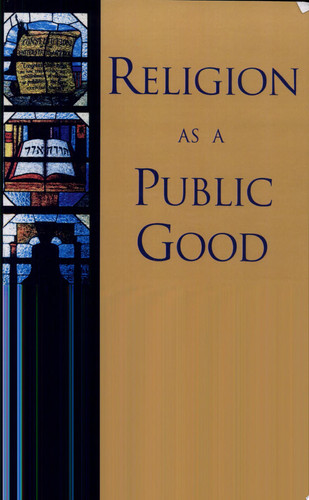
Religion as a public good: Jews and other Americans on religion in the public square

Alan Mittleman
Religion as a Public Good: Jews and Other Americans on Religion in the Public Square explores the often controversial topic of how religion ought to relate to American public life. The sixteen distinguished contributors, both Jewish and Christian, reflect on the topic out of their own disciplines-social ethics, political theory, philosophy, law, history, theology, and sociology. and take a stand based on their religious convictions and political beliefs. The volume is at once scholarly and committed, polemic and civil, reflective and activist. Written in the shadow of 9/11, it invites a new consideration of how religion enhances democratic public life with full awareness of the dangers that religion can sometimes pose. The volume is polemical, as befits the topic, but also civil, as befits a dialogue about an issue of profound significance for democratic citizenship.
Rowman & Littlefield 2003-12-09 336 pages

In my opinion..: thoughts on religion, society and life by a very opinionated rabbi

Wein, Berel
F or several decades, informed readers sought out Rabbi Berel Wein'sopinion column in his weekly Destiny Foundation blog, in the Jerusalem Post, and other publications to gain his perspective on current issues. Theproducts of his highly educated and sensitive mind, the essays were uniquely"Wein"- always original, always refreshing in their candor, and subtly thought provoking. Who else could experience uplift from an orchid plant or discover thecore values of the Jewish nation in the words of Israel's taxi drivers?His sweeping gaze simultaneously takes in past, present, and future.Continually aware of history and its impact on today's events, he looks at anempty field in the Land of Israel and sees not only the farmer with his plow today,but one who worked the same land two thousand years ago. And with heartfeltfaith and a vibrant awareness of ancient prophecy, he envisions those who willharvest that field in the future. In this troubled, insecure age of ours, he provesthat one can, one must, be a realist and an optimist at the same time.The best of these valuable essays have been collected for this volume. If youare fan of Rabbi Wein's writing, you will feel as though you are encountering anold friend. If you are not already familiar with Rabbi Wein's take on life, you are infor a treat.
The Destiny Foundation 2020 345 pages