
6 results for "History"

The spoken word: oral culture in Britain, 1500-1850

Adam Fox,Daniel Woolf
"The early modern period was of great significance throughout Europe with respect to its gradual transition from a largely oral to a fundamentally literate society. On the one hand, the spoken word remained of the utmost importance to the dissemination of ideas, the communication of information and the transmission of the cultural repertoire. On the other hand, the proliferation of written documents of all kinds, the development of printing and the spread of popular literacy combined to transform the nature of communication. Studies previous to this have traditionally focused on individual countries or regions, and emphasised the contradictions between oral and literate culture. The essays in this fascinating collection depart from these approaches in several ways. By examining not only English, but also Scottish and Welsh oral culture, they provide the first pan-British study of the subject. The authors also emphasise the ways in which oral and literate culture continued to compliment and inform each other, rather than focusing exclusively on their incompatibility, or on the 'inevitable' triumph of the written word. The chronological focus, ranging from the sixteenth to the mid-nineteenth century, with glances ahead to the twentieth, set the problem against a longer chronological span than most other studies, providing a link between early modern and modern oral and literate cultures. This book it will be of interest to students and scholars of British history, Linguistics, Literary Studies and Folklore Studies"--Publisher's description.
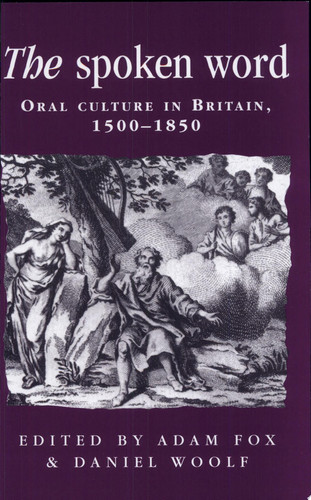
Manchester University Press 2002 286 pages

Reading Shakespeare historically

Jardine, Lisa
Reading Shakespeare Historically is a passionate, provocative book by one of the most renowned and popular Renaissance scholars writing today. Charting ten years of critical development, these challenging, witty essays shed new light on Renaissance studies. It also raises intriguing questions about how the culture and history of the past illuminates the key social and political issues of today. Lisa Jardine re-reads Renaissance drama in its historical and cultural context, from laws of defamation in Othello to the competing loyalties of companionate marriage and male friendship in The Changeling. In doing so she reveals a wealth of new insights, sometimes surprising but always original and engrossing. At the same time, these essays also provide a fascinating account of the rise of feminist scholarship since the 1980s and the diversifying of `new historicist' approaches over the same period. Reading Shakespeare Historically will fascinate and provoke students of shakespeare and his historical age, and general readers with an urge to understand how the culture and history of our past illuminates the key scoial and political issues of today.
Routledge 1996 207 pages

The time is out of joint: Shakespeare as philosopher of history

Heller, Agnes
The Time Is Out of Joint handles the Shakespearean oeuvre from a philosophical perspective, finding that Shakespeare's historical dramas reflect on issues and reveal puzzles which were taken up by philosophy proper only in the centuries following them. Shakespeare's extraordinary handling of time and temporality, the difference between truth and fact, that of theory, and that of interpretation and revelatory truth are evaluated in terms of Shakespeare's own conjectural endeavors, and are compared with early modern, modern, and postmodern thought. Heller shows that modernity, which recognized itself in Shakespeare only from the time of Romanticism, found in Shakespeare's work a revelatory character which marked the end of both metaphysical system-building and a tragic reckoning with the inaccessibility of an absolute, timeless truth. Heller distinguishes the four stages found in constantly unique relation in Shakespeare's work (historical, personal, political, and existential) and probes their significance as time comes to fall "out of joint" and may be again set aright. Rather than initially bestowing upon Shakespeare the dubious honorary title of philosopher , Heller probes the concretely situated reflections of characters who must face a blind and irrational fate either without taking responsibility for the discordance of time, or with a responsibility which may both transform history into politics, and set right the time which is out of joint. In the ruminations and undertakings of these characters, Shakespeare's dramas present a philosophy of history, a political philosophy, and a philosophy of (im)moral personality. Heller weighs each as distinctly modern confrontations with the possibility of truth and virtue within a human historical condition no less multifarious for its momentariness.
Rowman & Littlefield 2002-07-23 375 pages

Literature, nationalism, and memory in early modern England and Wales

Schwyzer, Philip
The Tudor era has long been associated with the rise of nationalism in England, yet nationalist writing in this period often involved the denigration and outright denial of Englishness. Philip Schwyzer argues that the ancient, insular, and imperial nation imagined in the works of writers such as Shakespeare and Spenser was not England, but Britain. Disclaiming their Anglo-Saxon ancestry, the English sought their origins in a nostalgic vision of British antiquity. Focusing on texts including The Faerie Queene, English and Welsh antiquarian works, The Mirror for Magistrates, Henry V and King Lear, Schwyzer charts the genesis, development and disintegration of British nationalism in the sixteenth and early seventeenth centuries. An important contribution to the expanding scholarship on early modern Britishness, this study gives detailed attention to Welsh texts and traditions, arguing that Welsh sources crucially influenced the development of English literature and identity.
Cambridge University Press 2004-10-21 194 pages