

16 results for "History"

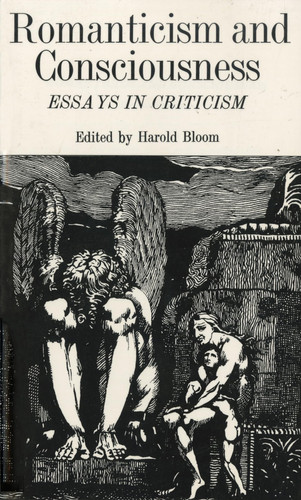
Romanticism and consciousness: essays in criticism
'Romanticism and Consciousness' is a comprehensive collection of essays on Romanticism-its intellectual and political backgrounds, its place in literary history, its continued relevance to the present age, its relation to psychoanalysis and other modern trends of thought-and on the major English Romantic poets. The topics covered include the relations between nature and consciousness, nature and revolution, and nature and literary form; the principal poets studied are Blake, Wordsworth, Coleridge, Byron, Shelley, and Keats.
The roots of romanticism
The Roots of Romanticism is the long-awaited text of Isaiah Berlin's most celebrated set of lectures, the Mellon Lectures, delivered in Washington in 1965 and heard since by a much wider audience on BBC radio. For Berli, the Romantics set in train a vast, unparalleled revolution in humanity's view of itself. They destroyed the traditional notion of objective truth in ethicsm with incalculable, all-pervasive results. In his unscripted tour de force Berlin surveys the myriad attempts to define romanticism, distils its essence, traces its development, and shows how its legacy permeates our outlook today.

The truth and beauty: how the lives and works of England's greatest poets point the way to a deeper understanding of the words of Jesus
"The words of Jesus can be as mysterious as they are familiar. For those seeking greater understanding of the Gospels through storytelling and poetry comes this book by Andrew Klavan, who chronicles his own inspiring, late-in-life journey to achieve a fresh perspective and deep connection to Jesus's most well-known and complex biblical passages"--

Romantic poets, critics, and other madmen
Few can match Charles Rosen's cultivation and discernment, whether as pianist, music historian, or critic. Here he gives us a performance of literary criticism as high art, a critical conjuring of the Romantic period by way of some of its central texts. "What is the real business of the critic?" Rosen asks of George Bernard Shaw in one of his essays. It is a question he answers throughout this collection as he demonstrates and analyzes various critical approaches. In writing about the Romantic poets Lord Byron, William Wordsworth, William Cowper, and Friedrich Hölderlin, he examines the kind of criticism which attempts to uncover concealed code. He investigates the relationship between Romantic aesthetic theory and artworks, and explores the way Romantic art criticism has been practiced by critics from Friedrich Schlegel to Walter Benjamin. In essays on Honoré de Balzac, Robert Schumann, Gustave Flaubert, and others, he highlights the intersections between Romantic art and music; the artist's separation of life and artistic representations of it; and the significance of the established text. With an apt comparison or a startling juxtaposition, Rosen opens whole worlds of insight, as in his linking of Caspar David Friedrich's landscape painting and Schumann's music, or in his review of the theory and musicology of Heinrich Schenker alongside the work of Roman Jakobson. Throughout this volume we hear the voice of a shrewd aesthetic interpreter, performing the critic's task even as he redefines it in his sparkling fashion.

The line's eye: poetic experience, American sight
Is American vision implicitly possessive, as a generation of critics contends? By viewing the American poetic tradition through the prism of pragmatism, Elisa New contests this claim. A new reading of how poetry "sees," her work is a passionate defense of the power of the poem, the ethics of perception, and the broader possibilities of American sight. American poems see more fully, and less invasively, than accounts of American literature as an inscription of imperial national ideology would allow. Moreover, New argues, their ways of seeing draw on, and develop, a vigorous mode of national representation alternative to the appropriative sort found in the quintessential American genre of encounter, the romance. Grounding her readings of Dickinson, Frost, Moore, and Williams in foundational texts by Edwards, Jefferson, Audubon, and Thoreau, New shows how varieties of attentiveness and solicitude cultivated in the early literature are realized in later poetry. She then discloses how these ideas infuse the philosophical notions about pragmatic experience codified by Emerson, James, and Dewey. As these philosophers insisted, and as New's readings prove, art is where the experience of experience can be had: to read, as to write, a poem is to let the line guide one's way.

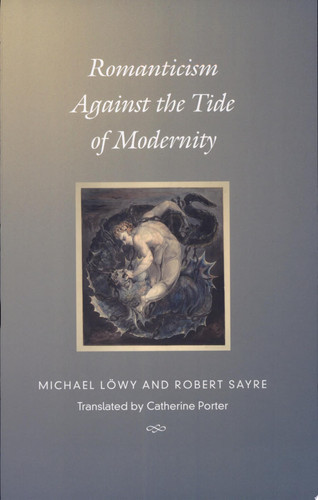
Romanticism against the tide of modernity
Romanticism is a worldview that finds expression over a whole range of cultural fields—not only in literature and art but in philosophy, theology, political theory, and social movements. In Romanticism Against the Tide of Modernity Michael Löwy and Robert Sayre formulate a theory that defines romanticism as a cultural protest against modern bourgeois industrial civilization and work to reveal the unity that underlies the extraordinary diversity of romanticism from the eighteenth to the twenty-first century. After critiquing previous conceptions of romanticism and discussing its first European manifestations, Löwy and Sayre propose a typology of the sociopolitical positions held by romantic writers-from “restitutionist” to various revolutionary/utopian forms. In subsequent chapters, they give extended treatment to writers as diverse as Coleridge and Ruskin, Charles Peguy, Ernst Bloch and Christa Wolf. Among other topics, they discuss the complex relationship between Marxism and romanticism before closing with a reflection on more contemporary manifestations of romanticism (for example, surrealism, the events of May 1968, and the ecological movement) as well as its future. Students and scholars of literature, humanities, social sciences, and cultural studies will be interested in this elegant and thoroughly original book.
A half-century of greatness: the creative imagination of Europe, 1848-1884
Choice Outstanding Academic Title for 2008 A Half-Century of Greatness paints a vivid and dramatic picture of the creative thought of mid- to late nineteenth century Europe and the influence of the unsuccessful revolutions of 1848. It reveals often unexpected links between novelists, poets, and philosophers from England, Germany, Austria, Hungary, Russia, and Ukraine—especially Dickens, Carlyle, Mill, the Brontës, and George Eliot; Hegel, Strauss, Feuerbach, Marx, Engels, Wagner, and several German poets; the Hungarian poet Sándor Petöfi; Gogol, Dostoevsky, Bakunin, and Herzen in Russia, and the great Ukrainian poet Shevchenko. Ewen goes on to trace the transition from Romanticism to Victorianism, or what he calls “the Victorian compromise”—the ascendancy of the middle class. The book was reconstructed and edited by Dr. Jeffrey Wollock from Ewen’s final manuscript. It includes the author's own reference citations throughout, a reconstructed bibliography, and an updated “further reading” list. This is Ewen’s last work, the long-lost companion to his Heroic Imagination. Together, these books present a panorama of the social, political, and artistic aspects of European Romanticism, especially foreshadowing and complementing recent work on the relation of Marxism to romanticism. Anyone interested in what Lukacs called “Romantic anticapitalism,”; who appreciates such books as Marshall Berman's Adventures in Marxism or E.P. Thompson's The Romantics (1997), will find Ewen’s work a welcome addition.

Images of voice: music and sound in Romantic poetry

Romantic anti-capitalism and nature: the enchanted garden
Romantic Anti-capitalism and Nature examines the deep connections between the romantic rebellion against modernity and ecological concern with modern threats to nature. The chapters deal with expressions of romantic culture from a wide variety of different areas: travel writing, painting, utopian vision, cultural studies, political philosophy, and activist socio-political writing. The authors discuss a highly diverse group of figures - William Bartram, Thomas Cole, William Morris, Walter Benjamin, Raymond Williams, and Naomi Klein - from the late eighteenth to the early twenty-first century. They are rooted individually in English, American, and German cultures, but share a common perspective: the romantic protest against modern bourgeois civilisation and its destruction of the natural environment. Although a rich ecocritical literature has developed since the 1990s, particularly in the United States and Britain, that addresses many aspects of ecology and its intersection with romanticism, they almost exclusively focus on literature, and define romanticism as a limited literary period of the late eighteenth and early nineteenth centuries. This study is one of the first to suggest a much broader view of the romantic relation to ecological discourse and representation, covering a range of cultural creations and viewing romanticism as a cultural critique, or protest against capitalist-industrialist modernity in the name of past, pre-modern, or pre-capitalist values. This book will be of great interest to students and scholars of ecology, romanticism, and the history of capitalism.

In respect to egotism: studies in American Romantic writing
Joel Porte offers a timely reassessment of nineteenth century literature, focusing on the general question of the American Romantic ego and its varying modalities of self-creation, self-display, self-projection, and self-concealment. The book begins by exploring the status of the "text" in nineteenth-century American writing, the relationship of "rhetorical" reading to historical context, and the nature of "Romanticism" in an American setting. Porte then concentrates on the great authors of the period through a series of thematically linked but critically discrete essays on Brown, Irving, Parkman, Cooper, Poe, Emerson, Hawthorne, Thoreau, Melville, Frederick Douglass, Stowe, Whitman, and Dickinson. Throughout his important new study, Porte offers provocative reassessments of familiar texts while at the same time casting an illuminating critical eye on less well-known territory. Readers of this book will come away with increased respect for the achievement of American Romantic writers.

The experience of the foreign: culture and translation in romantic Germany
"This book is the first authoritative analysis of the theory of translation in German Romanticism. In a systematic study of Herder, Goethe, Schlegel, Novalis, Humboldt, Schleiermacher, and Hölderlin, Berman demonstrates the importance of the theory of translation for an understanding of German romantic culture, arguing that never before has the concept of translation been meditated in such detail and such depth. Indeed, fundamental questions that arise again today, such as the question concerning the proper versus the literal, of the Other to a given culture, the essence of the work of art, and of language, all these issues, and many more, are shown to have been premeditated in a most important manner by these German Romantics.

Romanticism in perspective: a comparative study of aspects of the Romantic movements in England, France and Germany

Romanticism in national context
The main literary and artistic currents of Romanticism are well known. This volume aims uniquely to set them in their wider contexts. Thirteen distinguished contributors examine the particular configurations of the Romantic movement within individual national contexts. Parallels, influences and differences are explored between the course of Romanticism in England, France, Germany and ten other European nations, and special emphasis is placed upon the interplay between Romantic culture and social, political and economic change. Narrow definitions of Romanticism are avoided: the contributors emphasize the Romantic strands within science, philosophy and political thinking as well as within art and literature. The book also forms part of a sequence of collections of essays which started with The Enlightenment in National Context (1981). In preparation are Fin-de-Siècle and its Legacy and the Renaissance in National Context. The purpose of these and other envisaged collections is to bring together comparative, national and inter-disciplinary approaches to the history of great movements in the development of human thought and action.

The Birth of Abstract Romanticism
A radical departure from Professor Albert Boime’s well-known social art history, The Birth of Abstract Romanticism examines the paintings of Kamran Khavarani. In this beautiful volume, Boime delves into the beauty, passion and intensity of Khavarani’s work, expressed in layered themes of landscapes, cosmologies, botanical micro worlds, and ecstatic visions. Lavished with over 100 images, this book offers a unique view of both an artist and a celebrated art historian.
