156 results for "History"

Iron Curtain The Crushing of Eastern Europe, 1944-1956

Anne Applebaum
At the end of WWII, the Soviet Union, to its surprise and delight, found itself in control of a huge swath of territory in Central Europe. It set out to convert a dozen radically different countries to a completely new political and moral system, Communism. Iron Curtain describes how the communist regimes of Eastern Europe were created, and what daily life was like once they were complete. Applebaum draws on newly opened European archives and personal accounts translated for the first time to portray in devestating detail millions of individuals trying to adjust to a way of life that challenged their every belief, rendered worthless their every qualification, and took everything away they had accumulated. Today the Soviet Block is a lost civilization, once whose cruelty, paranoia, bizarre morality and strange aethestics Applebaum captures in the electrifying pages of this book.
McClelland & Stewart 2012-10-30 608 pages

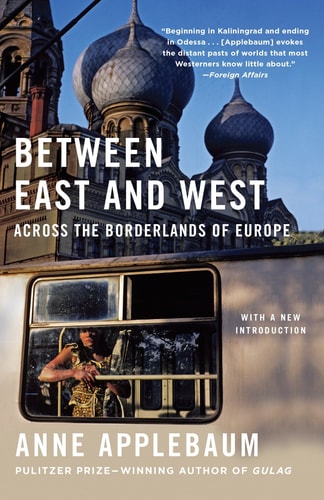
Between East and West Across the Borderlands of Europe

Anne Applebaum
In the summer and fall of 1991, Anne Applebaum, Pulitzer Prize-winning author of Gulag and Iron Curtain , took a three month road trip through the freshly independent borderlands of Eastern Europe. She deftly weaves the harrowing history of the region and captures the effects of political upheaval on a personal level. An extraordinary journey into the past and present of the lands east of Poland and west of Russia—an area defined throughout its history by colliding empires. Traveling from the former Soviet naval center of Kaliningrad on the Baltic to the Black Sea port of Odessa, Anne Applebaum encounters a rich range of competing cultures, religions, and national aspirations. In reasserting their heritage, the inhabitants of the borderlands attempt to build a future grounded in their fractured ancestral legacies. In the process, neighbors unearth old conflicts, devote themselves to recovering lost culture, and piece together competing legends to create a new tradition. Rich in surprising encounters and vivid characters, Between East and West brilliantly illuminates the soul of the borderlands and the shaping power of the past.
National Geographic Books 2017-06-13 336 pages

Project Azorian The CIA and the Raising of the K-129

Norman Polmar,Michael White
In early August 1974, despite incredible risks and after six years of secret preparations, the CIA attempted to salvage the sunken Soviet ballistic missile submarine K-129 from the depths of the North Pacific Ocean. The audacious effort was undertaken with the cover of an undersea mining operation sponsored by eccentric billionaire Howard Hughes. "Azorian" incorrectly identified as Project Jennifer by the press was the most ambitious ocean engineering endeavor attempted by man. Following the accidental sinking of a Soviet missile submarine in March 1968, U.S. intelligence agencies were able to determine the precise location and to develop a means of raising the submarine from a depth of 16,400 feet. The remarkable salvage effort of the K-129, which contained nuclear-armed torpedoes and one nuclear tipped missile as well as crypto equipment, was conducted with Soviet naval ships a few hundred yards from the lift ship, the Hughes Glomar Explorer. While other books were previously published about this top-secret project, not one was based on interviews with the participants or on withheld government documents and film. The authors conducted interviews with men who were on board the Glomar Explorer and the USS Halibut, the submarine that found the wreckage, with U.S. naval intelligence officers, and with the Soviet submarine division commander and other Soviet officials and engineers. They also had access to the Glomar Explorer's logs and other documents from U.S. and Soviet sources. The book is based, in part, on the research for Michael White' documentary film Azorian: The Raising of the K-129, released in late 2009. The research for the book and the documentary forced the CIA to issue a brief report on Project Azorian in early 2010, with one-third of the document censored.
Naval Institute Press 2012 264 pages

A people's tragedy: the Russian Revolution, 1891-1924

Figes, Orlando
On the brink of the 100th anniversary of the Russian Revolution, read the most vivid, moving, and comprehensive history of the events that changed the world It is history on an epic yet human scale. Vast in scope, exhaustive in original research, written with passion, narrative skill, and human sympathy, A People's Tragedy is a profound account of the Russian Revolution for a new generation. Many consider the Russian Revolution to be the most significant event of the twentieth century. Distinguished scholar Orlando Figes presents a panorama of Russian society on the eve of that revolution, and then narrates the story of how these social forces were violently erased. Within the broad stokes of war and revolution are miniature histories of individuals, in which Figes follows the main players' fortunes as they saw their hopes die and their world crash into ruins. Unlike previous accounts that trace the origins of the revolution to overreaching political forces and ideals, Figes argues that the failure of democracy in 1917 was deeply rooted in Russian culture and social history and that what had started as a people's revolution contained the seeds of its degeneration into violence and dictatorship. A People's Tragedy is a masterful and original synthesis by a mature scholar, presented in a compelling and accessibly human narrative.
Penguin Books 1998 923 pages

Return from Siberia

John Shallman
** Wall Street Journal , Publishers Weekly , and USA Today Bestseller!** In the lead-up to the Bolshevik Revolution, one young revolutionary is condemned to exile in Siberia; a hundred years later, his ancestors discover his story and learn just how much history has repeated itself. In the midst of running a long-shot political campaign, Democratic political consultant John Simon discovers a 100-year-old manuscript written by his grandfather Joseph—a brilliant young revolutionary whose exile to Siberia by the last czar of Russia is just the beginning of an extraordinary tale of survival, romance, and revolution. Return From Siberia chronicles not only the Simon family's relationship to each other and the past, but also the remarkable story of a young man who sacrificed everything for his political ideals. As Joseph's manuscript is translated, chapter-by-chapter, the Simon family is pulled deep into their ancestor’s story— in particular, the bitter rivalry between two brothers, whose competing visions of the American Dream are played out on the campaign trail and in their lives. Return from Siberia is a timely appraisal of modern politics and society juxtaposed with an inside look into the machinations of a young political mind 100 years ago. The true story documents an extraordinary time of political upheaval in Russia and Europe just prior to World War I while also drawing parallels to current day American politics and the current philosophical and ideological debates about immigration, Democratic Socialism, and Capitalism. Beyond the deep social, political, and philosophical themes, there is romance, adventure, betrayal, suspense, and the struggles of families today and in yesteryear. Return from Siberia illustrates how one modern family's connection to the past helps them resolve their future.
Skyhorse 2020-08-18 256 pages

The Lost A Search for Six of Six Million

Daniel Mendelsohn
A New York Times Notable Book * Winner of the National Jewish Book Award * Winner of the National Book Critics Circle Award * A Los Angeles Times Book Prize Finalist "A gripping detective story, a stirring epic, a tale of ghosts and dark marvels, a thrilling display of scholarship, a meditation on the unfathomable mystery of good and evil, a testimony to the enduring power of the ancient archetypes that haunt one Jewish family and the greater human family, The Lost is as complex and rich with meaning and story as the past it seeks to illuminate. A beautiful book, beautifully written."--Michael Chabon In this rich and riveting narrative, a writer's search for the truth behind his family's tragic past in World War II becomes a remarkably original epic--part memoir, part reportage, part mystery, and part scholarly detective work--that brilliantly explores the nature of time and memory, family and history. The Lost begins as the story of a boy who grew up in a family haunted by the disappearance of six relatives during the Holocaust--an unmentionable subject that gripped his imagination from earliest childhood. Decades later, spurred by the discovery of a cache of desperate letters written to his grandfather in 1939 and tantalized by fragmentary tales of a terrible betrayal, Daniel Mendelsohn sets out to find the remaining eyewitnesses to his relatives' fates. That quest eventually takes him to a dozen countries on four continents and forces him to confront the wrenching discrepancies between the histories we live and the stories we tell. And it leads him, finally, back to the small Ukrainian town where his family's story began, and where the solution to a decades-old mystery awaits him. Deftly moving between past and present, interweaving a world-wandering odyssey with childhood memories of a now-lost generation of immigrant Jews and provocative ruminations on biblical texts and Jewish history, The Lost transforms the story of one family into a profound, morally searching meditation on our fragile hold on the past. Deeply personal, grippingly suspenseful, and beautifully written, this literary tour de force illuminates all that is lost, and found, in the passage of time.
HarperCollins Publishers 2022-08-02 688 pages

The Endless Steppe

Esther Hautzig
"In the bitter desolation of Siberia, Esther and her family fight to stay alive." It is June 1941. The Rudomin family has been arrested by the Russians. They are "capitalists--enemies of the people." Forced from their home and friends in Vilna, Poland, they are herded into crowded cattle cars. Their destination: the endless steppe of Siberia. For five years, Esther and her family live in exile, weeding potato fields and working in the mines, struggling for enough food and clothing to stay alive. Only the strength of family sustains them and gives them hope for the future. Notable Children's Books of 1968 (ALA) 1968 Boston Globe-Horn Book Award Honor Book Outstanding Children's Books of 1968 (NYT) 1969 Jane Addams Award 1971 Lewis Carroll Shelf Award Nominee, 1969 National Book Award for Children's Literature 1969 Shirley Kravitz Children's Book Award 1987 Deutsche Jugenliteraturpreis (German Youth Literature Prize) "Honorable List" 1969 Fanfare Honor List (The Horn Book)
Perfection Learning Corporation 1988-09 243 pages

Kafka's Other Trial The Letters to Felice

Elias Canetti
Felice Bauer was Kafka's first great love and the inspiration for his first great fiction. Six weeks after they met, he wrote "The Judgment" for her in one night of feverish activity. Kafka always inferred to the traumatic, public breaking-off of their engagement as his "tribunal," and indeed he began work on The Trial within a month of that event. Kafka's letters to Felice offer rare insights into the writer's life and art. Elias Canetti's brilliant and sensitive examination of this moving correspondence to shows is the origins of Kafka's voice as a writer and his torment as a man.
Knopf Doubleday Publishing Group 1988-04-12 128 pages

Young Stalin

Sebag Montefiore,Simon Sebag Montefiore
Stalin, like Hitler, remains the very personification of evil but also one of the creators of today’s world. Now in an enthralling biography that reads like a thriller, Simon Sebag Montefiore unveils the shadowy, adventurous journey of the Georgian cobbler’s son who became the Red Tsar.What makes a Stalin? Was he illegitimate? Was his mother whore or saint? Was Stalin a Tsarist agent or Lenin’s chief gangster? Was his most notorious heist planned during his stay in London? Was he to blame for his wife’s death? If he really missed the 1917 Revolution, how did he emerge so powerful?Born in poverty, scarred by his upbringing, exceptional in his studies, this charismatic but dangerous boy was hailed as a romantic poet and trained as a priest but found his mission as fanatical revolutionary. He became the mastermind of bank robberies, protection-rackets, arson, piracy, and murder yet he was, uniquely part-intellectual, part-brigand. Surprisingly, he is also revealed as a scandalously prolific lover, leaving a trail of mistresses (varying from schoolgirls to noblewomen) and illegitimate children. Her is the arch-conspirator and escape-artist whose brutal ingenuity so impressed Lenin that he made Stalin (with Trotsky) his top henchman. The paranoid underworld of Joseph Conrad-style terrorism was Stalin’s natural habitat. Montefiore shows how murderous Caucasian banditry and political gangsterism, combined with pitiless ideology, qualified Stalin to demonstrate the Kremlin – and create the USSR in his flawed image. Based on massive research and astonishing new evidence in archives from Moscow to Georgia, YOUNG STALIN, companion and prequel to bestselling, prizewinning STALIN: THE COURT OF THE RED TSAR, is a chronicle of the Revolution, a pre-history of the USSR – and an intimate biography: this is how Stalin became Stalin.
McArthur 2007 397 pages

Lenin's Tomb

David, Remnick
Remnick es el mejor periodista de su generación, y "La tumba de Lenin" es el libro que le consagró y con el que obtuvo el Premio Pulitzer. Inédito en España y con un nuevo prefacio para conmemorar los veinte años de la caída de la Unión Soviética, es un clásico del periodismo y una de las obras fundamentales sobre ese periodo histórico, clave para entender el mundo de hoy.Corresponsal en Moscú del Washington Post desde 1988 hasta 1992, Remnick fue un testigo del hundimiento de la Unión Soviética. A partir de sus viajes por el país y sus conversaciones con ciudadanos soviéticos de todos los niveles de la sociedad, logra reflejar el impacto histórico de ese momento. Una obra maestra del mejor periodismo narrativo.
Imprint unknown 1993

The Romanovs: 1613-1918

Sebag Montefiore, Simon
The Romanovs were the most successful dynasty of modern times, ruling a sixth of the world's surface for three centuries. How did one family turn a war-ruined principality into the world's greatest empire? And how did they lose it all? This is the intimate story of twenty tsars and tsarinas, some touched by genius, some by madness, but all inspired by holy autocracy and imperial ambition. Simon Sebag Montefiore's gripping chronicle reveals their secret world of unlimited power and ruthless empire-building, overshadowed by palace conspiracy, family rivalries, sexual decadence and wild extravagance, with a global cast of adventurers, courtesans, revolutionaries and poets, from Ivan the Terrible to Tolstoy and Pushkin, to Bismarck, Lincoln, Queen Victoria and Lenin. To rule Russia was both imperial-sacred mission and poisoned chalice: six of the last twelve tsars were murdered. Peter the Great tortured his own son to death while making Russia an empire, and dominated his court with a dining club notable for compulsory drunkenness, naked dwarfs and fancy dress. Catherine the Great overthrew her own husband (who was murdered soon afterward), enjoyed affairs with a series of young male favorites, conquered Ukraine and fascinated Europe. Paul I was strangled by courtiers backed by his own son, Alexander I, who in turn faced Napoleon's invasion and the burning of Moscow, then went on to take Paris. Alexander II liberated the serfs, survived five assassination attempts and wrote perhaps the most explicit love letters ever composed by a ruler. The Romanovs climaxes with a fresh, unforgettable portrayal of Nicholas II and Alexandra, the rise and murder of Rasputin, war and revolution--and the harrowing massacre of the entire family. Dazzlingly entertaining and beautifully written from start to finish, The Romanovs brings these monarchs--male and female, great and flawed, their families and courts--blazingly to life. Drawing on new archival research, Montefiore delivers an enthralling epic of triumph and tragedy, love and murder, encompassing the seminal years 1812, 1914 and 1917, that is both a universal study of power and a portrait of empire that helps define Russia today.
Alfred A. Knopf 2016 744 pages

Motherland: a feminist history of modern Russia, from revolution to autocracy

Ioffe, Julia
"Award-winning journalist Julia Ioffe tells the story of modern Russia through the history of its women, from revolution to utopia to autocracy. In 1990, seven-year-old Julia Ioffe and her family fled the Soviet Union. Nearly twenty years later, Ioffe returned to Moscow-only to discover just how much Russian society had changed while she had been living in America. The Soviet women she had known growing up-doctors, engineers, scientists-had seemingly been replaced with women desperate to marry rich and become stay-at-home moms. How had Russia gone from portraying itself as the vanguard of world feminism to the last bastion of conservative Christian values? In Motherland, Ioffe turns modern Russian history on its head, telling it exclusively through the stories of its women. From her own physician great-grandmothers to Lenin's lover, a feminist revolutionary; from the hundreds of thousands of Soviet girls who fought in World War II to the millions of single mothers who rebuilt and repopulated a devastated country; from the members of Pussy Riot to Yulia Navalnaya, wife of opposition leader Alexei Navalny, she chronicles one of the most audacious social experiments in history and how it failed the very women it was meant to liberate-and documents how that failure paved the way to the revanche of Vladimir Putin. Part memoir, part journalistic exploration, part history, Motherland paints a portrait of modern Russia through the women who shaped it. With deep emotion, Ioffe shows what it means to live through the cataclysms of revolution, war, idealism, and heartbreak-and reveals how the story of Russia today is inextricably tied to the history of its women"-- Provided by publisher.
Ecco, an imprint of Harper Collins Publishers 2025-10 489 pages

Catherine the Great & Potemkin: the imperial love affair

Sebag Montefiore, Simon
'One of the great love stories of history, in a league with Napoleon and Josephine, and Antony and Cleopatra ... Excellent, with dazzling mastery of detail and literary flair' Economist It was history's most successful political partnership - as sensual and fiery as it was creative and visionary. Catherine the Great was a woman of notorious passion and imperial ambition. Prince Potemkin - wildly flamboyant and sublimely talented - was the love of her life and her co-ruler. Together they seized Ukraine and Crimea, defining the Russian empire to this day. Their affair was so tumultuous that they negotiated an arrangement to share power, leaving Potemkin free to love his beautiful nieces, and Catherine her young male favourites. But these 'twin souls' never stopped loving each other. Drawing on their intimate letters and vast research, Simon Sebag Montefiore's enthralling, widely acclaimed biography restores these imperial partners to their rightful place as titans of their age.
Weidenfeld & Nicolson 2020 640 pages

Catherine the Great and Potemkin: the imperial love affair

Sebag Montefiore, Simon
A widely acclaimed biography from the bestselling author of The Romanovs: "One of the great love stories of history” ( The Economist ) between Catherine the Great and the wildly flamboyant and talented Prince Potemkin. • "Captures the genius of two extraordinary Enlightenment figures—and of the age as well." — The Wall Street Journal Catherine the Great was a woman of notorious passion and imperial ambition. Prince Potemkin was the love of her life and her co-ruler. Together they seized Ukraine and Crimea, territories that define the Russian sphere of influence to this day. Their affair was so tumultuous that they negotiated an arrangement to share power, leaving each of them free to take younger lovers. But these “twin souls” never stopped loving each other. Drawing on the pair’s intimate letters and on vast research, Simon Sebag Montefiore restores these imperial partners to their rightful place as titans of their age. "Biography in the grand tradition...Riveting...The author [is] a gifted storyteller." — The Washington Post
Vintage Books, a division of Penguin Random House LLC 2016-04-26 634 pages

My Disillusionment in Russia

Emma Goldman
The decision to record my experiences, observations, and reactions during my stay in Russia I had made long before I thought of leaving that country. In fact, that was my main reason for departing from that tragically heroic land. The strongest of us are loath to give up a long-cherished dream. I had come to Russia possessed by the hope that I should find a new-born country, with its people wholly consecrated to the great, though very difficult, task of revolutionary reconstruction. And I had fervently hoped that I might become an active part of the inspiring work. I found reality in Russia grotesque, totally unlike the great ideal that had borne me upon the crest of high hope to the land of promise. It required fifteen long months before I could get my bearings. Each day, each week, each month added new links to the fatal chain that pulled down my cherished edifice. I fought desperately against the disillusionment. For a long time I strove against the still voice within me which urged me to face the overpowering facts. I would not and could not give up. Then came Kronstadt. It was the final wrench. It completed the terrible realization that the Russian Revolution was no more. I saw before me the Bolshevik State, formidable, crushing every constructive revolutionary effort, suppressing, debasing, and disintegrating everything. Unable and unwilling to become a cog in that sinister machine, and aware that I could be of no practical use to Russia and her people, I decided to leave the country. Once out of it, I would relate honestly, frankly, and as objectively as humanly possible to me the story of my two years' stay in Russia. I left in December, 1921. I could have written then, fresh under the influence of the ghastly experience. But I waited four months before I could bring myself to write a series of articles. I delayed another four months before beginning the present volume.
Independently Published 2020-02 111 pages

The Prince of Princes The Life of Potemkin

Sebag Montefiore
Prince Grigory Potemkin was Catherine the Great's lover and secret husband. An outstandingly gifted political counselor, he won the Crimea, founded the Black Sea Fleet, and made Russia a Near Eastern power. Volatile, handsome, and always astonishing, his magnificence enchanted and scandalized Europe.With all new research, Sebag Montefiore brings to life Potemkin's blazing love for Catherine, lays to rest the smear of the "Potemkin Villages", and restores him to his place as a colossus of the 18th century. Copyright © Libri GmbH. All rights reserved.
St. Martin's Press

The Historical Figure of Jesus

Sanders, E. P.
Everyone has his own picture of Jesus - few historical figures have been so overlaid with centuries of mythmaking. But is it possible for us to discover what he was like from the historical evidence? Professor Sanders, author of Paul and Palestinian Judaism and Jesus and Judaism, has placed the study of the relationship between Judaism and early Christianity on a new one that is historical and descriptive rather than theological and antagonistic. In this book he uses a clear and logical approach, carefully distinguishing the 'certain' from the 'less certain' and the 'improbable' to present a fresh and dramatic account of Jesus as a person. Since scholars first began to analyse the gospels using the tools of critical study, Jesus has proved a tantalizing puzzle. There is enough evidence to offer the hope of a full explanation of who he was and what he did, but on examination it turns out to be difficult and sometimes contradictory. In the first part of this study Professor Sanders proposes that we can have excellent knowledge about Jesus on a general level where he fits into the history and religious movements of first-century Palestine, the main themes of his teaching, some of his principal activities, and the people who followed him. More specific questions, such as 'What precisely was he like?', 'What are the nuances of his teaching?' and 'What were his aims', can be answered with less certainty. The second part of the book identifies the range of possible answers and weighs the evidence in favour of each. Historical research into the life and career of Jesus cannot fully explain the emergence and phenomenal spread of the new religion of Christianity. The author discusses how the disciples decided to put together the reports of Jesus' life which we now have as the gospels, and their desire to present his person in the teachings of what became a powerful religion that spread from the Jews to the Gentiles and throughout the world. Although we must acknow
Allen Lane 1993