194 results for "History"

The better angels of our nature: why violence has declined

Pinker, Steven
We've all asked, "What is the world coming to?" But we seldom ask, "How bad was the world in the past?" Cognitive scientist Steven Pinker shows that the past was much worse. Evidence of a bloody history has always been around us: genocides in the Old Testament, gory mutilations in Shakespeare and Grimm, monarchs who beheaded their relatives, and American founders who dueled with their rivals. The murder rate in medieval Europe was more than thirty times what it is today. Slavery, sadistic punishments, and frivolous executions were common features of life for millennia, then were suddenly abolished. How could this have happened, if human nature has not changed? Pinker argues that thanks to the spread of government, literacy, trade, and cosmopolitanism, we increasingly control our impulses, empathize with others, debunk toxic ideologies, and deploy our powers of reason to reduce the temptations of violence.
Viking 2011 802 pages

The library book

Orlean, Susan
The author reopens the unsolved mystery of the most catastrophic library fire in American history. This book chronicles the Los Angeles Public Library (LAPL) fire, and its aftermath, to showcase the crucial role that libraries play in our lives. The author delves into the evolution of libraries around the world, from their humble beginnings to their status as a cornerstone of the community; brings the departments of the library to life through on-the-ground reporting; reflects on her own experiences in libraries; and reexamines the case of Harry Peak, the actor long suspected of setting fire to the LAPL. The fire was disastrous: it reached 2000 degrees and burned for more than seven hours. By the time it was extinguished, it had consumed four hundred thousand books and damaged seven hundred thousand more. Investigators descended on the scene, but more than thirty years later, the mystery remains: Did someone purposefully set fire to the library? In addition to examining the circumstances of the fire, the author delves into the history of the LAPL. The book introduces us to a cast of characters from libraries past and present - from Mary Foy; who in 1880 at eighteen years old was named the head of the LAPL at a time when men still dominated the role, to Dr. C.J.K. Jones, "The Human Encyclopedia," who roamed the library dispensing information. The book introduces readers to Charles Lummis, an eccentric journalist and adventurer who was determined to make the L.A. library one of the best in the world, and to the staff in the twenty-first century, who work every day to ensure that their institution remains a vital part of the city it serves.--adapted from publisher's description and end-papers.
Simon and Schuster 2018 317 pages

Tyranny of the minority: why American democracy reached the breaking point

Levitsky, Steven,Ziblatt, Daniel
"A call to reform our antiquated political institutions before it's too late--from the New York Times bestselling authors of How Democracies Die. America is undergoing a massive experiment: It is moving, in fits and starts, toward a multiracial democracy, something few societies have ever done. But the prospect of change has sparked an authoritarian backlash that threatens the very foundations of our political system. Why is democracy under assault here, and not in other wealthy, diversifying nations? And what can we do to save it? With the clarity and brilliance that made their first book, How Democracies Die, a global bestseller, Harvard professors Steven Levitsky and Daniel Ziblatt offer a coherent framework for understanding these volatile times. They draw on a wealth of examples--from 1930s France to present-day Thailand--to explain why and how political parties turn against democracy. They then show how our Constitution makes us uniquely vulnerable to attacks from within: It is a pernicious enabler of minority rule, allowing partisan minorities to consistently thwart and even rule over popular majorities. Most modern democracies--from Germany and Sweden to Argentina and New Zealand--have eliminated outdated institutions like elite upper chambers, indirect elections, and lifetime tenure for judges. The United States lags dangerously behind. In this revelatory book, Levitsky and Ziblatt issue an urgent call to perfect our national experiment. It's a daunting task, but we have remade our country before--most notably, after the Civil War and during the Progressive Era. And now we are at a crossroads: America will either become a multiracial democracy or cease to be a democracy at all"--
Crown 2023 368 pages

The Singularity is Near When Humans Transcend Biology

Ray Kurzweil
How Singular? How singular is the Singularity? Will it happen in an instant? Lets consider again the derivation of the word. In mathematics a singularity is a value that is beyond any limit - in essence, infinity. The Singularity as we have discussed it in this book, does not achieve infinite levels of computation, memory, as any other other measurable attribute. But it certainly achieves vast levels of all these qualities, including intelligence. With the reverse engineering of the human brain we will be able to apply the parallel, self-organizing, chaotic, algorithms of human intelligence to enormously powerful computational substrates. This intelligence will then be in a position to improve its own design, both hardware and software, in a rapidly accelerating iterative process.
Viking 2005 652 pages

Cooked: a natural history of transformation

Pollan, Michael
"Fire, water, air, earth--our most trusted food expert recounts the story of his culinary education In Cooked, Michael Pollan explores the previously uncharted territory of his own kitchen. Here, he discovers the enduring power of the four classical elements--fire, water, air, and earth--to transform the stuff of nature into delicious things to eat and drink. Apprenticing himself to a succession of culinary masters, Pollan learns how to grill with fire, cook with liquid, bake bread, and ferment everything from cheese to beer. In the course of his journey, he discovers that the cook occupies a special place in the world, standing squarely between nature and culture. Both realms are transformed by cooking, and so, in the process, is the cook. Each section of Cooked tracks Pollan's effort to master a single classic recipe using one of the four elements. A North Carolina barbecue pit master tutors him in the primal magic of fire; a Chez Panisse-trained cook schools him in the art of braising; a celebrated baker teaches him how air transforms grain and water into a fragrant loaf of bread; and finally, several mad-genius "fermentos" (a tribe that includes brewers, cheese makers, and all kinds of picklers) reveal how fungi and bacteria can perform the most amazing alchemies of all. The reader learns alongside Pollan, but the lessons move beyond the practical to become an investigation of how cooking involves us in a web of social and ecological relationships: with plants and animals, the soil, farmers, our history and culture, and, of course, the people our cooking nourishes and delights. Cooking, above all, connects us. The effects of not cooking are similarly far reaching. Relying upon corporations to process our food means we consume huge quantities of fat, sugar, and salt; disrupt an essential link to the natural world; and weaken our relationships with family and friends. In fact, Cooked argues, taking back control of cooking may be the single most important step anyone can take to help make the American food system healthier and more sustainable. Reclaiming cooking as an act of enjoyment and self-reliance, learning to perform the magic of these everyday transformations, opens the door to a more nourishing life."--
Allen Lane 2013 468 pages

English as a global language

Crystal, David
David Crystal's informative account of the rise of English as a global language explores the history, current status and potential of English as the international language of communication. This new edition of his classic work includes additional sections on the future of English as a world language, English on the Internet, and the possibility of an English "family" of languages. Footnotes, new tables, and a comprehensive bibliography reflect the expanded scope of the revised edition. An internationally renowned scholar in the field of language and linguistics, David Crystal received an Order of the British Empire in 1995 for his services to the English language. He is the author of several books with Cambridge, including Language and the Internet (2001), Language Death (2000), English as a Global Language (1997), Cambridge Encyclopedia of Language (1997), and Cambridge Encyclopedia of the English Language (1995) as well as Words on Words (University of Chicago, 2000). First edition Hb (1997): 0-521-59247-X First edition Pb (1998): 0-521-62994-2
Cambridge University Press 2003-07-28 212 pages

The age of American unreason

Jacoby, Susan
From the Publisher: A cultural history of the last forty years, The Age of American Unreason focuses on the convergence of social forces-usually treated as separate entities-that has created a perfect storm of anti-rationalism. These include the upsurge of religious fundamentalism, with more political power today than ever before; the failure of public education to create an informed citizenry; and the triumph of video over print culture. Sparing neither the right nor the left, Jacoby asserts that Americans today have embraced a universe of "junk thought" that makes almost no effort to separate fact from opinion
Pantheon Books 2008 356 pages

Good and mad: the revolutionary power of women's anger

Traister, Rebecca
"From Rebecca Traister, the New York Times bestselling author of All the Single Ladies--whom Anne Lamott called "the most brilliant voice on feminism in this country"--comes a vital, incisive exploration into the transformative power of female anger and its ability to transcend into a political movement. In the year 2018, it seems as if women's anger has suddenly erupted into the public conversation. But long before Pantsuit Nation, before the Women's March, and before the #MeToo movement, women's anger was not only politically catalytic--but politically problematic. The story of female fury and its cultural significance demonstrates the long history of bitter resentment that has enshrouded women's slow rise to political power in America, as well as the ways that anger is received when it comes from women as opposed to when it comes from men. With eloquence and fervor, Rebecca tracks the history of female anger as political fuel--from suffragettes chaining themselves to the White House to office workers vacating their buildings after Clarence Thomas was confirmed to the Supreme Court. Here Traister explores women's anger at both men and other women; anger between ideological allies and foes; the varied ways anger is perceived based on its owner; as well as the history of caricaturing and delegitimizing female anger; and the way women's collective fury has become transformative political fuel--as is most certainly occurring today. She deconstructs society's (and the media's) condemnation of female emotion (notably, rage) and the impact of their resulting repercussions. Highlighting a double standard perpetuated against women by all sexes, and its disastrous, stultifying effect, Traister's latest is timely and crucial. It offers a glimpse into the galvanizing force of women's collective anger, which, when harnessed, can change history"--
Simon & Schuster 2018 284 pages

Enshittification: why everything suddenly got worse and what to do about it

Doctorow, Cory
"Enshittification: It's not just you -- the internet sucks now. It's been enshittified. That was no accident, and it's not gonna fix itself. Here's how we'll disenshittify it so we can have a new, good internet. We are all living through the Enshittocene -- the Great Enshittening -- a time in which the services that matter to us, that we rely on, are being turned into giant piles of shit. It's frustrating. Demoralizing. Even terrifying. The once-glorious internet has degenerated into "platforms" that rose to dominance because they delivered convenient and delightful services efficiently and reliably. But once we were locked in to those services, the tech bosses turned on us, relying on our dependency to keep us using the services even as they got worse and worse. The platform bosses did the same to the companies that had flocked to their services to sell stuff to us. Once we were all locked in -- businesses and users -- the tech companies stripped out all utility, save the bare minimum needed to stave off total collapse. In Enshittification, Cory Doctorow shows us where it comes from: not the iron laws of economics, or the great forces of history, but specific policy choices made by powerful people who ignored every warning about the consequences of those choices. These are choices that can be undone. Enshittification is a Big Tech disassembly manual, a road map for the seizure of the means of computation. It is a diagnosis, and it is a cure" --
Verso 2025-10-14 338 pages

Nothing is true and everything is possible: the surreal heart of the new Russia

Pomerantsev, Peter
A journey into the glittering, surreal heart of 21st century Russia: into the lives of Hells Angels convinced they are messiahs, professional killers with the souls of artists, bohemian theatre directors turned Kremlin puppet-masters, supermodel sects, post-modern dictators and oligarch revolutionaries. This is a world erupting with new money and new power, changing so fast it breaks all sense of reality, where life is seen as a whirling, glamorous masquerade where identities can be switched and all values are changeable. It is home to a new form of authoritarianism, far subtler than 20th century strains, and which is rapidly expanding to challenge the global order. An extraordinary book - one which is as powerful and entertaining as it is troubling - Nothing is True and Everything is Possible offers a wild ride into this political and ethical vacuum
PublicAffairs 2014 243 pages

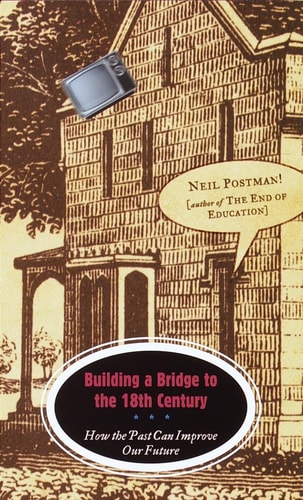
Building a bridge to the 18th century: how the past can improve our future

Postman, Neil
In Building a Bridge to the 18th Century , acclaimed cultural critic Neil Postman offers a cure for the hysteria and hazy values of the postmodern world. Postman shows us how to reclaim that balance between mind and machine in a dazzling celebration of the accomplishments of the Enlightenment-from Jefferson's representative democracy to Locke's deductive reasoning to Rousseau's demand that the care and edification of children be considered an investment in our collective future. Here, too, is the bold assertion that Truth is invulnerable to fashion or the passing of time. Provocative and brilliantly argued, Building a Bridge to the 18th Century illuminates a navigable path through the Information Age-a byway whose signposts, it turns out, were there all along.
Knopf 2000-10-10 213 pages

Stealing fire: how Silicon Valley, the Navy SEALs, and maverick scientists are revolutionizing the way we live and work

Kotler, Steven,Wheal, Jamie
NATIONAL BESTSELLER CNBC and Strategy + Business Best Business Book of 2017 "Steven and Jamie have done a wonderful job of balancing the promises, perils, and how-to prescriptions of engineering peak states such as 'flow.'" —Tim Ferriss, #1 New York Times best-selling author of The 4-Hour Workweek It’s the biggest revolution you’ve never heard of, and it’s hiding in plain sight. Over the past decade, Silicon Valley executives like Eric Schmidt and Elon Musk, Special Operators like the Navy SEALs and the Green Berets, and maverick scientists like Sasha Shulgin and Amy Cuddy have turned everything we thought we knew about high performance upside down. Instead of grit, better habits, or 10,000 hours, these trailblazers have found a surprising short cut. They're harnessing rare and controversial states of consciousness to solve critical challenges and outperform the competition. New York Times bestselling author Steven Kotler and high performance expert Jamie Wheal spent four years investigating the leading edges of this revolution—from the home of SEAL Team Six to the Googleplex, the Burning Man festival, Richard Branson’s Necker Island, Red Bull’s training center, Nike’s innovation team, and the United Nations’ Headquarters. And what they learned was stunning: In their own ways, with differing languages, techniques, and applications, every one of these groups has been quietly seeking the same thing: the boost in information and inspiration that altered states provide. Today, this revolution is spreading to the mainstream, fueling a trillion dollar underground economy and forcing us to rethink how we can all lead richer, more productive, more satisfying lives. Driven by four accelerating forces—psychology, neurobiology, technology and pharmacology—we are gaining access to and insights about some of the most contested and misunderstood terrain in history. Stealing Fire is a provocative examination of what’s actually possible; a guidebook for anyone who wants to radically upgrade their life.
Dey St. 2018-05-08 293 pages

Things that make white people uncomfortable

Bennett, Michael,Zirin, Dave
"Defensive lineman Michael Bennett adds his voice to discussions of racism and police violence, Black athletes and their relationship to powerful institutions like the NCAA and the NFL, the role of protest in history, and the responsibilities of athletes as role models to speak out against injustice. Following in the footsteps of activist-athletes from Muhammad Ali to Colin Kaepernick, Bennett demonstrates his outspoken leadership both on and off the field."--Provided by publisher.
Haymarket Books 2018 220 pages

Ethnic Americans: a history of immigration

Dinnerstein, Leonard
For more than three decades, Ethnic Americans has been hailed as a classic history of immigration to America. Leonard Dinnerstein and David M. Reimers begin with a brief overview of immigration during the colonial and early national eras (1492 to the 1820s), focusing primarily on the arrival of English Protestants, while at the same time stressing the diversity brought by Dutch, French, Spanish, and other small groups, including "free people of color" from the Caribbean. Next they follow large-scale European immigration from 1830 to the 1880s. Catholicism became a major force in America during this period, with immigrants—five million in the 1880s alone—creating a new mosaic in every state of the Union. This section also touches on the arrival, beginning in 1848, of Chinese immigrants and other groups who hoped to find gold and get rich. Subsequent chapters address eastern and southern European immigration from 1890 to 1940; newcomers from the Western Hemisphere and Asia who arrived from 1840 to 1940; immigration restriction from 1875 to World War II; and the postwar arrival and experiences of Asian, Mexican, Hungarian, and Cuban refugees. Taking the past fifteen years into account, the fifth edition of Ethnic Americans considers recent influxes of Asians and Hispanics, especially the surge in the Mexican population, and includes expanded coverage of nativist sentiment in American politics and thought. --
Columbia University Press 2009 236 pages

Up, up, and oy vey! how Jewish history, culture, and values shaped the comic book superhero

Weinstein, Simcha
From the birth of Krypton in Cleveland to the Caped Crusader, Captain America, the Incredible Hulk, Spider-Man, the X-Men, and more, Up, Up, and Oy Vey chronicles the uncanny story behind the story about the origins of the planet's most famous superheroes. While the Jewish contribution to film, theater, music, and comedy has been well-documented, the Jewish role in the creation of the All-American superhero has not been--until now! The official publication date of this book is June 27, 2006, which is two weeks after the 3rd X-Men movie is released and three days before Superman Returns hits the theaters. Additionally, Geppi's Entertainment Museum will be opening in Baltimore on July 4th as well, and this museum is being touted as a one-of-a-kind, fun, interactive museum. . .with a focus on pop culture in all media, toys, and comic characters.
Leviathan Press 2006-06-19 150 pages

The cruelty is the point: why Trump's America endures / Adam Serwer

Serwer, Adam
"To many, our most shocking political crises appear unprecedented--un-American, even. But they are not, writes The Atlantic's Adam Serwer in this prescient essay collection, which dissects the most devastating moments in recent memory to reveal deeply entrenched dynamics, patterns as old as the country itself. The January 6 insurrection, anti-immigrant sentiment, and American authoritarianism all have historic roots that explain their continued power with or without President Donald Trump--a fact borne out by what has happened since his departure from the White House. Serwer argues that Trump is not the cause, he is a symptom. Serwer's phrase "the cruelty is the point" became among the most-used descriptions of Trump's era, but as this book demonstrates, it resonates across centuries. The essays here combine revelatory reporting, searing analysis, and a clarity that's bracing. In this new, expanded version of his bestselling debut, Serwer elegantly dissects white supremacy's profound influence on our political system, looking at the persistence of the Lost Cause, the past and present of police unions, the mythology of migration, and the many faces of anti-Semitism. In so doing, he offers abundant proof that our past is present and demonstrates the devastating costs of continuing to pretend it's not. The Cruelty Is the Point dares us, the reader, to not look away."--
One World 2022-09-20 404 pages

American midnight: the Great War, a violent peace, and democracy's forgotten crisis

Hochschild, Adam
National Bestseller * One of the year's most acclaimed works of nonfiction A BEST BOOK OF THE YEAR: New York Times, Washington Post, New Yorker, Chicago Tribune, Kirkus, New York Post, Fast Company From legendary historian Adam Hochschild, a "masterly" (New York Times) reassessment of the overlooked but startlingly resonant period between World War I and the Roaring Twenties, when the foundations of American democracy were threatened by war, pandemic, and violence fueled by battles over race, immigration, and the rights of labor The nation was on the brink. Mobs burned Black churches to the ground. Courts threw thousands of people into prison for opinions they voiced--in one notable case, only in private. Self-appointed vigilantes executed tens of thousands of citizens' arrests. Some seventy-five newspapers and magazines were banned from the mail and forced to close. When the government stepped in, it was often to fan the flames. This was America during and after the Great War: a brief but appalling era blighted by lynchings, censorship, and the sadistic, sometimes fatal abuse of conscientious objectors in military prisons--a time whose toxic currents of racism, nativism, red-baiting, and contempt for the rule of law then flowed directly through the intervening decades to poison our own. It was a tumultuous period defined by a diverse and colorful cast of characters, some of whom fueled the injustice while others fought against it: from the sphinxlike Woodrow Wilson, to the fiery antiwar advocates Kate Richards O'Hare and Emma Goldman, to labor champion Eugene Debs, to a little-known but ambitious bureaucrat named J. Edgar Hoover, and to an outspoken leftwing agitator--who was in fact Hoover's star undercover agent. It is a time that we have mostly forgotten about, until now. In American Midnight, award-winning historian Adam Hochschild brings alive the horrifying yet inspiring four years following the U.S. entry into the First World War, spotlighting forgotten repression while celebrating an unforgettable set of Americans who strove to fix their fractured country--and showing how their struggles still guide us today.
Mariner Books 2023-10-17 432 pages