21 results for "Innovation"

Merchants of truth: inside the news revolution

Abramson, Jill
The gripping and definitive in-the-room account of the revolution that has swept the news industry over the last decade and reshaped our world. The last decade has seen the News industry face unprecedented change. The sometimes-century old institutions which were once the bastions of truth have had their dominance eroded by vast innovations in viral technology and, as millennial appetites force the industry to choose between principles of objectivity and impartiality, the survivors must confront the horrifying cost of their success- sexual scandal, fake news, the election of President Trump and the shaking of democracy. Taking us behind the scenes at four media titans - BuzzFeed , VICE , The New York Times and The Washington Post - Abramson reveals the human drama behind this shift- one involving deal-making tycoons, thrusting reporters, hard-bitten editors, egomaniacs, bullshitters, provocateurs and bullies, with some surfing and others drowning in the breaking wave of change. 'A cracking, essential read... Abramson knows where most of the bodies are buried and is prepared to draw the reader a detailed map' Guardian
Vintage Books 2020 534 pages

The Pope of Physics Enrico Fermi and the Birth of the Atomic Age

Gino Segrè,Bettina Hoerlin
A New York Times Book Review Editors’ Choice Named a Best Book of the Year by Bloomberg (Chosen by Philip Tetlock), Booklist ’s Top 10 Science Books of the Year, and Shortlisted for Physics World ’s Book of the Year A Major Biography of the Nobel Prize–Winning Physicist, Enrico Fermi, a Leading Architect of the Atomic Age Enrico Fermi is unquestionably among the greats of the world’s physicists, the most famous Italian scientist since Galileo. Called “the Pope” by his peers, he was regarded as infallible in his instincts and research. His discoveries changed our world; they led to weapons of mass destruction and conversely to life-saving medical interventions. This unassuming man struggled with issues relevant today, such as the threat of nuclear annihilation and the relationship of science to politics. Fleeing Fascism and anti-Semitism, Fermi became a leading figure in America’s most secret project: building the atomic bomb. An examination of the human dramas that touched Fermi’s life as well as a thrilling history of scientific innovation in the twentieth century, this is the comprehensive biography that Fermi deserves.
Picador 2017-10-10 384 pages

The changing face of war: combat from the Marne to Iraq

Van Creveld, Martin
One of the most influential experts on military history and strategy has now written his magnum opus, an original and provocative account of the past hundred years of global conflict. The Changing Face of War is the book that reveals the path that led to the impasse in Iraq, why powerful standing armies are now helpless against ill-equipped insurgents, and how the security of sovereign nations may be maintained in the future. While paying close attention to the unpredictable human element, Martin van Creveld takes us on a journey from the last century’s clashes of massive armies to today’s short, high-tech, lopsided skirmishes and frustrating quagmires. Here is the world as it was in 1900, controlled by a handful of “great powers,” mostly European, with the memories of eighteenth-century wars still fresh. Armies were still led by officers riding on horses, messages conveyed by hand, drum, and bugle. As the telegraph, telephone, and radio revolutionized communications, big-gun battleships like the British Dreadnought, the tank, and the airplane altered warfare. Van Creveld paints a powerful portrait of World War I, in which armies would be counted in the millions, casualties–such as those in the cataclysmic battle of the Marne–would become staggering, and deadly new weapons, such as poison gas, would be introduced. Ultimately, Germany’s plans to outmaneuver her enemies to victory came to naught as the battle lines ossified and the winners proved to be those who could produce the most weapons and provide the most soldiers. The Changing Face of War then propels us to the even greater global carnage of World War II. Innovations in armored warfare and airpower, along with technological breakthroughs from radar to the atom bomb, transformed war from simple slaughter to a complex event requiring new expertise–all in the service of savagery, from Pearl Harbor to Dachau to Hiroshima. The further development of nuclear weapons during the Cold War shifts nations from fighting wars to deterring them: The number of active troops shrinks and the influence of the military declines as civilian think tanks set policy and volunteer forces “decouple” the idea of defense from the world of everyday people. War today, van Crevald tells us, is a mix of the ancient and the advanced, as state-of-the-art armies fail to defeat small groups of crudely outfitted guerrilla and terrorists, a pattern that began with Britain’s exit from India and culminating in American misadventures in Vietnam and Iraq, examples of what the author calls a “long, almost unbroken record of failure.” How to learn from the recent past to reshape the military for this new challenge–how to still save, in a sense, the free world–is the ultimate lesson of this big, bold, and cautionary work. The Changing Face of War is sure to become the standard source on this essential subject.
Ballantine Books 2008-01-29 319 pages

Rhapsody A Dream Novel

Arthur Schnitzler
"He again had the sense that all this order, balance and security in his life were really an illusion and a lie".... "Everything seemed to be slipping from his grasp; everything was becoming increasingly unreal, even his home, his wife, his child, his profession, his very identity." Originally published in 1926, Rhapsody: A Dream Novel is a psychological novella written by Arthur Schnitzler. Following Doctor Fridolin and his wife, Albertine, Rhapsody: A Dream Novel sees the couple embark on a two-day odyssey in the erotic underworld. One night a successful doctor, Fridolin, and his beautiful wife, Albertine, attend a masked masquerade ball. Seeing naked men and women and propositioned for sex, the lust-filled couple are inspired to make love to one another; and Albertine-in the heat of passion-admits a sexual fantasy she had the previous summer. Taken slightly back, Fridolin admits his own fantasies to his wife and begins to question his place in their marriage, the strength of their love and the middle class life he has found himself living. Filled with erotic fun, secrets, and sensuality, Rhapsody: A Dream Novel is a psychoanalytic novella that explores sexual guilt, fantasy, love and death. This edition of Rhapsody: A Dream Novel is a classic of erotic literature reimagined for modern readers. Since our inception in 2020, Mint Editions has kept sustainability and innovation at the forefront of our mission. Each and every Mint Edition title gets a fresh, professionally typeset manuscript and a dazzling new cover, all while maintaining the integrity of the original book. With thousands of titles in our collection, we aim to spotlight diverse public domain works to help them find modern audiences. Mint Editions celebrates a breadth of literary works, curated from both canonical and overlooked classics from writers around the globe.
Mint Editions 2024-04-16 80 pages

Morning in America: how Ronald Reagan invented the 1980s

Troy, Gil
Did America's fortieth president lead a conservative counterrevolution that left liberalism gasping for air? The answer, for both his admirers and his detractors, is often "yes." In Morning in America , Gil Troy argues that the Great Communicator was also the Great Conciliator. His pioneering and lively reassessment of Ronald Reagan's legacy takes us through the 1980s in ten year-by-year chapters, integrating the story of the Reagan presidency with stories of the decade's cultural icons and watershed moments-from personalities to popular television shows. One such watershed moment was the 1984 Los Angeles Olympics. With the trauma of Vietnam fading, the triumph of America's 1983 invasion of tiny Grenada still fresh, and a reviving economy, Americans geared up for a festival of international harmony that-spurred on by an entertainment-focused news media, corporate sponsors, and the President himself-became a celebration of the good old U.S.A. At the Games' opening, Reagan presided over a thousand-voice choir, a 750-member marching band, and a 90,000-strong teary-eyed audience singing "America the Beautiful!" while waving thousands of flags. Reagan emerges more as happy warrior than angry ideologue, as a big-picture man better at setting America's mood than implementing his program. With a vigorous Democratic opposition, Reagan's own affability, and other limiting factors, the eighties were less counterrevolutionary than many believe. Many sixties' innovations went mainstream, from civil rights to feminism. Reagan fostered a political culture centered on individualism and consumption-finding common ground between the right and the left. Written with verve, Morning in America is both a major new look at one of America's most influential modern-day presidents and the definitive story of a decade that continues to shape our times.
Princeton University Press 2005 417 pages

Jews in Nazi Berlin: from Kristallnacht to liberation

Beate Meyer,Hermann Simon,Chana Schütz
Though many of the details of Jewish life under Hitler are familiar, historical accounts rarely afford us a real sense of what it was like for Jews and their families to live in the shadow of Nazi Germany’s oppressive racial laws and growing violence. With Jews in Nazi Berlin , those individual lives—and the constant struggle they required—come fully into focus, and the result is an unprecedented and deeply moving portrait of a people. Drawing on a remarkably rich archive that includes photographs, objects, official documents, and personal papers, the editors of Jews in Nazi Berlin have assembled a multifaceted picture of Jewish daily life in the Nazi capital during the height of the regime’s power. The book’s essays and images are divided into thematic sections, each representing a different aspect of the experience of Jews in Berlin, covering such topics as emigration, the yellow star, Zionism, deportation, betrayal, survival, and more. To supplement—and, importantly, to humanize—the comprehensive documentary evidence, the editors draw on an extensive series of interviews with survivors of the Nazi persecution, who present gripping first-person accounts of the innovation, subterfuge, resilience, and luck required to negotiate the increasing brutality of the regime. A stunning reconstruction of a storied community as it faced destruction, Jews in Nazi Berlin renders that loss with a startling immediacy that will make it an essential part of our continuing attempts to understand World War II and the Holocaust.
University of Chicago Press 2009-12-15 392 pages

Artaud

Esslin, Martin
The influence of Antonin Artaud on the contemporary theatre has only become evident since the early Sixties, although writers and directors have been directly or indirectly influenced by his thinking and innovations for many years. Today his pre-eminence as a founder of modern theatrical style is rivalled only by Brecht, with whom he has much in common. The man and his work, as Martin Esslin persuasively argues in this perceptive study, are inseparable and must be considered together. Genius or madman, everything about Artaud is fascinating – his extraordinary life, his passions, his wide-ranging interests, the brilliance and originality that he brought to his plays, his productions and his other writings. Artaud died in 1948 at the age of fifty-two, but accomplished a revolution in his short life that is still bearing fruit today. This compact, carefully researched study is an invaluable guide, combining readability with a sympathetic and authoritative study of its subject.
J. Calder 1999-03-01 127 pages

Leaders in war: West Point remembers the 1991 Gulf War

Frederick W. Kagan,Christian Kubik
Leaders in War present unique first-person perspectives across the spectrum of American combat operations during the 1991 Persian Gulf War. From division commanders to platoon leaders, the authors deliver an insider's view of tough leadership challenges, tragic failures, and triumphant victories. Leaders in War captures the essence of the post-Cold War US Army: how an all-volunteer army, equipped with new weapons systems and adjusting to new battle doctrine, mounted one of history's most successful military campaigns. Described here are the details of the tremendous logistical challenges, innovations in intelligence, ground combat operations from platoon to division, and a wide range of combat support operations. Leaders in War focuses not just on the successes, but on the failures as well, in operations ranging from violent tank battles against the vaunted Iraqi Republican Guard to train-and-fill operations thousands of miles away. Leaders in War illustrates how US Army leaders adapted to the psychological strains of combat, the fog of war, unforeseeable challenges, and the fury of tank warfare during the Persian Gulf War.
Frank Cass 2005 200 pages

In defense of decadent Europe

Aron, Raymond
Raymond Aron's In Defense of Decadent Europe was first conceived at a time of great uncertainty for the Western democracies. The postwar economic boom had been interrupted by "stagflation," while communist and socialist parties in Italy and France were powerful factors in Europe's political landscape. Aron's book has a threefold purpose: the analysis of the Soviet Russian regime and its Marxist-Leninist theoretical foundation; the detailed empirical comparison between liberal democracies and collectivist regimes of the East; and, above all, the exploration of what might be termed the "problem" of democracy the tendency of democratic regimes to undermine themselves unless checked in their most extreme tendencies. Aron denounces the clash between democracy and the Marxist-Leninist mystification and explains how Marxism leads to Soviet-style ideology. The second part of the book constitutes a defense of liberal Europe. The author makes comparisons in terms of productivity, technical innovation, living standards, scientific progress, and human freedom. But Aron also notes there are important ways in which the West must put her house in order by cultivating authority in the church, in universities, in business, and even in the army. This paradox is conveyed by the title of the book, the juxtaposition of the words In Defense of and Decadent Europe. In the new introduction, Daniel Mahoney and Brian Anderson discuss the disenchanted conservative liberalism of Raymond Aron that set him apart. Among the topics they cover are: the challenge of ideocracy, the decadence of democracy, and Aron as a civic philosopher. In Defense of Decadent Europe combines ideological debate with economic and social analysis. Its thorough examination of Western freedom versus the Eastern communism of the recent past extends well beyond parochial debates into a basic vision of Western societies. The book will be compelling for historians, political scientists, economists, and philosophers.
Routledge 2018-04-04 297 pages

Freud in his time and ours

Roudinesco, Elisabeth
Élisabeth Roudinesco offers a bold and modern reinterpretation of the iconic founder of psychoanalysis. Based on new archival sources, this is Freud's biography for the twenty-first century--a critical appraisal, at once sympathetic and impartial, of a genius greatly admired and yet greatly misunderstood in his own time and in ours. Roudinesco traces Freuds life from his upbringing as the eldest of eight siblings in a prosperous Jewish-Austrian household to his final days in London, a refugee of the Nazis' annexation of his homeland. She recreates the milieu of fin de siecle Vienna in the waning days of the Habsburg Empire--an era of extraordinary artistic innovation, given luster by such luminaries as Gustav Klimt, Stefan Zweig, and Gustav Mahler. In the midst of it all, at the modest residence of Berggasse 19, Freud pursued his clinical investigation of nervous disorders, blazing a path into the unplumbed recesses of human consciousness and desire. Yet this revolutionary who was overthrowing cherished notions of human rationality and sexuality was, in his politics and personal habits, in many ways conservative, Roudinesco shows. In his chauvinistic attitudes toward women, and in his stubborn refusal to acknowledge the growing threat of Hitler until it was nearly too late, even the analytically-minded Freud had his blind spots. Alert to his intellectual complexity--the numerous tensions in his character and thought that remained unresolved--Roudinesco ultimately views Freud less as a scientific thinker than as the master interpreter of civilization and culture.
Harvard University Press 2016-11-07 580 pages

Morning star: surrealism, Marxism, anarchism, situationism, utopia

Löwy, Michael
An expanded edition of revered theorist Michael Löwy's Morning Star: Marxism and Surrealism (previously published in French, Portuguese, Spanish, Italian, and Greek), this masterwork collects the author's essays on the ways in which surrealism intersected with a variety of revolutionary political approaches, ranging from utopian ideals to Marxism and situationism. Taking its title from André Breton's essay "Arcane 17," which casts the star as the searing firebrand of rebellion, Löwy's provocative work spans many perspectives. These include surrealist artists who were deeply interested in Marxism and anarchism (Breton among them), as well as Marxists who were deeply interested in surrealism (Walter Benjamin in particular). Probing the dialectics of innovation, diversity, continuity, and unity throughout surrealism's international presence, Morning Star also incorporates analyses of Claude Cahun, Guy Debord, Pierre Naville, José Carlos Mariátegui and others, accompanied by numerous reproductions of surrealist art. An extraordinarily rich collection, Morning Star promises to ignite new dialogues regarding the very nature of dissent.
University of Texas Press 2009-04-01 142 pages

Redrawing the boundaries: the transformation of English and American literary studies

Greenblatt, Stephen J.,Gunn, Giles
In this collection of essays, twenty-four leading scholars examine the major developments that have expanded the horizons of English and American literary studies during recent decades.Redrawing the Boundaries reviews the significant scholarship for major historical periods and surveys new directions in literary criticism and in composition studies. Each essay is accompanied by an annotated list of suggestions for further reading; the book concludes with an extensive list of works cited and a name index.For scholars, teachers, and students of literature, this remarkable work provides an essential overview of traditions and innovations that make up English and American literary studies today. -- Amazon.com.
Modern Language Association of America 1992 595 pages

The Great American Novel

William Carlos. Williams
The Great American Novel (1923) is an experimental novel by William Carlos Williams. Although he is predominately known as a poet, Williams frequently pushed the limits of prose style throughout his career. In the defining decade of Modernism, Williams sought to try his hand at the so-called "Great American Novel," a concept fueling impassioned debate in academic and artistic circles nationwide. Far from conventional, Williams' novel is a metafictional foray into matters more postmodern than modern, a commentary masquerading as narrative and a satire of the all-American overreliance on cliché in form and content. "If there is progress then there is a novel. Without progress there is nothing. Everything exists from the beginning. I existed in the beginning. I was a slobbering infant. Today I saw nameless grasses--I tapped the earth with my knuckle. It sounded hollow. It was dry as rubber. Eons of drought. No rain for fifteen days. No rain. It has never rained. It will never rain." Williams' novel begins with the word and a birth. Language describes the experience of awakening to experience, of coming into consciousness as a living being in a living world. Using words from everyday speech, he builds a novel out of observations, a book that remains conscious of itself throughout. Like the child whose first experience with the written word often comes from names and slogans stretched over trucks and billboards, the reader eventually comes to accept their new reality, a world where people love and succeed and fail, where history and art intercede to make meaning where they can. The Great American Novel showcases Williams' experimental form, stretching the meaning of "novel" to its outermost limit. This edition of William Carlos Williams' The Great American Novel is a classic of American literature reimagined for modern readers. Since our inception in 2020, Mint Editions has kept sustainability and innovation at the forefront of our mission. Each and every Mint Edition title gets a fresh, professionally typeset manuscript and a dazzling new cover, all while maintaining the integrity of the original book. With thousands of titles in our collection, we aim to spotlight diverse public domain works to help them find modern audiences. Mint Editions celebrates a breadth of literary works, curated from both canonical and overlooked classics from writers around the globe.
Mint Editions 2021-05 72 pages

Western music and its others: difference, representation, and appropriation in music

Georgina Born,David Hesmondhalgh
"[ Western Music and Its Others ] will be taken as an important book signalling a new turn within the field. It takes the best features of traditional, rigorous scholarship and brings these to bear upon contemporary, more speculative questions. The level of theoretical sophistication is high. The studies within it are polemical and timely and of lasting scholarly value."--Will Straw, co-editor of Theory Rules: Art as Theory/ Theory and Art "The great value of this collection lies in the wealth of questions that it raises--questions that together crystallize the recent concerns of musicology with force and clarity. But it also lies in the authors' resistance to the easy 'postmodernist' answers that threaten to turn new musicology prematurely grey. The editors' comprehensive, intellectually adventurous introduction exemplifies the sort of eager yet properly skeptical receptivity to scholarly innovation that fosters lasting disciplinary reform. It alone is worth the price of the book." --Richard Taruskin, author of Stravinsky and the Russian Traditions: A Biography of the Works Through " Mavra" "When cultural-studies methods first appeared in musicology 15 years ago, they triggered a storm of polemics that sometimes overshadowed the important issues being raised. As the canon wars recede, however, scholars are finding it possible to focus on the concerns that led them to cultural criticism in the first place: the study of music and its political meanings. Western Music and Its Others brings together leading musicologists, ethnomusicologists, and specialists in film and popular music to explore the ways European and North American musicians have drawn on or identified themselves in tension with the musical practices of Others. In a series of essays ranging from examination of the Orientalist tropes of early 20th-century Modernists to the tangled claims for ownership in today's World Music, the authors in this collection greatly advance both our knowledge of specific case studies and our intellectual awareness of the complexity and urgency of these problems. A timely intervention that should help push music studies to the next level." --Susan McClary, author of Conventional Wisdom: The Content of Musical Form (2000) "This collection provides a sophisticated model for using theory to interrogate music and music to interrogate theory. The essays both take up and challenge the dominance of notions of representation in cultural theory as they explore the relevance of the concepts of hybridity and otherness for contemporary art music. Sophisticated theory, erudite scholarship and a very real appreciation for the specificities of music make this a powerful and important addition to our understanding of both culture and music." --Lawrence Grossberg, author of Dancing in Spite of Myself
University of California Press 2000 360 pages

Love's Shadow

Ada Leverson
Love's Shadow (1908) is a novel by Ada Leverson. Having established herself as a journalist and short story writer, Leverson published her debut novel in 1907 to moderate acclaim. Entertaining and effortlessly witty, Leverson's prose paints a stunning portrait of the Edwardian era, a time when hope and relative peace proved prosperous for many. Often compared to her close friend Oscar Wilde, Leverson, a pioneering Jewish woman, remains a unique and refreshing voice in English literature. Love's Shadow is the first installment in her Little Ottleys trilogy, a series of novels exploring the romantic lives of a hilariously diverse group of friends. Edith and Bruce Ottley seem to have it all--a charming flat, a healthy child, and a group of entertaining friends. Although they are far from perfect--Bruce can be jealous and quite the hypochondriac at times--their marriage remains strong and their home remains a place of refuge to their frequently lovelorn comrades. Among a dizzying array of faces and names, Hyacinth Verney, Mrs. Eugenia Raymond, Cecil Reeve, and Lord Selsey stand out. Although Hyacinth loves Cecil, a match favored by his uncle Lord Selsey, the young man seems inexplicably smitten with the widow Eugenia, who has no interest in marrying again. Edith and Bruce do their best to make themselves hospitable while defending their home against the hostilities of love, but the hearts and minds of their eclectic guests prove difficult to assuage. Love's Shadow is a humorous tale of romance and desire from Ada Leverson, an underappreciated novelist of the Edwardian era. This edition of Ada Leverson's Love's Shadow is a classic work of British literature reimagined for modern readers. Since our inception in 2020, Mint Editions has kept sustainability and innovation at the forefront of our mission. Each and every Mint Edition title gets a fresh, professionally typeset manuscript and a dazzling new cover, all while maintaining the integrity of the original book. With thousands of titles in our collection, we aim to spotlight diverse public domain works to help them find modern audiences. Mint Editions celebrates a breadth of literary works, curated from both canonical and overlooked classics from writers around the globe.
West Margin Press 2021-05 174 pages

Defenders of the faith: studies in nineteenth- and twentieth-century Orthodoxy and Reform

Bleich, Judith
"Emancipation of European Jewry during the nineteenth century led to conflict between tradition and modernity, creating a chasm that few believed could be bridged. The emergence of modern traditionalism was fraught with obstacles. The essays published in this collection eloquently depict the passion underlying the disparate views, the particular areas of vexing confrontation and the hurdles faced by champions of tradition. The author identifies and analyzes the many areas of sociological and religious tension that divided the competing factions, including synagogue innovation, circumcision, intermarriage, military service and many others. With compelling writing and facile style, this illuminating work provides keen insight into the history and development of the various streams of Judaism and the issues that continue to divide them in contemporary times"--
Touro University Press 2020 420 pages

The Twelfth Hour

Ada Leverson
The Twelfth Hour (1907) is a novel by Ada Leverson. Having established herself as a journalist and short story writer, Leverson published her debut novel to moderate acclaim. Entertaining and effortlessly witty, Leverson's prose paints a stunning portrait of the Edwardian era, a time when hope and relative peace proved prosperous for many. Often compared to her close friend Oscar Wilde, Leverson, a pioneering Jewish woman, remains a unique and refreshing voice in English literature. Felicity, Sylvia, and Savile Crofton all feel the pressure placed on upper-class youths to marry wisely. At 25, Felicity appears to have found herself a good husband, a man of wealth and social standing who on closer appearance seems more interested in leisure than love. Determined not to fall into a similarly unhappy marriage, her 20-year-old sister Sylvia hopes to thwart her father's wish that she marry millionaire Mr. Ridokanski. Although he is only 16, Eton student Savile is deeply in love with a famous opera singer--from a distance--but also feels obliged to entertain the affections of Dolly Clive, a girl his own age. Finding company in their own unique miseries of the heart, the Crofton siblings hatch a plan to achieve happiness for themselves, satisfaction for their father, and whatever it is young people are meant to owe to society. The Twelfth Hour is a humorous tale of romance and desire from Ada Leverson, an underappreciated novelist of the Edwardian era. This edition of Ada Leverson's The Twelfth Hour is a classic work of British literature reimagined for modern readers. Since our inception in 2020, Mint Editions has kept sustainability and innovation at the forefront of our mission. Each and every Mint Edition title gets a fresh, professionally typeset manuscript and a dazzling new cover, all while maintaining the integrity of the original book. With thousands of titles in our collection, we aim to spotlight diverse public domain works to help them find modern audiences. Mint Editions celebrates a breadth of literary works, curated from both canonical and overlooked classics from writers around the globe.
West Margin Press 2021-05 170 pages

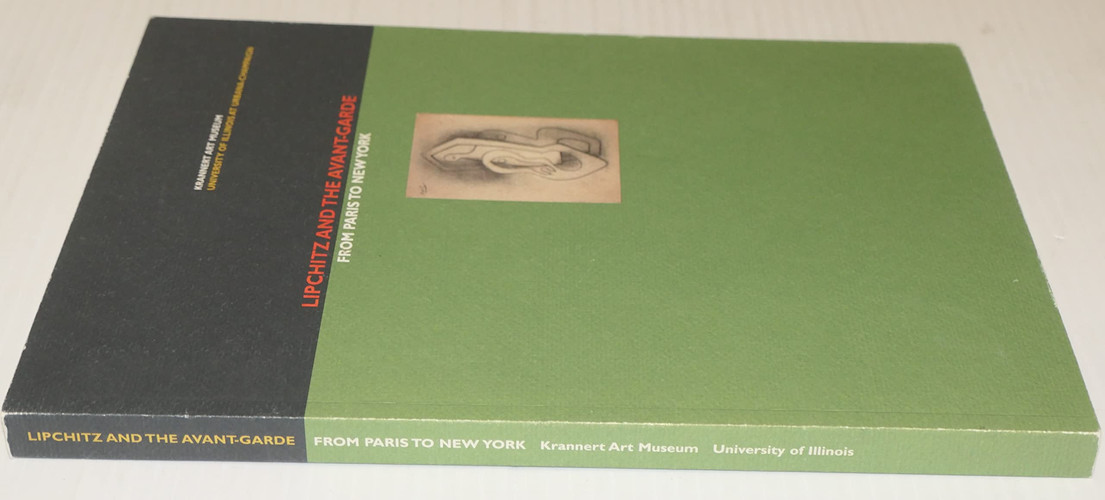
Lipchitz and the avant-garde: from Paris to New York

Lipchitz, Jacques
Utilizing works from museums across North America, Lipchitz and the Avant-Garde traces the path of the pioneering sculptor Jacques Lipchitz from his birthplace in Lithuania to his early work in Paris before World War I, where he was associated with the Parisian avant-garde and applied cubist principles to three-dimensional artwork. By breaking the volume and using different planes, Lipchitz created works that were a new force in the history of sculpture. His innovation of the transparents style in sculpture during the late 1920s was groundbreaking and was copied by many, including Picasso. At the outbreak of World War II the Jewish artist fled to New York, where he worked on increasingly monumental sculptures until his death in 1973. This substantive catalog contains new essays by internationally renowned scholars and translated articles by contemporaries Ramón Gómez de la Serna and Joaquin Torres-García that have not appeared in English before.
Krannert Art Museum and Kinkead Pavilion, University of Illinois at Urbana-Champaign 2001 152 pages

The other harmony: the collected poetry of Eli Mandel

Mandel, Eli
As a poet, critic, anthologist and teacher, Saskatchewan native Eli Mandel was a major figure in Canadian literature, particularly prairie literature. Mandel fashioned his identity as a post-Holocaust Jewish writer positioned dramatically between extremes of tradition and innovation, nation and region, East and West, producing work which can be read in a variety of contexts and which reflects patterns and changes within Canadian writing from the 1950s to the 1980s. This two-volume edition of Mandel's collected poetry includes the complete texts of ten previously published volumes of poetry, as well as 82 "new" poems never before presented in a collection.
Canadian Plains Research Center 2000 751 pages