40 results for "Jewish History"

How to fight anti-Semitism

Weiss, Bari
"No longer the exclusive province of the far right and far left, anti-semitism finds a home in identity politics and the reaction against identity politics, in the renewal of "America first" isolationism and the rise of one-world socialism. An ancient hatred increasingly allowed into modern political discussion, anti-semitism has been migrating toward the mainstream in dangerous ways, amplified by social media and a culture of conspiracy that threatens us all. This timely book is Weiss's cri de couer: an unnerving reminder that Jews must never lose their hard-won instinct for danger, and a powerful case for renewing Jewish and liberal values to guide us through this uncertain moment. Not just for the sake of America's Jews, but for the sake of America"--
Crown 2019-09-10 210 pages

Antisemitism: here and now

Lipstadt, Deborah E.
The award-winning author of The Eichmann Trial and Denial: Holocaust History on Trial gives us a penetrating and provocative analysis of the hate that will not die, focusing on its current, virulent incarnations on both the political right and left, and on what can be done about it. When newsreels depicting the depredations of the Holocaust were shown in movie theaters to a horrified American public immediately after World War II, it was believed that the antisemitism that was part of the fabric of American culture in the 1920s and 1930s was finally going to be laid to rest. In the ensuing decades, Gregory Peck received an Academy Award for playing a journalist who passed as a Jew to blow the lid off genteel Jew hatred, clauses restricting where Jews could live were declared illegal, the KKK was pretty much litigated out of existence, and Joe Lieberman came within five electoral votes of becoming America's first Jewish vice president. And then the unthinkable began to happen. Over the last decade, there has been a noticeable uptick in antisemitic rhetoric and incidents by left-wing groups targeting Jewish students and Jewish organizations on American college campuses. Jews in countries throughout Europe have been attacked by terrorists. And the re-emergence of the white nationalist movement in America, complete with Nazi slogans and imagery, has brought to mind the fascist displays of the 1930s. Where is all this hatred coming from? Is there any significant difference between left-wing and right-wing antisemitism? What role has the anti-Zionist movement played? And what can be done to combat this latest manifestation of an ancient hatred? In a series of letters to an imagined college student and imagined colleague, both of whom are perplexed by this resurgence, Deborah Lipstadt gives us her own superbly reasoned, brilliantly argued, and sure-to-be-controversial responses to these troubling questions.
Scribe Publications 2019 288 pages

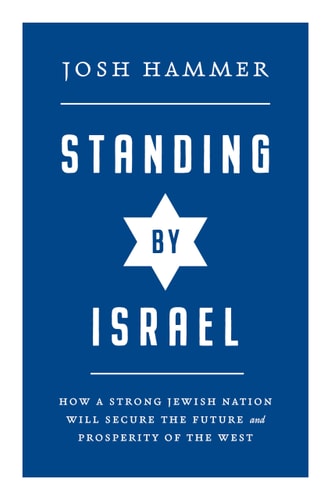
Israel and civilization: the fate of the Jewish nation and the destiny of the West

Hammer, Josh
"In Israel and Civilization, acclaimed journalist, legal expert, and pundit Josh Hammer makes a righteous case that the key to the prosperity of the West is the flourishing of the Jewish people and the Jewish State of Israel. Hammer's uplifting offense is our best defense against the enemies of the Jewish people's right to self-determination in their ancestral homeland. And as Hammer makes clear, manifesting the promise of Israel requires action by the United States and its allies. There can be no overstating the impact of the trauma of October 7, 2023, on the Jewish people. Yet the anti-Israel reactions the world over have been equally devastating. Rallies of hundreds of thousands explicitly or implicitly promoting Hamas violence; demonstrations of Ivy League professors celebrating the pogrom as awesome and exhilarating; so-called human rights organizations that refuse to unequivocally condemn the use of rape as a weapon of war; and a hydra of multiculturalism, postmodern relativism, and tolerance--it all threatens the physical and metaphysical survival of the West and our essential Jewish heritage. Preserving the best of what's been thought and said throughout history and ensuring that there will be centuries more requires a West that is proud of its Jewish heritage. In other words, the continued existence of the Jewish people is inextricably tied to the endurance of Western civilization. Israel is the center of the battle, and Israel and Civilization explains why and how the Jewish state must win."--
Radius Book Group 2025-03-18 293 pages

Stars of David: Prominent Jews talk about being Jewish

Pogrebin, Abigail
Sixty-two of the most accomplished Jews in America speak intimately—most for the first time—about how they feel about being Jewish. In unusually candid interviews conducted by former 60 Minutes producer Abigail Pogrebin, celebrities ranging from Sarah Jessica Parker to Supreme Court Justice Ruth Bader Ginsburg, from Larry King to Mike Nichols, reveal how resonant, crucial or incidental being Jewish is in their lives. The connections they have to their Jewish heritage range from hours in synagogue to bagels and lox; but every person speaks to the weight and pride of their Jewish history, the burdens and pleasures of observance, the moments they’ve felt most Jewish (or not). This book of vivid, personal conversations uncovers how being Jewish fits into a public life, and also how the author’s evolving religious identity was changed by what she heard.
Broadway books 2005 385 pages

American shtetl: the making of Kiryas Joel, a Hasidic village in upstate New York

Stolzenberg, Nomi M.,Myers, David N.
A compelling account of how a group of Hasidic Jews established its own local government on American soil Settled in the mid-1970s by a small contingent of Hasidic families, Kiryas Joel is an American town with few parallels in Jewish history—but many precedents among religious communities in the United States. This book tells the story of how this group of pious, Yiddish-speaking Jews has grown to become a thriving insular enclave and a powerful local government in upstate New York. While rejecting the norms of mainstream American society, Kiryas Joel has been stunningly successful in creating a world apart by using the very instruments of secular political and legal power that it disavows. Nomi Stolzenberg and David Myers paint a richly textured portrait of daily life in Kiryas Joel, exploring the community's guiding religious, social, and economic norms. They delve into the roots of Satmar Hasidism and its charismatic founder, Rebbe Joel Teitelbaum, following his journey from nineteenth-century Hungary to post–World War II Brooklyn, where he dreamed of founding an ideal Jewish town modeled on the shtetls of eastern Europe. Stolzenberg and Myers chart the rise of Kiryas Joel as an official municipality with its own elected local government. They show how constant legal and political battles defined and even bolstered the community, whose very success has coincided with the rise of political conservatism and multiculturalism in American society over the past forty years. Timely and accessible, American Shtetl unravels the strands of cultural and legal conflict that gave rise to one of the most vibrant religious communities in America, and reveals a way of life shaped by both self-segregation and unwitting assimilation.
Princeton University Press 2024-02-20 496 pages

The deadliest lies: the Israel lobby and the myth of Jewish control

Foxman, Abraham H.
While the special relationship of all ethnic and religious minorities in the USA with their old countries and the existence of their pressure groups is regarded as normal, the support given by U.S. Jews to Israel and the pro-Israeli lobby causes some Americans to view the Jews as disloyal to the USA. Examines the "paper" by John J. Mearsheimer and Stephen M. Walt, "The Israeli Lobby and U.S. Foreign Policy" (first published in 2006 on the Internet and then in the "London Review of Books"; an expanded book appeared later, in 2007). The authors contend that U.S. support of Israel is harmful to American interests, and is due to pressure exerted by a mighty Israel Lobby which acts to the detriment of the state. They argue that the Israel Lobby had a crucial part in the decision to attack Iraq in 2003. Notes that despite the academic style of their paper, Mearsheimer and Walt have revived the myths of a Jewish conspiracy, of Jewish control of the mass media, and of a Jewish secret power. Dwells, also, on the Tony Judt affair. In 2006 Judt, who supported Mearsheimer and Walt, was to deliver a lecture on a binational alternative for Israel. His lecture was cancelled, which he ascribed to pressure by the Anti-Defamation League. Supporters of Mearsheimer and Walt used it as a demonstration of the Israel Lobby's intervention. Criticizes Jimmy Carter's book "Palestine: Peace Not Apartheid" (2006) for its clear anti-Israel bias.
Palgrave Macmillan 2007-09-04 256 pages

Contemporary left antisemitism

Hirsh, David
Today's antisemitism is difficult to recognize because it does not come dressed in a Nazi uniform and it does not openly proclaim its hatred or fear of Jews. This book looks at the kind of antisemitism which is tolerated or which goes unacknowledged in apparently democratic spaces: trade unions, churches, left-wing and liberal politics, social gatherings of the chattering classes and the seminars and journals of radical intellectuals. It analyses how criticism of Israel can mushroom into antisemitism and it looks at struggles over how antisemitism is defined. It focuses on ways in which those who raise the issue of antisemitism are often accused of doing so in bad faith in an attempt to silence or smear. Hostility to Israel has become a signifier of identity, connected to opposition to imperialism, neo-liberalism and global capitalism; the 'community of the good' takes on toxic ways of imagining most living Jewish people.
Routledge 2017 314 pages

Jews in Gotham: New York Jews in a changing city, 1920-2010

Gurock, Jeffrey S.
Jews in Gotham follows the Jewish saga in ever-changing New York City from the end of the First World War into the first decade of the new millennium. This lively portrait details the complex dynamics that caused Jews to persist, abandon, or be left behind in their neighborhoods during critical moments of the past century. It shows convincingly that New York retained its preeminence as the capital of American Jews because of deep roots in local worlds.
New York University Press 2015-01-08 327 pages

Philip Roth: stung by life

Zipperstein, Steven J.
"Philip Roth (1933-2018) is one of the most celebrated American writers of his age. Born in Newark, New Jersey -- where his short stories and thirty-one books were often set -- he wrote with immense ambition and drive, along with a keen awareness of what must be done to produce great literature. Yet despite rubbing shoulders with the Kennedys and engaging in a spate of famous and infamous romances, he viewed himself as socially withdrawn, living much like an "unchaste monk" (his words). In this original and lucid biography, Steven J. Zipperstein captures Roth's complex life and the astonishing range of his self-reflective writings-from "Goodbye, Columbus" and "Portnoy's complaint" to the Pulitzer Prize-winning "American pastoral" and "The plot against America." Employing extensive archival research and well over one hundred interviews, including conversations with Roth himself, Zipperstein provides an intimate and probing look at one of the twentieth century's most influential authors, placing his work in the context of Jewishness, freedom, and sexuality in America"-- Provided by publisher.
Yale University Press 2025-10-14 346 pages

I sleep in Hitler's room: an American Jew visits Germany

Tenenbom, Tuvia
But this is just part of the story, a little part of it. For I Sleep in Hitler's Room is also a book about modern anti-Semitism, about hate that refuses to disappear, about a disease that won't get cured and a curse that won't let go. All told in the clearest of style and most amazing of humor. But this is not fiction. From beginning to end "I Sleep in Hitler's Room" is a true tale, a tale about a country that created the Holocaust and a story about a continent that moves in the direction of creating another. The target group, as in the last round, is the same: the "Jews." Why is Europe, the cradle of our civilization, so obsessed with Jews? Read "I Sleep in Hitler's Room" to find the answer. "I Sleep in Hitler's Room" will make you think, make you worry, make you cry, and make you laugh out loud. It is a book you will never forget. Ever. Buy it today. And run to tell all your friends. Traveling across Germany and seeking out that elusive quality that is the German character, playwright and journalist Tuvia Tenenbom wonders whether he has identified it in any one of several striking social phenomena--the proclivity of Germans to join clubs and group activities; how their aptitude for visual design shapes their architecture and their daily life; how their daily life is suffused with soccer and beer, the omnipresent beverage for all occasions; how they proudly self-define themselves by their achievements in precision technology; and, what is most disturbing to this son of Holocaust survivors, how their crushing awareness of their dark history coexists with virulent anti-Semitism and a stubborn obsession with Israel. Tenenbom integrates deep seriousness with the most lighthearted comic touch in this critical but affectionate look at both left and right in contemporary German politics and society. Listen in on his meetings with leaders in German industry and media, including former chancellor Helmut Schmidt, as well as with scores of private citizens whose everyday conversation Tenenbom ponders even as he gently teases them.
Gefen 2016 334 pages

Contemporary American Judaism: transformation and renewal

Kaplan, Dana Evan
No longer controlled by a handful of institutional leaders based in remote headquarters and rabbinical seminaries, American Judaism is being transformed by the individual spiritual decisions of tens of thousands of Jews living in all corners of the United States. A pulpit rabbi and American Jew, Kaplan follows this religious individualism from its postwar suburban roots to the hippie revolution of the 1960s and the multiple postmodern identities of today. From Hebrew tattooing to Jewish Buddhist meditation, his book describes the remaking of historical tradition in ways that channel multiple ethnic and national identities.
Columbia University Press 2009-08-22 446 pages

Being Jewish today: confronting the real issues

Bayfield, Tony
"...gives an account of both the journey of a particular British Jew and the journey of millions of women and men through today's perplexing and difficult world. With honesty and integrity Rabbi Tony Bayfield breaks new ground in exploring the meaning of Jewish identity and its relationship to Jewish tradition and belief. He does so from the perspective of a person fully integrated into the modern Western world. The rigorous questions he asks of his Jewishness, Judaism and the Jewish God are therefore substantially the same as those asked by all faiths and none." -- inside front jacket flap.
Bloomsbury Continuum 2019-12-03 365 pages

The impact of the presidency of Donald Trump on American Jewry and Israel: the Jewish role in American life

Windmueller, Steven F.
"The Trump presidency has resulted in a fundamentally disruptive moment in this nation's political culture. Not only were there different policy options and directions, but the cultural artifacts of politics changed because of how this president dramatically challenged the existing norms of political behavior and action. As we have shifted from a period of American liberalism to a time of political populism, deep fissures are dividing Americans in general and Jews in particular. The Impact of the Presidency of Donald Trump on American Jewry and Israel unpacks President Donald Trump's distinctive and unique relationship with the American Jewish community and the State of Israel. Addressing the various dimensions of his personal and political connections with Jews and Israel, this publication is designed to provide an assessment of how the Trump presidency has influenced and altered American Jewish political behavior. Writers from different backgrounds and political orientations bring a broad range of perspectives designed to examine various aspects of this presidency, including Trump's particular impact on Israel-US relations, his special connection with Orthodox Jews, and his complex and uneven relationship with Jewish Republicans. For liberal American Jews, these four years represented a fundamental revolution, overturning and challenging much that a generation of activists had fought to achieve and protect. For Trump's supporters, it afforded them an opportunity to advance their priorities, while joining the forty-fifth president in changing the American political landscape. The "Trump effect" will extend well beyond his four-year tenure, creating an environment that has fomented the politics of hate and exposed a deeply embedded presence of anti-Semitism. How Americans understand this moment in time and the ways society will adapt can be reflected through the prism of the Jewish encounter with Trumpism that this volume seeks to explore"--
Purdue University Press 2021 286 pages

Shtick shift: Jewish humor in the 21st century

Weinstein, Simcha
This isnt your zaydes Jewish comedy. The once revolutionary, understated "Jew-ish" and "Israel-lite" flavor of Seinfeld has been replaced by a brutal matter-of-factness that would make earlier generation cringe. Your primer to the ever-changing face of Jewish comedy at the dawn of the 21st century: the new faces, their outrageous routines and their sometimes surprising seriousness about the most de pressing issues of our time.
Barricade Books 2008 142 pages

American post-Judaism: identity and renewal in a postethnic society

Magid, Shaul
How do American Jews identify as both Jewish and American? American Post-Judaism argues that Zionism and the Holocaust, two anchors of contemporary American Jewish identity, will no longer be centers of identity formation for future generations of American Jews. Shaul Magid articulates a new, post-ethnic American Jewishness. He discusses pragmatism and spirituality, monotheism and post-monotheism, Jesus, Jewish law, sainthood and self-realization, and the meaning of the Holocaust for those who have never known survivors. Magid presents Jewish Renewal as a movement that takes this radical cultural transition seriously in its striving for a new era in Jewish thought and practice.
Indiana University Press 2013-04-09 388 pages

Jewish radical feminism: voices from the women's liberation movement

Antler, Joyce
Jewish women were undeniably instrumental in shaping the women’s liberation movement of the 1960s, 70s, and 80s. Yet historians and participants themselves have overlooked their contributions as Jews. This has left many vital questions unasked and unanswered—until now. Delving into archival sources and conducting extensive interviews with these fierce pioneers, Joyce Antler has at last broken the silence about the confluence of feminism and Jewish identity.Antler’s exhilarating new book features dozens of compelling biographical narratives that reveal the struggles and achievements of Jewish radical feminists in Chicago, New York and Boston, as well as those who participated in the later, self-consciously identified Jewish feminist movement that fought gender inequities in Jewish religious and secular life. Disproportionately represented in the movement, Jewish women’s liberationists helped to provide theories and models for radical action that were used throughout the United States and abroad. Their articles and books became classics of the movement and led to new initiatives in academia, politics, and grassroots organizing. Other Jewish-identified feminists brought the women’s movement to the Jewish mainstream and Jewish feminism to the Left. For many of these women, feminism in fact served as a “portal” into Judaism.Recovering this deeply hidden history, Jewish Radical Feminism places Jewish women’s activism at the center of feminist and Jewish narratives. The stories of over forty women’s liberationists and identified Jewish feminists—from Shulamith Firestone and Susan Brownmiller to Rabbis Laura Geller and Rebecca Alpert—illustrate how women’s liberation and Jewish feminism unfolded over the course of the lives of an extraordinary cohort of women, profoundly influencing the social, political, and religious revolutions of our era.
New York University Press 2018 453 pages

Book of Rachel

David, Esther
Winner of the Sahitya Akademi Award 2010 A gripping story of a lone Jewish woman battling land sharks to keep her community alive Rachel lives alone by the sea. Her children have long migrated to Israel as have her Bene Israel Jew neighbours. Taking care of the local synagogue and preparing exquisite traditional Jewish dishes sustains Rachel's hope of seeing the community come together again at a future time. When developers make moves to acquire the synagogue and its surrounding land, Rachel's vehement opposition takes the synagogue committee and the town by surprise. Written with warmth and humour, Book of Rachel is a captivating tale of a woman's battle to live life on her own terms. Continuing the saga of the unique Bene Israel Jews in India, it adds to Esther David's reputation as a writer of grace and power.
Penguin 2018-07-20 197 pages

Third-generation Holocaust representation: trauma, history, and memory

Aarons, Victoria,Berger, Alan L.
Victoria Aarons and Alan L. Berger show that Holocaust literary representation has continued to flourish well into the twenty-first century-gaining increased momentum even as its perspective shifts, as a third generation adds its voice to the chorusof post-Holocaust writers. In negotiating the complex thematic imperatives and narrative conceits of the literature of third-generation writers, this bold new work examines those structures, tropes, patterns, ironies, disjunctions, and overall tensionsthat produce a literature that laments unrecoverable loss for a generation removed spatially and temporally from the extended trauma of the Holocaust. Aarons and Berger address evolving notions of "postmemory"; the intergenerational and ongoingtransmission of trauma; issues of Jewish cultural identity; inherited memory; the psychological tensions of post-Holocaust Jewish identity; the characteristic tropes of memory and the personalized narrative voice; issues of generational dislocationand anxiety; the recurrent antagonisms of assimilation and historical alienation; the imaginative re-creation and reconstruction of the past; and the future of Holocaust memory and representation. --Back cover.
Northwestern University Press 2017 263 pages

Between Jewish tradition and modernity: rethinking an old opposition : essays in honor of David Ellenson

Michael A. Meyer,Meyer A. Michael,David N. Myers
Although the ideas of “tradition” and “modernity” may seem to be directly opposed, David Ellenson, a leading contemporary scholar of modern Jewish thought, understood that these concepts can also enjoy a more fluid relationship. In honor of Ellenson, editors Michael A. Meyer and David N. Myers have gathered contributors for Between Jewish Tradition and Modernity: Rethinking an Old Opposition to examine the permutations and adaptations of these intertwined forms of Jewish expression. Contributions draw from a range of disciplines and scholarly interests and vary in subject from the theological to the liturgical, sociological, and literary. The geographic and historical focus of the volume is on the United States and the State of Israel, both of which have been major sites of inquiry in Ellenson's work.
Wayne State University Press 2014 360 pages