37 results for "Jewish History"

The Jewish annotated New Testament: New Revised Standard Version Bible translation

Amy-Jill Levine
The intention for publishing The Jewish Annotated New Testament, according to its editors, Amy-Jill Levine and Mark Zvi Brettler is to recognize the growing understanding between Jewish and Christian traditions, and to help further that understanding. The editors of this volume, both distinguished New Testament scholars, had two key reasons for creating this "Jewish Annotated New Testament." First they wanted Christian readers to learn more about the Judaic origins of Christianity and the context surrounding the life of Jesus. Second, they wanted to introduce Jewish readers to what is unquestionably one of the canonical texts in Western Civilization, whether they believe in it or not. On the whole, this volume does a fairly good job of serving these purposes. Many of the glosses found in the text are geared at linking the ideas and events of the gospels to their background in the history of Judaism. Each of the books of The New Testament is accompanied by a brief introductory essay. There are also a number of shorter sidebar essays positioned within each book to help to explain specific passages at greater length. Finally the end of the book contains a number of essays by leading experts on the bible and Jewish history on a broad range of relevant topics. Those who are involved in interfaith dialogue will recognize that this book will be a classic reference work for anyone seriously interested in Judaism in the first century.
Oxford University Press 2011-11-03 637 pages

Salvation is from the Jews (John 4:22): the role of Judaism in salvation history from Abraham to the Second Coming

Schoeman, Roy H.
Traces the role of Judaism and the Jewish people in God's plan for the salvtion of mankind, from Abraham through the Second Coming, as revealed by the Catholic faith and by a thoughtful examination of history. It will give both Jews and Christians a deeper understanding of Judaism, both as a religion in itself and as a central component of salvation history. The book examines the unique and central role Judaism plays in the destiny of the world. It documents that throughout history attacks on Jews and Judasim have been rooted, not in Christianity, but in the most anti-Christian of forces. Areas addressed in depth include: the Messianic prophecies in Jewish Scripture; the very anti-Christian roots of Nazi anti-Semitism; the links between Nazism and Arab anti-Semitism; the theological insights of well-known Jewish converts; and the role of the Jews in the Second Coming.
Ignatius Press 2003 392 pages

Abraham's heirs: Jews and Christians in medieval Europe

Glick, Leonard B.
Emphasizes the radical difference between how Jews and Christians perceived themselves and each other in medieval Europe, focusing on the Franco-German region. The Jews considered themselves the true heirs to God's promises to Abraham. Christians insisted that because Jews had rejected the Messiah, God had rejected them, and therefore they were eternally damned. Jews were acceptable only if they were economically useful to the powerful, and as exemplars of what it meant to be not-Christian. That role, in good times and bad, shaped the Jewish experience and molded the Jewish consciousness. Inter alia, quotes Christian documents to indicate a prevalence of antisemitic Christian myths, stereotypes, and fantasies about Jews. The inequality of Christian-Jewish relations is described in terms of dependence, exploitation, terror, forced conversions, massacres, expulsions, etc., along with blood libels and Host desecration accusations, among others. Popes, lower clergymen, emperors, kings, nobles, and the lower classes were all involved, at different times and places, in persecuting Jews. Ashkenazi culture is shown as having developed in reaction to (and sometimes influenced by) Christian culture.
Syracuse University Press 1999-01-01 323 pages

The significance of Yavneh and other essays in Jewish hellenism

Cohen, Shaye J. D.
This volume collects thirty essays by Shaye J.D. Cohen. First published between 1980 and 2006, these essays deal with a wide variety of themes and texts: Jewish Hellenism; Josephus; the Synagogue; Conversion to Judaism; Blood and Impurity; the boundary between Judaism and Christianity. What unites them is their philological orientation. Many of these essays are close studies of obscure passages in Jewish and Christian texts. The essays are united too by their common assumption that the ancient world was a single cultural continuum; that ancient Judaism, in all its expressions and varieties, was a Hellenism; and that texts written in Hebrew share a world of discourse with those written in Greek. Many of these essays are well-known and have been much discussed in contemporary scholarship. Among these are: The Significance of Yavneh (the title essay), Patriarchs and Scholarchs, Masada: Literary Tradition, Archaeological Remains, and the Credibility of Josephus, Epigraphical Rabbis, The Conversion of Antoninus, Menstruants and the Sacred in Judaism and Christianity, and A Brief History of Jewish Circumcision Blood.
Mohr Siebeck 2010 614 pages

The changing face of antisemitism: from ancient times to the present day

Laqueur, Walter
An overview of the history of antisemitism throughout the ages, with emphasis on the modern period. Ch. 3 (pp. 39-70) deals with ancient and medieval anti-Judaism, and the rest of the book describes antisemitism from the Enlightenment to the present day. The 19th century saw the development of racialism and theories of a Jewish conspiracy. The dramatic rise of antisemitism after World War I ended with the Holocaust. Afterwards antisemitism appeared in the guise of anti-Zionism, Holocaust denial, neo-fascism and other forms. Subsequently, antisemitism was adopted by the Left and by the Muslim world. Nowadays the radical Left, radical Right, and radical Muslim antisemitisms are undistinguishable and form all kinds of alliances with one another. It is difficult to differentiate between anti-Zionism and antisemitism. At present, antisemitism, by whatever name, is still much more than a mere historical memory.
Oxford University Press 2008-06-30 228 pages

Dying for God: martyrdom and the making of Christianity and Judaism

Boyarin, Daniel
Not long ago, everyone knew that Judaism came before Christianity. More recently, scholars have begun to recognize that the historical picture is quite a bit more complicated than that. In the Jewish world of the first century, many sects competed for the name of the true Israel and the true interpreter of the Torah—the Talmud itself speaks of seventy—and the form of Judaism that was to be the seedbed of what eventually became the Christian Church was but one of these many sects. Scholars have come to realize that we can and need to speak of a twin birth of Christianity and Judaism, not a genealogy in which one is parent to the other. In this book, the author develops a revised understanding of the interactions between nascent Christianity and nascent Judaism in late antiquity, interpreting the two "new" religions as intensely and complexly intertwined throughout this period. Although the "officials" of the eventual winners in both communities—the Rabbis in Judaism and the orthodox leaders in Christianity—sought to deny it, until the end of late antiquity many people remained both Christians and Jews. This resulted, among other things, in much shared religious innovation that affected the respective orthodoxies as well. Dying for God aims to establish this model as a realistic one through close and comparative readings of contemporary Christian texts and Talmudic narratives that thematize the connections and differences between Christians and Jews as these emerged around the issue of martyrdom. The author argues that, in the end, the developing discourse of martyrology involved the circulation and exchange of cultural and religious innovations between the two communities as they moved toward sharper self-definition.
Stanford University Press 1999 247 pages

Our hands are stained with blood: the tragic story of the Church and the Jewish people

Brown, Michael L.
"The pages of church history are marked by countless horrors committed against the Jewish people. From the first persecutions of the Jews in the fourth century to the horrors of the Holocaust, from Israel-bashing in today's press to anti-Semitism spouted from the pulpit, this painful book tells the tragic story that every Christian must read. In a freshly updated and expanded edition of this pivotal work, Dr. Michael Brown exposes the faulty theological roots that opened the door to anti-Semitism in Church history, explaining why well-meaning believers so often fall into the trap of hate... and showing how you can bring an end to the cycle of violence. This generation can make a difference. Now is the time for change! Discover the important role you play in helping to shape a Church that will bless Israel rather than curse Israel." -- From back cover.
Destiny Image Publishers, Inc 2019-09-17 300 pages

Palaces of time: Jewish calendar and culture in early modern Europe

Carlebach, Elisheva
"From one of the leading historians of the Jewish past comes a stunning look into a previously unexamined dimension of Jewish life and culture: the calendar. In the late sixteenth century, Pope Gregory XIII instituted a momentous reform of Western timekeeping, and with it a period of great instability. Jews, like all minority cultures in Europe, had to realign their time-keeping to accord with the new Christian calendar. Elisheva Carlebach shows that the calendar is a complex and living system, constantly modified as new preoccupations emerge and old priorities fade. Calendars serve to structure time and activities and thus become mirrors of experience. Through this seemingly mundane and all-but-overlooked document, we can reimagine the quotidian world of early modern Jewry, of market days and sacred days, of times to avoid Christian gatherings and times to secure communal treasures. In calendars, we see one of the central paradoxes of Jewish existence: the need to encompass the culture of the other while retaining one#x19;s own unique culture. Carlebach reveals that Jews have always lived in multiple time scales, and demonstrates how their accounting for time, as much as any cultural monument, has shaped Jewish life. After a decade exploring Judaica collections around the world, Carlebach brings to light these textually rich and beautifully designed repositories of Jewish life. With color illustrations throughout, this is an evocative illumination of how early modern Jewry marked the rhythms and realities of time and filled it with anxieties and achievements."--Jacket.
Belknap Press of Harvard University Press 2011 292 pages

Border lines: the partition of Judaeo-Christianity

Boyarin, Daniel
The historical separation between Judaism and Christianity is often figured as a clearly defined break of a single entity into two separate religions. Following this model, there would have been one religion known as Judaism before the birth of Christ, which then took on a hybrid identity. Even before its subsequent division, certain beliefs and practices of this composite would have been identifiable as Christian or Jewish.In Border Lines , however, Daniel Boyarin makes a striking case for a very different way of thinking about the historical development that is the partition of Judaeo-Christianity. There were no characteristics or features that could be described as uniquely Jewish or Christian in late antiquity, Boyarin argues. Rather, Jesus-following Jews and Jews who did not follow Jesus lived on a cultural map in which beliefs, such as that in a second divine being, and practices, such as keeping kosher or maintaining the Sabbath, were widely and variably distributed. The ultimate distinctions between Judaism and Christianity were imposed from above by "border-makers," heresiologists anxious to construct a discrete identity for Christianity. By defining some beliefs and practices as Christian and others as Jewish or heretical, they moved ideas, behaviors, and people to one side or another of an artificial border--and, Boyarin significantly contends, invented the very notion of religion.
University of Pennsyvania Press 2007 374 pages

Augustine and the Jews: a Christian defense of Jews and Judaism

Fredriksen, Paula
In Augustine and the Jews, Fredriksen draws us into the life, times, and thought of Augustine of Hippo (396–430). Focusing on the period of astounding creativity that led to his new understanding of Paul and to his great classic, The Confessions, she shows how Augustine’s struggle to read the Bible led him to a new theological vision, one that countered the anti-Judaism not only of his Manichaean opponents but also of his own church. The Christian Empire, Augustine held, was right to ban paganism and to coerce heretics. But the source of ancient Jewish scripture and current Jewish practice, he argued, was the very same as that of the New Testament and of the church—namely, God himself. Accordingly, he urged, Jews were to be left alone. Conceived as a vividly original way to defend Christian ideas about Jesus and about the Old Testament, Augustine’s theological innovation survived the collapse of the Western Roman Empire, and it ultimately served to protect Jewish lives against the brutality of medieval crusades. Augustine and the Jews sheds new light on the origins of Christian anti-Semitism and, through Augustine, opens a path toward better understanding between two of the world’s great religions.
Yale University Press 2010-10-12 503 pages

An introduction to Jewish-Christian relations

Kessler, Edward
"Relations between Christians and Jews over the past two thousand years have been characterised to a great extent by mutual distrust and by Christian discrimination and violence against Jews. In recent decades, however, a new spirit of dialogue has been emerging, beginning with an awakening among Christians of the Jewish origins of Christianity, and encouraging scholars of both traditions to work together. An Introduction to Jewish-Christian relations sheds fresh light on this ongoing interfaith encounter, exploring key writings and themes in Jewish-Christian history, from the Jewish context of the New Testament to major events of modern times, including the rise of ecumenism, the horrors of the Holocaust, and the creation of the state of Israel. This accessible theological and historical study also touches on numerous related areas such as Jewish and interfaith studies, philosophy, sociology, cultural studies, international relations and the political sciences"--Provided by publisher.
Cambridge University Press 2010-02-18 243 pages

Bound by the Bible: Jews, Christians, and the sacrifice of Isaac

Kessler, Edward
The Sacrifice of Isaac is one of the most well-known stories in the Bible. It is also a shocking account of how Abraham's faith in God was demonstrated by a willingness to sacrifice his long-awaited son at God's command. This story has been a source of fascination for Jews and Christians for many centuries and here, Edward Kessler offers an enthralling account of Jewish and Christian interpretations of this biblical story. For understandable reasons, it has been assumed that Judaism influenced Christian interpretation but relatively little attention has been given to the question of the influence of Christianity upon Judaism. Kessler provides an insight into this absorbing two-way encounter and argues that neither Jewish nor Christian interpretations can be understood properly without reference to the other. As Jews and Christians lived, and continue to live, in a biblically orientated culture, Kessler shows how both were 'bound by the bible'.
Cambridge University Press 2004-09-02 222 pages

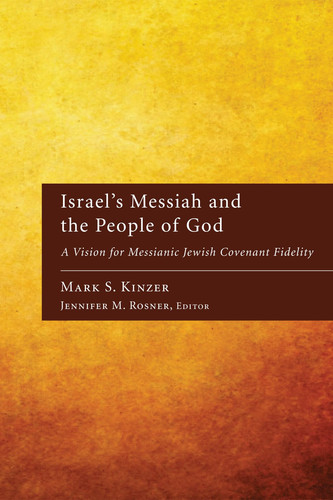
Israel's messiah and the people of God: a vision for Messianic Jewish covenant fidelity

Kinzer, Mark
Israel's Messiah and the People of God presents a rich and diverse selection of essays by theologian Mark Kinzer, whose work constitutes a pioneering step in Messianic Jewish theology. Including several pieces never before published, this collection illuminates Kinzer's thought on topics such as Oral Torah, Jewish prayer, eschatology, soteriology, and Messianic Jewish-Catholic dialogue. This volume offers the reader numerous portals into the vision of Messianic Judaism offered in Kinzer's Postmissionary Messianic Judaism (2005). An introductory essay by editor Jennifer M. Rosner sets Kinzer's thought and writings in context.
Cascade Books 2011-01-07 221 pages

The Talmud in dispute during the High Middle Ages

Fidora, Alexander,Hasselhoff, Görge K.,Ragacs, Ursula
"The Christian discovery of the Babylonian Talmud is a significant landmark in the long and complex history of anti-Jewish polemic. While the Talmudic corpus developed in the same period as early Christianity, this post-biblical text was largely unknown to the Christians. Full awareness of the Talmud among Christian authors did not arise until the late 1230s, when the Jewish convert Nicholas Donin presented a Latin translation of Talmudic fragments to Pope Gregory IX. Though the Talmud was subsequently put on trial (1240) and burnt (1241/2) in Paris, the controversy surrounding it continued over the following years, as Pope Innocent IV called for a revision of its condemnation. The textual basis for this revision is the Extractiones de Talmud, that is, a Latin translation of 1.922 Talmudic fragments. The articles in this volume shed new light on this monumental translation and its historical context. They also offer critical editions of related texts, such as DoninÕs anti-Talmudic polemic. Authors of the contributions are: Wout van Bekkum, Piero Capelli, Ulisse Cecini, Enric Cort s, îscar de la Cruz Palma, Federico Dal Bo, Alexander Fidora, Gšrge K. Hasselhoff, MoisŽs Orfali, Ursula Ragacs and Eulˆlia Vernet i Pons."
Universitat Autònoma de Barcelona, Servei de Publicaciones 2019-12-17 281 pages

Jews, Christians and religious pluralism

Cohn-Sherbok, Dan
Provides a basis for considering the claims of a wide variety of Jewish and Christian writers in the Judeo-Christian tradition, from biblical times to the present, who have wrestled with the issues of religious pluralism. In many cases these thinkers have reflected on the merits of one another's faith; alternatively, they have considered the truth-claims of their own faith in relation to the world's religions. Profiles on some 90 thinkers, such as Augustine, Helen Fry, and Baruch Spinoza, provide the type of information most commonly sought by students and general readers, including biographical details, theological position, and samples of work. The author is a professor of Judaism at the University of Wales, and visiting professor of interfaith dialog at Middlesex University. Annotation c. Book News, Inc., Portland, OR (booknews.com)
Edwin Mellen Press 1999 336 pages

Paul the convert: the apostolate and apostasy of Saul the Pharisee

Segal, Alan F.
Although Paul's writings have been intensively studied by Christian theologians, they have been dismissed by Jewish scholars as the meditations of an antagonistic apostate who broke completely with his Jewish past. In this revisionist account of Paul's work, Alan Segal argues that Paul's life can be better understood by taking his Jewishness seriously, and that Jewish history can be illuminated greatly by examining Paul's writings. By reading Paul from the viewpoint of the religion he left behind, Segal sheds new light on the man who played a critical role in both Judaism and Christianity.
Yale University Press 1990-01-01 368 pages

Jews, Christians and Muslims in encounter

Kessler, Edward
This book reflects on one of the most pressing challenges of our time: the current and historical relationships that exist between the faith-traditions of Judaism, Christianity and Islam. It begins with discussion on the state of Jewish-Christian relations, examining antisemitism and the Holocaust, the impact of Israel and theological controversies such as covenant and mission. Kessler also traces different biblical stories and figures, from the Hebrew Bible and the New Testament, demonstrating Jewish-Christian contact and controversy. Jews and Christians share a sacred text, but more surprisingly, a common exegetical tradition. They also need to deal with some of the more problematic and violent biblical texts. Jews, Christians and Muslims includes reflection on the encounter with Islam, including topics associated with a divergent history and memory as well contemporary relations between the three Abrahamic faiths. Kessler's writings shed light on common purpose as well as how to manage difference, both vital in forming a positive identity and sustaining a flourishing community.
SCM Press 2013 266 pages