36 results for "Jewish History"

The Oxford handbook of Jewish studies

Martin Goodman
The Oxford Handbook of Jewish Studies is part of a major new series of Oxford Handbooks. The volume on Jewish Studies reflects the aim of the series to produce distinctive and original surveys of today's interests and directions in the Humanities and Social Sciences. The Handbook covers all the main areas currently taught and researched as part of Jewish Studies in universities throughout the world, especially in Europe, the United States, and Israel. The span of the volume chronologically and geographically is thus enormous, but all contributors have in common their expertise in the study of the history, literature, religion, and culture of the Jews. Jewish Studies is a comparatively young discipline which has grown over the past fifty years in a somewhat undisciplined way. In a period of great upheaval for Jews following the Holocaust, the creation of the State of Israel, the emergence of new forms of dialogue between Jews and Christians, deepening divisions between secular and religious Jews, and unprecedented assimilation by diaspora Jews to the wider culture, the study of Jewish traditions and history has rarely been dispassionate. This is a good time to examine where we are and where the subject is going. There have been some attempts in recent years to encapsulate current conclusions about particular aspects of Jewish Studies, but these other works aim to provide compendia of agreed facts rather than a survey of interests and directions such as is found in the Oxford Handbook. The Handbook begins with an examination of Jewish Studies as an academic discipline in its own right. The first half of the volume is organized chronologically, followed by sections on languages and literature, general aspects of religion, and other branches of Jewish Studies which have each accumulated a considerable corpus of scholarship over the past half-century. This substantial volume of c. 400,000 words reflects the current state of scholarship as analysed by an international team of experts in the different and varied fields represented within contemporary Jewish Studies.
Oxford University Press 2002-12-12 1037 pages

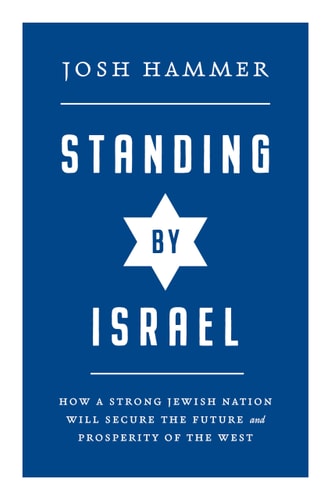
Israel and civilization: the fate of the Jewish nation and the destiny of the West

Hammer, Josh
"In Israel and Civilization, acclaimed journalist, legal expert, and pundit Josh Hammer makes a righteous case that the key to the prosperity of the West is the flourishing of the Jewish people and the Jewish State of Israel. Hammer's uplifting offense is our best defense against the enemies of the Jewish people's right to self-determination in their ancestral homeland. And as Hammer makes clear, manifesting the promise of Israel requires action by the United States and its allies. There can be no overstating the impact of the trauma of October 7, 2023, on the Jewish people. Yet the anti-Israel reactions the world over have been equally devastating. Rallies of hundreds of thousands explicitly or implicitly promoting Hamas violence; demonstrations of Ivy League professors celebrating the pogrom as awesome and exhilarating; so-called human rights organizations that refuse to unequivocally condemn the use of rape as a weapon of war; and a hydra of multiculturalism, postmodern relativism, and tolerance--it all threatens the physical and metaphysical survival of the West and our essential Jewish heritage. Preserving the best of what's been thought and said throughout history and ensuring that there will be centuries more requires a West that is proud of its Jewish heritage. In other words, the continued existence of the Jewish people is inextricably tied to the endurance of Western civilization. Israel is the center of the battle, and Israel and Civilization explains why and how the Jewish state must win."--
Radius Book Group 2025-03-18 293 pages

The pity of it all: a history of the Jews in Germany, 1743-1933

Elon, Amos
Presents a cultural history of German Jewry from Moses Mendelssohn's arrival in Berlin until the end of the Weimar Republic. Refers to antisemitism in a number of contexts: Mendelssohn is hailed by German intellectuals as an exception among the Jews; acceptance of the Jew was sometimes soon followed by rejection; despite or because of disproportionate Jewish contributions to culture and society, Jews are viewed as foreigners; rights are granted only to rich and useful Jews; despite Jewish patriotism, Jews are often portrayed as traitors and subversives. Among the prominent Jews discussed are Heinrich Heine, whose ambivalence toward Germans reflected their ambivalence toward him, and Walther Rathenau who was assassinated by radical nationalists whose activities the Weimar Republic was unable to curb. The section devoted to the latter reveals how Weimar's weaknesses opened the door of power to the Nazis.
Metropolitan Books 2002-11 446 pages

Jews and power

Wisse, Ruth R.
From the Kingdom of David to the Oslo Accords, Ruth Wisse offers a radical new way to think about the Jewish relationship to power. Traditional Jews believed that upholding the covenant with God constituted a treaty with the most powerful force in the universe; this later transformed itself into a belief that, unburdened by a military, Jews could pursue their religious mission on a purely moral plain. Wisse, an eminent professor of comparative literature at Harvard, demonstrates how Jewish political weakness both increased Jewish vulnerability to scapegoating and violence, and unwittingly goaded power-seeking nations to cast Jews as perpetual targets. Although she sees hope in the State of Israel, Wisse questions the way the strategies of the Diaspora continue to drive the Jewish state, echoing Abba Eban's observation that Israel was the only nation to win a war and then sue for peace. And then she draws a persuasive parallel to the United States today, as it struggles to figure out how a liberal democracy can face off against enemies who view Western morality as weakness. This deeply provocative book is sure to stir debate both inside and outside the Jewish world. Wisse's narrative offers a compelling argument that is rich with history and bristling with contemporary urgency.
Nextbook, Schocken 2020-02-04 231 pages

Jews and the American soul: human nature in the twentieth century

Heinze, Andrew R.
What do Joyce Brothers and Sigmund Freud, Rabbi Harold Kushner and philosopher Martin Buber have in common? They belong to a group of pivotal and highly influential Jewish thinkers who altered the face of modern America in ways few people recognize. So argues Andrew Heinze, who reveals in rich and unprecedented detail the extent to which Jewish values, often in tense interaction with an established Christian consensus, shaped the country's psychological and spiritual vocabulary. Jews and the American Soul is the first book to recognize the central role Jews and Jewish values have played in shaping American ideas of the inner life. It overturns the widely shared assumption that modern ideas of human nature derived simply from the nation's Protestant heritage. Heinze marshals a rich array of evidence to show how individuals ranging from Erich Fromm to Ann Landers changed the way Americans think about mind and soul. The book shows us the many ways that Jewish thinkers influenced everything from the human potential movement and pop psychology to secular spirituality. It also provides fascinating new interpretations of Sigmund Freud, Alfred Adler, and Western views of the psyche; the clash among Protestant, Catholic, and Jewish moral sensibilities in America; the origins and evolution of America's psychological and therapeutic culture; the role of Jewish women as American public moralists, and more. A must-read for anyone interested in the contribution of Jews and Jewish culture to modern America.
Princeton University Press 2007 438 pages

Jews and the American soul: human nature in the twentieth century

Heinze, Andrew R.
What do Joyce Brothers and Sigmund Freud, Rabbi Harold Kushner and philosopher Martin Buber have in common? They belong to a group of pivotal and highly influential Jewish thinkers who altered the face of modern America in ways few people recognize. So argues Andrew Heinze, who reveals in rich and unprecedented detail the extent to which Jewish values, often in tense interaction with an established Christian consensus, shaped the country's psychological and spiritual vocabulary. Jews and the American Soul is the first book to recognize the central role Jews and Jewish values have played in shaping American ideas of the inner life. It overturns the widely shared assumption that modern ideas of human nature derived simply from the nation's Protestant heritage. Heinze marshals a rich array of evidence to show how individuals ranging from Erich Fromm to Ann Landers changed the way Americans think about mind and soul. The book shows us the many ways that Jewish thinkers influenced everything from the human potential movement and pop psychology to secular spirituality. It also provides fascinating new interpretations of Sigmund Freud, Alfred Adler, and Western views of the psyche; the clash among Protestant, Catholic, and Jewish moral sensibilities in America; the origins and evolution of America's psychological and therapeutic culture; the role of Jewish women as American public moralists, and more. A must-read for anyone interested in the contribution of Jews and Jewish culture to modern America.
Princeton University Press 2004 438 pages

Atlas of Jewish history

Cohn-Sherbok, Dan
An illuminating and comprehensive atlas, containing over 100 maps and 30 photographs, tracing the fascinating development of Jewish history from ancient times to the present day.In this illuminating history, Dan Cohn-Sherbok traces the development of Jewish history from ancient times to the present day. Containing over 100 maps and 30 photographs, this is a comprehensive atlas of Jewish history designed for students and the general reader. It is ideally suited for those courses in Jewish or Biblical Studies, serving as a handy reference guide as well as a textbook.
Routledge 1994 219 pages

The significance of Yavneh and other essays in Jewish hellenism

Cohen, Shaye J. D.
This volume collects thirty essays by Shaye J.D. Cohen. First published between 1980 and 2006, these essays deal with a wide variety of themes and texts: Jewish Hellenism; Josephus; the Synagogue; Conversion to Judaism; Blood and Impurity; the boundary between Judaism and Christianity. What unites them is their philological orientation. Many of these essays are close studies of obscure passages in Jewish and Christian texts. The essays are united too by their common assumption that the ancient world was a single cultural continuum; that ancient Judaism, in all its expressions and varieties, was a Hellenism; and that texts written in Hebrew share a world of discourse with those written in Greek. Many of these essays are well-known and have been much discussed in contemporary scholarship. Among these are: The Significance of Yavneh (the title essay), Patriarchs and Scholarchs, Masada: Literary Tradition, Archaeological Remains, and the Credibility of Josephus, Epigraphical Rabbis, The Conversion of Antoninus, Menstruants and the Sacred in Judaism and Christianity, and A Brief History of Jewish Circumcision Blood.
Mohr Siebeck 2010 614 pages

Families, rabbis and education: traditional Jewish society in nineteenth-century Eastern Europe

Stampfer, Shaul
The realities of Jewish life in eastern Europe that concerned the average Jew meant the way their children grew up, the way they studied, how they married, and all the subsequent stages of the life cycle-including the problems of divorce, remarriage, and elderly parents. The family and the community were in a very real sense the core institutions of east European Jewish society. These realities were always dynamic and evolving but in the nineteenth century, the pace of change in almost every area of life was exceptionally rapid. This collection of essays deals with these social realities objectively and analytically. Some of the essays presented here are classics that have been widely acclaimed, earning their author a well-deserved reputation for authoritative research; all have been comprehensively revised for this book. They avoid both sentimental descriptions and judgmental attitudes. The result is a picture that is far from the stereotyped view of the past that is common today, but a more honest and more comprehensive one. Topics covered in the studies on education consider the learning experiences of both males and females of different ages. They also deal with and distinguish between study among the well off and learned (not surprisingly, the two went together) and study among the poorer masses. A number of essays are devoted to aspects of educating the elite. Here too, the reconstruction of the realities of the past, as opposed to the stereotypical popular image, reveals the remarkable creativity of what is often mistakenly considered a highly conservative element of society. Several essays deal with aspects of marriage, a key element in the life of most Jews. Using both quantitative and qualitative sources, the author has been able to identify and document characteristics of both first and subsequent marriages and to highlight and explain trends that have hitherto been misunderstood. The problem of aged parents and the changing nature of the nuclear family is also considered. The attempt to understand the rabbinate in its social and historical context is no less revealing then the studies in other areas. The realities of rabbinical life--the problems of getting appointments, job security and insecurity, changing responsibilities and the difficulties of dealing with fragmented and modernizing communities--are presented in a way that explains rabbinic behavior and the complex relations between communities, ideologies, and modernization. These essays look at the past through the prism of the lives of ordinary people, with results that are sometimes surprising but always stimulating. The topics they treat are varied, but the concern to explain what lay behind the visible reality is common to all of them.
The Littman Library of Jewish Civilization 2014 414 pages

The Jewish mind

Patai, Raphael
A Landmark Exploration of Jewish History and Cultur e First published in 1977, The Jewish Mind provides a penetrating insight into the complex collective reality of the Jewish people. Raphael Patai examines how six great historical encounters, spanning three millennia, between the Jews and other cultures led to both change and continuity in Jewish communities throughout the global diaspora. A Timeless Analysis by a Prominent Scholar Patai, a noted cultural anthropologist and historian, drew on a lifetime of research and personal experience to explore the contemporary Jewish mind in its many manifestations, including an exploration of the notion of Jews as a race, an investigation into Jewish intelligence and talents, a discussion of Jewish self-hate, and a profile of Jewish personality and character. An Insightful New Foreword by Ari L. Goldman Bestselling author and journalist Ari L. Goldman places the book in the context of recent turbulent events, especially in the Middle East, and confirms Patai’s conclusion that Judaism remains of enormous value to humankind. Goldman calls the book “a brilliant and absorbing survey of everything poured into the Jewish mind over the millennia.” The Jewish Mind is a towering work of scholarship that remains relevant to anyone trying to understand Jewish culture and society around the world today.
Hatherleigh Press 2007 634 pages

Jews in a Graeco-Roman world

Martin Goodman
The papers in this book represent a unique integration of Jewish history and classics. They tackle from different angles the extent to which Jews in the Graeco-Roman period differed from other peoples in the Mediterranean region, and how much Jewish evidence can be used for the history of the wider classical world. The authors make extensive use not only of types of evidence familiar to classicists, such as inscriptions and the writings of Josephus, but also Jewish religious literature, including Rabbinic texts. The various studies demonstrate that, although Jews lived to some extent apart from others with distinctive customs, in many ways their history also highlights the cultural presuppositions and preoccupations of their non-Jewish contemporaries. The book aims to encourage wider use of the Jewish evidence by classicists and will be important for all students of the classical world.
Clarendon 1998 293 pages

Translation and survival: the Greek Bible of the ancient Jewish Diaspora

Rajak, Tessa
The translation of the Hebrew Bible into Greek was the first major translation in Western culture. Its significance was far-reaching but largely forgotten. Without a Greek Bible, European history would have been entirely different - no Western Jewish diaspora and no Christianity. Translation and Survival is a radical new study of the ancient creators and receivers of the translations and of their impact. The Greek Bible sustained Jews who spoke Greek and made the survival of the first Jewish diaspora possible: indeed, the translators invented the term 'diaspora'. The translations were a tool for the preservation of group identity and for the expression of resistance. They devised a new kind of language: many of the words they coined are still with us. The Greek Bible translations ended up as the Christian Septuagint, taken over along with the entire heritage of Hellenistic Judaism when the Church parted from the Synagogue. Here, a brilliant creation is restored to its first owners, and to its historical context among Jews, Greeks and Christians.
Oxford University Press 2009-04-09 380 pages

Translation and survival: the Greek Bible and the Jewish Diaspora

Rajak, Tessa
The translation of the Hebrew Bible into Greek was the first major translation in Western culture. Its significance was far-reaching but largely forgotten. Without a Greek Bible, European history would have been entirely different - no Western Jewish diaspora and no Christianity. Translation and Survival is a radical new study of the ancient creators and receivers of the translations and of their impact. The Greek Bible sustained Jews who spoke Greek and made the survivalof the first Jewish diaspora possible: indeed, the translators invented the term 'diaspora'. The translations were a tool fo
Oxford University Press 2011-07-21 380 pages

Aphrodite and the rabbis: how the Jews adapted Roman culture to create Judaism as we know it

Visotzky, Burton L.
"Hard to believe but true: - The Passover Seder is a Greco-Roman symposium banquet - The Talmud rabbis presented themselves as Stoic philosophers - Synagogue buildings were Roman basilicas - Hellenistic rhetoric professors educated sons of well-to-do Jews - Zeus-Helios is depicted in synagogue mosaics across ancient Israel - The Jewish courts were named after the Roman political institution, the Sanhedrin - In Israel there were synagogues where the prayers were recited in Greek. Historians have long debated the (re)birth of Judaism in the wake of the destruction of Jerusalem and the Temple cult by the Romans in 70 CE. What replaced that sacrificial cult was at once something new-indebted to the very culture of the Roman overlords-even as it also sought to preserve what little it could of the old Israelite religion. The Greco-Roman culture in which rabbinic Judaism grew in the first five centuries of the Common Era nurtured the development of Judaism as we still know and celebrate it today. Arguing that its transformation from a Jerusalem-centered cult to a world religion was made possible by the Roman Empire, Rabbi Burton Visotzky presents Judaism as a distinctly Roman religion. Full of fascinating detail from the daily life and culture of Jewish communities across the Hellenistic world, Aphrodite and the Rabbis will appeal to anyone interested in the development of Judaism, religion, history, art and architecture. "--
St. Martin's Press 2016 245 pages

Unsettled: an anthropology of the Jews

Konner, Melvin
Presented as an anthropoligist's view of Jewish culture and history, antisemitism is noted in terms of Christianity and contempt for Jews in terms of Islam (chs. 7 and 6, respectively). The Holocaust (including religious responses and literature) is the topic of ch. 13, "Smoke: How the Germans Gave the Jews Graves in the Air, " and reistance that of ch. 14, "Fire: How the Jews Fought Back."
Viking Compass 2003 500 pages

The Wisdom of Love

Alain Finkielkraut
The Wisdom of Love examines the seemingly contradictory claims of universalism and partisanship for the ethnic or racial Other. In discussions of topics ranging from the work of the Jewish philosopher Emmanuel Lävinas to the Dreyfus Affair of the 1890s to the contending positions of Right and Left in the recent culture wars in Europe and the Americas, Finkielkraut cautions against both an unreflective universalism and an equally inflexible advocacy of the Other. He argues instead that genuine respect for the Other is inseparable from calls for universal justice and equality. Rather than being opposites, otherness and universalism are, for Finkielkraut, inextricably bound to one another.
U of Nebraska Press 2001-03-01 153 pages

Voltaire's coconuts: or Anglomania in Europe

Buruma, Ian
"Voltaire's Coconuts is a wonderfully engaging and witty combination of history and biography which looks at how Europeans have been fascinated by all that it means to be English. Dutch by birth, Buruma came to live in England in 1990 for the third time in his life and noticed a new mood of introspection. Englishness was a subject of endless discussion. Fox hunting was debated, loyalty to English cricket a hot issue, and the future of the monarchy rarely out of the news. This worrying over Englishness resulted, in Buruma's words, 'in great balls of intellectual wool', obscuring the more practical reasons why Europeans have admired (or hated) Britain in the past: its liberal institutions, its civil liberties, its delicate balance between social order and the free pursuit of self-interest. In this brilliant and elegantly written book Buruma examines these ideas about Englishness and what Europeans admired or loathed about Britain. Voltaire wondered why British laws could not be planted in France, or even Serbia, like the precious seeds of coconut trees. Karl Marx thought the English were too stupid to start a revolution; Goethe worshipped Shakespeare; Baron de Coubertin's idea of the modern Olympic Games was inspired by Tom Brown's Schooldays; Theodor Herzl's dream of the Jewish state was fuelled by his love of British aristocracy; and the German Kaiser was convinced that Britain was run by Jews. Combining biographical stories of these European Anglophiles and Anglophobes with memories of his own Anglo-Dutch-German-Jewish family, Ian Buruma has found a wholly original way of describing the relationship between Britain and Europe. This is a dazzlingly clever book which through its exploration of anglomania shows how much Englishness and people's view of it has shaped modern Europe." --Descripción del editor.
Weidenfeld & Nicolson 1999 326 pages

Jewish perspectives on Hellenistic rulers

Tessa Rajak
This volume gathers sixteen essays on monarchy and power in the Hellenistic period and charts a new approach to Hellenistic history by focusing attention on biblical and Jewish evidence and reading that evidence in new ways. The essays consider the kings, queens, and power figures of the Hellenistic dynasties, as well as ancient Israelite kings, the Babylonian and Persian rulers of the Bible, Parthians, and Romans. The volume also represents a new kind of interpretation of the Greek Bible (Septuagint) and of the Jewish literature of the period, setting them in the context of Hellenistic political thought and practice.
University of California Press 2007 363 pages