19 results for "Jewish History"

The pope at war: the secret history of Pius XII, Mussolini, and Hitler

Kertzer, David I.
"The Pope at War is the third in a trilogy of books about Pope Pius XII's response to the rise of Fascism and Nazism. It tells the dramatic story of Pope Pius XII's struggle to respond to the Second World War, the Holocaust, and the ongoing Nazi attempts to exterminate the Jews of Europe. It is the first book dealing with the war to make extensive use of the newly opened Vatican archives for the war years. It is based, as well, on thousands of documents from the Italian, German, French, British, and American archives. Among the many new discoveries brought to light is the discovery that within weeks of becoming pope in 1939, Pius XII entered into secret negotiations with Hitler through Hitler's emissary, a Nazi Prince who was married to the daughter of the King of Italy and who was very close to Hitler. The negotiations were kept so secret that not even the German ambassador to the Holy See was informed of them. The book also offers new insight into the thinking behind Pius XII's decision to maintain good relations with the German government during the war, including keeping the Germans happy while they occupied Rome in 1943-44. And throughout, David I. Kertzer shows the active role of the Italian Church hierarchy in promoting the Axis war while the pope, who as bishop of Rome was responsible for the Italian hierarchy, offered his silent blessings and cast his public speeches in such a way that both sides could claim support for their cause"--
Oxford University Press 2022 621 pages

We are not one: a history of America's fight over Israel

Alterman, Eric
"In We Are Not One, historian Eric Alterman traces this debate from its nineteenth-century origins. Following Israel's 1948-1949 War of Independence (called the "nakba" or "catastrophe" by Palestinians), few Americans, including few Jews, paid much attention to Israel or the challenges it faced. Following the 1967 Six-Day War, however, almost overnight support for Israel became the primary component of American Jews' collective identity. Over time, Jewish organizations joined forces with conservative Christians and neoconservative pundits and politicos to wage a tenacious fight to define Israel's image in the US media, popular culture, Congress, and college campuses. Deeply researched, We Are Not One reveals how our consensus on Israel and Palestine emerged and why, today, it is fracturing"--
Basic Books 2022-11 502 pages

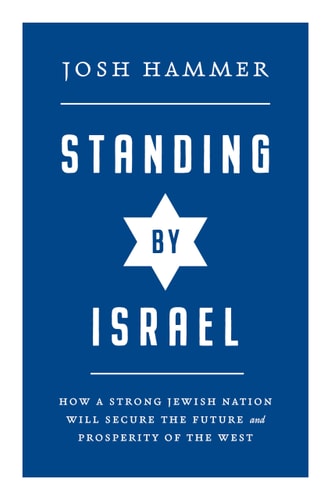
Israel and civilization: the fate of the Jewish nation and the destiny of the West

Hammer, Josh
"In Israel and Civilization, acclaimed journalist, legal expert, and pundit Josh Hammer makes a righteous case that the key to the prosperity of the West is the flourishing of the Jewish people and the Jewish State of Israel. Hammer's uplifting offense is our best defense against the enemies of the Jewish people's right to self-determination in their ancestral homeland. And as Hammer makes clear, manifesting the promise of Israel requires action by the United States and its allies. There can be no overstating the impact of the trauma of October 7, 2023, on the Jewish people. Yet the anti-Israel reactions the world over have been equally devastating. Rallies of hundreds of thousands explicitly or implicitly promoting Hamas violence; demonstrations of Ivy League professors celebrating the pogrom as awesome and exhilarating; so-called human rights organizations that refuse to unequivocally condemn the use of rape as a weapon of war; and a hydra of multiculturalism, postmodern relativism, and tolerance--it all threatens the physical and metaphysical survival of the West and our essential Jewish heritage. Preserving the best of what's been thought and said throughout history and ensuring that there will be centuries more requires a West that is proud of its Jewish heritage. In other words, the continued existence of the Jewish people is inextricably tied to the endurance of Western civilization. Israel is the center of the battle, and Israel and Civilization explains why and how the Jewish state must win."--
Radius Book Group 2025-03-18 293 pages

Israel: the will to prevail

Danon, Danny
Danny Danon has been a vocal opponent of disengaging in the Gaza Strip and West bank, and transforming the stalemate "two state/one state" dialogue to include regional partners, at times standing in direct opposition to his own party's leadership. A well-known and frequent speaker in the global arena, he is the rising voice for a fresh movement toward nationalism among the generation of Israelis currently coming to power. Here, Danon shares this vision with the world. It is a bold and uncompromising stance in the face of attacks on Israel's sovereignty by other Middle Eastern nations as the United States sends mixed signals of support to further its own goals in the region. Danon dissects the missteps and wrong turns that Israel's politicians have taken in the past by working to appease the United States and not offend their neighbors, instead of prioritizing their nation's own viability. With electrifying zeal, he tackles the challenges Israel faces today to undo what he sees as a consequence brought on by years of acquiescence to US policy. Danon believes "US pressure on Israel is hurting Israel and will do nothing to advance peace". Danon leads the charge toward a victorious future with an invitation for the United States and the Middle East to participate in, and not just dictate, Israel's international relations and policies (as opposed to an Israel cuckolded with an endless array of caveats toward those who would see it fall). No stranger to controversy, Danon's unabashed insights are a welcome revelation in the current quagmire of Middle-East international relations. A leading speaker to both Jewish groups and Christian Conservatives, the LA Jewish Journal says "What Danny says is what Bibi is actually thinking." For Danny Danon, this is only the beginning.
Palgrave Macmillan 2012-09-04 230 pages

The victory of Zionism: reclaiming the narrative about Israel's domestic, regional, and international challenges

Navon, Emmanuel
In his new book, The Victory of Zionism, Emmanuel Navon challenges the popular belief that the future of Zionism depends on the resolution of the Arab-Israeli conflict, powerfully defending the idea of a Jewish nation-state from its assaulters both at home and abroad. In direct opposition to Peter Beinart's The Crisis of Zionism, Navon argues that Israeli democracy is not threatened by the status-quo with the Palestinians but by judicial activism. He reveals how, over the years, the separation of powers in Israel was replaced by a hierarchy of powers dominated by the Judiciary; exposes the European Union's interference in Israeli politics via government-funded NGOs; shows the consequences of the United States' blundering foreign policy; and explains the complexities of the Arab-Israeli conflict. Navon argues that the corrupt nature of the PLO, the rise of Islamic fanaticism, and the failure of Arab states to promote democracy make for a conflict that is essentially unsolvable. He reminds readers that Israel, a democratic and technological powerhouse in the midst of the most volatile region in the world, has a key role to play on the international stage. The victory of Zionism is a must read for leaders, opinion-makers, and citizens who care about the future of Israel and of the Middle East.
[CreateSpace Independent Publishing Platform] 2014 366 pages

The deadliest lies: the Israel lobby and the myth of Jewish control

Foxman, Abraham H.
While the special relationship of all ethnic and religious minorities in the USA with their old countries and the existence of their pressure groups is regarded as normal, the support given by U.S. Jews to Israel and the pro-Israeli lobby causes some Americans to view the Jews as disloyal to the USA. Examines the "paper" by John J. Mearsheimer and Stephen M. Walt, "The Israeli Lobby and U.S. Foreign Policy" (first published in 2006 on the Internet and then in the "London Review of Books"; an expanded book appeared later, in 2007). The authors contend that U.S. support of Israel is harmful to American interests, and is due to pressure exerted by a mighty Israel Lobby which acts to the detriment of the state. They argue that the Israel Lobby had a crucial part in the decision to attack Iraq in 2003. Notes that despite the academic style of their paper, Mearsheimer and Walt have revived the myths of a Jewish conspiracy, of Jewish control of the mass media, and of a Jewish secret power. Dwells, also, on the Tony Judt affair. In 2006 Judt, who supported Mearsheimer and Walt, was to deliver a lecture on a binational alternative for Israel. His lecture was cancelled, which he ascribed to pressure by the Anti-Defamation League. Supporters of Mearsheimer and Walt used it as a demonstration of the Israel Lobby's intervention. Criticizes Jimmy Carter's book "Palestine: Peace Not Apartheid" (2006) for its clear anti-Israel bias.
Palgrave Macmillan 2007-09-04 256 pages

1948: a history of the first Arab-Israeli war

Morris, Benny
"This history of the foundational war in the Arab-Israeli conflict is groundbreaking, objective, and deeply revisionist. Besides the military account, it also focuses on the war's political dimensions. Historian Morris probes the motives and aims of the protagonists on the basis of newly opened Israeli and Western documentation. The Arab side--where the archives are still closed--is illuminated with the help of intelligence and diplomatic materials. Morris stresses the jihadi character of the two-stage Arab assault on the Jewish community in Palestine. He examines the dialectic between the war's military and political developments and highlights the military impetus in the creation of the Palestinian refugee problem. He looks both at high politics and general staff decision-making and at the nitty-gritty of combat in the battles that resulted in the emergence of the State of Israel and the humiliation of the Arab world--a humiliation that underlies the continued Arab antagonism toward Israel."-
Yale University Press 2008 524 pages

The Farhud: roots of the Arab-Nazi alliance in the Holocaust

Black, Edwin
The Nazis needed oil. The Arabs wanted the Jews and British out of Iraq. The Mufti of Jerusalem forged a far-ranging alliance with Hitler resulting in the June 1941 Farhud, a Nazi-style pogrom in Baghdad that set the stage for the devastation and expulsion of the Iraqi Jews and ultimately almost a million Jews across the Arab world. The Farhud was the beginning of what became a broad Nazi-Arab alliance in the Holocaust. --publisher.
Dialog Press 2010 448 pages

The impact of the presidency of Donald Trump on American Jewry and Israel: the Jewish role in American life

Windmueller, Steven F.
"The Trump presidency has resulted in a fundamentally disruptive moment in this nation's political culture. Not only were there different policy options and directions, but the cultural artifacts of politics changed because of how this president dramatically challenged the existing norms of political behavior and action. As we have shifted from a period of American liberalism to a time of political populism, deep fissures are dividing Americans in general and Jews in particular. The Impact of the Presidency of Donald Trump on American Jewry and Israel unpacks President Donald Trump's distinctive and unique relationship with the American Jewish community and the State of Israel. Addressing the various dimensions of his personal and political connections with Jews and Israel, this publication is designed to provide an assessment of how the Trump presidency has influenced and altered American Jewish political behavior. Writers from different backgrounds and political orientations bring a broad range of perspectives designed to examine various aspects of this presidency, including Trump's particular impact on Israel-US relations, his special connection with Orthodox Jews, and his complex and uneven relationship with Jewish Republicans. For liberal American Jews, these four years represented a fundamental revolution, overturning and challenging much that a generation of activists had fought to achieve and protect. For Trump's supporters, it afforded them an opportunity to advance their priorities, while joining the forty-fifth president in changing the American political landscape. The "Trump effect" will extend well beyond his four-year tenure, creating an environment that has fomented the politics of hate and exposed a deeply embedded presence of anti-Semitism. How Americans understand this moment in time and the ways society will adapt can be reflected through the prism of the Jewish encounter with Trumpism that this volume seeks to explore"--
Purdue University Press 2021 286 pages

FDR and the Jews

Breitman, Richard,Lichtman, Allan J.
In an extensive examination of this impassioned debate, Richard Breitman and Allan J. Lichtman find that the president was neither savior nor bystander. In "FDR and the Jews," they draw upon many new primary sources to offer an intriguing portrait of a consummate politician--compassionate but also pragmatic--struggling with opposing priorities under perilous conditions
The Belknap Press of Harvard University Press 2014 433 pages

Israel, the embattled ally

Safran, Nadav
Through thirty turbulent years, the United States has been deeply enmeshed in Israel’s destiny. Seldom in the history of international relations has such a world power been involved so intensely for so long with such a small power. How this phenomenon came to pass and how it will affect the future are explained in this compelling history of Israel and its relations with the United States—from the 1947 United Nations resolution through Kissinger’s shuttle diplomacy to Carter’s peace campaign.To form the backdrop for this extraordinary relationship, Nadav Safran paints a detailed portrait of the historical forces that combined to create the Jewish state. He unfolds panel after panel of Israeli life—its physical environment, people, economy, politics, and religion. He examines Israel’s responses to the many security crises it has faced since becoming a nation, and presents a clear and thorough exposition of its defense strategy and descriptions of all its wars.Safran then presents his brilliant analysis of Israel and America in international politics. Cutting through the tangle of the Arab–Israeli conflict, the East–West struggle, the disagreement among Western powers, the conflicts within and among the Arab states, and the impact of special interest groups in the United States on its foreign policy, Safran deftly pursues fluctuations in the American–Israeli relationship as it moved from simple friendship to an alliance of friends. A concluding chapter recapitulates the highlights of that evolution and projects its relevance for the future of the Middle East and American–Israeli relations.
Belknap Press of Harvard University Press 1978-02-27 633 pages

The United States and the Nazi Holocaust: race, refuge, and remembrance

Trachtenberg, Barry
"The United States and the Nazi Holocaust is an invaluable synthesis of United States policies and attitudes towards the Nazi persecution of European Jewry from 1933 right up to the modern day. The book, which includes 20 illustrations, weaves together a vast body of scholarly literature to bring students of the Holocaust a balanced, readable overview of this complex and often controversial topic. It demonstrates that the United States' response to the rise of Nazism, the refugee crisis it provoked, the Holocaust itself, and its aftermath were--and remain to this day--intricately linked to the ever-shifting racial, economic, and social status of American Jewry. Using a broad chronological framework, Barry Trachtenberg navigates us through the major themes and events of this period. He discusses the complicated history of the Roosevelt administration's response to the worsening situation of European Jewry in the context of the ambiguous racial status of Jews in Depression and World War II-era America. He examines the post-war decades in America, and discusses, over a series of chapters, how the Holocaust, like American Jewry itself, came to move from the margins to the very center of American awareness. The United States and the Nazi Holocaust considers the reception of Holocaust survivors, post-war trials, film, memoirs, memorials, and the growing field of Holocaust Studies. The reactions of the United States government, the general public, and the Jewish communities of America are all accounted for in this integrated, detailed survey"--
Bloomsbury Academic 2018-02-08 244 pages

Between the lines: readings on Israel, the Palestinians, and the U.S. "war on terror"

Honig-Parnass, Tikva
This compilation of essays, edited by a Palestinian writer and an Israeli journalist, constitutes a challenge to critically rethink the Israeli-Palestinian conflict. Between the Lines presents a groundbreaking study that brings together insights from across the lines of conflict to put the latest chapter of Israeli apartheid and Palestinian resistance into context. Contributors include: Marwan Bargouti, Dr. Azmi Bishara, Dr. Sami Shalom Chetrit, Dr. Saleh Abdel Jawwad, Husam Khader, Eileen Kuttab, Dr. Yitzhak Laor, Dr. Adi Ophir, Dr. Ilan Pappe, Linda Tabar, Graham Usher and Dr. Jamal Zahalqa. "The destruction of a nation is not an everyday event in history. It is being carried out before our eyes, systematically and consciously, with cruelty and self-righteousness, and with the backing of the global superpower. These acute and informed essays develop a perspective on the background and unfolding of these events that is remote from anything likely to be heard in the West. They merit close attention and thoughtful consideration." --Noam Chomsky "This collection provides a lucid and critical analysis of the Israeli and American policies in the Middle East. The disastrous repercussions of this unholy alliance are presented in this collection through incisive and timely contributions. In the best tradition of [the journal] Between the Lines, readers will be rewarded by this collection that unmasks and exposes what the mainstream media refuses to report or admit." --Ilan Pappe, Israeli historian and author of A History of Modern Palestine Toufic Haddad is a Palestinian American activist who was formerly co-editor with Tikva Honig-Parnass of the Jerusalem-based magazine Between the Lines. Tikva Honig-Parnass is a Jewish Israeli active in radical anti-occupation movements.
Haymarket Books 2007 405 pages

Blowing the whistle on genocide: Josiah E. Dubois, Jr., and the struggle for a U.S. response to the Holocaust

Medoff, Rafael
"Blowing the Whistle on Genocide tells the story of a young Treasury Department lawyer who helped alert the world about the Holocaust and force U.S. government action to rescue Jews from the Nazis." "Risking his career and ignoring threats that were made against him, Josiah E. DuBois, Jr., relentlessly investigated and then exposed the State Department's suppression of news about the Holocaust and obstruction of rescue attempts." "His report, "The Acquiescence of This Government in the Murder of the Jews," helped force President Roosevelt to belatedly establish the War Refugee Board. With DuBois as one of its leaders, the board played a key role in the rescue of more than 200,000 refugees during the final months of the war." "At every turn, DuBois was confronted by officials who tried to stop him - from the powerful Assistant Secretary of State who sabotaged rescue attempts, to the War Department official who blocked DuBois's proposal to bomb Auschwitz and worked to pardon Nazi war criminals after the war." "But DuBois persevered. He overcame the obstacles and saved lives. He was America's Schindler."--BOOK JACKET.
Purdue University 2009 157 pages

Peace for Palestine: first lost opportunity

Berger, Elmer
"This is a work of genuine discovery that uses both the methods and sources of first-rate scholarship. It is a valuable addition to the 'new thinking' about the Middle East, [although] there are many who will refute its contribution without so much as a glance at its first page because it was written by Elmer Berger. The loss is theirs. Who will gain are those, like Berger himself, with an open mind and a willingness to become familiar with new perspectives on an ancient controversy."--From the Foreword by Don Peretz, professor of political science, SUNY-Binghamton At the outset of the 1949 armistice negotiations between Israel and its Arab neighbors, acting UN mediator Ralph Bunche expressed his hope that the talks would "chart the road to a peace for Palestine," an outcome apparently as elusive today as when he spoke those words more than forty years ago. Perhaps the most significant aspect of this meticulously documented analysis of those negotiations is its relevance for today's headlines. Relating the proposals and counterproposals, the conspiracies and power plays to present-day Israeli and Middle East policies, Berger suggests that the basic negotiating strategies of the main players have persisted almost unchanged into the present, a "near rigidity" that has defeated all efforts to achieve peace in the Middle East's central conflict. Berger is a controversial rabbi, an avowed anti-Zionist who proves himself capable of examining highly flammable issues and events with objectivity, insight, and rigorous scholarship. Drawing upon newly released material from official Israeli and U.S. archives, Berger manages to paint both the large picture and the telling detail--the frustrations of the conscientious and highly respected Bunche, the pathetically unprepared Arab negotiators, the well-informed Israeli diplomats, the intrigue of the Israel-Transjordan alliance. The work will serve serious observers of the prolonged conflict over Palestine as a guide to applicable international law and to the attitudes and negotiating policies of the countries involved. Elmer Berger has for twenty-five years been president of American Jewish Alternatives to Zionism, Inc., and has written and edited a number of books on Judaism and Jewish nationalism. At the outset of the 1949 armistice negotiations between Israel and its Arab neighbors, acting UN mediator Ralph Bunche expressed his hope that the talks would "chart the road to a peace for Palestine," an outcome apparently as elusive today as when he spoke those words more than forty years ago. Perhaps the most significant aspect of this meticulously documented analysis of those negotiations is its relevance for today's headlines. Relating the proposals and counterproposals, the conspiracies and power plays to present-day Israeli and Middle East policies, Berger suggests that the basic negotiating strategies of the main players have persisted almost unchanged into the present, a "near rigidity" that has defeated all efforts to achieve peace in the Middle East's central conflict. Berger is a controversial rabbi, an avowed anti-Zionist who proves himself capable of examining highly flammable issues and events with objectivity, insight, and rigorous scholarship. Drawing upon newly released material from official Israeli and U.S. archives, Berger manages to paint both the large picture and the telling detail--the frustrations of the conscientious and highly respected Bunche, the pathetically unprepared Arab negotiators, the well-informed Israeli diplomats, the intrigue of the Israel-Transjordan alliance. The work will serve serious observers of the prolonged conflict over Palestine as a guide to applicable international law and to the attitudes and negotiating policies of the countries involved. Elmer Berger has for twenty-five years been president of American Jewish Alternatives to Zionism, Inc., and has written and edited a number of books on Judaism and Jewish nationalism.
University Press of Florida 1993 287 pages

Complicated complicity: European collaboration with Nazi Germany during World War II

Martina Bitunjac,Julius H. Schoeps
"Complicated Complicity is about the forms taken, motives and spectrum of actions of European collaboration with the Nazis. State authorities, local military organizations and individual players in different countries and areas including France, Scandinavia, Lithuania, Poland, Ukraine, Romania, Hungary, Slovakia, Greece, Italy, Portugal and the countries of the former Yugoslavia are discussed in the context of the history of World War II, the history of occupation and everyday life and as an essential influencing factor in the Holocaust. New forms of right-wing populism, nationalism and growing intolerance of Jewish fellow citizens and minorities have made such historically sensitive studies considerably more difficult in many countries today. In this time of increasing historical revisionism in Europe, such elucidating discourse is particularly relevant."--Page 4 of cover.
De Gruyter Oldenbourg 2021 350 pages