56 results for "Jewish History"

We are not one: a history of America's fight over Israel

Alterman, Eric
"In We Are Not One, historian Eric Alterman traces this debate from its nineteenth-century origins. Following Israel's 1948-1949 War of Independence (called the "nakba" or "catastrophe" by Palestinians), few Americans, including few Jews, paid much attention to Israel or the challenges it faced. Following the 1967 Six-Day War, however, almost overnight support for Israel became the primary component of American Jews' collective identity. Over time, Jewish organizations joined forces with conservative Christians and neoconservative pundits and politicos to wage a tenacious fight to define Israel's image in the US media, popular culture, Congress, and college campuses. Deeply researched, We Are Not One reveals how our consensus on Israel and Palestine emerged and why, today, it is fracturing"--
Basic Books 2022-11 502 pages

Anti-semitism in times of crisis

Sander L. Gilman,Steven T. Katz
A groundbreaking history of anti-Semitism, from the Roman Empire to the twentieth century The origins of anti-Semitism have been hotly contested. Some say that it is a transitory phenomenon, appearing randomly in Western history, while others argue that it reflects a deep-seated tradition inherent in Western culture. Anti-Semitism in Times of Crisis argues that anti-semitism is not an anomaly in Western culture, but a defining feature. In this collection of essays, 16 celebrated contributors trace representations of Jewish people over the past two thousand years. Their analysis shows how Jewish people have been consistently cast as outsiders, allowing Westerners to define themselves in contrast to the Jewish community. Even as the popular image of Jewish people changed, anti-semitism persisted. With essays on the religious, social, political, and economic origins of European and American anti- Semitism, as well as some Jewish responses, this volume is the most wide-ranging history of anti-Semitism ever compiled.
New York University Press 1991 406 pages

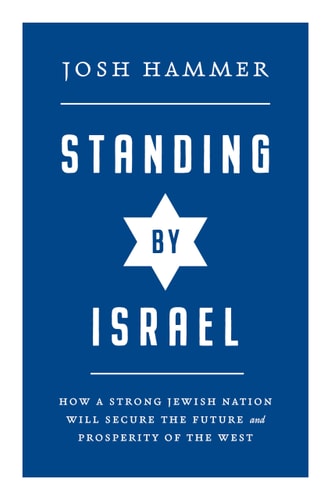
Israel and civilization: the fate of the Jewish nation and the destiny of the West

Hammer, Josh
"In Israel and Civilization, acclaimed journalist, legal expert, and pundit Josh Hammer makes a righteous case that the key to the prosperity of the West is the flourishing of the Jewish people and the Jewish State of Israel. Hammer's uplifting offense is our best defense against the enemies of the Jewish people's right to self-determination in their ancestral homeland. And as Hammer makes clear, manifesting the promise of Israel requires action by the United States and its allies. There can be no overstating the impact of the trauma of October 7, 2023, on the Jewish people. Yet the anti-Israel reactions the world over have been equally devastating. Rallies of hundreds of thousands explicitly or implicitly promoting Hamas violence; demonstrations of Ivy League professors celebrating the pogrom as awesome and exhilarating; so-called human rights organizations that refuse to unequivocally condemn the use of rape as a weapon of war; and a hydra of multiculturalism, postmodern relativism, and tolerance--it all threatens the physical and metaphysical survival of the West and our essential Jewish heritage. Preserving the best of what's been thought and said throughout history and ensuring that there will be centuries more requires a West that is proud of its Jewish heritage. In other words, the continued existence of the Jewish people is inextricably tied to the endurance of Western civilization. Israel is the center of the battle, and Israel and Civilization explains why and how the Jewish state must win."--
Radius Book Group 2025-03-18 293 pages

Israel: the will to prevail

Danon, Danny
Danny Danon has been a vocal opponent of disengaging in the Gaza Strip and West bank, and transforming the stalemate "two state/one state" dialogue to include regional partners, at times standing in direct opposition to his own party's leadership. A well-known and frequent speaker in the global arena, he is the rising voice for a fresh movement toward nationalism among the generation of Israelis currently coming to power. Here, Danon shares this vision with the world. It is a bold and uncompromising stance in the face of attacks on Israel's sovereignty by other Middle Eastern nations as the United States sends mixed signals of support to further its own goals in the region. Danon dissects the missteps and wrong turns that Israel's politicians have taken in the past by working to appease the United States and not offend their neighbors, instead of prioritizing their nation's own viability. With electrifying zeal, he tackles the challenges Israel faces today to undo what he sees as a consequence brought on by years of acquiescence to US policy. Danon believes "US pressure on Israel is hurting Israel and will do nothing to advance peace". Danon leads the charge toward a victorious future with an invitation for the United States and the Middle East to participate in, and not just dictate, Israel's international relations and policies (as opposed to an Israel cuckolded with an endless array of caveats toward those who would see it fall). No stranger to controversy, Danon's unabashed insights are a welcome revelation in the current quagmire of Middle-East international relations. A leading speaker to both Jewish groups and Christian Conservatives, the LA Jewish Journal says "What Danny says is what Bibi is actually thinking." For Danny Danon, this is only the beginning.
Palgrave Macmillan 2012-09-04 230 pages

Where memory leads: my life

Friedländer, Saul
"A Pulitzer Prize-winning historian's return to memoir, a tale of intellectual coming-of-age on three continents, published in tandem with his classic work of Holocaust literature, When Memory Comes Forty years after his acclaimed, poignant first memoir, Friedlander returns with WHEN MEMORY COMES: THE LATER YEARS, bridging the gap between the ordeals of his childhood and his present-day towering reputation in the field of Holocaust studies. After abandoning his youthful conversion to Catholicism, he rediscovers his Jewish roots as a teenager and builds a new life in Israeli politics. Friedlander's initial loyalty to Israel turns into a lifelong fascination with Jewish life and history. He struggles to process the ubiquitous effects of European anti-Semitism while searching for a more measured approach to the Zionism that surrounds him. Friedlander goes on to spend his adulthood shuttling between Israel, Europe, and the United States, armed with his talent for language and an expansive intellect. His prestige inevitably throws him up against other intellectual heavyweights. In his early years in Israel, he rubs shoulders with the architects of the fledgling state and brilliant minds such as Gershom Scholem and Carlo Ginzburg, among others. Most importantly, this memoir led Friedlander to reflect on the wrenching events that induced him to devote sixteen years of his life to writing his Pulitzer Prize-winning masterpiece, The Years of Extermination: Nazi Germany and the Jews, 1939-1945"--
Other Press 2016-11-08 283 pages

Being Jewish after the destruction of Gaza

Beinart, Peter
"In Peter Beinart's view, one story dominates Jewish communal life: that of persecution and victimhood. It is a story that erases much of the nuance of Jewish religious tradition and warps our understanding of Israel and Palestine. After Gaza, where Jewish texts, history and language have been deployed to justify mass slaughter and starvation, Beinart argues, Jews must tell a new story. After this war, whose horror will echo for generations, they must do nothing less than offer a new answer to the question: What does it mean to be a Jew?Beinart imagines an alternate narrative, which would draw on other nations' efforts at moral reconstruction and a different reading of Jewish tradition. A story in which Israeli Jews have the right to equality, not supremacy, and in which Jewish and Palestinian safety are not mutually exclusive but intertwined. One that recognizes the danger of venerating states at the expense of human life." --
Atlantic Books 2025 172 pages

Revolutionary Jews from Spinoza to Marx: the fight for a secular world of universal and equal rights

Israel, Jonathan
"In the eighteenth and early nineteenth centuries a small but conspicuous fringe of the Jewish population became the world's most resolute, intellectually driven, and philosophical revolutionaries, among them the pre-Marxist Karl Marx. Yet the roots of their alienation from existing society and determination to change it extend back to the very heart of the Enlightenment, when Spinoza and other philosophers living in a rigid, hierarchical society colored by a deeply hostile theology first developed a modern revolutionary consciousness. Leading intellectual historian Jonathan Israel shows how the radical ideas in the early Marx's writings were influenced by this legacy, which, he argues, must be understood as part of the Radical Enlightenment. He traces the rise of a Jewish revolutionary tendency demanding social equality and universal human rights throughout the Western world. Israel considers how these writers understood Jewish marginalization and ghettoization and the edifice of superstition, prejudice, and ignorance that sustained them. He investigates how the quest for Jewish emancipation led these thinkers to formulate sweeping theories of social and legal reform that paved the way for revolutionary actions that helped change the world from 1789 onward-but hardly as they intended"--
University of Washington Press 2021 549 pages

Golden harvest: events at the periphery of the Holocaust

Gross, Jan Tomasz
The starting point of Jan Tomasz and Irena Grudzinska Gross's Golden Harvest, this haunting photograph in fact depicts a group of peasants--"diggers"--atop a mountain of ashes at Treblinka, where some 800,000 Jews were gassed and cremated. The diggers are searching for gold and precious stones that Nazi executioners may have overlooked. The story captured in this grainy black-and-white photograph symbolizes the vast, continent-wide plunder of Jewish wealth that went hand-in-hand with the Holocaust. The seizure of Jewish assets during World War II occasionally generates widespread attention when Swiss banks are challenged to produce lists of dormant accounts, or national museums are forced to return stolen paintings. But the theft of Europe's Jewish population was not limited to conquering armies, leading banks, or museums. It was perpetrated also by local people, such as those pictured in the photograph.
Oxford University Press 2016 135 pages

Stranger in my own country: a Jewish family in modern Germany

Mounk, Yascha
"A moving and unsettling exploration of a young man's formative years in a country still struggling with its past As a Jew in postwar Germany, Yascha Mounk felt like a foreigner in his own country. When he mentioned that he is Jewish, some made anti-Semitic jokes or talked about the superiority of the Aryan race. Others, sincerely hoping to atone for the country's past, fawned over him with a forced friendliness he found just as alienating. Vivid and fascinating, Stranger in My Own Country traces the contours of Jewish life in a country still struggling with the legacy of the Third Reich and portrays those who, inevitably, continue to live in its shadow. Marshaling an extraordinary range of material into a lively narrative, Mounk surveys his countrymen's responses to "the Jewish question." Examining history, the story of his family, and his own childhood, he shows that anti-Semitism and far-right extremism have long coexisted with self-conscious philo-Semitism. But of late a new kind of resentment against Jews has come out in the open. Unnoticed by much of the outside world, the desire for a "finish line" that would spell a definitive end to the country's obsession with the past is feeding an emphasis on German victimhood. Mounk shows how, from the government's pursuit of a less "apologetic" foreign policy to the way the country's idea of the "Volk" makes life difficult for its immigrant communities, a troubled nationalism is shaping Germany's future"--
Farrar, Straus and Giroux 2014-01-07 261 pages

Salvation is from the Jews (John 4:22): the role of Judaism in salvation history from Abraham to the Second Coming

Schoeman, Roy H.
Traces the role of Judaism and the Jewish people in God's plan for the salvtion of mankind, from Abraham through the Second Coming, as revealed by the Catholic faith and by a thoughtful examination of history. It will give both Jews and Christians a deeper understanding of Judaism, both as a religion in itself and as a central component of salvation history. The book examines the unique and central role Judaism plays in the destiny of the world. It documents that throughout history attacks on Jews and Judasim have been rooted, not in Christianity, but in the most anti-Christian of forces. Areas addressed in depth include: the Messianic prophecies in Jewish Scripture; the very anti-Christian roots of Nazi anti-Semitism; the links between Nazism and Arab anti-Semitism; the theological insights of well-known Jewish converts; and the role of the Jews in the Second Coming.
Ignatius Press 2003 392 pages

Probing the limits of representation: Nazism and the "final solution"

Saul Friedländer
Can the Holocaust be compellingly described or represented? Or is there some core aspect of the extermination of the Jews of Europe which resists our powers of depiction, of theory, of narrative? In this volume, twenty scholars probe the moral, epistemological, and aesthetic limits of an account or portrayal of the Nazi horror. Christopher Browning, Hayden White, Carlo Ginzburg, Martin Jay, Dominick LaCapra, and others focus first on the general question: can the record of his historical event be established objectively through documents and witnesses, or is every historical interpretation informed by the perspective of its narrator? The suggestion that all historical accounts are determined by a preestablished narrative choice raises the ethical and intellectual issues of various forms of relativization. In more specific terms, what are the possibilities of historicizing National Socialism without minimizing the historical place of the Holocaust? Also at issue are the problems related to an artistic representation, particularly the dilemmas posed by aestheticization. John Felstiner, Yael S. Feldman, Sidra Ezrahi, Eric Santner, and Anton Kaes grapple with these questions and confront the inadequacy of words in the face of the Holocaust. Others address the problem of fitting Nazi policies and atrocities into the history of Western thought and science. The book concludes with Geoffrey Hartman's evocative meditation on memory. These essays expose to scrutiny questions that have a pressing claim on our attention, our conscience, and our cultural memory. First presented at a conference organized by Saul Friedlander, they are now made available for the wide consideration and discussion they merit.
Harvard University Press 1992 407 pages

Three rings: a tale of exile, narrative, and fate

Mendelsohn, Daniel Adam
Winner of the 2020 Prix du Meilleur Livre Etranger, France's best foreign book of the year. 'Astounding' Sebastian Barry 'A masterpiece' Ayad Akhtar 'This little book is ruminative, humane, and gorgeously precise' Jonathan Lethem In this genre-defying book, best-selling memoirist and critic Daniel Mendelsohn explores the mysterious links between the randomness of the lives we lead and the artfulness of the stories we tell. Combining memoir, biography, history, and literary criticism, Three Rings weaves together the stories of three exiled writers who turned to the classics of the past to create masterpieces of their own-works that pondered the nature of narrative itself. Erich Auerbach, the Jewish philologist who fled Hitler's Germany and wrote his classic study of Western literature, Mimesis, in Istanbul. Francois Fenelon, the seventeenth-century French archbishop whose ingenious sequel to the Odyssey,The Adventures of Telemachus - a veiled critique of the Sun King and the best-selling book in Europe for one hundred years - resulted in his banishment. And the German novelist W. G. Sebald, self-exiled to England, whose distinctively meandering narratives explore Odyssean themes of displacement, nostalgia, and separation from home. Intertwined with these tales of exile and artistic crisis is an account of Mendelsohn's struggles to write two of his own books-a family saga of the Holocaust and a memoir about reading the Odyssey with his elderly father-that are haunted by tales of oppression and wandering. As Three Rings moves to its startling conclusion, a climactic revelation about the way in which the lives of its three heroes were linked across borders, languages, and centuries forces the reader to reconsider the relationship between narrative and history, art and life.
William Collins 2022-03-17 116 pages

Holocaust literature: a history and guide

Roskies, David G.,Diamant, Naomi
"What is Holocaust literature? When does it begin and how is it changing? Is there an essential core of diaries, eyewitness accounts of the concentration camps, tales of individual survival in hiding? Is it the same everywhere: in the West as in the East, in Australia as in the Americas, in poetry as in prose? Is this literature sacred and sui generis, or can it be studied in the light of other literatures? What of the perpetrators and bystanders, the hidden children, the children of Holocaust survivors: Do they speak with the same authority? What works of Holocaust literature will be read a hundred years from now--and why? Here, for the first time and told from beginning to end, is an historical survey of Holocaust literature in all genres, countries, and major languages. Beginning in wartime, it proceeds from the literature of mobilization and mourning in the Free World to the vast and varied literature produced in the Nazi-occupied ghettos, the bunkers and places of hiding, the transit and concentrations camps. Within weeks of the liberation, in displaced persons camps, a new memorial and testamentary literature begins to take shape. Moving from Europe to Israel, the U.S., and beyond, the authors situate the writings by real and proxy witnesses within three distinct postwar periods: a period of "communal memory," still internal and internecine; a period of "provisional memory" in the '60s and '70s that witnesses the birth of a self-conscious Holocaust genre; to the period of "authorized memory" in which we live today, following the collapse of the Soviet Union (1989-91), and the opening of the US Holocaust Museum (1993). Twenty book covers - first editions in their original languages - and an eminently readable guide to the "first hundred books" together show the multilingual scope, historical depth, the moral and artistic range of this extraordinary body of writing."--Publisher's website.
Brandeis University Press 2012 355 pages

Mirrors of destruction: war, genocide, and modern identity

Bartov, Omer
Reflects on the interrelationship between war, genocide, and identity in the 20th century. Contends that World War I provided a pattern for the industrial killing that reached its apex in the Nazi Holocaust. Comparing France and Germany, both of which looked for an "elusive enemy" to help them cope with the trauma of World War I, notes that Germany found it in the Jews. This perception allowed the Germans to see themselves as victims and their actions against the Jews as self-defense. The search for "elusive enemies" (to blame for perpetrating the genocide) and "elusive victims" (e.g. the French or German people) continued after the war. Compares the French, German, and Jewish postwar discourses of the Holocaust. Presenting themselves as the main victims of Nazism, the French and Germans have tended to neglect Jews as the main victims. Criticizes writings by Hannah Arendt, Ka-Tzetnik, and some other postwar writers on the Holocaust and its roots.
Oxford University Press 2000 302 pages

GI Jews: how World War II changed a generation

Moore, Deborah Dash
Whether they came from Sioux Falls or the Bronx, over half a million Jews entered the U.S. armed forces during the Second World War. Uprooted from their working- and middle-class neighborhoods, they joined every branch of the military and saw action on all fronts. Deborah Dash Moore offers an unprecedented view of the struggles these GI Jews faced, having to battle not only the enemy but also the prejudices of their fellow soldiers. Through memoirs, oral histories, and letters, Moore charts the lives of fifteen young Jewish men as they faced military service and tried to make sense of its demands. From confronting pork chops to enduring front-line combat, from the temporary solace of Jewish worship to harrowing encounters with death camp survivors, we come to understand how these soldiers wrestled with what it meant to be an American and a Jew. Moore shows how military service in World War II transformed this generation of Jews, reshaping Jewish life in America and abroad. These men challenged perceptions of Jews as simply victims of the war, and encouraged Jews throughout the diaspora to fight for what was right. At the same time, service strengthened Jews' identification with American democratic ideals, even as it confirmed the importance of their Jewish identity. GI Jews is a powerful, intimate portrayal of the costs of a conflict that was at once physical, emotional, and spiritual, as well as its profound consequences for these hitherto overlooked members of the "greatest generation."
Belknap 2006-04 368 pages

After such knowledge: memory, history, and the legacy of the Holocaust

Hoffman, Eva
Sixty years after the Holocaust, the author of Lost in Translation explores the difficult process of preserving an authentic version of its tragic events. As the Holocaust recedes in time, the guardianship of its legacy is being passed on from its survivors and witnesses to the next generation. How should they, in turn, convey its knowledge to others? What are the effects of a traumatic past on its inheritors? And what are the second generation's responsibilities to its received memories?In this meditation on the long aftermath of atrocity, Eva Hoffman -a child of Polish Jews who survived the Holocaust with the help of neighbors, but whose entire families perished -probes these questions through personal reflections, and through broader explorations of the historical, psychological, and moral implications of the second-generation experience. She examines the subterranean processes through which private memories of suffering are transmitted, and the more willful stratagems of collective memory. She traces the second generation's trajectory from childhood intimations of horror, through its struggles between allegiance and autonomy, and its complex transactions with children of per
Public Affairs 2004-01-07 301 pages

Howl

Jacobson, Howard
In the aftermath of October 7, Ferdinand Draxler walks the streets of London in despair. Everything has changed - the sights, the sound, the spirit. He too is not who he was. Is he at the crossroads of history or is it just a bend in the cul-de-sac of his own gloomy nature? The son of a Holocaust survivor who accuses him of cowardice and the father of a daughter who sees him as complicit in genocide, Draxler fixates on bad news. He shouts at the television. He carries his own tin of paint to cover up graffiti. The staffroom at the primary school of which he is headmaster has become a battlefield of inflamed opinion he does nothing to quiet. His wife, Charmian, is a beacon of calm, but even she isn't sure she can save Ferdie from himself. 'Don't worry about me,' he tells her. 'I don't have what it takes to go mad.' -- Source other than Library of Congress.
Jonathan Cape 2026-03-03 294 pages