715 results for "Jewish History"

The Warburgs: the twentieth-century odyssey of a remarkable Jewish family

Chernow, Ron
From the Pulitzer Prize–winning bestselling author of Alexander Hamilton , the inspiration for the hit Broadway musical, comes this definitive biography of the Warburgs, one of the great German-Jewish banking families of the twentieth century. Bankers, philanthropists, scholars, socialites, artists, and politicians, the Warburgs stood at the pinnacle of German (and, later, of German-American) Jewry. They forged economic dynasties, built mansions and estates, assembled libraries, endowed charities, and advised a German kaiser and two American presidents. But their very success made the Warburgs lightning rods for anti-Semitism, and their sense of patriotism became increasingly dangerous in a Germany that had declared Jews the enemy. Ron Chernow's hugely fascinating history is a group portrait of a clan whose members were renowned for their brilliance, culture, and personal energy yet tragically vulnerable to the dark and irrational currents of the twentieth century.
Vintage Books, a division of Random House LLC 2016-11-15 820 pages

People love dead Jews: reports from a haunted present

Horn, Dara
"A startling exploration of how Jewish history is exploited to comfort the living. Reflecting on subjects as far-flung as the international veneration of Anne Frank, the blockbuster travelling exhibition called "Auschwitz," the Jewish history of the Chinese city of Harbin, and the little known "righteous-gentile" Varian Fry, Dara Horn challenges us to confront the reasons why there might be so much fascination with Jewish deaths, as emblematic of the worst of evils the world has to offer, and so little respect for Jewish lives, as they continue to unfold in the present. Horn draws upon her own family life -- trying to explain Shakespeare's Shylock to a curious 10-year-old, her anger when swastikas are drawn on desks in her children's school in New Jersey, the profound and essential perspective offered by traditional religious practice, prayer, and study -- to assert the vitality, complexity and depth of this life against an anti-Semitism that, far from being disarmed by the mantra of "Never forget," is on the rise"--Provided by publisher.
W. W. Norton & Company 2021 237 pages

Rome and Jerusalem: the clash of ancient civilizations

Goodman, Martin
A magisterial history of the titanic struggle between the Roman and Jewish worlds that led to the destruction of Jerusalem. Martin Goodman—equally renowned in Jewish and in Roman studies—examines this conflict, its causes, and its consequences with unprecedented authority and thoroughness. He delineates the incompatibility between the cultural, political, and religious beliefs and practices of the two peoples and explains how Rome's interests were served by a policy of brutality against the Jews. At the same time, Christians began to distance themselves from their origins, becoming increasingly hostile toward Jews as Christian influence spread within the empire. This is the authoritative work of how these two great civilizations collided and how the reverberations are felt to this day.
Vintage Books 2008-11-11 598 pages

Jews and words

Oz, Amos,Oz-Salzberger, Fania
Why are words so important to so many Jews? Novelist Amos Oz and historian Fania Oz-Salzberger roam the gamut of Jewish history to explain the integral relationship of Jews and words. Through a blend of storytelling and scholarship, conversation and argument, father and daughter tell the tales behind Judaism’s most enduring names, adages, disputes, texts, and quips. These words, they argue, compose the chain connecting Abraham with the Jews of every subsequent generation.Framing the discussion within such topics as continuity, women, timelessness, and individualism, Oz and Oz-Salzberger deftly engage Jewish personalities across the ages, from the unnamed, possibly female author of the Song of Songs through obscure Talmudists to contemporary writers. They suggest that Jewish continuity, even Jewish uniqueness, depends not on central places, monuments, heroic personalities, or rituals but rather on written words and an ongoing debate between the generations. Full of learning, lyricism, and humor, Jews and Words offers an extraordinary tour of the words at the heart of Jewish culture and extends a hand to the reader, any reader, to join the conversation.
Yale University Press 2012 232 pages

Antisemitism: here and now

Lipstadt, Deborah E.
The award-winning author of The Eichmann Trial and Denial: Holocaust History on Trial gives us a penetrating and provocative analysis of the hate that will not die, focusing on its current, virulent incarnations on both the political right and left, and on what can be done about it. When newsreels depicting the depredations of the Holocaust were shown in movie theaters to a horrified American public immediately after World War II, it was believed that the antisemitism that was part of the fabric of American culture in the 1920s and 1930s was finally going to be laid to rest. In the ensuing decades, Gregory Peck received an Academy Award for playing a journalist who passed as a Jew to blow the lid off genteel Jew hatred, clauses restricting where Jews could live were declared illegal, the KKK was pretty much litigated out of existence, and Joe Lieberman came within five electoral votes of becoming America's first Jewish vice president. And then the unthinkable began to happen. Over the last decade, there has been a noticeable uptick in antisemitic rhetoric and incidents by left-wing groups targeting Jewish students and Jewish organizations on American college campuses. Jews in countries throughout Europe have been attacked by terrorists. And the re-emergence of the white nationalist movement in America, complete with Nazi slogans and imagery, has brought to mind the fascist displays of the 1930s. Where is all this hatred coming from? Is there any significant difference between left-wing and right-wing antisemitism? What role has the anti-Zionist movement played? And what can be done to combat this latest manifestation of an ancient hatred? In a series of letters to an imagined college student and imagined colleague, both of whom are perplexed by this resurgence, Deborah Lipstadt gives us her own superbly reasoned, brilliantly argued, and sure-to-be-controversial responses to these troubling questions.
Scribe Publications 2019 288 pages

The case for Israel

Dershowitz, Alan M.
States that the Jewish nation of Israel stands accused in the dock of international justice. Throughout the world, Israel is singled out for condemnation, divestment, boycott, and demonization. This book refutes anti-Zionism in the format of posing 32 questions based on accusations made against Israel (e.g. "Is Israel a racist state?"). For each one, presents the accusation, the accusers, the reality, and the proof of the reality (as opposed to the false accusation). Stresses that Israel is being judged unfairly, by a double standard, and that comparatively and in context Israel is hardly among the worst human rights offenders in the world. Claims that such a subjective view of Israel encourages terrorist attacks by Palestinians and others. Blames the Palestinians for the lack of peace in the Middle East. Ch. 31 (pp. 208-216), "Are Critics of Israel Anti-Semitic?", differentiates between criticism of Israel and singling it out for unique sanctions, which is labelled antisemitism.
J. Wiley & Sons 2003-08 274 pages

All but my life

Klein, Gerda Weissmann
All But My Life is the unforgettable story of Gerda Weissmann Klein's six-year ordeal as a victim of Nazi cruelty. From her comfortable home in Bielitz (present-day Bielsko) in Poland to her miraculous survival and her liberation by American troops--including the man who was to become her husband--in Volary, Czechoslovakia, in 1945, Gerda takes the reader on a terrifying journey. Gerda's serene and idyllic childhood is shattered when Nazis march into Poland on September 3, 1939. Although the Weissmanns were permitted to live for a while in the basement of their home, they were eventually separated and sent to German labor camps. Over the next few years Gerda experienced the slow, inexorable stripping away of "all but her life." By the end of the war she had lost her parents, brother, home, possessions, and community; even the dear friends she made in the labor camps, with whom she had shared so many hardships, were dead. Despite her horrifying experiences, Klein conveys great strength of spirit and faith in humanity. In the darkness of the camps, Gerda and her young friends manage to create a community of friendship and love. Although stripped of the essence of life, they were able to survive the barbarity of their captors. Gerda's beautifully written story gives an invaluable message to everyone. It introduces them to last century's terrible history of devastation and prejudice, yet offers them hope that the effects of hatred can be overcome.
Hill and Wang 2019-11-19 289 pages

The years of extermination: Nazi Germany and the Jews, 1939-1945

Friedländer, Saul
This epic book completes the richest and fullest study yet made of the Nazis' persecution of the Jews. Based on a vast scholarly literature, it also incorporates original research and personal letters, diaries, etc. Acclaim for Volume 1: "This will be the standard work for many years to come" (Daniel Johnson, The Times) "There have been many books about Nazism's persecution of the Jews, but none as magisterial or comprehensive as this" (Richard Evans, Sunday Telegraph) "The merits of this work are many; it is easily the best book of a distinguished historian. It is based on a great variety of sources, published and unpublished, and the judgement of the author cannot be faulted on any major issue...This is a very good, very important book. It needed to be written before the last historians disappear who, because of the date and place of their birth and their personal experience, know certain things in their bones about the period of the Holocaust." (Walter Lacquer, Los Angeles Times) "Saul Friedlander is the most astute, sophisticated and stylish historian of the Holocaust working in any language today." (Michael Burleigh)
Weidenfeld & Nicolson 2007 870 pages

The kidnapping of Edgardo Mortara

Kertzer, David I.
Discusses the cause célèbre of Edgardo Mortara, who in 1858, at the age of six, was taken by force from his Jewish home in Bologna by the pontifical police on the grounds that he had been baptized as an infant by a family servant. Despite the efforts of his family, Jews in Italy and abroad, and foreign ambassadors and rulers, he was never returned to his family. Pope Pius IX defended the Church's policy of remaining true to its salvationist ideology, and refused to surrender the boy. Edgardo ultimately chose not to return to Judaism but to become a priest. (He died in a Belgian abbey in March 1940.) The case is shown to be pivotal in terms of the unification of Italy and the loss of papal power. Describes the various ways Jews attempted, unsuccessfully, to free Mortara: quiet diplomacy, legal means, the involvement of influential Jews, the Jewish and non-Jewish press, and self-defense organizations (the Alliance Israélite Universelle was founded in reaction to the kidnapping). Reveals much about Christian-Jewish relations on the political and social level, one aspect of which was relations between Jewish employers and Christian servants.
Alfred Knopf 1997 350 pages

We are not one: a history of America's fight over Israel

Alterman, Eric
"In We Are Not One, historian Eric Alterman traces this debate from its nineteenth-century origins. Following Israel's 1948-1949 War of Independence (called the "nakba" or "catastrophe" by Palestinians), few Americans, including few Jews, paid much attention to Israel or the challenges it faced. Following the 1967 Six-Day War, however, almost overnight support for Israel became the primary component of American Jews' collective identity. Over time, Jewish organizations joined forces with conservative Christians and neoconservative pundits and politicos to wage a tenacious fight to define Israel's image in the US media, popular culture, Congress, and college campuses. Deeply researched, We Are Not One reveals how our consensus on Israel and Palestine emerged and why, today, it is fracturing"--
Basic Books 2022-11 502 pages

The story of the Jews

Mack, Stanley
Beginning with Abraham and Sarah, artist Stan Mack takes us on a rewarding pictorial journey across 4,000 years of Jewish history, through its ups and downs. From the biblical era to the twentieth century, we witness Moses receiving the Ten Commandments, the world's first "oy," the creation of the Talmud, the Crusades, the Holocaust, the birth of the Israeli state, the evolution of the stand-up comic, and much more.
Kuperard 1999 273 pages

The Oxford handbook of Jewish studies

Martin Goodman
The Oxford Handbook of Jewish Studies is part of a major new series of Oxford Handbooks. The volume on Jewish Studies reflects the aim of the series to produce distinctive and original surveys of today's interests and directions in the Humanities and Social Sciences. The Handbook covers all the main areas currently taught and researched as part of Jewish Studies in universities throughout the world, especially in Europe, the United States, and Israel. The span of the volume chronologically and geographically is thus enormous, but all contributors have in common their expertise in the study of the history, literature, religion, and culture of the Jews. Jewish Studies is a comparatively young discipline which has grown over the past fifty years in a somewhat undisciplined way. In a period of great upheaval for Jews following the Holocaust, the creation of the State of Israel, the emergence of new forms of dialogue between Jews and Christians, deepening divisions between secular and religious Jews, and unprecedented assimilation by diaspora Jews to the wider culture, the study of Jewish traditions and history has rarely been dispassionate. This is a good time to examine where we are and where the subject is going. There have been some attempts in recent years to encapsulate current conclusions about particular aspects of Jewish Studies, but these other works aim to provide compendia of agreed facts rather than a survey of interests and directions such as is found in the Oxford Handbook. The Handbook begins with an examination of Jewish Studies as an academic discipline in its own right. The first half of the volume is organized chronologically, followed by sections on languages and literature, general aspects of religion, and other branches of Jewish Studies which have each accumulated a considerable corpus of scholarship over the past half-century. This substantial volume of c. 400,000 words reflects the current state of scholarship as analysed by an international team of experts in the different and varied fields represented within contemporary Jewish Studies.
Oxford University Press 2002-12-12 1037 pages

Who will write our history? rediscovering a hidden archive from the Warsaw Ghetto

Kassow, Samuel D.
In 1940, in the Jewish ghetto of Nazi-occupied Warsaw, the Polish historian Emanuel Ringelblum established a clandestine scholarly organization called the Oyneg Shabes to record the experiences of the ghetto's inhabitants. For three years, members of the Oyneb Shabes worked in secret to chronicle the lives of hundreds of thousands as they suffered starvation, disease, and deportation by the Nazis. Shortly before the Warsaw ghetto was emptied and razed in 1943, the Oyneg Shabes buried thousands of documents from this massive archive in milk cans and tin boxes, ensuring that the voice and culture of a doomed people would outlast the efforts of their enemies to silence them. Samuel D. Kassow tells the tragic story of Ringelblum and his heroic determination to use historical scholarship to preserve the memory of a threatened people. -- from publisher description.
Penguin 2009-02-26 523 pages

Jewish literacy: the most important things to know about the Jewish religion, its people, and its history

Telushkin, Joseph
From the Publisher: What does it mean to be a Jew? How does one begin to answer so extensive a question? In this insightful and completely updated tome, esteemed rabbi and bestselling author Joseph Telushkin helps answer the question of what it means to be a Jew, in the largest sense. Widely recognized as one of the most respected and indispensable reference books on Jewish life, culture, tradition, and religion, Jewish Literacy covers every essential aspect of the Jewish people and Judaism. In 352 short and engaging chapters, Rabbi Telushkin discusses everything from the Jewish Bible and Talmud to Jewish notions of ethics to antisemitism and the Holocaust; from the history of Jews around the world to Zionism and the politics of a Jewish state; from the significance of religious traditions and holidays to how they are practiced in daily life. Whether you want to know more about Judaism in general or have specific questions you'd like answered, Jewish Literacy is sure to contain the information you need
William Morrow 2008-06-17 768 pages

As a driven leaf

Steinberg, Milton
A spirited classic of American Jewish literature, a historical novel about ancient sage-turned-apostate Elisha ben Abuyah in the late first century C.E. At the heart of the tale are questions about faith and the loss of faith and the repression and rebellion of the Jews of Palestine. Elisha is a leading scholar in Palestine, elected to the Sanhedrin, the highest Jewish court in the land. But two tragedies awaken doubt about God in Elisha's mind, and doubt eats away at his faith. Declared a heretic and excommunicated from the Jewish community, he journeys to Antioch in nearby Syria to begin a quest through Greek and Roman culture for some fundamental irrefutable truth. The pace of the narrative picks up as Elisha directly encounters the full force of the ancient Romans' all-consuming culture. Ultimately, Elisha is forced by the power of Rome to choose between loyalty to his people, who are rebelling against the emperor's domination, and loyalty to his own quest for truth.-Publishers Weekly
J. Aronson 1987 480 pages

Anti-semitism in times of crisis

Sander L. Gilman,Steven T. Katz
A groundbreaking history of anti-Semitism, from the Roman Empire to the twentieth century The origins of anti-Semitism have been hotly contested. Some say that it is a transitory phenomenon, appearing randomly in Western history, while others argue that it reflects a deep-seated tradition inherent in Western culture. Anti-Semitism in Times of Crisis argues that anti-semitism is not an anomaly in Western culture, but a defining feature. In this collection of essays, 16 celebrated contributors trace representations of Jewish people over the past two thousand years. Their analysis shows how Jewish people have been consistently cast as outsiders, allowing Westerners to define themselves in contrast to the Jewish community. Even as the popular image of Jewish people changed, anti-semitism persisted. With essays on the religious, social, political, and economic origins of European and American anti- Semitism, as well as some Jewish responses, this volume is the most wide-ranging history of anti-Semitism ever compiled.
New York University Press 1991 406 pages

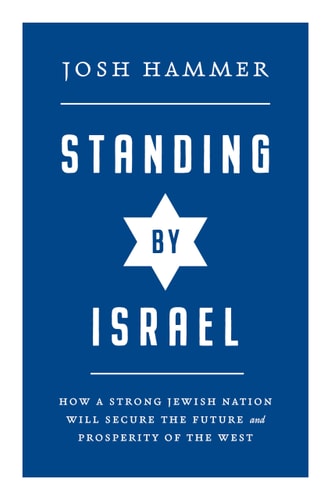
Israel and civilization: the fate of the Jewish nation and the destiny of the West

Hammer, Josh
"In Israel and Civilization, acclaimed journalist, legal expert, and pundit Josh Hammer makes a righteous case that the key to the prosperity of the West is the flourishing of the Jewish people and the Jewish State of Israel. Hammer's uplifting offense is our best defense against the enemies of the Jewish people's right to self-determination in their ancestral homeland. And as Hammer makes clear, manifesting the promise of Israel requires action by the United States and its allies. There can be no overstating the impact of the trauma of October 7, 2023, on the Jewish people. Yet the anti-Israel reactions the world over have been equally devastating. Rallies of hundreds of thousands explicitly or implicitly promoting Hamas violence; demonstrations of Ivy League professors celebrating the pogrom as awesome and exhilarating; so-called human rights organizations that refuse to unequivocally condemn the use of rape as a weapon of war; and a hydra of multiculturalism, postmodern relativism, and tolerance--it all threatens the physical and metaphysical survival of the West and our essential Jewish heritage. Preserving the best of what's been thought and said throughout history and ensuring that there will be centuries more requires a West that is proud of its Jewish heritage. In other words, the continued existence of the Jewish people is inextricably tied to the endurance of Western civilization. Israel is the center of the battle, and Israel and Civilization explains why and how the Jewish state must win."--
Radius Book Group 2025-03-18 293 pages