
9 results for "Literature"

The trouble begins at 8: a life of Mark Twain in the wild, wild West

Fleischman, Sid
"Mark Twain was born fully grown, with a cheap cigar clamped between his teeth." So begins Sid Fleischman's ramble-scramble biography of the great American author and wit, who started life in a Missouri village as a barefoot boy named Samuel Clemens. Abandoning a career as a young steamboat pilot on the Mississippi River, Sam took a bumpy stagecoach to the Far West. In the gold and silver fields, he expected to get rich quick. Instead, he got poor fast, digging in the wrong places. His stint as a sagebrush newspaperman led to a duel with pistols. Had he not survived, the world would never have heard of Tom Sawyer or Huckleberry Finn—or red-headed Mark Twain. Samuel Clemens adopted his pen name in a hotel room in San Francisco and promptly made a jumping frog (and himself) famous. His celebrated novels followed at a leisurely pace; his quips at jet speed. "Don't let schooling interfere with your education," he wrote. Here, in high style, is the story of a wisecracking adventurer who came of age in the untamed West; an ink-stained rebel who surprised himself by becoming the most famous American of his time. Bountifully illustrated.
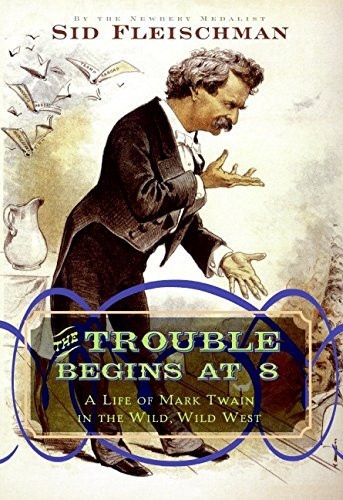
Greenwillow Books 2008 224 pages

San Francisco beat: talking with the poets

Meltzer, David
San Francisco Beat is an essential archive of the Beat Generation, a rich moment in a fortunate place. America-somnolent, conformist, and paranoid in the 1950s-was changed forever by a handful of people who refused an existence of drudgery and enterprise, opting instead for a life of personal, spiritual, and artistic adventure. In these intimate, free-wheeling conversations, a baker's dozen of the poets of San Francisco talk about the scene then and now, the traditions of poetry, and about anarchism, globalism, Zen, the Bomb, the Kabbalah, and the Internet. Thirty years ago, poet David Meltzer interviewed his poet friends for The San Francisco Poets. Now in San Francisco Beat he has combined these classic interviews with recent follow-up. San Francisco Beat features major new interviews with Philip Lamantia, Joanne Kyger, Gary Snyder, Jack Hirschman, Diane di Prima, Jack Micheline, Philip Whalen, and David Meltzer himself. David Meltzer is the author of many books of poetry, including Tens, The Name, Arrows: Selected Poetry 1957-1992, and No Eyes: Lester Young. He is the editor of Birth, The Secret Garden, Reading Jazz, and Writing Jazz, among other collections. His agit-smut fictions include The Agency Trilogy. Meltzer read poetry at the Jazz Cellar in the 1950s and in the 1960s fronted the band, Serpent Power. Meltzer teaches poetics at New College of California. Table of Contents/Interviewed Authors Preface Acknowledgments Diane di Prima (1999) William Everson (1971) Remembering Everson (1999) Lawrence Ferlinghetti I (1969) Lawrence Ferlinghetti II (1999) Jack Hirschman (1998) Joanne Kyger (1998) Philip Lamantia (1998) Michael McClure I (1971) Michael McClure II (1999) David Meltzer (1999) Jack Micheline (1994) Kenneth Rexroth (1971) Remembering Rexroth (1971) Gary Snyder (1999) Lew Welch (1971) Philip Whalen (1999) Bibliographies Preface Nothing is hidden; As of old All is clear as daylight -Anonymous haiku, 16th century San Francisco Beat: Talking with the Po
City Lights Books 2001-05 364 pages

Balzac's Paris: the city as human comedy

Hazan, Éric
"Eric Hazan follows in Balzac's footsteps, criss-crossing the city in the novelist's outsize boots, running between printers, publishers, coffee merchants, mistresses and friends, stopping for a moment, struck by a detail that would be fixed in Balzac's photographic memory. More than a tour of the city, this is an attempt to measure the soul of a city as recovered in its finest literature"--
Verso 2024-06-25 200 pages

A political education: coming of age in Paris and New York

Schiffrin, André
"Schiffrin evokes the bittersweet tang of emigre life in New York." --The New York Times Book Review Andre Schiffrin was born the son of one of France's most esteemed publishers, in a world peopled by some of the day's leading writers and intellectuals, such as Andre Gide, Jean-Paul Sartre, and Antoine de Saint-Exupery. But this world was torn apart when the Nazis marched into Paris on young Andre's fifth birthday. Beginning with the family's dramatic escape to Casablanca--thanks to the help of the legendary Varian Fry--and eventually New York, A Political Education recounts the surprising twists and turns of a life that saw Schiffrin become, himself, one of the world's most respected publishers. Emerging from the emigre community of wartime New York (a community that included his father's friends Hannah Arendt and Helen and Kurt Wolff), he would go on to develop an insatiable appetite for literature and politics: heading a national student group he renamed the Students for a Democratic Society--the SDS. leading student groups at European conferences, once, as an unwitting front man for the CIA. and eventually being appointed by Random House chief Bennett Cerf to head the very imprint cofounded by his father--Pantheon. There, he would discover and publish some of the world's leading writers, including Noam Chomsky, Michel Foucault, Art Spiegelman, Studs Terkel, and Marguerite Duras. But in a move that would make headlines, Schiffrin would ultimately rebel at corporate ownership and form his own publishing house--The New Press--where he would go on to set a new standard for independent publishing. A Political Education is a fascinating intellectual memoir that tells not only the story of a unique and important figure, but of the tumultuous political times that shaped him. From the Hardcover edition"--
Melville House 2014 281 pages

Yom Kippur a go-go

Roth, Matthue
Yom Kippur A Go-Go is a mind-blowing meeting of pop culture, Orthodox faith, and hipster poetics. Matthue Roth is an American original: an Orthodox Jew who cites Outkast and Michelle Tea among his influences, who won’t touch a light switch on Shabbos but mimics a screaming orgasm onstage while reading his paean to Orthodox girls. From the World Bank riots (what can you do when the revolution starts on Shabbos?) to Thursday night tranny basketball in San Francisco’s Dolores Park, Matthue takes readers on a journey among the queer and hip streets of urban America in his exuberant memoir, Yom Kippur a Go-Go. With humor and insight, Roth describes the tension between contemporary life and the demands of faith. He falls in love and in lust with a panoply of girls, both strictly kosher and determinedly secular, to the accompaniment of MP3 rabbinical lectures on modesty ("Boys are nothing but perverts and filthy animals!”).
Cleis Press 2005 268 pages

A literary guide to Washington, DC: walking in the footsteps of American writers from Francis Scott Key to Zora Neale Hurston

Roberts, Kim
The site of a thriving literary tradition, Washington, DC, has been the home to many of our nation's most acclaimed writers. From the city's founding to the beginnings of modernism, literary luminaries including Walt Whitman, Paul Laurence Dunbar, Alice Dunbar-Nelson, Henry Adams, Langston Hughes, and Zora Neale Hurston have lived and worked at their craft in our nation's capital. In A Literary Guide to Washington, DC, Kim Roberts offers a guide to the city's rich literary history. Part walking tour, part anthology, A Literary Guide to Washington, DC is organized into five sections, each corresponding to a particularly vibrant period in Washington's literary community. Starting with the city's earliest years, Roberts examines writers such as Hasty-Pudding poet Joel Barlow and "Star-Spangled Banner" lyricist Francis Scott Key before moving on to the Civil War and Reconstruction and touching on the lives of authors such as Charlotte Forten Grimké and James Weldon Johnson. She wraps up her tour with World War I and the Jazz Age, which brought to the city some writers at the forefront of modernism, including the first American to win the Nobel Prize for Literature, Sinclair Lewis. The book's stimulating tours cover downtown, the LeDroit Park and Shaw neighborhoods, Lafayette Square, and the historic U Street district, bringing the history of the city to life in surprising ways. Written for tourists, literary enthusiasts, amateur historians, and armchair travelers, A Literary Guide to Washington, DC offers a cultural tour of our nation's capital through a literary lens.
University of Virginia Press 2018 228 pages

James Joyce and Italo Svevo: the story of a friendship

Price, Stanley
James Joyce left Dublin in 1904, bound for Trieste and a job teaching English at the Berlitz School. He was to live there for the next eleven years. Italo Svevo, born and bred in Trieste, worked there for his family's marine paint company. He had also written two novels, published privately and unsuccessfully. In 1907, wanting to improve his English to do business with the British Admiralty, Svevo went to Berlitz, where Joyce became his teacher. Svevo was then 46 and Joyce 25. Despite their different backgrounds, Irish Catholic and Triestene Jewish, they had, intellectually, much in common. They admired each other's writing. Joyce improved Svevo's English. Svevo helped Joyce stay solvent, and also became the inspiration for Leopold Bloom. In Ulysses, the near father-son relationship between Stephen Dedalus and Bloom in Dublin was very close to that of Svevo and Joyce in Trieste. The two writers lived through the great political and cultural upheavals of the early twentieth century, and their story has a fascinating supporting cast - W.B. Yeats and G.B. Shaw, Proust and Hemingway, Freud and Jung, H.G. Wells and T.S. Eliot. Although often living in different cities - Zurich, Paris, London - their friendship survived. When Ulysses was finally published in Paris in 1922, its success enabled Joyce to help Svevo find a publisher for his great comic masterpiece The Confessions of Zeno. European literature owes a great deal to that meeting in Trieste.
Somerville Press 2016 276 pages

Pioneers in Palestine: stories of one of the first settlers in Petach Tikva

Trager, Hannah
Mrs Trager's book, while containing all these questions in embryonic shape, for the stimulation of the thinker, is yet written with a simplicity and charm that should make it a favourite reading-book: a genre of literature of which the Anglo-Jewish community possesses as yet only the Apples and honey of Mrs Redcliffe Salaman. Christians should be equally entranced by this picture of the latest development of the people whom they first met in the Bible. The present book needs to be supplemented by one giving a comprehensive survey of things as they are to-day in Palestine.
Routledge 2018 246 pages