

4 results for "Literature"

Jewish thought in dialogue: essays on thinkers, theologies, and moral theories
"The essays in this volume present interpretations of themes in major Jewish texts and thinkers, as well as treatments of significant issues in Jewish theology and ethics. It offers philosophical readings of biblical narratives, analyses of topics in the thought of Maimonides, Rabbi Abraham Isaac Kook and Rabbi Joseph B. Soloveitchik, and critical and constructive examinations of divine providence, religious anthropology, free will, 9/11, evil, Halakhah and morality, altruism, autonomy in Jewish medical ethics, and the epistemology of religious belief. The author frequently brings Jewish philosophy and law into dialogue with contemporary Anglo-American philosophy. The book serves scholars and students of Jewish philosophy and law, and is suitable for inclusion in syllabi of undergraduate and graduate courses''--Provided by the publisher.

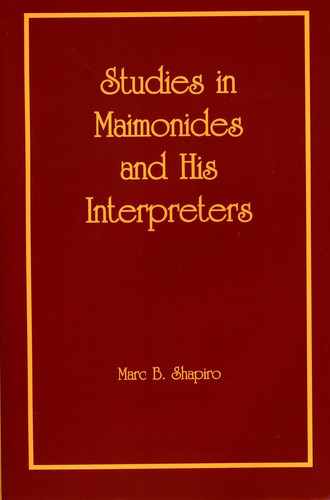
Studies in Maimonides and his interpreters
More than 800 years after his death, the figure of Moses Maimonides—rabbi, philosopher, doctor, and communal leader—continues to fascinate. Studies in Maimonides and His Interpreters unites the traditional rabbinic approach and the modern academic perspective to forge a new understanding of this iconic teacher. This groundbreaking work by Marc B. Shapiro, which includes an essay on Maimonides’ approach to superstition in rabbinic literature and features three previously unpublished letters by Rabbi Joseph Kafih, will be essential reading for scholars and students of Jewish studies.
Maimonides' confrontation with mysticism
Maimonides' vision of Judaism was deeply elitist, but at the same time profoundly universalistic. He was highly critical of the regnant Jewish culture of his day, which he perceived as so heavily influenced by ancient Jewish mysticism as to be debased. While focusing on that critique, Kellner skilfully and accessibly demonstrates how Maimonides used philosophy in order to purify a corrupted and paganized religion and to present distinctions fundamental to Judaism as institutional, sociological, and historical, rather than ontological. In Maimonides' hands, metaphysical distinctions are translated into moral challenges.
