13 results for "Love"

Renia's diary

Spiegel, Renia
"The long-hidden diary of a young Polish woman's last days during the Holocaust, translated for the first time into English, with a foreword from American Holocaust historian Deborah Lipstadt. Renia Spiegel was a young girl from an upper-middle class Jewish family living on an estate in Stawki, Poland, near what was at that time the border with Romania. In the summer of 1939, Renia and her sister Elizabeth (née Ariana) were visiting their grandparents in Przemysl, right before the Germans invaded Poland. Like Anne Frank, Renia recorded her days in her beloved diary. She also filled it with beautiful original poetry. Her diary records how she grew up, fell in love, and was rounded up by the invading Nazis and forced to move to the ghetto in Przemsyl with all the other Jews. By luck, Renia's boyfriend Zygmund was able to find a tenement for Renia to hide in with his parents and took her out of the ghetto. This is all described in the Diary, as well as the tragedies that befell her family and her ultimate fate in 1942, as written in by Zygmund on the Diary's final page. Renia's Diary is a significant historical and psychological document. The raw, yet beautiful account depicts Renia's angst over the horrors going on around her. It has been translated from the original Polish, with notes included by her surviving sister, Elizabeth Bellak"--
St. Martin's Press 2019-09-24 320 pages

The diary of Mary Berg: growing up in the Warsaw ghetto

Berg, Mary
• Inspiring and fascinating tale of the strength of human spirit during one of humanity’s darkest hours; • Reminiscent of both The Diary of Anne Frank, A Woman in Berlin and Suite Francaise; • Beautifully packaged in an attractive hardback, gift format for the Christmas market and containing original photographs and maps; • A unique insight from one of the few survivors of the Warsaw Ghetto, offering the only contemporary eye-witness account. After 60 years of silence, The Diary of Mary Berg is poised at last to gain the appreciation and widespread attention that it so richly deserves, and is certain to take it’s place alongside The Diary of Anne Frank as one of the most significant memoirs of the twentieth century. From love to tragedy, seamlessly combining the everyday concerns of a growing teenager with a unique commentary on life in one of the darkest contexts of history. This is a work remarkable for its authenticity, detail, and poignancy. But it is not only as a factual report on the life and death of a people that The Diary of Mary Berg ranks with the most noteworthy documents of the Second World War. This is the personal story of a life-loving girl’s encounter with unparalleled human suffering, a uniquely illuminating insight into one of the darkest chapters of history. Mary Berg was imprisoned in the ghetto from 1940 to 1943. Unlike so many others, she survived the war, rescued in a prisoner-of-war exchange due to her mother’s dual Polish-American nationality. Her diary was published in 1945 when she was still only 19, in an attempt to alert the world to the Nazi atrocities in Poland, when it was described as "one of the most heartbreaking documents yet to come out of the war" by the /New Yorker/. After the war, Berg remained in America in quiet anonimity.
Oneworld 2007-04-15 284 pages

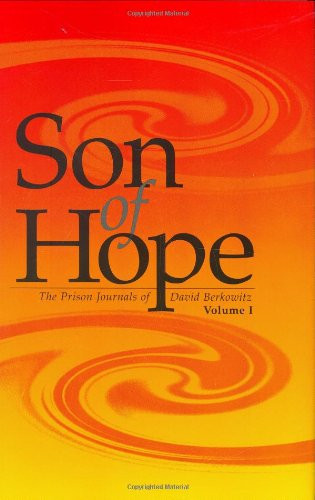
Son of hope: the prison journals of David Berkowitz

Berkowitz, David Richard
From late 1975 through 1977, over a 13-month period, David Berkowitz went on a killing spree in the New York metropolitan area--a spree that left six people dead and seven wounded. When Berkowitz--dubbed the Son of Sam--was finally captured, he confessed to his crimes and in 1978 was sentenced to 365 consecutive years in prison. Ten years into David's prison sentence a fellow inmate began to share with him Christ's love, hope and forgiveness. Eventually, David Berkowitz accepted Jesus Christ's as his Lord and Savior and has been walking as a Christian for more than 18 years. David's prison journals offer irrefutable evidence that God has indeed done a marvelous and miraculous work on this man's life. Several Christian organizations now refer to David's testimony as an example of the life-transforming power of the Gospel.
Morning Star Communications 2006 338 pages

Ruth Maier's diary: a young girl's life under Nazism

Maier, Ruth
Ruth Maier was born into a middle-class Jewish family in interwar Vienna. Following the Anschluss of Austria in March 1938, the world of the substantial Viennese Jewish community crumbled. In early 1939, her sister having left for England, Ruth emigrated to Norway and lived with a family in Lillestrom, about thirty miles from Oslo. Although she loved many things about her new country and its people, Ruth's relationship with her hosts soon turned stale, then sour. Ruth became increasingly isolated in Norway until she met a soul mate, Gunvor Hofmo, who was to become a celebrated poet. Norway itself became a Nazi conquest in April 1940, and Ruth's attempts to join the rest of her family - now in Britain - became ever more urgent. She never left Norway, and in November 1942 she was deported to Auschwitz where she was exterminated on arrival. She had just turned twenty-two. Ruth Maier kept a diary from 1934 until just before she was murdered. Despite being only in her teens she shows a sophisticated understanding of the political forces shaping central Europe as well as extraordinary prescience. The book is much more than just historical documentation, however. In a lucid yet highly lyrical style, with an incisive talent for narrative and a sharp wit, Ruth explores universal themes of isolation, identity, friendship, love, sexuality, desire, morality, justice and sacrifice. Most of all, however, she seeks what it means to be a human being. Published only recently for the first time in Norway, Ruth Maier's Diary is one of the most moving testimonies to emerge from this dark period of European history
Harvill Secker 2009 413 pages

As consciousness is harnessed to flesh: diaries 1964-1980

Sontag, Susan
As Consciousness is Harnessed to Flesh reveals the inner life of Susan Sontag.Providing a unique insight into the mind of one of the leading intellectuals of the modern age, Susan Sontag's As Conscious is Harnessed to Flesh chronicles the cultural, moral, and political journeys of this renowned critic and artist at the height of her powers.As Consciousness Is Harnessed to Flesh follows Sontag through the turbulent years of the late 1960s - from her trip to Hanoi at the peak of the Vietnam War to her time making films in Sweden - up to 1980, just before the beginning of the Reagan era. This is an invaluable record of the inner workings of one of the most inquisitive and analytical thinkers of the twentieth century at the height of her power. It is also a remarkable document of on individual's political and moral awakening.'More true to life, both intellectual and emotional, than the most artful novel or careful biography' Sunday Telegraph'Gold dust' Sunday Times'A powerful self-portrait emerges. In its fragmentation . . . and passion, its combination of the erudite and the everyday, it is more true to life, both intellectual and emotional, than the most artful novel or careful biography. It may well be that Sontag's diaries will come to be seen as just as brilliant and important as anything she wrote' Sunday Telegraph'Mesmerising, fascinating' Guardian'Express the fullness and diversity of her intellectual curiosity. Revelatory in the most profound sense: they are existential fragments, self-selected thoughts, emotions, reactions . . . arising in one of the most remarkable minds of the twentieth century' The TimesOne of America's best-known and most admired writers, Susan Sontag was also a leading commentator on contemporary culture until her death in December 2004. Her books include four novels and numerous works of non-fiction, among them Regarding the Pain of Others, On Photography, Illness as Metaphor, At the Same Time, Against Interpretation and Other Essays and Reborn: Early Diaries 1947-1963, all of which are published by Penguin. A further eight books, including the collections of essays Under the Sign of Saturn and Where the Stress Falls, and the novels The Volcano Lover and The Benefactor, are available from Penguin Modern Classics.
Hamish Hamilton 2012 523 pages

Dirty blonde: the diaries of Courtney Love

Love, Courtney
A multi-textual memoir chronicling the life of one of our most potent pop iconsGroundbreaking rock musician. Award-winning actress. Perceptive songwriter and author. Mother. Wife of a rock god. Fashionista and trendsetter. Provocateur. In each and every one of these roles Courtney Love has demonstrated a wholehearted commitment to her art, and an intense drive and a lust for life that have made her a star and a celebrity icon—but have also led her into some unwise, uncharted, and even dangerous territory. Simultaneously candid and enigmatic, Love has a mordant wit and vivid intelligence matched in intensity only by the extraordinary life she has led, from a bleak early childhood through great fame and terrible heartbreak to the present day. By turns exhilarating and unsettling, this is a story told for the first time in Dirty Blonde . Composed of an astonishing and eclectic collection of deeply personal artifacts including personal letters, childhood records, poetry, diary entries, song lyrics, fanzines, show flyers, other original writings, and never-before-seen photographs, Dirty Blonde leads us through the unimaginable highs and the despairing lows of one of the most compelling and creative figures in the world of popular culture. Through these diaries we see Love’s accomplishments, her mistakes, her history, and her bright future in a whole new light. From her upbringing in Oregon through her years living in Japan, New Zealand, and London, from her career highs with Hole and as a Hollywood leading lady to her personal heartbreak and struggle, Dirty Blonde is Love laid bare—a wholly fascinating portrait of a fierce and insightful woman with an unblinking worldview and a determination to express herself no matter the cost.
Faber and Faber 2006-10-31 292 pages

Marguerite Wildenhain: a diary to Franz

Wildenhain, Marguerite
This is a new, revealing book about the psychological life of a well-known French-born American potter named Marguerite Wildenhain, who was one of the first students at the Weimar Bauhaus. One of the major reasons for the book's significance is that virtually everything in it has not been previously published. As the Nazis came to power, Wildenhain (a French citizen, of Jewish ancestry) was forced to move from Germany to Holland and then, in 1940, to the U.S., but her husband (a German citizen) was denied a visa. As a result, the Wildenhains were physically separated for seven years, and, during the first months of that period, had no contact of any kind. So Marguerite did not know her husband's whereabouts, nor even if he had survived (as it turned out, he had been forced to join the German Army). During part of that time (especially as she traveled slowly across the U.S., en route to California), she made drawings and letter-like entries to Franz in a diary of sorts. This book is the first publication of those pages, with her text translated into English. Throughout, her words are supplemented by wonderfully rich illustrations (vintage drawings and photographs, examples of her pottery, specimens from their rock collection, and a suite of commemorative woodblock prints by Luther's David Kamm). A conspicuous highlight is a stunning sepia photograph of a beautiful and exquisitely dressed Marguerite in 1929. The richness of her diary is largely because of her candor in describing what and who she meets. Artists, designers, art historians, women's studies scholars, and historians in general will find this book of value. In addition, any readers who have been in love, or married to someone from whom they've become separated, for whatever reason, should find themselves drawn into the painful details of the text.
South Bear Press 2004 140 pages

Beyond psychology: letters and journals, 1934-1939

Reich, Wilhelm
"In August 1934, without warning or explanation, Wilhelm Reich was expelled from the International Psychoanalytic Association. Political expediency and the organization's growing adherence to Freud's death instinct theory had prevailed over Reich's scientific efforts to understand the functioning of what Freud had termed "libido."" "The provocative originality of Reich's work in the years to follow would inevitably distance him from Freudian psychology. But the result was an extraordinary widening of his scientific interests, scrupulously documented in these journals and letters. They record his pioneering laboratory experiments to verify the reality of the pleasure function and his discovery of an unknown energy that exists in all living matter. They record, too, the anguish of a man unafraid to speak his truth in the face of attack and defamation, even though it cost him his profession, his homeland and his adopted country, his wife, his two children, and his lover." "In her introduction to the volume, Mary Boyd Higgins of the Wilhelm Reich Infant Trust considers key events and themes of Reich's life and work during the years leading up to 1934."--BOOK JACKET.Title Summary field provided by Blackwell North America, Inc. All Rights Reserved
Farrar Straus Giroux 1994 256 pages

Strong on music: the New York music scene in the days of George Templeton Strong

Lawrence, Vera Brodsky
In Strong on Music Vera Brodsky Lawrence uses the diaries of lawyer and music lover George Templeton Strong as a jumping-off point from which to explore every aspect of New York City's musical life in the mid-nineteenth century. This third and final volume ranges across opera, orchestral and chamber music, blackface minstrels, military bands, church choirs, and even concert saloons. Among the many striking scenes vividly portrayed in Repercussions are the rapturous reception of Verdi's Ballo in maschera in 1861; the impact of the Civil War on New York's music scene, from theaters closing as their musicians enlisted to the performance of "The Star-Spangled Banner" at every possible occasion; and open-air concerts in the developing Central Park. Throughout, Lawrence mines a treasure trove of primary source materials including daily newspapers, memoirs, city directories, and architectural drawings. Indispensable for scholars, Repercussions will also fascinate music fans with its witty writing and detailed descriptions of the cultural life of America's first metropolis. Formerly a concert pianist, Vera Brodsky Lawrence spent the last third of her life as a historian of American music (she died in 1996). She was editor of The Piano Works of Louis Moreau Gottschalk and The Complete Works of Scott Joplin . On Volume 1: "A marvelous book. There is nothing like it in the literature of American music."—Harold C. Schonberg, New York Times Book Review On Volume 2: "A monumental achievement."—Victor Fell Yellin, Opera Quarterly
University of Chicago Press 1995 630 pages

The Weimar triangle

Koch, Eric
This new novel extends Koch's achievements in his previous novels and takes the reader to Koch's native Germany. Set in Weimar and Frankfurt in Germany, in the pivotal years 1927 and 1928, the novel is triggered the International Music Exhibition of 1927 "The Summer of Music. The reader is introduced to three main characters: Hanni Geisel, an amateur musician and hostess of star-studded Saturday 'dejeuners'; her lover Erwin Herzberg, the editor of the culture sections of the Frankfurter Zeitung; and Hanni's husband, Dr. Hermann Geisel, a successful lawyer and art collector. They constitute the Weimar triangle of the title. Koch again uses a multi-format narrative technique so highly praised in the German reviews of Recollections, including stories, excerpts from imagined memoirs, invented diaries, letters and even a synopsis of a never-produced operetta about the failed Hitler putsch of 1923, Putsching with Putzi.
Mosaic Press 2010 198 pages

Charles Brasch: journals, 1958-1973

Brasch, Charles
"This third and final volume of Charles Brasch's compelling private journals covers the years from when he was 48 to his death at 64. By the 1960s, Brasch, though very private by temperament, was a reluctant public figure, especially as editor of Landfall - indisputably New Zealand's leading cultural quarterly (he eventually quit as editor after 20 years). He was also becoming a highly regarded poet, who eventually had six books (one posthumous) to his name. Behind the scenes Brasch was increasingly important as an art collector and as patron and benefactor; the Burns, Hodgkins and Mozart Fellowships - for writers, artists and composers respectively - which he helped anonymously to found and fund, all began in this period. Among his friends Brasch counted most of the country's leading artists, writers and intellectuals including Sargeson, McCahon, McCormick, Stead, the Pauls, the Woollastons, the Baxters, Lilburn, Beaglehole, Angus, Oliver, Bensemann, Lusk, Frame and Dallas. These near contemporaries were joined by the talented young, many met as contributors to Landfall - including Gee, Cross, Shadbolt, Duggan, O'Sullivan, Hotere, Tuwhare, Caselberg, Middleton and Manhire. Brasch's lively and sometimes acerbic accounts of such people are a fascinating aspect of his journals. Behind the esteemed poet, editor and public intellectual, however, was a sensitive and often angst-ridden man, who confided to his journals (and poems) the emotional roller- coaster of his private life, especially his endlessly frustrated search for love. Presented here are deep attachments to both men and women, including Andrew Packard (a visiting English zoologist) and Margaret Scott, widow of Harry Scott with whom Brasch had also been in love. Late in life his strong involvement with an elderly Jewish emigree, Moli Zimmerman, adds another surprising layer to the complex and lovable man his journals reveal. Brasch's journals will change forever the perception and understanding of an outstanding New Zealander and of the era to which he contributed so much."--Provided by publisher.
Otago University Press 2018 687 pages

Charles Brasch: journals, 1945-1957

Brasch, Charles
"This second of three volumes of Charles Brasch's journals covers 1945 to 1957, beginning with his return to New Zealand after World War II to establish a literary quarterly. The journals cover the discussions that preceded Landfall and the first decade of his distinguished editorship, a role that brought Brasch into contact with New Zealand's leading artists and intelligentsia. His frank and often detailed descriptions of these people - including Frank Sargeson, A.R.D. Fairburn, Keith Sinclair, Eric McCormick, James Bertram, John Beaglehole, Fred and Evelyn Page, Alistair Campbell, Toss and Edith Woollaston, Denis Glover, Allen Curnow, Leo Bensemann, Ngaio Marsh, Colin McCahon, James K. Baxter, Janet Frame, Ruth Dallas and many others - are among the highlights of the book. Unmarried and longing for intimacy, Brasch also writes with great candour about his relationships with Rose Archdall, Rodney Kennedy and Harry Scott, revealing a side of himself that has not been known about before. Central to Brasch's life was the vocation of poetry. He writes revealingly about his own work, and also about his love of nature and the outdoors. The book ends with his visit to Europe in 1957, which confirmed his sense that New Zealand had become for him 'a centre & a world'" -- Back cover.
Otago 2017 686 pages