61 results for "Management"

How Google works

Schmidt, Eric,Rosenberg, Jonathan
Both Eric Schmidt and Jonathan Rosenberg came to Google as seasoned Silicon Valley business executives, but over the course of a decade they came to see the wisdom in Coach John Wooden's observation that 'it's what you learn after you know it all that counts'. As they helped grow Google from a young start-up to a global icon, they relearned everything they knew about management. How Google Works is the sum of those experiences distilled into a fun, easy-to-read primer on corporate culture, strategy, talent, decision-making, communication, innovation, and dealing with disruption. The authors explain how the confluence of three seismic changes - the internet, mobile, and cloud computing - has shifted the balance of power from companies to consumers. The companies that will thrive in this ever-changing landscape will be the ones that create superior products and attract a new breed of multifaceted employees whom the authors dub 'smart creatives'. The management maxims ('Consensus requires dissension', 'Exile knaves but fight for divas', 'Think 10X, not 10%') are illustrated with previously unreported anecdotes from Google's corporate history. 'Back in 2010, Eric and I created an internal class for Google managers,' says Rosenberg. 'The class slides all read 'Google confidential' until an employee suggested we uphold the spirit of openness and share them with the world. This book codifies the recipe for our secret sauce: how Google innovates and how it empowers employees to succeed.'
John Murray 2014-09-25 286 pages

The ride of a lifetime: lessons learned from 15 years as CEO of the Walt Disney Company

Iger, Robert
Robert Iger became CEO of The Walt Disney Company in 2005, during a difficult time. Competition was more intense than ever and technology was changing faster than at any time in the company's history. His vision came down to three clear ideas: Recommit to the concept that quality matters, embrace technology instead of fighting it, and think bigger -- think global -- and turn Disney into a stronger brand in international markets. Twelve years later, Disney is the largest, most respected media company in the world, counting Pixar, Marvel, Lucasfilm, and 21st Century Fox among its properties. Its value is nearly five times what it was when Iger took over. Now Iger shares the lessons he's learned while running Disney and leading its 200,000 employees, and he explores the principles that are necessary for true leadership.
Random House, an imprint and division of Penguin Random House LLC 2019-09-23 246 pages

Voices of Freedom: A Documentary History (Volume 1)

Eric Foner,Kathleen DuVal,Lisa McGirr
Voices of Freedom is the only reader with a thematic focus on American freedom. The organization of this popular, compact, and accessible primary source collection mirrors the best-selling Give Me Liberty! survey texts. The Eighth Edition features NEW selections that highlight women's voices throughout American history with a wide variety of perspectives. Much more affordable than other readers of its kind, Voices of Freedom is an exceptional value in print and ebook formats. Now, it is easier than ever to use alongside the main textbook right in your learning management system with a NEW Give Me Liberty! PLUS bundle purchase option. Highlights of this edition's new content: 21 new primary source selections with a focus on women's history. NEW Give Me Liberty! PLUS, an LMS-friendly courseware bundle that makes it easier than ever to assign the Voices of Freedom companion reader with Give Me Liberty!
W. W. Norton & Company 2025-12-15 384 pages

Franklin D. Roosevelt A Political Life

Robert Dallek
Named a Best Book of the Year by The Washington Post and NPR “We come to see in FDR the magisterial, central figure in the greatest and richest political tapestry of our nation’s entire history” —Nigel Hamilton, Boston Globe “Meticulously researched and authoritative” —Douglas Brinkley, The Washington Post “A workmanlike addition to the literature on Roosevelt.” —David Nasaw, The New York Times “Dallek offers an FDR relevant to our sharply divided nation” —Michael Kazin “Will rank among the standard biographies of its subject” — Publishers Weekly A one-volume biography of Roosevelt by the #1 New York Times bestselling biographer of JFK, focusing on his career as an incomparable politician, uniter, and deal maker In an era of such great national divisiveness, there could be no more timely biography of one of our greatest presidents than one that focuses on his unparalleled political ability as a uniter and consensus maker. Robert Dallek’s Franklin D. Roosevelt: A Political Life takes a fresh look at the many compelling questions that have attracted all his biographers: how did a man who came from so privileged a background become the greatest presidential champion of the country’s needy? How did someone who never won recognition for his intellect foster revolutionary changes in the country’s economic and social institutions? How did Roosevelt work such a profound change in the country’s foreign relations? For FDR, politics was a far more interesting and fulfilling pursuit than the management of family fortunes or the indulgence of personal pleasure, and by the time he became president, he had commanded the love and affection of millions of people. While all Roosevelt’s biographers agree that the onset of polio at the age of thirty-nine endowed him with a much greater sense of humanity, Dallek sees the affliction as an insufficient explanation for his transformation into a masterful politician who would win an unprecedented four presidential terms, initiate landmark reforms that changed the American industrial system, and transform an isolationist country into an international superpower. Dallek attributes FDR’s success to two remarkable political insights. First, unlike any other president, he understood that effectiveness in the American political system depended on building a national consensus and commanding stable long-term popular support. Second, he made the presidency the central, most influential institution in modern America’s political system. In addressing the country’s international and domestic problems, Roosevelt recognized the vital importance of remaining closely attentive to the full range of public sentiment around policy-making decisions—perhaps FDR’s most enduring lesson in effective leadership.
Penguin 2018-11-06 720 pages

Get what's yours: the secrets to maxing out your social security

Kotlikoff, Laurence J.
"Learn the secrets to maximizing your Social Security benefits and earn up to thousands of dollars more each year with expert advice that you can't get anywhere else. Want to know how to navigate the forbidding maze of Social Security and emerge with the highest possible benefits? You could try reading all 2,728 rules of the Social Security system (and the thousands of explanations of these rules), but Kotlikoff, Moeller, and Solman explain Social Security benefits in an easy to understand and user-friendly style. What you don't know can seriously hurt you: wrong decisions about which Social Security benefits to apply for cost some individual retirees tens of thousands of dollars in lost income every year. How many retirees or those nearing retirement know about such Social Security options as file and suspend (apply for benefits and then don't take them)? Or start stop start (start benefits, stop them, then re-start them)? Or--just as important--when and how to use these techniques? Get What's Yours covers the most frequent benefit scenarios faced by married retired couples, by divorced retirees, by widows and widowers, among others. It explains what to do if you're a retired parent of dependent children, disabled, or an eligible beneficiary who continues to work, and how to plan wisely before retirement. It addresses the tax consequences of your choices, as well as the financial implications for other investments. Many personal finance books briefly address Social Security, but none offers the thorough, authoritative, yet conversational analysis found here. You've paid all your working life for these benefits. Now, get what's yours"--
Simon & Schuster 2015-02-17 324 pages

Overhaul: an insider's account of the Obama administration's emergency rescue of the auto industry

Rattner, Steven
The first real look inside Team Obama—due just before the 2010 elections—mixes political warfare and big business shakeups in equal proportions, and comes from a uniquely informed source. Steve Rattner is not just the man brought in by the president to save the auto industry, he is a former New York Times financial reporter who also earned a place among the top tier of Wall Street’s most informed investment bankers and corporate experts. Now, from his vantage point at the helm of the historic auto-industry intervention, Rattner crafts a tightly plotted narrative of political brinkmanship, corporate mismanagement, and personalities under pressure in a high-stakes clash between Washington and Detroit. He also explains the tough choices he and his team made, working against a ticking clock and facing vocal opposition from free market champions, to keep Chrysler and General Motors in operation. As the economy faced free fall, Obama, Treasury Secretary Tim Geithner, and economic advisor Larry Summers—all revealingly described—faced the possibility of more than a million lost jobs and the astonishing wreckage of GM (a nightmare of huge proportions, caused by terrible management) and Chrysler (a company so close to death it was nearly sacrificed). Rattner’s book—which will take the story up to the fall of 2010—is a gripping account of one of the severest crises of President Obama’s first year in office, with lessons relevant for all managers and executives.
Houghton Mifflin Harcourt 2010 336 pages

Globalization and its discontents

Stiglitz, Joseph E.
Our world is changing. Globalisation is not working. It is hurting those it was meant to help. And now, the tide is turning . . .Explosive and shocking, Globalization and Its Discontents is the bestselling expose of the all-powerful organisations that control our lives - from the man who has seen them at work first hand. As chief economist at the World Bank, Nobel Prize-winner Joseph Stiglitz had a unique insider's view into the management of globalisation. Now he speaks out against it- how the IMF and WTO preach fair trade yet impose crippling economic policies on developing nations; how free market 'shock therapy' made millions in East Asia and Russia worse off than they were before; and how the West has driven the global agenda to further its own financial interests. Globalisation can still be a force for good, Stiglitz argues. But the balance of power has to change. Here he offers real, tough solutions for the future.
Penguin 2002 288 pages

Managing the non-profit organization

Drucker, Peter F.
A Drucker management classic, first published in 1990, which breaks down any narrow definition of management and is aimed specifically at decision-makers and managers working in non-profit making and charitable organizations to help them apply the principles of good management to their sector. Drawing from the American experience, Drucker poignantly illustrates his discussion of management by quoting his in-depth interviews with top executives from non-profit making organizations. The issues of mission, performance, people and relationships, leadership and developing managers are eloquently discussed and Drucker provides Action Implications throughout the book which are of practical importance to the reader.
Routledge 2016-02-04 178 pages

The McDonaldization of society

Ritzer, George
One of the most popular Sociology books of all time has been thoroughly updated to examine how McDonaldization has roared into the 21st century. The McDonaldization of Society, Revised New Century Edition discusses how McDonaldization and the broader process of globalization (in a new Chapter 8), are spreading more widely and more deeply into various social institutions such as education, medicine, the criminal justice system, and more. This Revised New Century Edition provides many new, relevant examples from recent events and contemporary popular culture, including the ever-increasing global proliferation of McDonald′s and other fast food franchises, shopping malls, and similar commercial entities. Their impact is examined in the post-September 11, 2001 era.
Pine Forge Press 2004-01-21 309 pages

Taxes and business strategy

Scholes, Myron S.
For MBA students and graduates embarking on careers in investment banking, corporate finance, strategy consulting, money management, or venture capital Through integration with traditional MBA topics, Taxes and Business Strategy, Fifth Edition provides a framework for understanding how taxes affect decision-making, asset prices, equilibrium returns, and the financial and operational structure of firms. Teaching and Learning Experience This program presents a better teaching and learning experience-for you : Use a text from an active author team: All 5 authors actively teach the tax and business strategy course and provide you with relevant examples from both classroom and real-world consulting experience. Learn the practical uses for business strategy: Learn important concepts that can be applied to your life. Reinforce learning by using in-depth analysis: Analysis and explanatory material help you understand, think about, and retain information.
Prentice Hall 2014 510 pages

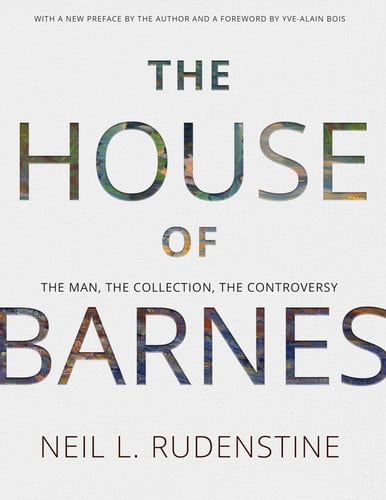
The house of Barnes: the man, the collection, the controversy

Rudenstine, Neil L.
"The House of Barnes: The Man, The Collection, The Controversy is a beautifully written study of the extraordinary art collector and volatile personality Albert C. Barnes. The book places him in the context of his own era, shedding new light on the ideas and movements (about art collecting, education, and aesthetics) that shaped so much of his thinking"--
The American Philosophical Society 2024 229 pages

Information doesn't want to be free: laws for the Internet age

Doctorow, Cory
Information Doesn't Want to Be Free takes on the state of copyright and creative success in the digital age. Can small artists still thrive in the Internet era? Can giant record labels avoid alienating their audiences? This is a book about the pitfalls and the opportunities that creative industries (and individuals) are confronting today -- about how the old models have failed or found new footing, and about what might soon replace them. Information Doesn't Want to Be Free offers a guide to the ways creativity and the Internet interact today, and to what might be coming next.
McSweeney's 2014 162 pages

Disproven: my unbiased search for voter fraud for the Trump campaign, the data that shows why he lost, and how we can improve our elections

Block, Ken (Expert in voter data)
"If you value the integrity of our elections-or want a behind-the-scenes look at an attempt at overturning one--Disproven by Ken Block takes you out of the voting booth and into the chaos that was the attempt to challenge the results of the 2020 U.S. presidential election. In November 2020, data specialist Ken Block received a phone call from the Trump Campaign. They wanted to hire him to find evidence of election fraud. What followed were late night and early morning requests to assess fraud claims at a blistering pace and ultimately find definitive evidence about the role voter fraud played in the outcome of the 2020 presidential election. Multiple subpoenas later, Block reveals the truth about being one of the few professionals hired to prove the Trump Campaign's allegation that voter fraud cost Donald Trump the 2020 presidential election. He explains what the voter data tells us and exposes the sobering truth that our federal elections are operating on hundreds, if not thousands, of disparate voting systems prone to error--a threat to national election integrity. Disproven is an insider's look at the results of an inflammatory claim, a flawed system, and the changes drastically needed before the results of another election are threatened or contested"--
Forefront Books 2024-03-12 313 pages

Three Days at Camp David How a Secret Meeting in 1971 Transformed the Global Economy

Jeffrey E. Garten
The former dean of the Yale School of Management and Undersecretary of Commerce in the Clinton administration chronicles the 1971 August meeting at Camp David, where President Nixon unilaterally ended the last vestiges of the gold standard--breaking the link between gold and the dollar--transforming the entire global monetary system. Over the course of three days--from August 13 to 15, 1971--at a secret meeting at Camp David, President Richard Nixon and his brain trust changed the course of history. Before that weekend, all national currencies were valued to the U.S. dollar, which was convertible to gold at a fixed rate. That system, established by the Bretton Woods Agreement at the end of World War II, was the foundation of the international monetary system that helped fuel the greatest expansion of middle-class prosperity the world has ever seen. In making his decision, Nixon shocked world leaders, bankers, investors, traders and everyone involved in global finance. Jeffrey E. Garten argues that many of the roots of America's dramatic retrenchment in world affairs began with that momentous event that was an admission that America could no longer afford to uphold the global monetary system. It opened the way for massive market instability and speculation that has plagued the world economy ever since, but at the same time it made possible the gigantic expansion of trade and investment across borders which created our modern era of once unimaginable progress. Based on extensive historical research and interviews with several participants at Camp David, and informed by Garten's own insights from positions in four presidential administrations and on Wall Street, Three Days at Camp David chronicles this critical turning point, analyzes its impact on the American economy and world markets, and explores its ramifications now and for the future.
Harper 2022 464 pages

Good for the money: my fight to pay back America

Benmosche, Bob
"In 2009, at the peak of the financial crisis, AIG - the American insurance behemoth - was sinking fast. It was the peg upon which the nation hung its ire and resentment during the financial crisis: the pinnacle of Wall Street arrogance and greed. When Bob Benmosche climbed aboard as CEO, it was widely assumed that he would go down with his ship. In mere months, he turned things around, pulling AIG from the brink of financial collapse and restoring its profitability. Before three years were up, AIG had fully repaid its staggering debt to the U.S. government - with interest.Good for the Money is an unyielding leader's memoir of a career spent fixing companies through thoughtful, unconventional strategy. With his brash, no-holds-barred approach to the job, Benmosche restored AIG's employee morale and good name. His is a story of perseverance, told with refreshing irreverence in unpretentious terms.Called "an American hero" by Andrew Ross Sorkin, author of Too Big to Fail, Benmosche was a self-made man who never forgot what life is like for the nation's 99-percent; again and again, he pushed back against obstinate colleagues to salvage American jobs and industry. Good for the Money affords you a front-row seat for Benmosche's heated battles with major players from Geithner to Obama to Cuomo, and offers incomparable lessons in leadership from the legendary CEO who changed the way Wall Street does business"--
St. Martin's Press 2016-04-12 271 pages

Occupy

Chomsky, Noam
PRAISE FOR NOAM CHOMSKY'S OCCUPY AND ZUCCOTTI PARK PRESS: "Having spent so much time thinking about and engaging with social movements, Chomsky is both optimistic about the energy of Occupy and realistic about the challenges it faces. He appreciates the "just do it" ethos and embraces its radical approach to participatory democracy...What makes Chomsky's perspective so interesting, aside from the wealth of his political experience, is the range of his interests. He draws from examples around the world to demonstrate his points. ...It's a big agenda that Occupy has identified, nothing less than a complete renewal of U.S. society and the U.S. role in the world. Chomsky sees not only the radical agenda but also the radical practice of the Occupiers. "Part of what functioning, free communities like the Occupy communities can be working for and spreading to others is just a different way of living, which is not based on maximizing consumer goods, but on maximizing values that are important for life," he concludes in this valuable set of remarks and interviews." --John Feffer, Foreign Policy in Focus, Pick Review "For decades, Chomsky has been marginalized for his insightful, levelheaded, and accurate observations about how our society functions. In Occupy , Chomsky... sets the record straight. And he's got an answer for everything. "It's necessary," Chomsky warns, "to get out into the country and get people to understand what this is about, and what they can do about it, and what the consequences are of not doing anything about it." Occupy begins with a powerful editor's note from Greg Ruggiero, who comments on 'the heartlessness and inhumanity of the system, ' where 'people's stolen homes are sold off to the highest bidder.' And if it isn't obvious to those who are still asking what the demands of Occupy Wall Street are, Ruggiero puts it plainly: 'Occupy embodies a vision of democracy that is fundamentally antagonistic to the management of society as a corporate-controlled space that funds a political system to serve the wealthy, ignore the poor.' One can only cringe at the thought of what will happen if we continue to ignore the wisdom of Noam Chomsky. He gives a clue in Occupy ...." --The Coffin Factory, The Magazine for People who Love Books Occupy is another vital contribution from Chomsky to the literature of defiance and protest, and a red-hot rallying call to forge a better, more egalitarian future. --Alternet Chomsky advocates intelligent activism by those who see the divorce between public policy and public opinion. He is both optimistic and realistic towards this "first major public response to 30 years of class war." --IRISH TIMES, PICK REVIEW " Occupy , is at once a vivid portrait of the now-global movement and a practical guide to intelligent activism, infused with Chomsky's signature meditations on everything from how the wealthiest 1% came to steer society to what a healthy democracy would look like to how we can separate money from politics. Alongside Chomsky's words are some of the most moving and provocative photographs from the Occupy movement. ... [One of] 10 essential books on protest." --Maria Popova, Brain Pickings In Occupy , Chomsky discusses the cornerstone issues, questions and demands that have been driving ordinary Americans to critique the influence of the 1%. The book begins and ends with Chomsky celebrating the life and work of his longtime friend and colleague, Howard Zinn, author of A People's History of the United States. As a call to action, Chomsky encourages people to continue organizing, to continue struggling, and to continue defending citizenship and community-driven democracy from predation from the relentless encroachments of wealth and corporate power.
Zuccotti Park Press 2012 125 pages

Financial turmoil in Europe and the United States: essays

Soros, George
The dire economic situation we find ourselves in is not a result of economic forces alone, but of the policies pursued, and not pursued, by world leaders. In this collection of his recent writings on the global financial situation, George Soros presents his views and analysis of key economic policy choices leading up to, during, and following the financial crisis of 2008-2009. Soros explores domestic and international policy choices like how to manage the (then) potential implosion of Fannie Mae & Freddie Mac, deploying measures to stem global contagion from the sub-prime crisis, alternative options on bailing out lesser developed countries and why this was vital, the structural problems of European economic management, and more. Financial Turmoil in Europe and the United States elegantly distills the choices at hand, and takes the reader on a journey of real time economic policy work and experimentation.
PublicAffairs 2012-01-01 161 pages

Baseball anecdotes

Okrent, Daniel
In the 150 years since its humble birth, baseball has shown an infinite capacity for exhilarating triumphs, heart-breaking losses, amusing blunders, and awe-inspiring feats. Willie Mays's amazing catch of Vic Wertz's monstrous drive in the 1954 World Series, Bobby Thomson's "shot heard round the world," the "Black Sox" Scandal of 1919, DiMaggio's 56-game hitting streak, even the pitiful 1962 Mets, who finished 60 games (or two full months) out of first place--these are all part of baseball lore and part of its allure. A banquet for baseball fans, Baseball Anecdotes offers a colorful and highly entertaining anecdotal history of America's National Pastime, from the founding of the first professional baseball team, Cincinnati's Red Stockings, by George Wright (the son of a famous English cricketer) and the forming of the first league (in a New York bar on St. Patrick's Day), to the miraculous comeback of the Mets in the Sixth Game of the 1986 World Series. Here you will meet the game's great innovators (from John Montgomery Ward, who invented the pitching mound--and also pitched the second perfect game in history--to Bill Veeck, who introduced the exploding scoreboard in Comiskey Park); the colorful eccentrics (such as King Kelly, who was accompanied off the field by a black monkey and a Japanese valet) and the self-effacing stars (such as Harmon Killebrew, who, when asked what his hobbies were, said, "Well, I like to wash dishes"); the penny-pinching owners (when Babe Ruth requested tickets for the Yankee's 1936 season opener at The House That Ruth Built, the team management said sure, just send in a check); and, most of all, the legendary players: Ruth, Ty Cobb, Rogers Hornsby, Lefty Gomez, Sandy Koufax, Casey Stengel, Mickey Mantle, and countless others. Along the way, readers are treated to instant replays of some of baseball's most memorable moments, such as Roger Maris' quest for Ruth's 61-home-run record, Don Larsen's perfect World Series game, and Ted Williams' final major league at bat (he hit a home run). Okrent and Wulf, two highly regarded baseball writers, touch all the bases in this vividly written volume, capturing the whole human drama of baseball in a cascade of stories that offers a nostalgic feast (or, as Yogi Berra would put it, "Deja vu all over again") as well as a fascinating introduction to baseball lore for the newest generation of fans.
Oxford University Press 1989 356 pages

Management cases

Drucker, Peter F.
The companion to Drucker's seminal work Management, completely revised and updated Management Cases, Revised Edition is a collection of thought-provoking case studies—each a timeless representative of a challenge that all managers will face at some point in their careers. Longtime Drucker colleague, collaborator, and eminent management professor Joseph A. Maciariello has organized the material to be used in conjunction with Management, Revised Edition , making the book particularly useful in undergraduate, MBA, and executive education classrooms. It contains fifteen completely new cases written especially for this edition plus another thirty-five revised and updated cases, ensuring that the book provides comprehensive coverage of the most important management dilemmas and most timeless leadership wisdom. An essential resource for business students and working professionals alike, the book will help readers test and hone their management skills.
HarperCollins 2009 241 pages