19 results for "Medical Science"

A Short Guide to a Long Life

David B. Agus
The New York Times bestselling book of simple rules everyone should follow in order to live a long, healthy life, featuring illustrations throughout, from the author of The End of Illness . In his international bestseller, The End of Illness , Dr. David B. Agus shared what he has learned from his work as a pioneering cancer doctor, revealing the innovative steps he takes to prolong the lives of not only cancer patients, but those who want to enjoy a vigorous, lengthy life. Now Dr. Agus has turned his research into a practical and concise illustrated handbook for everyday living. He believes optimal health begins with our daily routines. A Short Guide to a Long Life is divided into three sections (What to Do, What to Avoid, and Doctor’s Orders) that provide the definitive answers to many common and not-so-common questions: Who should take a baby aspirin daily? Are flu shots safe? What constitutes “healthy” foods? Why is it important to protect your senses? Are airport scanners hazardous? Dr. Agus will help you develop new patterns of personal health care, using inexpensive and widely available tools that are based on the latest and most reliable science. An accessible and essential handbook for preparing for visits to the doctor and maintaining control of your future , “ A Short Guide to a Long Life explores the simple idea that a healthy tomorrow starts with good habits today” ( Fortune ).
Simon and Schuster 2014-12-30 208 pages

Survival of the Sickest LP

Dr. Sharon Moalem,Jonathan Prince
Joining the ranks of modern myth busters, Dr. Sharon Moalem turns our current understanding of illness on its head and challenges us to fundamentally change the way we think about our bodies, our health, and our relationship to just about every other living thing on earth, from plants and animals to insects and bacteria. So why does disease exist? Moalem proposes that most common ailments--diabetes, hemochromatosis, cystic fibrosis, sickle cell anemia--came into existence for very good reasons. At some point they helped our ancestors survive some grand challenge to their existence. Examining the evolution of man, Moalem reveals the role genetic and cultural differences have played in the health and well-being of various races, including their susceptibility to disease. With mesmerizing insight, Moalem offers groundbreaking insight into: - How diabetes may be a biproduct of a mechanism that helped humans survive the Ice Age - Why African Americans living in the north might suffer from vitamin D deficiencies, - Why Asians can't drink as much alcohol as Europeans Revelatory, utterly engaging, and timely--Moalem ponders strongN1, the emerging Avian Flu virus--Why Redheads Feel More Pain and Asians Can't Drink will irrevocably change the way we think about our bodies and ourselves.
Harper Collins 2007-05-22 372 pages

Rethinking Diabetes What Science Reveals About Diet, Insulin, and Successful Treatments

Gary Taubes
An eye-opening investigation into the history of diabetes research and treatment by the award-winning journalist and best-selling author of Why We Get Fat • "[Gary] Taubes’s meticulous, science-based work makes him the Bryan Stevenson of nutrition, an early voice in the wilderness for an unorthodox view that is increasingly becoming accepted."—Niel Barsky , The Guardian Before the discovery of insulin, diabetes was treated almost exclusively through diet, from subsistence on meat, to reliance on fats, to repeated fasting and near-starvation regimens. After two centuries of conflicting medical advice, most authorities today believe that those with diabetes can have the same dietary freedom enjoyed by the rest of us, leaving the job of controlling their disease to insulin therapy and other blood-sugar-lowering medications. Rather than embark on “futile” efforts to restrict sugar or carbohydrate intake, people with diabetes can lead a normal life, complete with the occasional ice-cream cake, side of fries, or soda. These guiding principles, however, have been accompanied by an explosive rise in diabetes over the last fifty years, particularly among underserved populations. And the health of those with diabetes is expected to continue to deteriorate inexorably over time, with ever-increasing financial, physical, and psychological burdens. In Rethinking Diabetes, Gary Taubes explores the history underpinning the treatment of diabetes, types 1 and 2, elucidating how decades-old research that is rife with misconceptions has continued to influence the guidance physicians offer—at the expense of their patients’ long-term well-being. The result of Taubes’s work is a reimagining of diabetes care that argues for a recentering of diet—particularly, fewer carbohydrates and more fat—over a reliance on insulin. Taubes argues critically and passionately that doctors and medical researchers should question the established wisdom that may have enabled the current epidemic of diabetes and obesity, and renew their focus on clinical trials to resolve controversies that are now a century in the making.
Random House 2024-12-10 512 pages

The How Not to Age Cookbook

Michael Greger,Unknown Author
More than 100 delicious, nutritionally balanced recipes to help you live your longest, healthiest life. From the author of the Sunday Times bestsellers How Not To Die and How Not to Diet , comes The How Not To Age Cookbook - a beautifully illustrated cookbook of tasty recipes based on the groundbreaking nutritional science of How Not to Age . In How Not To Age , Dr Michael Greger revealed that a healthy diet is one of the most promising strategies for combating the effects of aging. His Anti-Aging Eight streamlined evidence-based research into simple, accessible steps for ensuring physical and mental longevity. Filled with more than 100 recipes to help you live well for longer, The How Not To Age Cookbook brings together decades of scientific research. These simple, nutrition-packed dishes make use of ingredients that have been proven to promote a healthy lifespan and inspiration from the places around the world where people traditionally live the longest. Grounded in the latest nutrition science, The How Not to Age Cookbook is packed full of delicious meals, snacks and drinks that will keep the body both nourished and youthful.
Bluebird Publishing 2026-03-26 288 pages

The Panic Virus Fear, Myth and the Vaccination Debate

Seth Mnookin
In 1998 Andrew Wakefield published a paper containing a shocking allegation- the measles-mumps-rubella vaccine might cause autism. Wakefield based his findings on a study of just a dozen children, and his methods and conclusions immediately came under fire. The media, however, seized on the story - and so helped launch one of the most devastating health scares of modern times. Within months, vaccination rates across the West had started to fall, resulting in deaths from diseases previously thought to be disappearing. Wakefield eventually lost his medical licence, yet the myth that vaccines cause developmental disorders lives on. In The Panic Virus Seth Mnookin examines how the anti-immunisation panic spread and looks at a controversial Australian case that exposed the claims and tactics of the movement to new scrutiny. Sorting fact from rumour, he confronts fundamental questions- with more facts at our fingertips than ever, why is our trust in science so fragile? Has the internet made us better informed, or simply enabled panic to spread more quickly? And how might we balance fact and intuition when it comes to decisions about children's health? The Panic Virus is a riveting and sometimes heartbreaking medical detective story, a gripping work of investigative journalism and a cautionary tale for our times.
Black Incorporated 2011 425 pages

Foreign Bodies Pandemics, Vaccines, and the Health of Nations

Simon Schama
A vibrant cultural history investigating pandemics and vaccines, by bestselling author and historian Simon Schama Cities and countries engulfed by panic and death, desperate for vaccines but fearful of what inoculation may bring. This is what the world has just gone through with Covid-19. But as Simon Schama shows in his epic history of vulnerable humanity caught between the terror of contagion and the ingenuity of science, it has happened before. Characteristically, Schama's message is delivered through gripping, page-turning stories set in the eighteenth and nineteenth centuries: smallpox strikes London; cholera hits Paris; plague comes to India. Threading through the scenes of terror, suffering and hope - in hospitals and prisons, palaces, and slums - are an unforgettable cast of characters: a philosopher-playwright burning up with smallpox in a country chateau; a vaccinating doctor paying house calls in Halifax; a woman doctor in south India driving her inoculator-carriage through the stricken streets as dead monkeys drop from the trees. But we are also in the labs when great, life-saving breakthroughs happen, in Paris, Hong Kong, and Mumbai. At the heart of it all is an unsung hero: Waldemar Haffkine, a gun-toting Jewish student in Odesa turned microbiologist at the Pasteur Institute, hailed in England as "the saviour of mankind" for vaccinating millions against cholera and bubonic plague in British India while being cold-shouldered by the medical establishment of the Raj. Creator of the world's first mass production line of vaccines in Mumbai, he is tragically brought down in an act of shocking injustice. Foreign Bodies crosses borders between east and west, Asia and Europe, the worlds of rich and poor, politics and science. Its thrilling story carries with it the credo of its author on the interconnectedness of humanity and nature; of the powerful and the people. Ultimately, Schama says, as we face the challenges of our times together, "there are no foreigners, only familiars."
HarperCollins Publishers 2024-11-12 480 pages

The Mind's Eye

Oliver W. Sacks
From the author of the #1 national bestselling Musicophilia comes a truly visionary book: an exploration of the remarkable, unpredictable ways that our brains cope with the loss of sight by finding new forms of perception to create worlds as complete and rich as the no-longer-visible world. Following the phenomenal success of his international bestseller Musicophilia , the inimitable Oliver Sacks returns with another book on the extraordinary interaction between our brain and our senses -- in this case, vision. In The Mind's Eye , Sacks examines questions ranging from the primary experiences of how we perceive depth or color or motion to the complex matter of how different individuals have varied ways of thinking and experiencing or recreating the visual world. Like The Man Who Mistook His Wife for a Hat and An Anthropologist on Mars , Sacks's new book is based primarily on individual stories -- including Sacks's own experience of an ocular tumor that left him unable to perceive depth. As always, he embeds these case histories in a rich historical and scientific context. Sacks goes beyond basic vision to explore perception, hallucination and the power of visualization, as well as the ocular effects of migraine, epilepsy and other conditions. Oliver Sacks is our perfect guide to the visual world, a realm that, it turns out, is much, much more complicated than we could have imagined.
Alfred A. Knopf 2010 263 pages

My Breast

Joyce Wadler
After her breast cancer diagnosis in 1991, Joyce Wadler, a smart, savvy, forty-something New York writer, fought back with a grounded, roll-with-the-punches outlook. She took charge of her treatments, her options, her life -- and her disease. My Breast is her irreverently witty, fiercely personal story of facing cancer's obstacles and uncertainties with feisty courage. Read it for the first time, or read it again. In a new epilogue, meet Joyce Wadler as she is today. My Breast isn't the end of her journey, but a beginning....
Simon and Schuster 1997-11 176 pages

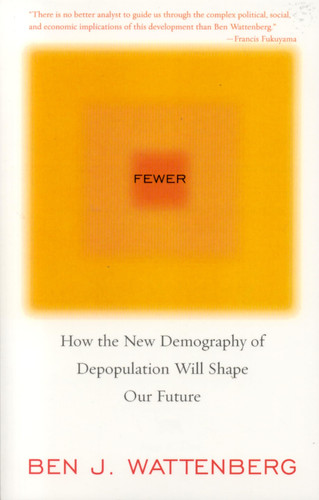
Fewer How the New Demography of Depopulation Will Shape Our Future

Ben J. Wattenberg
For at least 650 years, since the time of the Black Plague, the world's population has headed in only one direction: up. But within a few decades the number of people on earth will level off and then will likely decline over an extended period of time. In Fewer, the author explains how and why birthrates and fertility rates are now falling at an alarming rate in countries throughout the world--both modern and less developed. And he explores the major implications--for world politics, the environment, and the international economy--of this momentous shift. Illustrated with 23 clarifying charts.
Bloomsbury Academic 2004 241 pages

The Prolongation Of Life

Elie Metchnikoff
This work has been selected by scholars as being culturally important, and is part of the knowledge base of civilization as we know it. This work is in the "public domain in the United States of America, and possibly other nations. Within the United States, you may freely copy and distribute this work, as no entity (individual or corporate) has a copyright on the body of the work. Scholars believe, and we concur, that this work is important enough to be preserved, reproduced, and made generally available to the public. We appreciate your support of the preservation process, and thank you for being an important part of keeping this knowledge alive and relevant.
Creative Media Partners, LLC 2022-10-26 380 pages

Immunity in Infective Diseases

Elie Metchnikoff
This work has been selected by scholars as being culturally important, and is part of the knowledge base of civilization as we know it. This work is in the "public domain in the United States of America, and possibly other nations. Within the United States, you may freely copy and distribute this work, as no entity (individual or corporate) has a copyright on the body of the work. Scholars believe, and we concur, that this work is important enough to be preserved, reproduced, and made generally available to the public. We appreciate your support of the preservation process, and thank you for being an important part of keeping this knowledge alive and relevant.
Creative Media Partners, LLC 2022-10-27 606 pages

Gossip The Untrivial Pursuit

Joseph Epstein
Gossip is no trivial matter; despite its reputation, Epstein argues, it is an eternal and necessary human enterprise. Proving that he himself is a master of the art, Epstein serves up delightful mini-biographies of the Great Gossips of the Western World, along with many choice bits from his own experience. He also makes a powerful case that gossip has morphed from its old-fashioned best--clever, mocking, a great private pleasure--to a corrosive new-school version, thanks to the reach of the mass media and the Internet. Written in his trademark erudite and witty style, Gossip captures the complexity of this immensely entertaining subject.
HarperCollins Publishers 2012-11 256 pages

Blocked in the USA The Stem Cell Miracle

William C. Rader,William C Rader MD
If you thought the time of medical breakthroughs was over, brace yourself for the untold story of a doctor who singlehandedly, in the face of disdain from his colleagues and threats from government bureaucrats, made a breakthrough scientific discovery. Dr. Rader discovered how to apply fetal stem cell technology to humans and has saved the lives and eased the suffering of more than 1,500 patients with Autism, Epilepsy, Multiple Sclerosis, Stroke, Parkinson's disease, Muscular Dystrophy, and many other diseases. Blocked in the U.S.A. reveals the science behind Dr. Rader's breakthroughs, the struggles with the medical establishment, and, most important, the detailed successful results of his work. Now the truth can be told, and it reads like an adventure story, spanning three continents as one doctor dared to defy the FDA, the medical establishment and the drug companies.
Nanog Publishing, Incorporated 2010-03 378 pages

Aging thoughtfully: conversations about retirement, romance, wrinkles, and regret

Martha C. Nussbaum,Saul Levmore
We all age differently, but we can learn from shared experiences and insights. The conversations, or paired essays, in Aging Thoughtfully combine a philosopher's approach with a lawyer-economist's. Here are ideas about when to retire, how to refashion social security to help the elderly poor, how to learn from King Lear -- who did not retire successfully -- and whether to enjoy or criticize anti-aging cosmetic procedures. Some of the concerns are practical: philanthropic decisions, relations with one's children and grandchildren, the purchase of annuities, and how to provide for care in old age. Other topics are cultural, ranging from the treatment of aging women in a Strauss opera and various popular films, to a consideration of Donald Trump's (and other men's) marriages to much younger women. These engaging, thoughtful, and often humorous exchanges show how stimulating discussions about our inevitable aging can be, and offer valuable insight into how we all might age more thoughtfully, and with zest and friendship.
Oxford University Press 2020 251 pages

The Cancer Biopathy

Wilhelm Reich
What is cancer? Traditionally, medical science has thought of it as an invasive tumor arising spontaneously in an otherwise healthy organism. Consequently, it has naïvely devised increasingly intricate techniques to eradicate the tumor and treat its complications. These techniques have had varying degrees of success. In contrast, Reich defines cancer not as a tumor-the tumor is merely a late manifestation of the disease-but as a systemic disease due to chronic thwarting of natural sexual functioning. The ensuing biopathic shrinking of the organism is revealed initially in emotional despair and resignation, which leads eventually to a disturbance of cellular metabolism, with the tumor as its most visible manifestation. In this radically different scientific investigation of a process that ends, literally, in the putrefaction of the living body due to chronic suffocation of the tissues, Reich has arrived at the conclusion that "cancer is the most significant somatic expression of the biophysiological effect of sexual stasis." If this is so, there is a far greater possibility for the prophylaxis of cancer than for its treatment. Reich's contribution to an understanding of cancer is based on his years of clinical, social, and laboratory study of human emotions and his discovery of the specific energy processes manifested in them. A detailed account of this discovery forms the opening chapters of the book, providing the experimental and theoretical basis for the later chapters in which he presents his findings on the emotional background of the disease, the crucial role played by inadequate sexual functioning that causes a general devitalization and shrinking, the origin of the cancer cell, experimental therapy with laboratory animals and human beings, and, finally, the problems and possibilities of prevention.
WRM PRESS 2023-11-03 492 pages

So You Want to Live Younger Longer?

Norman Swan
Many of us dream of staying as young as possible as long as possible whether we're in our 30s, 40s, 70s or even 80s, and there's a growing Conga line of products and people offering you just that dream. The dilemma is, which of the pills, mental and physical exercise programs, diets and superfoods actually work? Some of them do help to keep us young, healthy and living longer, others may work when the researchers get the potions right and some are a downright waste of money. So how do you know what and who to trust? That's the journey that Dr Norman Swan is going to take you on in So You Want to Live Younger Longer? Deeply researched and written with his trademark wit, common sense and accessibility, Norman brings together what's known, not known, hopeful but not harmful and harmful and not hopeful, summarised with quick takeaway messages backed up by the science and evidence. No matter what your age, So You Want to Live Younger Longer? gives you the information you need to make your own choices without wasting your time and money or even missing a nice dinner because you might be on a diet that is getting you nowhere. Norman disentangles our 'Book of Life' - the genes we're born with and what we subject them to later on - and shows that in the search for youth, genes matter much less than you'd think for most of us. In other words, we can overwrite our personal Book of Life and Norman's book will help you do it. We can live younger, longer - at any age - we've just got to know what to do.
Hachette Australia 2022-07-27 320 pages