36 results for "Medical Science"

The Pattern Seekers How Autism Drives Human Invention

Simon Baron-Cohen
*A New York Times Editors' Choice Pick* An "ambitious work" ( Washington Post ) tracing the links between autism and ingenuity Is the ability to invent things unique to humans? In The Pattern Seekers , Cambridge University psychologist Simon Baron-Cohen argues that it is, and proposes that autistic people have played a key role in human progress for seventy to one hundred thousand years, from the first complex tools like the bow and arrow and the first musical instrument to the digital revolution. He presents the science that the same genes that contribute to autism enable a special kind of pattern seeking that is essential to our species' inventiveness. However, these abilities come at a cost for autistic people, including social and neurological challenges. Baron-Cohen calls on us to support and celebrate autistic people in both their disabilities and their talents. Ultimately, The Pattern Seekers isn't just a new theory of human evolution, but a call to reconsider how society treats those who think differently.
Basic Books 2023-01-24 272 pages

Finding Chika A Little Girl, an Earthquake, and the Making of a Family

Mitch Albom
"Mitch Albom has done it again with this moving memoir of love and loss. You can't help but fall for Chika. A page-turner that will no doubt become a classic." --Mary Karr, author of The Liars' Club and The Art of Memoir From the #1 New York Times bestselling author of Tuesdays With Morrie comes Mitch Albom's most personal story to date: an intimate and heartwarming memoir about what it means to be a family and the young Haitian orphan whose short life would forever change his heart. Chika Jeune was born three days before the devastating earthquake that decimated Haiti in 2010. She spent her infancy in a landscape of extreme poverty, and when her mother died giving birth to a baby brother, Chika was brought to The Have Faith Haiti Orphanage that Albom operates in Port Au Prince. With no children of their own, the forty-plus children who live, play, and go to school at the orphanage have become family to Mitch and his wife, Janine. Chika's arrival makes a quick impression. Brave and self-assured, even as a three-year-old, she delights the other kids and teachers. But at age five, Chika is suddenly diagnosed with something a doctor there says, "No one in Haiti can help you with." Mitch and Janine bring Chika to Detroit, hopeful that American medical care can soon return her to her homeland. Instead, Chika becomes a permanent part of their household, and their lives, as they embark on a two-year, around-the-world journey to find a cure. As Chika's boundless optimism and humor teach Mitch the joys of caring for a child, he learns that a relationship built on love, no matter what blows it takes, can never be lost. Told in hindsight, and through illuminating conversations with Chika herself, this is Albom at his most poignant and vulnerable. Finding Chika is a celebration of a girl, her adoptive guardians, and the incredible bond they formed--a devastatingly beautiful portrait of what it means to be a family, regardless of how it is made.
HarperCollins Publishers 2021-05-18 256 pages

Why is the Penis Shaped Like That? And Other Reflections on Being Human

Jesse Bering
"Titillating and provocative essays from one of the freshest voices in science today -- Why do testicles hang the way they do? Is there an adaptive function to the female orgasm? What does it feel like to want to kill yourself? Does "free will" really exist? And why is the penis shaped like that anyway? In Why Is the Penis Shaped Like That?, the research psychologist and award-winning columnist Jesse Bering features more than thirty of his most popular essays from Scientific American and Slate, as well as two new pieces, that take readers on a bold and captivating journey through some of the most taboo issues related to evolution and human behavior. Exploring the history of cannibalism, the neurology of people who are sexually attracted to animals, the evolution of human body fluids, the science of homosexuality, and serious questions about life and death, Bering astutely covers a generous expanse of our kaleidoscope of quirks and origins. With his characteristic irreverence and trademark cheekiness, Bering leaves no topic unturned or curiosity unexamined, and he does it all with an audaciously original voice. Whether you are interested in the psychological history behind the many facets of sexual desire or the evolutionary patterns that have dictated our current mystique and phallic physique, Why Is the Penis Shaped Like That? is bound to create lively discussion and debate for years to come"--
Transworld Publishers Limited 2012 320 pages

Moonshot Inside Pfizer's Nine-Month Race to Make the Impossible Possible

Albert Bourla
The exclusive, first-hand, behind-the-scenes story of how Pfizer raced to create the first Covid-19 vaccine, told by Pfizer's CEO Dr. Albert Bourla A riveting, fast-paced, inside look at one of the most incredible private sector achievements in history, Moonshot recounts the intensive nine months in 2020 when the scientists at Pfizer, under the visionary leadership of Dr. Albert Bourla, made "the impossible possible"--creating, testing, and manufacturing a safe and effective Covid-19 vaccine that previously would have taken years to develop. Dr. Bourla chronicles how the brilliant, dedicated minds at Pfizer, under the enormous strains of the global pandemic, overcame a series of crises that were compounded by social and political unrest, and reveals the doubts, decisions, obstacles, and failures they encountered. As Dr. Bourla makes clear, Pfizer's success wasn't due to luck; it was because of preparation driven by four simple values--Courage, Excellence, Equity, and Joy. Moonshot is a story of leadership under the most unprecedented circumstances--how Dr. Bourla, a Greek immigrant, a child of Holocaust survivors, and a veterinarian, became the head of one of the world's largest corporations and initiated a dramatic transformation of the organization just before a global health crisis would serve to test the organization, its scientists and its leader, like never before. Moonshot describes best practices that can be used to address the multiple, unprecedented challenges our world faces, reveals Pfizer's implementation of scientific breakthroughs at a record-breaking pace, and offers leadership lessons that can help anyone successfully manage their own seemingly unsolvable problems. As Dr. Bourla explains, "I am sharing the story of our moonshot--the challenges we faced, the lessons we learned, and the core values that allowed us to make it happen--in hopes that it might inspire and inform your own moonshot, whatever that may be."
HarperCollins Publishers Limited 2022-03-16 288 pages

The Panic Virus Fear, Myth and the Vaccination Debate

Seth Mnookin
In 1998 Andrew Wakefield published a paper containing a shocking allegation- the measles-mumps-rubella vaccine might cause autism. Wakefield based his findings on a study of just a dozen children, and his methods and conclusions immediately came under fire. The media, however, seized on the story - and so helped launch one of the most devastating health scares of modern times. Within months, vaccination rates across the West had started to fall, resulting in deaths from diseases previously thought to be disappearing. Wakefield eventually lost his medical licence, yet the myth that vaccines cause developmental disorders lives on. In The Panic Virus Seth Mnookin examines how the anti-immunisation panic spread and looks at a controversial Australian case that exposed the claims and tactics of the movement to new scrutiny. Sorting fact from rumour, he confronts fundamental questions- with more facts at our fingertips than ever, why is our trust in science so fragile? Has the internet made us better informed, or simply enabled panic to spread more quickly? And how might we balance fact and intuition when it comes to decisions about children's health? The Panic Virus is a riveting and sometimes heartbreaking medical detective story, a gripping work of investigative journalism and a cautionary tale for our times.
Black Incorporated 2011 425 pages

Christ Stopped at Eboli

Carlo Levi
It was to Lucania, a desolate land in southern Italy, that Carlo Levi--a doctor, painter, philosopher, and man of letters--was confined as a political prisoner because of his opposition to Italy's Fascist government at the start of the Ethiopian war in 1935. While there, Levi reflected on the harsh landscape and its inhabitants, peasants who lived the same lives their ancestors had, constantly fearing black magic and the near presence of death. In so doing, Levi offered a starkly beautiful and moving account of a place and a people living outside the boundaries of progress and time.
Penguin Books 1947 253 pages

The Point of It All A Lifetime of Great Loves and Endeavors

Charles Krauthammer
NEW YORK TIMES BESTSELLER - A powerful collection of the influential columnist's most important works--featuring rare speeches and a major new essay about today's populist movements and the future of global democracy "Charles will be remembered as one of the greatest public intellects of his generation."--John McCain In his decades of work as America's preeminent political commentator, whether writing about statecraft and foreign policy or reflecting on more esoteric topics such as baseball, spaceflight and medical ethics, Charles Krauthammer elevated the opinion column to a form of art. This collection features the columns, speeches and unpublished writings that showcase the best of his original thought and his last, enduring words on the state of American politics, the nature of liberal democracy and the course of world history. The book also includes a deeply personal section offering insight into Krauthammer's beliefs about what mattered most to him: friendship, family and the principles he lived by. The Point of It All is a timely demonstration of what made Charles Krauthammer the most celebrated American columnist and political thinker of his generation, a revealing look at the man behind the words and a lasting testament to his belief that anyone with an open and honest mind can grapple deeply with the most urgent questions in politics and in life.
Diversified Publishing 2018 544 pages

Voices from the Pandemic Americans Tell Their Stories of Crisis, Courage and Resilience

Eli Saslow
From Pulitzer Prize-winning Washington Post reporter Eli Saslow, a powerful portrait of a country grappling with the pandemic, told through voices of people from all across America The Covid-19 pandemic was a world-shattering event, affecting everyone in the nation. From its first ominous stirrings, renowned journalist Eli Saslow began interviewing a cross-section of Americans, capturing their experiences in real time: An exhausted and anguished EMT risking his life in New York City; a grocery store owner feeding his neighborhood for free in locked-down New Orleans; an overwhelmed coroner in Georgia; a Maryland restaurateur forced to close his family business after forty-six years; an Arizona teacher wrestling with her fears and her obligations to her students; rural citizens adamant that the whole thing is a hoax, and retail workers attacked for asking people to wear masks; patients struggling to breathe and doctors desperately trying to save them. Through Saslow's masterful, empathetic interviewing, we are given a kaleidoscopic picture of a people dealing with the unimaginable. These deeply personal accounts make for cathartic reading, as we see Americans at their worst, and at their resilient best.
Random House Large Print 2021 304 pages

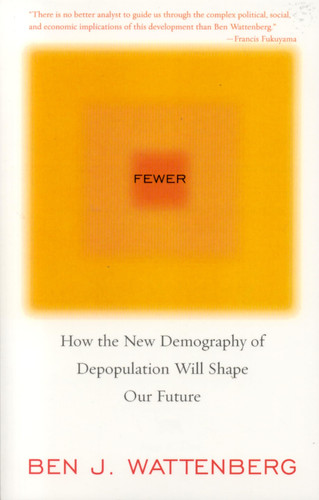
Fewer How the New Demography of Depopulation Will Shape Our Future

Ben J. Wattenberg
For at least 650 years, since the time of the Black Plague, the world's population has headed in only one direction: up. But within a few decades the number of people on earth will level off and then will likely decline over an extended period of time. In Fewer, the author explains how and why birthrates and fertility rates are now falling at an alarming rate in countries throughout the world--both modern and less developed. And he explores the major implications--for world politics, the environment, and the international economy--of this momentous shift. Illustrated with 23 clarifying charts.
Bloomsbury Academic 2004 241 pages

Seeing the Insane

Sander L. Gilman
Seeing the Insane is a richly detailed cultural history of madness and art in the Western world, showing how the portrayal of stereotypes has both reflected and shaped the perception and treatment of the mentally disturbed. Covering the Middle Ages through the end of the nineteenth century, Sander L. Gilman explores the depictions of mental illness as seen in manuscripts, sculptures, lithographs, and photography. With artistic renderings and medical illustrations side-by-side, this volume includes over 250 visual displays of the mentally ill. These images capture society's reliance on visual motifs to assign concrete qualities to abstract ailments in an attempt to understand the marginalized. Gilman's collection of images demonstrates how society has relegated the mentally ill to a state of "otherness" and portrays how society's perceived realities concerning the insane have morphed and evolved over centuries. Sander L. Gilman, PhD, is a distinguished professor of the Liberal Arts and Sciences as well as Professor of Psychiatry at Emory University. A respected educator, he has served as Old Dominion Visiting Professor of English at Princeton; Northrop Frye Visiting Professor of Comparative Literature at the University of Toronto; Mellon Visiting Professor of Humanities at Tulane University; Goldwin Smith Professor of Humane Studies at Cornell University; and Professor of the History of Psychiatry at Cornell Medical College. He has written and edited several books including The Face of Madness and Sexuality: An Illustrated History . " Seeing the Insane is a visual history of the stereotypes that have shaped the perception of the mentally ill from medieval through modern times. The result is nearly as heartbreaking as a visual history of the Holocaust. In picture after picture, the book portrays centuries of intolerance for deviance, mindless cruelty, unthinking prejudice, and self-righteous abuse of the weak and ill." - American Journal of Psychiatry "As extraordinary in concept as it is in its execution. . . . This remarkable book helps laymen as well as specialists to see the insane, but it does far more. When we study the past, we understand the present. When we see the conventional stereotype images of insanity, we find they still color our concepts of madness. Through these pictures of the insane, we see all humanity. We look, not through a glass darkly, but through a multiplicity of media, brightly." - Antiquarian Bookman Readers interested in related titles from Sander L. Gilman will also want to see: Face of Madness: Hugh W. Diamond and the Origin of Psychiatric Photography (ISBN: 9781626549234), Sexuality: An Illustrated History (ISBN: 9781626549227).
Echo Point Books & Media 2014-04 256 pages

An American Saga The Story of Helen Thomas and Simon Flexner

James T. Flexner
This tale of two families is set on a grand scale, as James Thomas Flexner brings his talents to bear on his own noteworthy heritage. An American Saga is an historical narrative, grounded on documentary sources, which ends with the marriage of Helen Thomas and Simon Flexner. The account deals equally with the lives and the backgrounds of husband and wife, the author's parents. Simon Flexner was the famous medical investigator, discoverer of the "Flexner vacillus" and the "Flexner serum," who became the creating director of the Rockefeller Institute for Medical Research (now Rockefeller University) and eventually acknowledged leader of American medical science. The Kentucky-born son of impoverished German Jewish immigrants, he grew up in penury. As he never completed the eighth grade, he was almost completely self-educated when he appeared at the Johns Hopkins University before its celebrated medical school had been founded. Almost instantly he began making the discoveries that soon made him the leading younger medical scientist in the United States.
Fordham University Press 1993 494 pages

Brainstorming The Science and Politics of Opiate Research

Solomon H. Snyder
The discovery of how opiates such as morphine and heroin relieve pain and produce euphoria is one of the most dramatic tales of modern science. It begins in 1971 when, at the height of the undeclared war in Vietnam, Richard Nixon officially announced a war on drugs. Heroin addiction--no longer confined to urban ghettos--was causing bad public relations for the White House. The specter of young American soldiers demoralized, drugged, and committing atrocities was not the image President Nixon wished to convey as he argued for further bombings of North Vietnam. In this book Solomon Snyder describes the political maneuverings and scientific sleuthing that led him and Candace Pert, then a graduate student in his lab, to a critical breakthrough in the effort to understand addiction. Their discovery--the so-called opiate receptor--is a structure on the surface of certain nerve cells that attracts opiates. Heroin or morphine molecules fit into opiate receptors much as a key fits into the ignition switch of a car--thus turning on the engine of the cell. Snyder and his students were able to show that nerve cells which possess opiate receptors are found in precisely those parts of the brain that control emotion and pain. Dr. Snyder describes the friendly yet intense competition from other researchers to expand upon this initial discovery. From the work of two Scottish investigators, Hans Kosterlitz and John Hughes, neuroscientists now know not only where opiate receptors are found in the brain but also why they are there: to serve as binding sites for an opiate-like substance produced by the brain itself--the brain's own morphine. This substance, called enkephalin, regulates pain, mood, and a host of other physiological functions. From this very human chronicle of scientific battles in the ongoing war against pain and addiction, we gain an appreciation of the extraordinary intellectual processes of an eminent scientist. But Dr. Snyder's story of scientific brainstorming also affords us rare glimpses into the fruitful, sometimes frustrating, relationships among scientists which enrich and complicate creative work. We are reminded of the delicate political alliances that are forged at every level of organization, from the lab bench to the Oval Office, as the scientific community attempts to fit its needs to those of the larger society.
Harvard University Press 2013-10 219 pages

Gossip The Untrivial Pursuit

Joseph Epstein
Gossip is no trivial matter; despite its reputation, Epstein argues, it is an eternal and necessary human enterprise. Proving that he himself is a master of the art, Epstein serves up delightful mini-biographies of the Great Gossips of the Western World, along with many choice bits from his own experience. He also makes a powerful case that gossip has morphed from its old-fashioned best--clever, mocking, a great private pleasure--to a corrosive new-school version, thanks to the reach of the mass media and the Internet. Written in his trademark erudite and witty style, Gossip captures the complexity of this immensely entertaining subject.
HarperCollins Publishers 2012-11 256 pages

For Your Own Good The Anti-Smoking Crusade and the Tyranny of Public Health

Jacob Sullum
The tobacco controversy is usually portrayed as a battle between selfless defenders of public health and greedy merchants of death. In For Your Own Good, journalist Jacob Sullum argues that such a view conceals the true nature of the crusade for a smoke-free society. As Sullum demonstrates, this struggle is not about the behavior of corporations; it's about the behavior of individuals. It is an attempt by one group of people to impose their tastes and preferences on another. For Your Own Good shows that long before Philip Morris or R.J. Reynolds existed, tobacco's opponents condemned smoking as disgusting, immoral, addictive, unhealthy, and inconsiderate. In recent decades, they have used scientific evidence that smoking is hazardous to enlist the state in their crusade, arguing that the government has an obligation to discourage behavior that might lead to disease or injury. Given this country's tradition of limited government, however, Americans tend to be skeptical of this argument. Sullum justifies their misgivings, noting that achieving a "smoke-free society" in a nation where tens of millions choose to smoke is necessarily an exercise in tyranny.
Simon and Schuster 1998 338 pages

Anthropological Studies on the Strange Sexual Practices of All Races and All Ages

Iwan Bloch
The celebrated compendium of sexual oddities, a no-holds-barred treatment of sexual practices throughout the world and throughout time. The work makes excellent reading, though it may be criticized for lacking any substantial synthesis of its components and for being unsympathetic to homosexuals and masturbators. Iwan Bloch (1872-1922) -- the father of sexual science -- took his medical degree from Wuurzburg in 1896 and soon published his Ursprung der Syphilis (1901), which made him the foremost exponent of the so-called Morbus Americanus theory that syphilis originated in America. His Beitrage zur Aetiologie der Psychopathia Sexualis was an important follow-up of Krafft-Ebing, and several other works brought him recognition as a pioneer sexologist. Book jacket.
The Minerva Group, Inc. 2001-06 272 pages

Heil Hunger! Health Under Hitler

Martin Gumpert
""Heil Hunger! Health Under Hitler"" is a non-fiction book written by Martin Gumpert. The book explores the impact of Nazi policies on the health and well-being of the German people during the Third Reich. Gumpert examines the various measures taken by the Nazi regime to promote health and fitness, including the establishment of physical education programs and the promotion of healthy eating habits. However, he also highlights the negative effects of Nazi policies, such as the forced sterilization of individuals deemed ""unfit"" and the mistreatment of concentration camp prisoners. Through extensive research and analysis, Gumpert provides a comprehensive look at the complex and often contradictory relationship between health and politics in Nazi Germany. Overall, ""Heil Hunger! Health Under Hitler"" offers a thought-provoking perspective on a dark period in history and the ways in which ideology can impact public health.This scarce antiquarian book is a facsimile reprint of the old original and may contain some imperfections such as library marks and notations. Because we believe this work is culturally important, we have made it available as part of our commitment for protecting, preserving, and promoting the world's literature in affordable, high quality, modern editions, that are true to their original work.
Literary Licensing, LLC 2011-05 128 pages

Never Again! The Government Conspiracy in the JFK Assassination

Harold Weisberg
Originally published in 1995, and in the same classic investigative style of Whitewash and Case Open , Harold Weisberg turns his sharp investigative eye towards the events surrounding the autopsy of John F. Kennedy. Inside Never Again! you’ll find: • The specific truths regarding the autopsy of John F. Kennedy—truths that have for thirty years been buried, distorted, or ignored not only by the government but also by the national press • The blatant errors and calculated deceit of the Journal of the American Medical Association in their 1992 reports on the Kennedy autopsy • The path of conspiracy leading from the Navy Hospital in Bethesda through the corridors of the FBI to the Justice Department, into the office of the attorney general and eventually that of the president Weisberg argues this case with exclusive regard for the facts. Facts lead to the book’s startling new illuminations. Facts provide a compelling narrative filled with intrigue and laced with outrage. Facts reveal the failure of America’s institutions to deal effectively with perhaps its most profound national tragedy. In the face of overwhelming facts, Harold Weisberg justly warns us that this must never again happen!
Skyhorse 2013-09-03 544 pages