30 results for "Medicine"

The immortal life of Henrietta Lacks

Skloot, Rebecca
Her name was Henrietta Lacks, but scientists know her as HeLa. She was a poor Southern tobacco farmer, yet her cells--taken without her knowledge--became one of the most important tools in medicine. The first "immortal" human cells grown in culture, they are still alive today, though she has been dead for more than sixty years. HeLa cells were vital for developing the polio vaccine; uncovered secrets of cancer and viruses; helped lead to in vitro fertilization, cloning, and gene mapping; and have been bought and sold by the billions. Yet Henrietta Lacks is buried in an unmarked grave. Her family did not learn of her "immortality" until more than twenty years after her death, when scientists began using her husband and children in research without informed consent. The story of the Lacks family is inextricably connected to the dark history of experimentation on African Americans, the birth of bioethics, and the legal battles over whether we control the stuff we are made of--From publisher description.
Broadway Paperbacks 2011-03-08 381 pages

How to change your mind: what the new science of psychedelics teaches us about consciousness, dying, addiction, depression, and transcendence

Pollan, Michael
"A brilliant and brave investigation by Michael Pollan, author of five New York Times best sellers, into the medical and scientific revolution taking place around psychedelic drugs--and the spellbinding story of his own life-changing psychedelic experiences When Michael Pollan set out to research how LSD and psilocybin (the active ingredient in magic mushrooms) are being used to provide relief to people suffering from difficult-to-treat conditions such as depression, addiction and anxiety, he did not intend to write what is undoubtedly his most personal book. But upon discovering how these remarkable substances are improving the lives not only of the mentally ill but also of healthy people coming to grips with the challenges of everyday life, he decided to explore the landscape of the mind in the first person as well as the third. Thus began a singular adventure into the experience of various altered states of consciousness, along with a dive deep into both the latest brain science and the thriving underground community of psychedelic therapists. Pollan sifts the historical record to separate the truth about these mysterious drugs from the myths that have surrounded them since the 1960s, when a handful of psychedelic evangelists catalyzed a powerful backlash against what was then a promising field of research. A unique and elegant blend of science, memoir, travel writing, history, and medicine, How to Change Your Mind is a triumph of participatory journalism. By turns dazzling and edifying, it is the gripping account of a journey to an exciting and unexpected new frontier in our understanding of the mind, the self, and our place in the world. The true subject of Pollan's "mental travelogue" is not just psychedelic drugs but also the eternal puzzle of human consciousness and how, in a world that offers us both struggle and beauty, we can do our best to be fully present and find meaning in our lives"--
Penguin Press 2018-05-15 465 pages

Sontag: her life

Moser, Benjamin
No writer is as emblematic of the American twentieth century as Susan Sontag (1933-2004). Mythologized and misunderstood, lauded and loathed, a girl from the suburbs who became a proud symbol of cosmopolitanism, Sontag left a legacy of writing on art and politics, feminism and homosexuality, celebrity and style, medicine and drugs, radicalism and Fascism and Freudianism and Communism and Americanism, that forms an indispensable key to modern culture. She was there when the Cuban Revolution began, and when the Berlin Wall came down; in Vietnam under American bombardment, in wartime Israel, in besieged Sarajevo. She was in New York when artists tried to resist the tug of money?and when many gave in. No writer negotiated as many worlds; no serious writer had as many glamorous lovers. Sontag tells these stories and examines the work upon which her reputation was based. It explores the agonizing insecurity behind the formidable public face: the broken relationships, the struggles with her sexuality, that animated?and undermined?her writing. And it shows her attempts to respond to the cruelties and absurdities of a country that had lost its way, and her conviction that fidelity to high culture was an activism of its own. Utilizing hundreds of interviews conducted from Maui to Stockholm and from London to Sarajevo - and featuring nearly one hundred images - Sontag is the first book based on the writer's restricted archives, and on access to many people who have never before spoken about Sontag, including Annie Leibovitz.
Allen Lane 2019 816 pages

Heart: an American medical odyssey

Cheney, Dick
"For as long as he has served at the highest levels of business and government, Vice President Dick Cheney has also been one of the world's most prominent heart patients. Now, for the first time ever, Cheney, together with his longtime cardiologist Jonathan Reiner, MD, shares the very personal story of his courageous thirty-five-year battle with heart disease, from his first heart attack in 1978 to the heart transplant he received in 2012. In 1978, when Cheney suffered his first heart attack, he received essentially the same treatment as President Eisenhower had in 1955. Since then, cardiac medicine has evolved in extraordinary ways, and Cheney has benefited from nearly every medical and technological breakthrough along the way. At each juncture, when Cheney faced a new health challenge, the technology was one step ahead of his disease. In many ways, Cheney's story is the story of the evolution of modern cardiac care. Heart is the riveting, singular memoir of both doctor and patient, tracking their relationship as it unfolds over many years and crises. Like no US politician has before him, Cheney opens up about his health struggles, sharing harrowing, never-before-told stories about the challenges he faced during a perilous time in our nation's history. Dr. Reiner provides his perspective on Cheney's case and also gives readers a fascinating glimpse into his own education as a doctor. He masterfully chronicles the important discoveries, radical innovations, and cutting-edge science that have changed the face of medicine and saved countless lives. Powerfully braiding science with story and the personal with the political, Heart is a sweeping, inspiring, and ultimately optimistic book that will give hope to the millions of Americans affected by heart disease"--
Scribner 2013-10-22 344 pages

Anatomy of an illness as perceived by the patient

Cousins, Norman
"Anatomy of an Illness was the first book by a patient that spoke to our current interest in taking charge of our own health. It started the revolution in patients working with their doctors and using humor to boost their bodies' capacity for healing. When Norman Cousins was diagnosed with a crippling and irreversible disease, he forged an unusual collaboration with his physician, and together they were able to beat the odds. The doctor's genius was in helping his patient to use his own powers: laughter, courage, and tenacity. The patient's talent was in mobilizing his body's own natural resources, proving what an effective healing tool the mind can be. This remarkable story of the triumph of the human spirit is truly inspirational reading." -- from publisher's website.
W. W. Norton 2005 176 pages

Surviving the angel of death: the true story of a mengele twin in auschwitz

Kor, Eva Mozes,Rojany-Buccieri, Lisa
"Eva Mozes Kor was just ten years old when she arrived in Auschwitz. While her parents and two older sisters were taken to the gas chambers, she and her twin, Miriam, were herded into the care of the man known as the Angel of Death, Dr. Josef Mengele. Subjected to sadistic medical experiments, she was forced to fight daily for her and her twin's survival. In this incredible true story written for young adults, readers learn of a child's endurance and survival in the face of truly extraordinary evil and Eva's recovery and her controversial but often misunderstood decision to publicly forgive the Nazis. Readers will learn of how she triumphed over unfathomable pain and suffering into a life-long work for peace, human rights, and Holocaust education. The new edition provides interesting details and important context to the events related in the original story. A new Afterword by publisher Peggy Porter Tierney offers a richer portrayal of Eva as a person, the truth behind the controversies, and the eventful last ten years of her life"--
Tanglewood 2020-10-13 183 pages

Singular intimacies: becoming a doctor at Bellevue

Ofri, Danielle
Singular Intimacies is the story of becoming a doctor by immersion at New York's Bellevue Hospital, the oldest public hospital in the country-and perhaps the most legendary. It is both the classic inner-city hospital and a unique amalgam of history, insanity, beauty, and intellect. When Danielle Ofri enters the doors of this 250-year-old institution as a tentative medical student, she is immediately plunged into the teeming world of urban medicine: mysterious illnesses, patients speaking any one of a dozen languages, overworked interns devising audacious strategies to cope with the feverish intensity of a big-city hospital. Yet the emphasis of Singular Intimacies is not so much on the arduous hours in medical training (which certainly exist here) but on the evolution of an instinct for healing.^
Beacon Press 2003 246 pages

Kay's brilliant brains

Kay, Adam
KAY'S BRILLIANT BRAINS is a mini book written and illustrated for World Book Day 2023 by the record-breaking Adam Kay and Henry Paker. It's a hilarious celebration of the world's most ingenious geniuses and all that their brilliant brains achieved. One hundred billion people have lived on earth. Unfortunately, this book would be too heavy if it talked about them all, so it's about ten of them. You'll meet Amelia Earhart, who flew across a huge ocean in a tiny plane, back in the days when planes were basically made out of old bits of wood (and worst of all, they didn't have in-flight movies) and Thomas Edison, who invented light bulbs and movie cameras (but only went to school until he was twelve). Plus a whole bunch more other brilliant people with brilliant brains who woke up one day and thought 'Oh, I've got an idea . . . !' and changed the world forever. Praise for Kay's Anatomy: 'An enjoyably gross look at the human body. Hours of gruesome fun guaranteed' i 'Like listening to a teacher who makes pupils fall about' Sunday Times 'Totally brilliant!' Jacqueline Wilson 'Fun and informative' Malorie Blackman 'Very funny - this exciting book is bound to inspire the next generation of medics' Sunday Express Praise for Kay's Marvellous Medicine: 'A ridiculously funny read that will delight, gross out and educate all at the same time' Independent 'Educational and entertaining. It should be on the national curriculum!' Harry Hill 'Completely marvellous and very funny' BookTrust
Puffin 2023-02-16 96 pages

Medicine in translation: journeys with my patients

Ofri, Danielle
For two decades, Dr. Danielle Ofri has cared for patients at Bellevue, the oldest public hospital in the country and a crossroads for the world's cultures. In Medicine in Translation , she introduces us, in vivid, moving portraits, to the patients she has known. They have braved language barriers, religious and racial divides, and the emotional and practical difficulties of exile in order to access quality health care. Sharing their journeys with them over the years, Danielle has witnessed some of their best and worst moments, and come to admire their resilience and courageous spirit. Danielle introduces us to her patients: Samuel Nwanko, who was brutally attacked by a Nigerian cult in his homeland and is attempting to create a new life in America; Jade Collier, an Aussie who refuses to let a small thing like a wheelchair keep her from being a homegrown ambassador to New York City; Julia Barquero, a Guatemalan woman who migrated to the States to save her disabled son but cannot obtain the lifesaving heart transplant she needs because she is undocumented. We meet a young Muslim woman threatened at knifepoint for wearing her veil, and the spitfire Señora Estrella, one of Danielle's many Spanish-speaking patients, whose torrent of words helps seal Danielle's resolve to improve her own Spanish, an essential skill in today's urban hospitals. And so she, her husband, and their two young children and seventy-five-pound dog relocate to Costa Rica, where they discover potholes the size of their New York City apartment, a casual absence of street signs or even street names, tangy green-skinned limon dulce dangling in the playground, and sudden rains surging over the craggy edges of roadside ditches. Ultimately, Danielle experiences being a patient in a foreign country when she gives birth to their third child, a "Costarricense" girl. With controversy over immigrants in our society escalating, and debate surrounding health-care reform becoming increasingly urgent, Ofri's riveting stories about her patients could not be more timely. Living and dying in the foreign country we call home, they have much to teach us about the American way, in sickness and in health.
Beacon Press 2010 251 pages

Ravenous: Otto Warburg, the Nazis, and the search for the cancer-diet connection

Apple, Sam
"The extraordinary story of the Nazi-era scientific genius who discovered how cancer cells eat-and what it means for how we should. The Nobel laureate Otto Warburg-a cousin of the famous finance Warburgs-was widely regarded in his day as one of the most important biochemists of the twentieth century, a man whose research was integral to humanity's understanding of cancer. He was also among the most despised figures in Nazi Germany. As a Jewish homosexual living openly with his male partner, Warburg represented all that the Third Reich abhorred. Yet Hitler and his top advisors dreaded cancer, and protected Warburg in the hope that he could cure it"--
Liveright Publishing Corporation, a division of W.W. Norton & Company 2021-05-25 399 pages

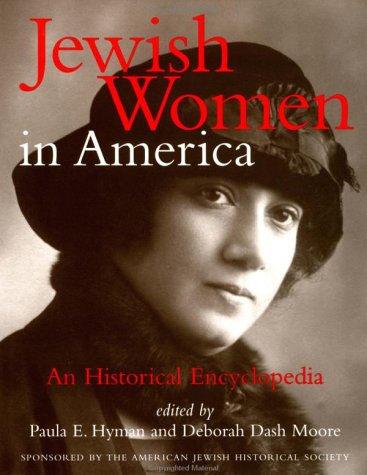
Jewish women in America: an historical encyclopedia

Paula Hyman,Deborah Dash Moore,Phyllis Holman Weisbard,American Jewish Historical Society
This encyclopedia provides the first standard reference work on the lives, history and activities of Jewish women in the United States. Covering a period which extends from the arrival of the first Jewish women in North America in 1654 to the present, this two-volume set presents the most comprehensive and detailed portrait of American Jewish women ever published, and brings together for the first time the wealth of recent scholarship on this subject. Includes: * Biographical entries on over 800 individual women. * 128 topical articles on organizations such as Hadassah, the National Council of Jewish Women, Mizrachi, and the Ladies' Garment Workers' Union. * Major essays on Jewish women's participation in the movement for women's suffrage, social reform, civil rights, and the recent women's movement. * The activities of Jewish women in politics, business, education, the arts, and religion. * A readable, inviting format with over 500 large photographs. * Bibliographies at the end of each entry which include overviews of major scholarship in the field, complete citations of more general works and citations of additional bibliographical and reference sources. * The comprehensive index includes citations to every substantive discussion in the entries as well as all proper names appearing in the text, such as organizations, book, song and film titles, schools, and individuals. The "Encyclopedia" provides information on American Jewish women in all fields of endeavor, and pays special attention to the work of women in the arts, academics, law, the labor movement, education, science, medicine, journalism and publishing, and on the lives of ordinary Jewish women during all time periods and in all regions of the United States.
Routledge 1997 1770 pages

The man with the miraculous hands

Kessel, Joseph
This amazing story of World War 2 chronicles the carrer of Dr Felix Kersten, physicain to the high-demon of the Third Reich, Heinrich Himmler. Kersten, an alternative medicine specialist, could alleviate Himmler's severe stomach pains with his hands, using massage and manipulation. In return, Kersten bargained with Himmler to order the release of innocent prisoners condemned to die. By war's end, thanks to Kersten, thousands of jews and other prisoners had eluded the fate of the concentration camp. This is a memorable account of a little-known miracle of World War 2.
Burford Books 2004 235 pages

The art and politics of science

Varmus, Harold
A Nobel Prize–winning cancer biologist, leader of major scientific institutions, and scientific adviser to President Obama reflects on his remarkable career. A PhD candidate in English literature at Harvard University, Harold Varmus discovered he was drawn instead to medicine and eventually found himself at the forefront of cancer research at the University of California, San Francisco. In this “timely memoir of a remarkable career” ( American Scientist ), Varmus considers a life’s work that thus far includes not only the groundbreaking research that won him a Nobel Prize but also six years as the director of the National Institutes of Health; his current position as the president of the Memorial Sloan-Kettering Cancer Center; and his important, continuing work as scientific adviser to President Obama. From this truly unique perspective, Varmus shares his experiences from the trenches of politicized battlegrounds ranging from budget fights to stem cell research, global health to science publishing.
W. W. Norton 2010-04-27 315 pages

Children of the flames: Dr. Josef Mengele and the untold story of the twins of Auschwitz

Matalon Lagnado, Lucette
Relates the life story of Josef Mengele and quotes from the testimonies of twin children who were the victims of his sadistic pseudo-medical experiments in Auschwitz. They speak about the complicated psychological problems which they confronted after the war, and which caused their silence in the 1950s-70s. In 1984 the organization of surviving twins, CANDLES, was established, which organized a trip to Auschwitz in 1985 and publicized their reminiscences.
Morrow 1991 320 pages

Phoning home: essays

Appel, Jacob M.
"Phoning Home is a collection of entertaining and thought-provoking essays featuring the author's quirky family, his Jewish heritage, and his New York City upbringing. Jacob M. Appel's recollections and insights, informed and filtered by his advanced degrees in medicine, law, and ethics, not only inspire nostalgic feelings but also offer insight into contemporary medical and ethical issues. At times sardonic and at others self-deprecating, Appel lays bare the most private aspects of his emotional life. "We'd just visited my grandaunt in Miami Beach, the last time we would ever see her. I had my two travel companions, Fat and Thin, securely buckled into the backseat of my mother's foul-tempered Dodge Dart," writes Appel of his family vacation with his two favorite rubber cat toys. Shortly thereafter Fat and Thin were lost forever--beginning, when Appel was just six years old, what he calls his "private apocalypse." Both erudite and full-hearted, Appel recounts storylines ranging from a bout of unrequited love gone awry to the poignant romance of his grandparents. We learn of the crank phone calls he made to his own family, the conspicuous absence of Jell-O at his grandaunt's house, and family secrets long believed buried. The stories capture the author's distinctive voice--a blend of a physician's compassion and an ethicist's constant questioning. "--
University of South Carolina Press 2014 177 pages