
8 results for "Medicine"

Jewish women in America: an historical encyclopedia

Paula Hyman,Deborah Dash Moore,Phyllis Holman Weisbard,American Jewish Historical Society
This encyclopedia provides the first standard reference work on the lives, history and activities of Jewish women in the United States. Covering a period which extends from the arrival of the first Jewish women in North America in 1654 to the present, this two-volume set presents the most comprehensive and detailed portrait of American Jewish women ever published, and brings together for the first time the wealth of recent scholarship on this subject. Includes: * Biographical entries on over 800 individual women. * 128 topical articles on organizations such as Hadassah, the National Council of Jewish Women, Mizrachi, and the Ladies' Garment Workers' Union. * Major essays on Jewish women's participation in the movement for women's suffrage, social reform, civil rights, and the recent women's movement. * The activities of Jewish women in politics, business, education, the arts, and religion. * A readable, inviting format with over 500 large photographs. * Bibliographies at the end of each entry which include overviews of major scholarship in the field, complete citations of more general works and citations of additional bibliographical and reference sources. * The comprehensive index includes citations to every substantive discussion in the entries as well as all proper names appearing in the text, such as organizations, book, song and film titles, schools, and individuals. The "Encyclopedia" provides information on American Jewish women in all fields of endeavor, and pays special attention to the work of women in the arts, academics, law, the labor movement, education, science, medicine, journalism and publishing, and on the lives of ordinary Jewish women during all time periods and in all regions of the United States.
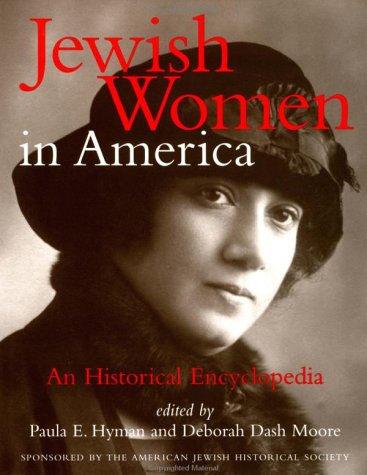
Routledge 1997 1770 pages

Surviving the Americans: the continued struggle of the Jews after liberation

Hilliard, Robert L.
Hilliard (born Robert Hilliard Levine), a former U.S. soldier in occupied Germany, describes the continuing genocide-by-neglect of Holocaust survivors. The latter had little or no food, clothing, or medicine; they were interned behind barbed wire, as if they were still being held by the Nazis. Their pain was increased by the favoritism shown by the U.S. Military Government toward former Nazis and their sympathizers. Letters sent by the author and by his friend, Edward Herman, came to the attention of Earl G. Harrison, whom President Truman sent to investigate the situation. Truman ordered General Eisenhower to change American policy, and this was done. Includes a description of events at a hospital in St. Ottilien where American antisemitism was rampant, until the reactions of the DPs and of American Jews helped pressure the Americans to improve the situation.
Seven Stories Press 1997 213 pages

Medicine stories: essays for radicals

Levins Morales, Aurora
In this revised and expanded edition, the author weaves together insights and lessons learned over a lifetime of activism to offer a new theory of social justice. Calling for a politics of integrity that recognizes the complicated wholeness of individual and collective lives, the author delves among the interwoven roots of multiple oppressions, exposing connections, crafting strategies, and uncovering the wellsprings of resilience and joy. Throughout these twenty-eight essays - twenty-one of which are new or extensively revised - she exposes the structures and mechanisms that silence voices and divide movements. The result is a medicine bag full of techniques and perspectives to build a universal solidarity that is flexible, nuanced, and strong enough to fundamentally shift our world toward justice. Intimately personal and globally relevant, this book brings clarity and hope to tangled, emotionally charged social issues in beautiful and accessible language.
Duke University Press 2019-04-26 232 pages

Parallel lines

Lantos, Peter L.
Memoirs of Lantos, born to the Leipniker family in 1939 in Makó, Hungary. In 1944, after his older brother was taken away, the rest of the family was sent to the ghetto of Szeged, but the Jews there were soon deported. He and his parents were first sent to Strasshof in Austria for a short time, then to Wiener Neustadt and to Bergen-Belsen, where his father died. He and his mother were then sent on a death transport, during which they were liberated by American soldiers. They returned to Hungary and found that his brother had perished. Lantos later studied medicine in England, and in 1969 decided to remain there.
Arcadia Books 2006 246 pages

Western Jews in India: from the fifteenth century to the present

Kenneth X. Robbins,Marvin Tokayer
"This is the first book describing the roles of Western Jews in South Asian political affairs, medicine, painting, architecture and religion. A time-line summarizes their contributions and those of the Indian Jews to the Indian subcontinent. Many of these foreign Jews left behind their Jewish identities. Others remained Jews, but functioned as individuals unconcerned with implementing any 'Jewish agenda'." --
Manohar Publishers & Distributors 2013 310 pages

Jews and genes: the genetic future in contemporary Jewish thought

Elliot N. Dorff,Laurie Zoloth
Well aware of Jews having once been the victims of Nazi eugenics policies, many Jews today have an ambivalent attitude toward new genetics and are understandably wary of genetic forms of identity and intervention. At the same time, the Jewish tradition is strongly committed to medical research designed to prevent or cure diseases. Jews and Genes explores this tension against the backdrop of various important developments in genetics and bioethics—new advances in stem cell research; genetic mapping, identity, testing, and intervention; and the role of religion and ethics in shaping public policy. Jews and Genes brings together leaders in their fields, from all walks of Judaism, to explore these most timely and intriguing topics—the intricacies of the genetic code and the wonders of life, along with cutting-edge science and the ethical issues it raises.
Jewish Publication Society 2015-03-01 458 pages

Jewish thought and scientific discovery in early modern Europe

Ruderman, David B.
This book is the first to examine closely the interaction between Jewish culture, medicine, and science during Europe's age of 'scientific revolution'. Most students of Jewish history have treated the period from the late sixteenth to the late eighteenth centuries as a mere extension of the Jewish Middle Ages, a time when the Jewish world was cut off from intellectual developments in the Christian world. The eminent scholar David Ruderman here argues, however, that during this era Jewish culture and society became increasingly aware of medical and scientific advances, and that a new Jewish scientific discourse evolved that had significant repercussions for Jewish religious concerns.
Yale University Press 1995-01-01 392 pages