58 results for "Medicine"

Eight Weeks to Optimum Health A Proven Program for Taking Full Advantage of Your Body's Natural Healing Power

Andrew Weil
The Eight-Week Program sets up a foundation for healthy living that is preventative in the broadest sense. Not only does Dr. Weil provide information with which you can keep your body's inherent healing system in peak working order as you encounter the challenges of day-to-day life; he also shows you how to construct a lifestyle that will protect you from premature illness and disability, and teaches practices and skills that will enable you to prepare for any eventual health crisis you may face. With clearly explained and authoritatively informed recommendations, Dr. Weil guides you in fine-tuning your current eating habits - to eat less fat and animal protein, more whole grains and other complex carbohydrates, and more fruits and vegetables - so that your diet becomes more nutritious and increasingly beneficial to general health (he also includes simple, flavorful recipes to help you make the dietary changes quickly and easily). He shows how walking and stretching will satisfy all your exercise requirements throughout your life, and provides a gradual plan by which you can make brisk forty-five-minute walks and some simple stretches part of your weekly regimen. Dr. Weil recommends the addition of four antioxidant supplements - vitamins C and E, selenium, and mixed carotenes - to further protect your healing system. He provides instruction in five basic breathing exercises that can impart both greater relaxation and energy. He discusses the benefits and techniques of visualization. He explains ways to overcome sleeping problems; to test and filter your water supply; to eliminate toxins from your diet; and to avoid environmental hazards such as the sun's ultraviolet rays. He suggestsways to make art, music, and the natural world more important parts of your life. For those who wish to experiment further, he outlines several projects and activities such as cleansing fasts. There are a dozen additional programs that concentrate on the specific needs of pregnant
Ballantine 1998 288 pages

The Birth of the Pill How Four Crusaders Reinvented Sex and Launched a Revolution

Jonathan Eig
In the winter of 1950, Margaret Sanger, then seventy-one, and who had campaigned for women's right to control their own fertility for five decades, arrived at a Park Avenue apartment building. She had come to meet a visionary scientist with a dubious reputation more than twenty years her junior. His name was Gregory Pincus. In The Birth of the Pill, Jonathan Eig tells the extraordinary story of how, prompted by Sanger, and then funded by the wealthy widow and philanthropist Katharine McCormick, Pincus invented a drug that would stop women ovulating. With the support of John Rock, a charismatic and, crucially, Catholic doctor from Boston, who battled his own church in the effort to win public approval for the controversial new drug, he succeeded. Together, these four determined men and women changed the world. Spanning the years from Sanger's heady Greenwich Village days in the early twentieth century to trial tests in Puerto Rico in the 1950s to the cusp of the sexual revolution in the 1960s, this is a grand story of radical feminism, scientific ingenuity, establishment opposition, and, ultimately, a sea change in social attitudes.
Pan Macmillan 2014 388 pages

Polio: an American Story

David M. Oshinsky
Here David Oshinsky tells the gripping story of the polio terror and of the intense effort to find a cure, from the March of Dimes to the discovery of the Salk and Sabin vaccines--and beyond. Drawing on newly available papers of Jonas Salk, Albert Sabin and other key players, Oshinsky paints a suspenseful portrait of the race for the cure, weaving a dramatic tale centered on the furious rivalry between Salk and Sabin. He also tells the story of Isabel Morgan, perhaps the most talented of all polio researchers, who might have beaten Salk to the prize if she had not retired to raise a family. Oshinsky offers an insightful look at the National Foundation for Infantile Paralysis, which was founded in the 1930s by FDR and Basil O'Connor, it revolutionized fundraising and the perception of disease in America. Oshinsky also shows how the polio experience revolutionized the way in which the government licensed and tested new drugs before allowing them on the market, and the way in which the legal system dealt with manufacturers' liability for unsafe products. Finally, and perhaps most tellingly, Oshinsky reveals that polio was never the raging epidemic portrayed by the media, but in truth a relatively uncommon disease. But in baby-booming America--increasingly suburban, family-oriented, and hygiene-obsessed--the specter of polio, like the specter of the atomic bomb, soon became a cloud of terror over daily life. Both a gripping scientific suspense story and a provocative social and cultural history, Polio opens a fresh window onto postwar America.
Oxford University Press 2006-10-15 384 pages

The Pattern Seekers How Autism Drives Human Invention

Simon Baron-Cohen
*A New York Times Editors' Choice Pick* An "ambitious work" ( Washington Post ) tracing the links between autism and ingenuity Is the ability to invent things unique to humans? In The Pattern Seekers , Cambridge University psychologist Simon Baron-Cohen argues that it is, and proposes that autistic people have played a key role in human progress for seventy to one hundred thousand years, from the first complex tools like the bow and arrow and the first musical instrument to the digital revolution. He presents the science that the same genes that contribute to autism enable a special kind of pattern seeking that is essential to our species' inventiveness. However, these abilities come at a cost for autistic people, including social and neurological challenges. Baron-Cohen calls on us to support and celebrate autistic people in both their disabilities and their talents. Ultimately, The Pattern Seekers isn't just a new theory of human evolution, but a call to reconsider how society treats those who think differently.
Basic Books 2023-01-24 272 pages

Bellevue Three Centuries of Medicine and Mayhem at America's Most Storied Hospital

David Oshinsky
From a Pulitzer Prize-winning historian comes a riveting history of New York's iconic public hospital that charts the turbulent rise of American medicine. Bellevue Hospital, on New York City's East Side, occupies a colorful and horrifying place in the public imagination: a den of mangled crime victims, vicious psychopaths, assorted derelicts, lunatics, and exotic-disease sufferers. In its two and a half centuries of service, there was hardly an epidemic or social catastrophe—or groundbreaking scientific advance—that did not touch Bellevue. David Oshinsky, whose last book, Polio: An American Story , was awarded a Pulitzer Prize, chronicles the history of America's oldest hospital and in so doing also charts the rise of New York to the nation's preeminent city, the path of American medicine from butchery and quackery to a professional and scientific endeavor, and the growth of a civic institution. From its origins in 1738 as an almshouse and pesthouse, Bellevue today is a revered public hospital bringing first-class care to anyone in need. With its diverse, ailing, and unprotesting patient population, the hospital was a natural laboratory for the nation's first clinical research. It treated tens of thousands of Civil War soldiers, launched the first civilian ambulance corps and the first nursing school for women, pioneered medical photography and psychiatric treatment, and spurred New York City to establish the country's first official Board of Health. As medical technology advanced, "voluntary" hospitals began to seek out patients willing to pay for their care. For charity cases, it was left to Bellevue to fill the void. The latter decades of the twentieth century brought rampant crime, drug addiction, and homelessness to the nation's struggling cities—problems that called a public hospital's very survival into question. It took the AIDS crisis to cement Bellevue's enduring place as New York's ultimate safety net, the iconic hospital of last resort. Lively, page-turning, fascinating, Bellevue is essential American history.
Knopf Doubleday Publishing Group 2017-10-24 416 pages

Why Our Health Matters

Andrew Weil
A landmark book that shows us exactly how we have let health and medicine become a crisis in our society and what we can all do to resolve it Healthcare is no longer just a public issue; for millions of Americans it is now a crisis on their own doorstep. Costs of medical care today are a leading cause personal bankruptcy. Although policy makers have weighed in on all sides, in this book, bestselling author Andrew Weil, M.D. identifies the root of the problem. He shows us exactly how we have become embroiled in the present situation and provides a solution that will not only make healthcare affordable, but will also put each one of us on the road to optimum health. Dr. Weil states that we have a right to good healthcare that is effective, accessible, and affordable. Many Americans would be surprised to know that our national health is far from the best in the world, even though we spend more money on it than any other country. The World Health Organization recently rated America thirty-seventh in health outcomes, on par with Serbia. Tackling head-on The Three Major Myths of American Medicine, Dr. Weil shows how medical schools fail to give future doctors the education they need to care for patients, how insurance companies have destroyed our opportunity to get excellent care, and how pharmaceutical companies have come to rule our lives. The solution involves nothing less than the creation of a completely new culture of health and medicine in this country, one that we can each start building today.
Thorndike Press 2009 393 pages

The How Not to Age Cookbook

Michael Greger,Unknown Author
More than 100 delicious, nutritionally balanced recipes to help you live your longest, healthiest life. From the author of the Sunday Times bestsellers How Not To Die and How Not to Diet , comes The How Not To Age Cookbook - a beautifully illustrated cookbook of tasty recipes based on the groundbreaking nutritional science of How Not to Age . In How Not To Age , Dr Michael Greger revealed that a healthy diet is one of the most promising strategies for combating the effects of aging. His Anti-Aging Eight streamlined evidence-based research into simple, accessible steps for ensuring physical and mental longevity. Filled with more than 100 recipes to help you live well for longer, The How Not To Age Cookbook brings together decades of scientific research. These simple, nutrition-packed dishes make use of ingredients that have been proven to promote a healthy lifespan and inspiration from the places around the world where people traditionally live the longest. Grounded in the latest nutrition science, The How Not to Age Cookbook is packed full of delicious meals, snacks and drinks that will keep the body both nourished and youthful.
Bluebird Publishing 2026-03-26 288 pages

Heart An American Medical Odyssey

Dick Cheney,Richard B. Cheney,Jonathan Reiner,Liz Cheney
"For as long as he has served at the highest levels of business and government, Vice President Dick Cheney has also been one of the world's most prominent heart patients. Now, for the first time ever, Cheney, together with his longtime cardiologist Jonathan Reiner, MD, shares the very personal story of his courageous thirty-five-year battle with heart disease, from his first heart attack in 1978 to the heart transplant he received in 2012. In 1978, when Cheney suffered his first heart attack, he receivedessentially the same treatment as President Eisenhower had in 1955. Since then, cardiac medicine has evolved in extraordinary ways, and Cheney has benefited from nearly every medical and technological breakthrough along the way. At each juncture, when Cheney faced a new health challenge, the technology was one step ahead of his disease. In many ways, Cheney's story is the story of the evolution of modern cardiac care. Heart is the riveting, singular memoir of both doctor and patient, tracking their relationship as it unfolds over many years and crises. Like no US politician has before him, Cheney opens up about his health struggles, sharing harrowing, never-before-told stories about the challenges he faced during a perilous time in our nation's history. Dr. Reiner provides his perspective on Cheney's case and also gives readers a fascinating glimpse into his own education as a doctor. He masterfully chronicles the important discoveries, radical innovations, and cutting-edge science that have changed the face of medicine and saved countless lives. Powerfully braiding science with story and the personal with the political, Heart is a sweeping, inspiring, and ultimately optimistic book that will give hope to the millions of Americans affected by heart disease"--
Thorndike Press, A part of Gale, Cengage Learning 2014 583 pages

Do Dogs Dream?: Nearly Everything Your Dog Wants You to Know

Stanley Coren
In a conversational Q&A format, a leading dog expert answers the most commonly asked questions about how dogs think and act. Do dogs dream? Can they recognize themselves in the mirror or understand what they’re seeing on television? Are they more intelligent than cats? People have a great curiosity—and many misunderstandings—about how dogs think, act, and perceive the world. They also wonder about the social and emotional lives of dogs. Stanley Coren brings decades of scientific research on dogs to bear in his unprecedented foray into the inner lives of our canine companions, dispelling many common myths in the process. Coren answers the questions dog owners have most frequently asked during his nearly fifty-year career as a dog researcher, combining the authority of an expert with the delivery of a guest at a cocktail party.
W. W. Norton & Company 2013-07-08 306 pages

Harrison's Principles of Internal Medicine Companion handbook

Kurt J. Isselbacher
Following publication of the 11th edition of Harrison's came The Harrison's Companion Handbook. Now, this companion to the 13th edition continues as a pocket-sized compendium on the pathophysiology, signs and symptoms, diagnosis and management of all internal disorders. Synoptic coverage, an outline format, and abundant use of tables and charts summarize key clinical points so the reader can access the information quickly.
McGraw-Hill 1994 940 pages

Memoir of a Debulked Woman Enduring Ovarian Cancer

Susan Gubar
Diagnosed with ovarian cancer in 2008, Susan Gubar underwent radical debulking surgery, an attempt to excise the cancer by removing part or all of many organs in the lower abdomen. Her memoir mines the deepest levels of anguish and devotion as she struggles to come to terms with her body 's betrayal and the frightful protocols of contemporary medicine. She finds solace in the abiding love of her husband, children, and friends while she searches for understanding in works of literature, visual art, and the testimonies of others who suffer with various forms of cancer. Ovarian cancer remains an incurable disease for most of those diagnosed, even those lucky enough to find caring and skilled physicians. Memoir of a Debulked Woman is both a polemic against the ineffectual and injurious medical responses to which thousands of women are subjected and a meditation on the gifts of companionship, art, and literature that sustain people in need.
Thorndike Press 2012 475 pages

The Peace of Mind Prescription An Authoritative Guide to Finding the Most Effective Treatment for Anxiety and Depression

Dennis S. Charney,Charles B. Nemeroff
The Ultimate Guide to Identifying, Treating, and Overcoming Depression and Anxiety Two world-renowned psychiatrists have created a comprehensive and empowering guide to the science and treatment of anxiety and depression. At the heart of their message is the idea that treatment can and must be tailored to the individual and that armed with the right information, patients can get the support they need from their health-care providers. Practical and authoritative, The Peace of Mind Prescription has been unanimously praised as a valuable resource that offers hope to millions of sufferers. Dennis S. Charney, M.D., is the Dean of Research and the Anne and Joel Ehrenkranz Professor in the departments of psychiatry, neuroscience, and pharmacology and biochemistry at the Mount Sinai School of Medicine. Charles B. Nemeroff, M.D., Ph.D., is the Reunette W. Harris Professor and chairman of the department of psychiatry and behavioral sciences at Emory University's School of Medicine.
Houghton Mifflin 2006 259 pages

The Soul of Medicine Tales from the Bedside

Sherwin B. Nuland
“Like all doctors, I collect stories…” From one of America’s most renowned and beloved doctors, and best-selling winner of the National Book Award, comes a remarkable book that brings together the stories of doctors collected over 30 years. Each of these tales, filled with grace and wisdom, explores the mysteries and conundrums of modern medicine. Enhanced by Sherwin Nuland’s keen insight into the special relationship between doctor and patient, these engrossing stories illustrate the judgment, wisdom, and character of veteran doctors who have mastered the art of care-giving. Taken together, the lessons learned from The Soul of Medicine are as moving and profound as they are timeless. “A beautiful book.” — Oliver Sacks “Nuland is a gifted storyteller, bringing his doctors…brilliantly to life.” — John Irving
Kaplan Publishing 2010-03-30 232 pages

A particularly nasty case

Kay, Adam
"When his toxic medical director dies of a heart attack, fellow doctor Eitan Rose smells foul play. Nobody else does, though, including some quite crucial players like the police and the medical examiner. So Eitan vows to uncover the truth himself. But Eitan's own past and reputation are far from spotless, despite his budding relationship with Cole, a handsome hospital porter, and reluctant camaraderie with his office mate, Margaret-with-the-cats. As his colleagues become increasingly concerned about his mental health, Eitan's investigation spirals out of control. Could a killer really be stalking the wards? Or is Eitan making a catastrophic mistake?"-- Publisher's website.
Mulholland Books 2025-09-16 323 pages

Voices from the Pandemic Americans Tell Their Stories of Crisis, Courage and Resilience

Eli Saslow
From Pulitzer Prize-winning Washington Post reporter Eli Saslow, a powerful portrait of a country grappling with the pandemic, told through voices of people from all across America The Covid-19 pandemic was a world-shattering event, affecting everyone in the nation. From its first ominous stirrings, renowned journalist Eli Saslow began interviewing a cross-section of Americans, capturing their experiences in real time: An exhausted and anguished EMT risking his life in New York City; a grocery store owner feeding his neighborhood for free in locked-down New Orleans; an overwhelmed coroner in Georgia; a Maryland restaurateur forced to close his family business after forty-six years; an Arizona teacher wrestling with her fears and her obligations to her students; rural citizens adamant that the whole thing is a hoax, and retail workers attacked for asking people to wear masks; patients struggling to breathe and doctors desperately trying to save them. Through Saslow's masterful, empathetic interviewing, we are given a kaleidoscopic picture of a people dealing with the unimaginable. These deeply personal accounts make for cathartic reading, as we see Americans at their worst, and at their resilient best.
Random House Large Print 2021 304 pages

Biotechnology in the time of COVID-19: commentaries from the front line

Jeremy M. Levin
"A collection of diverse viewpoints from over 45 thought leaders in the biotechnology industry and their efforts going forward during the COVID-19 pandemic. Biotechnology in the Time of COVID-19 is the opening chapter of a story of how the biotechnology industry rose to battle the COVID-19 virus-told by the leaders of that industry in their own words. The industry has built over more than forty years, an ecosystem of scientists, entrepreneurs, doctors, investors, venture capitalists, analysts, media, and bankers, all committed to advancing global health. In two months, leaders and companies from this ecosystem pivoted from the work they were carrying on pre-COVID-19 to face the virus. Forty-six seven contributors offer historical, personal, and investor perspectives, views from inside the biotech companies, broad lessons, leadership, and a look to the future. COVID-19 was a crisis anticipated by many, but one for which we were inadequately prepared. That has led to an unnecessary catastrophe. Now is the time to shine a light on those who bring hope that we will push back the virus with science and medicine. This book is a collection of the voices from the front of that fight. All share the commitment to fight and the conviction that science and medicine will prevail. The editor royalties and a portion of publisher revenues will be donated to two nonprofits focused on rare disease research: Global Genes (globalgenes.org) and The Institute for Life Changing Medicines (lifechangingmedicines.org)"--
RosettaBooks 2020-05-31 285 pages

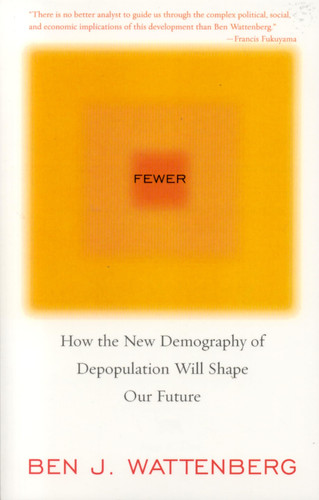
Fewer How the New Demography of Depopulation Will Shape Our Future

Ben J. Wattenberg
For at least 650 years, since the time of the Black Plague, the world's population has headed in only one direction: up. But within a few decades the number of people on earth will level off and then will likely decline over an extended period of time. In Fewer, the author explains how and why birthrates and fertility rates are now falling at an alarming rate in countries throughout the world--both modern and less developed. And he explores the major implications--for world politics, the environment, and the international economy--of this momentous shift. Illustrated with 23 clarifying charts.
Bloomsbury Academic 2004 241 pages

Introduction to the Talmud

Mielziner Moses
This work has been selected by scholars as being culturally important, and is part of the knowledge base of civilization as we know it. This work is in the "public domain in the United States of America, and possibly other nations. Within the United States, you may freely copy and distribute this work, as no entity (individual or corporate) has a copyright on the body of the work. Scholars believe, and we concur, that this work is important enough to be preserved, reproduced, and made generally available to the public. We appreciate your support of the preservation process, and thank you for being an important part of keeping this knowledge alive and relevant.
Creative Media Partners, LLC 2022-10-26 312 pages

The Lucky Years How to Thrive in the Brave New World of Health

David Agus,David B. Agus,Kristin Loberg
Medicine is undergoing rapid change. In the old world, you followed general principles and doctors treated you based on broad, one-size-fits all solutions. In this new golden age, you'll be able to take full advantage of the latest scientific findings and leverage the power of technology to customize your care. Only those who know how to access and adapt to these breakthroughs -- without being distracted by hyped ideas and bad medicine -- will benefit. Imagine being able to get fit and lose weight without dieting, train your immune system to fight cancer, edit your DNA to avoid a certain fate, erase the risk of a heart attack, reverse aging, and know exactly which drugs to take to optimize health with zero side effects.
Thorndike Press 2016 455 pages